National Strike in Colombia is Massive, Meets Violent Repression, by Tom Whitney

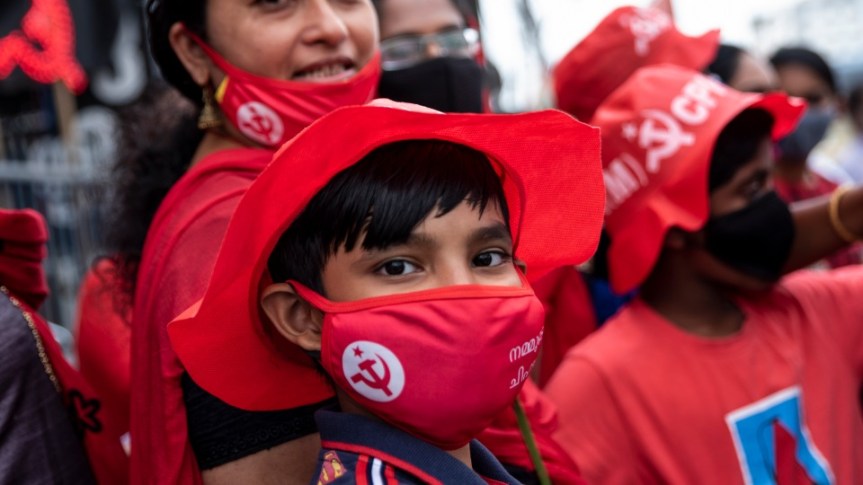
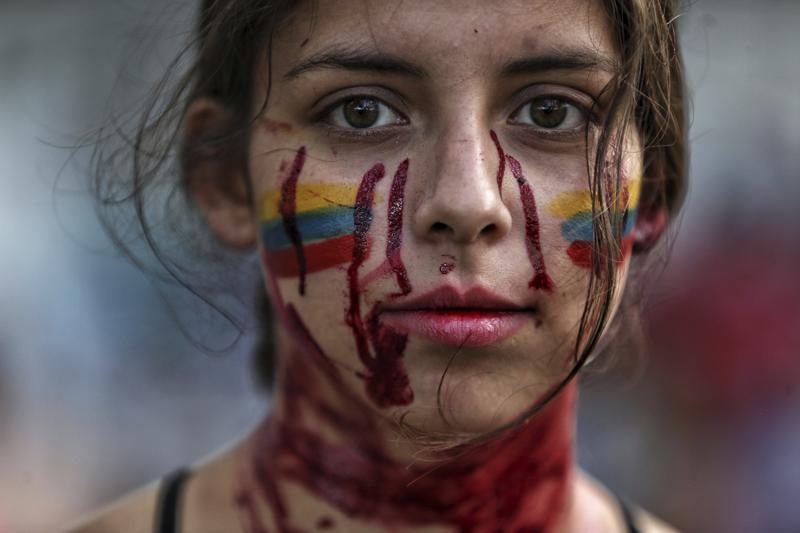
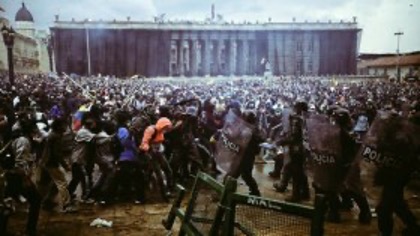
Colombia is afire with a National Strike mounted by working people young people, and the excluded. They are protesting neoliberal reforms that diminish lives and hopes. Tax-reform proposals from President Iván Duque’s rightwing government triggered large demonstrations that began on April 28 and are continuing. Brutal repression has inflamed the rebellion. The government quickly withdrew the tax proposals. The finance minister was dismissed. 

A National Strike Committee coordinates the actions of “26 social sectors at the national level” plus regional, departmental, and municipal strike committees. The demonstrations, unprecedented in size and scope, follow the student uprising of 2011, the agrarian strike of 2013, marches in September 2020 against police abuses, and a large strike in November 2020 against pension and education reforms.

One stimulus for the uprising is the rise in poverty in Colombia from 37.5% of the population in 2019 to almost 50% in 2020; 15% live in extreme poverty. Another is widespread disapproval of the government’s handling of the Covid-19 pandemic. Young people are enraged. Their futures are blunted, claims commentator Germán Muñoz González. Often regarded as “expendable,” they are being killed, he asserts. Polling shows that 75% of Colombians support the National Strike.

Colombian Cecelia Zamudio paints a grim picture. Protesters “are constantly being attacked by the forces of state repression who shoot with high caliber rifles … use weapons of war … utilize paramilitaries for covert actions.” So far “more than 60 people have been killed … 600 people taken away and disappeared … thousands injured, thousands imprisoned.”

The proposed tax reforms represented the tip of the neoliberal iceberg.  Healthcare privatization after 1993 led to healthcare inequalities because of reduced investment in personnel, training, and facilities. Over the course of three decades, most education at all levels has been privatized. For the “poorest sectors of the population, public education for children and adolescents has deteriorated.”

Flexible labor arrangements developing over three decades has centered on outsourcing. Self-employment, mostly work in the informal sector, now exceeds 60%; the unemployment rate is 18%. In the same neoliberal spirit, the government farmed out management of pension and disability funds to banks. Consequently, the equivalent of $83 billion of workers’ and employers’ money held by bankers is profitably invested and pension benefits are reduced.

The proposed tax-reform program was supposed to have supplied the government with the equivalent of $6.3 billion that would have enabled payment on debt that between 2016 and 2021 jumped from $79 billion to $157 billion, a figure representing 58% of Colombia’s GDP. Payment to foreign creditors consumes 38% of the government’s budgeted expenses.

The tax plan called for assessing a value added tax (VAT) on rent payments by those earning the equivalent of $470 per month or more. Some previously-exempt renters would have now been paying the tax. The plan also required that middle income private and public sector workers pay a 19% VAT on fees for energy use, water, and sewerage. People with big inheritances would have seen higher taxes. Well-to-do Colombians opposed the tax proposals along lower income people.

The National Strike Committee met May 15 with the government’s minister of labor and the high commissioner for peace. The Committee announced that no further negotiations would take place without guarantees assuring “no more violence and freedom to protest.” President Duque quickly responded: “In Colombia full guarantees exist for the exercise of protests.”  He declared that the blocking highways represented criminal action “affecting the economy.”

The National Committee indicated that future negotiations must involve the departmental and municipal strike committees. As with earlier national strikes, people’s assemblies are underway – in Ibagué, for example.

The Colombian state looks to be on the verge of ungovernability. Taken together, longtime negative features of Colombia’s national existence now pose formidable obstacles. They are: divisions between rich and poor, urban and rural; state power in the hands of oligarchs; continuing destitution and precarious lives for the many; their exclusion from meaningful political participation; ruling-class resort to extreme violence; and governmental complicity with U.S. hegemonic ambitions.  Integration of the national economy into the worldwide neoliberal system, with its own set of stern requirements, is relatively new.

The government has failed a three-part stress test. Colombians have suffered more from the Covid-19 pandemic than all but a few peoples of the world. The government’s implementation of the peace agreement between the FARC insurgents and the government was disastrous. There is the debt crisis.

Piedad Córdoba, once a left-leaning Liberal Party senator and always a target of reactionaries, portrays the strike as “only the most prominent symptom of a social order that’s now unsustainable. She calls for the “development of social struggle” and laments that, “in contrast to other countries of Our America, Colombia has not had a revolution of any type.”

She regards the high levels of poverty and debt as “big changes obliging us to look for [new] solutions.” Córdoba rejects neoliberalism and anticipates “a movement of new and developing leaders, and of generational change on the part of young people condemned to no future.”

Observer Fernando Rubio agrees: “The main protagonists of the present Strike are young people impacted by the breakdown of the neoliberal model.” These include “professionally trained people facing bankruptcy, the chronically unemployed, and those living precariously without a future.” 

Hope is alive for some Colombian young people. That’s apparent in the faces of the 200 or so orchestra members performing in Medellin’s Park of Desires on May 5. Under the baton of Susana Boreal, 26 years old, and before 6000 singing onlookers, they played and sang “El pueblo unido jamás será vencido” (The people united will never be defeated), and other numbers.

The symbolism is clear. That song materialized in Chile prior to the overthrow of President Salvador Allende’s socialist government. It’s since been heard worldwide. The title, morphed into a slogan, became a staple of political demonstrations throughout the Western Hemisphere. Readers may go here or here to hear and see the performance.

The youth uprising in Colombia parallels the massive outpourings of young Chilean protesters from October 2019 on, the Occupy phenomenon in the United States in 2011, and the Indignados in Spain. Maybe, one surmises, a new way of doing politics is afoot.

Colombian youth in rebellion, acting spontaneously and mostly unaffiliated with political parties, are maybe attending to moral and community values as they defend their material interests. They are workers – or would-be workers – but presumably don’t carry the sectarianism and memories of failure burdening their left-leaning predecessors.
Preliminary Report on National Strike (and Calamity) in Colombia

From our editorial team

(May 5) According to the website of the Colombian Communist Party, “there is a massacre in progress in Colombia: 21 murders, 208 seriously wounded, 503 arbitrarily detained, dozens of disappeared, ten women raped by Esmad police, attacked human rights defenders and journalists.” A nation strike has been ongoing nationwide in Colombia since April 28.

Analyst Angel Guerra Cabrera provides background information in a report written May 2: 

Presently in Colombia a national strike is underway in rejection of President Iván Duque’s tax reform and a health reform bill that seeks to deepen the failed model of privatization established in the health system.

The tax reform would impose a 19 percent VAT on eggs, meat, fish, coffee and salt, and proposes to tax salaries over 2.4 million pesos per month and pensions over 7 million pesos, to freeze for five years the salaries of public employees and even a scandalous tax on burials. The protesters had to overcome two factors. First, the third peak of the pandemic. The Ministry of Health reported that day an accumulated death toll of 72,725, one of the highest in the world per million inhabitants, higher than that of India and the United States.

A second factor was the judicial prohibition of the protest, which was not heeded by either the organizers or the local authorities. Despite being rejected by the government and the mainstream media, the marches were massive taking place in at least 600 of the country’s 1,100 municipalities.

In a previous survey, 73 percent of the population expressed their support for the strike and 35 percent said they would be willing to take that position to the streets. Seven million people took part in the strike and marches, with mobilization in Bogotá, Medellín, Cali, Barranquilla, Bucaramanga, Manizales and Pereira standing out. Clashes with riot police were severe in Cali and Bogotá. Mirar al Sur reported that there were eight deaths due to police repression.

The crisis in Colombia is very deep, has been going on for a long time, but has deepened with the pandemic. Poverty has recently increased 6.8 percent and now affects 42.5 percent of Colombian which means that 21.2 million of them cannot meet their basic needs. Extreme poverty now impacts 7.4 million people. To make matters worse, the government is trying to take the country back to war and more and more people are opposing it. The assassinations of social activists and former FARC combatants who have joined the peace process continue unabated.

May Day and the Haymarket Martyrs, by Tom Whitney

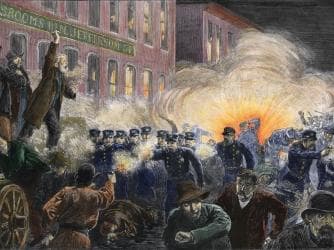
(Source: Labor Standard, Vol1, No3, 1999)

(Image Credit: Stock Montage/Getty Images)

Jose Marti, author of “A Terrible Drama”, which is cited in the present article, lived in exile in the United States for 15 years until 1895. Having organized Cuban rebel forces fighting in Cuba’s Second War for Independence, Marti died in battle early in the war. In the United States he was a correspondent for Latin American newspapers.

On May 1, 1886, Albert Parsons, head of the Chicago Knights of Labor, led 80,000 people
through the city’s streets in support of the eight-hour day. In the next few days they were joined nationwide by 350,000 workers who went on strike at 1,200 factories, including 70,000 in Chicago.

On May 3, August Spies, editor of the Arbeiter-Zeitung (Workers Newspaper), spoke at a
meeting of 6,000 workers, and afterwards many of them moved down the street to harass scabs at the McCormick plant. The police arrived, opened fire, and killed four people, wounding many more.

On May 4, Spies, Parsons, and Samuel Fielden were speaking at a rally of 2,500 people held to protest the police massacre when 180 police officers arrived, led by the Chicago police chief. While he was calling for the meeting to disperse a bomb exploded, killing one policeman. The police retaliated, killing seven of their own in the crossfire, plus four others; almost two hundred were wounded. The identity of the bomb thrower remains unknown.

On June 21, 1886, eight labor leaders, including Spies, Fielden, and Parsons went on trial,
charged with responsibility for the bombing. The trial was rife with lies and contradictions, and the state prosecutor appealed to the jury: “convict these men, make an example of them, hang them, and you save our institutions.”

Even though only two were present at the time of the bombing (Parsons had gone to a nearby tavern), seven were sentenced to die, one to fifteen years imprisonment. The Chicago bar condemned the trial, and several years later Governor John P. Altgeld pardoned all eight, releasing the three survivors (two of them had had their sentences reduced from hanging to life imprisonment).

On November 11, 1886, four anarchist leaders were hanged; Louis Lingg had committed suicide hours before. Two hundred thousand people took part in the funeral procession, either lining the streets or marching behind the hearses.

Unfortunately, the events surrounding the execution of the Haymarket martyrs fueled the
stereotype of radical activists as alien and violent, thereby contributing to ongoing repression.

Over the years the remains of many deceased or martyred radicals, among them Emma
Goldman, Bill Hayward, and Joe Hill, were deposited at the Haymarket Monument in Chicago, where seven of the eight men on trial lie buried. Ever since that time, in almost every country except one (guess which?) May 1 has been honored as International Workers Day.

The internationalization (if not “globalization”) of the Haymarket legacy was apparent two days after the hangings when José Martí, leader of Cuba’s struggle for independence from Spain, who was then living in exile in New York, wrote a detailed, emotion-filled report of the events leading up to the executions. Full of analysis, his article entitled “A Terrible Drama” appeared on January 1, 1888, in the Argentine paper La Nación, published in Buenos Aires. Early on in his piece he notes:

“Frightened by the growing power of the plain people, by the sudden coming together of the working masses (previously held back by the rivalries of their leaders), by the demarcation of two classes within the population — the privileged and the discontented (the latter a thorn in the side of European high society) — the republic determined to defend itself with a tacit covenant, a complicity whereby criminal action is triggered by the authorities’ misdeeds as much as by the fanaticism of the accused, in order to use their example to terrify — not by means of pain directly visited upon the rabble, but by the fearsome revival of the hangman’s hood.”

At the end of his long article José Martí quoted from the Arbeiter-Zeitung issued on the day of the executions:

“We have lost a battle, unhappy friends, but we will see in the end an ordered world that
conforms to justice: we will be wise like the serpent and quiet like the dove.”
In our own time the Uruguayan writer Eduardo Galeano has commented on “A Terrible Drama” (in his Memories of Fire, vol. II):

“The scaffold awaited them. They were five, but Lingg got up early for death, exploding a
dynamite cap between his teeth. Fischer was seen unhurriedly humming the ‘Marseillaise.’
Parsons, the agitator who used the word like a whip or a knife, grasps the hands of his comrades before the guards tie his own behind his back. Engel, famous for his sharp wit, asks for port wine and then makes them all laugh with a joke. Spies, who so often wrote about anarchism as the entrance into life, prepares himself in silence to enter into death.

“The spectators in the orchestra of the theater fix their view on the scaffold — a sign, a noise, the trap door gives way, now they die, in a horrible dance, twisting in the air. [Here he quotes Martí.]

“José Martí wrote the story of the execution of the anarchists in Chicago. The working class of the world will bring them back to life every first of May. That was still unknown, but Martí always writes as if he is listening for the cry of a newborn where it is least expected.”

Venezuela Border Conflict Mixes Drug Trafficking and Regime-Change Ambitions , by Tom Whitney

1182 words

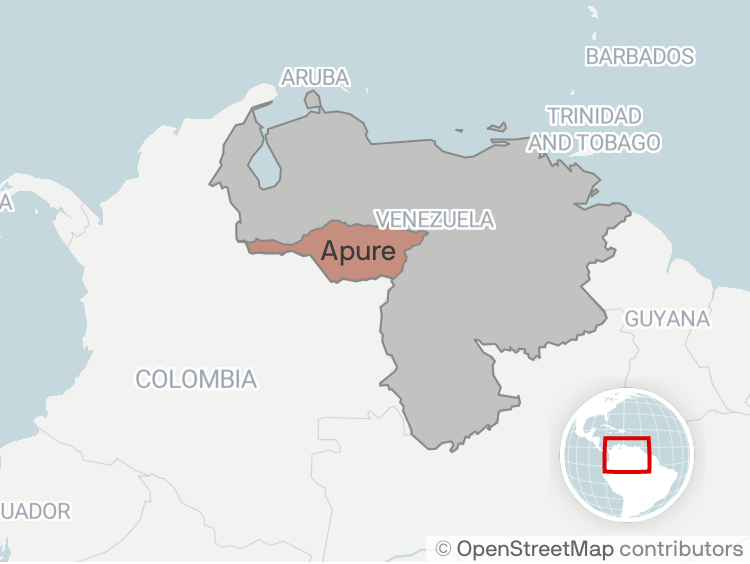
Since mid-March Venezuelan army units have been attacking and expelling Colombian operatives active in Apure state, in western Venezuela. Colombians have long used the border regions to prepare cocaine arriving from Colombia and ship it to the United States and Europe. Fighting has subsided; eight Venezuelan troops were killed. Seeking safety, 3,500 Venezuelans crossed the Meta River – an Orinoco tributary – to Arauca in Colombia.

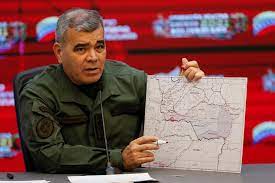
Venezuela’s Defense Minister Vladimir Padrino Lopez addresses the media at Miraflores Palace, in Caracas, Venezuela April 5, 2021. REUTERS/Manaure Quintero

The bi-national border is porous and long enough, at 1367 miles, to encourage smuggling and the undocumented passage of cross-border travelers such as the narcotraffickers in Apure. These include paramilitaries, bands of former FARC-EP insurgents, and drug-trade workers – pilots, truckers, laboratory workers, and more. Also involved are Colombia’s Army; Mexican drug cartels; officials in Washington; and DEA functionaries in Colombia. 

The paramilitaries in Apure represent Colombia’s largest drug cartel, “Los Rastrojos.” Colombia’s paramilitaries in general are the products of advice given Colombia’s government by U.S. Army consultants in the 1960s. They claimed paramilitaries were essential for defeating leftist guerrillas.  The Colombian military controls the paramilitaries’ actions, as verified recently by the prototypic paramilitary leader Salvatore Mancuso.  He was testifying before a Colombian judge virtually from a U.S. prison. 

The former FARC-EP insurgents active in Apure are known by the name of their leader, Gentil Duarte. In 2016 they rejected the forthcoming peace agreement that the FARC-EP would be signing with the Colombian government. They’ve taken up narcotrafficking.  Other dissenting ex-FARC fighters took up arms again in 2019. Calling themselves the “Second Marquetalia,” they are not present in Apure.

In March, the Colombian Army transferred 2000 troops to the Colombian side of the border. U.S. Secretary of State Anthony Blinken spoke with Colombian President Iván Duque by telephone on April 5; they discussed “their shared commitment to the restoration of democracy and rule of law in Venezuela.”  U.S. Ambassador to Venezuela James Story, stationed in Bogota, held meetings from February 19 to 26 with Venezuelan opposition leaders Leopoldo López, Julio Borges, and Manuel Rosales. They style themselves the “Venezuelan Presidential Commission.”

The U.S. Air Force on March 30 and 31 flew four C-17 “Globemaster” troop and equipment-carrying planes to airports in Colombia. Colombia’s Semana newspaper anticipates that the U.S. Congress will soon authorize the sale to Colombia of fighter aircraft worth $4.5 billion. The report laments the “worrisome picture” of air force capabilities in comparison with those of Venezuela.

Colombian President Iván Duque in late February announced the creation of the “Special Command against Narcotrafficking and Transnational Threats.”  This will be a 7000-person elite military force with air assault capabilities.  Its “certain objective,” according to the Communist Party’s website, is war against Venezuela.

During the tenure of left-leaning Venezuelan President Hugo Chavez and that of his successor, President Nicolas Maduro, Colombian paramilitaries repeatedly crossed the border on destabilization missions.  Organizers for a 2000 seaborne anti-Maduro assault called Operation Gedeon were based in Colombia, as were some of the plotters who mounted a drone attack against Maduro in 2018. The U.S. and Colombian governments in February 2019 failed in their attempt to deliver humanitarian aid across the border at Cucuta, Colombia. Their idea had been to divide Venezuela’s military.

The outcome of the fighting in Apure is unclear. The Colombian and U.S. governments undoubtedly would utilize any humanitarian crisis as an opening to further destabilize Venezuela’s government.

It’s certain that the U.S. government in the Biden era continues to seek the overthrow of Venezuela’s government. Without question the reactionary Colombian government is at the beck and call of the U.S. government. The U.S. capitalist hierarchy, of course, has its eye on Venezuela’s massive reserves of crude oil, in excess of 550 billion barrels.

What is underappreciated is the role of drug-trafficking in serving interventionist purposes, as in Apure. U.S. military aid under Plan Colombia, which began in 2000, was supposed to have reduced narcotrafficking. The same was to have happened after the FARC-EP insurgency gave up arms in 2016.   Nevertheless, Colombia afterwards continued to produce 70 percent of the cocaine consumed in the world, according to a 2019 United Nations report. Production has increased since.

Some 70 percent of Colombia’s cocaine heads to the United States – the world’s leading consumer – via the Pacific Ocean route. But much of the remainder does pass through Venezuela, and Washington officials pay attention.  

The Western Hemisphere Drug Policy Commission is “an independent, bipartisan entity” serving U.S. policymakers.  Its December, 2020 report noted that: “Traffickers operate freely in large swaths of the country s territory [and] The US State Department is offering rewards of $15 million for information leading to [President] Maduro’s arrest and $10 million for information on four other top officials.”

The U.S. Fourth Naval monitors Venezuelan waters and air space for supposed Venezuelan drug-trafficking.

The assumption here is that Colombian narcotrafficking has great appeal to Washington deciders on Latin America. Nobody likes drug dependency. The United States suffered some 70,000 drug-overdose deaths in 2019. In short, to trumpet war on drugs has great public-relations value. It’s an easy sell to promise to stem the flow of drugs into the United States in return for free rein for harsh policies in Latin America.

Therefore, the United States uses the presence in Venezuela of Colombian narco-trafficking to serve regime-change purposes. Public support for U.S. Plan Colombia told a similar story. After 2000, U.S. taxpayer money readily flowed into what was billed as war on narcotics. The real purpose was assistance to the Colombian military as it attempted to defeat leftist FARC-EP guerrillas. 

Jaime Caycedo, secretary general of the Colombian Communist Party, outlined these dynamics in writing about Plan Colombia in 2007:

“For the purposes of strategy, it’s essential to have it understood through continued propaganda that the guerrillas are associated with narcotrafficking and understood too that the war is being fought precisely because of that characteristic.”  Drugs become a “demonic phenomenon [and] imperialist military intervention figures as something ‘natural.’” The imperialists offer “no tie to history or realities that might explain things,” with the result that, “violence in the form of daily manifestations of repression and super-exploitation of workers appears simple as a consequence of narco-trafficking.” (Colombia en la Hora Latinoamericana, Ediciones Izquierda Viva)

Capitalists taking a broad view accommodate drug-trafficking for another reason. Selling cocaine yields vast amounts of money; laundered, cocaine becomes a source of liquidity for their financial system.

Former director of the United Nations Office on Drugs and Crime Antonio Maria Costa, writing in 2009, claimed that, “In many instances, drug money is currently the only liquid investment capital.”  According to the Samuel Robinson Institute, “the events in Apure show off Venezuela … as a threat, but only in what has to do with allowing the (narco)metabolism of the West to continue functioning.”  He cited journalist Roberto Saviano who notes that, “Cocaine is a safe asset … an anticyclical asset…. Cocaine becomes a product like gold or oil, but more economically potent than gold or oil. [Without] access to mines or wells, it’s hard to break into the market. With cocaine, no.”

Stopgap Methods Won’t Fix Migration Challenge, by Tom Whitney

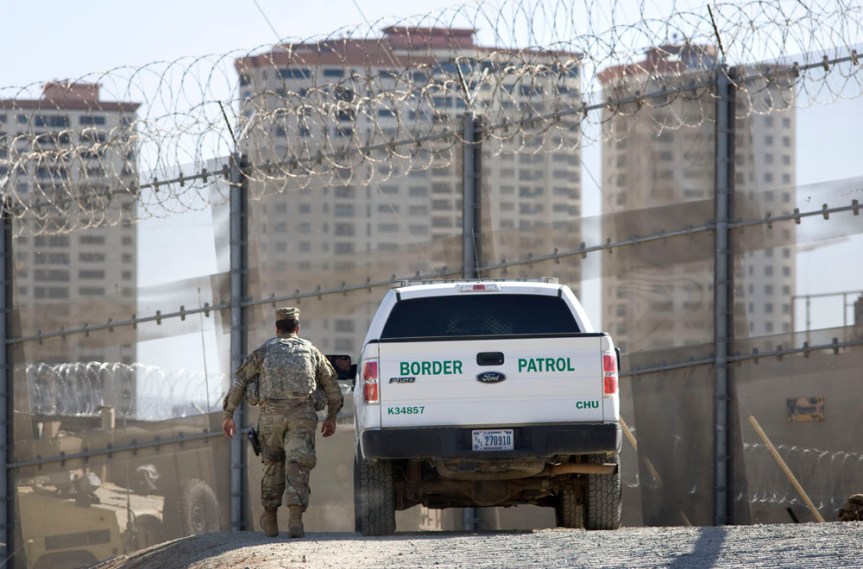
The continuing press of migrants from Mexico and Central America arriving at the U.S. southern border has forced the Biden administration to send Vice President Kamala Harris south on a negotiating mission. According to The New York Times, “She will work with the leaders of Central American governments.” Armed with “billions of dollars,” she will seek collaboration in  “reducing the violence and poverty” that predispose to migration.

A look at realities in Honduras and Guatemala suggests her goal is unattainable.  That’s because past U.S. policies and actions in the region, interventionist and exploitative, contributed to the very life-threatening conditions Harris is targeting. To succeed, the Biden administration must grapple with a dark legacy fashioned by the United States itself.

In Honduras presently, 62 percent of the population live in poverty, 40 percent in deep poverty. The impact of the pandemic and of hurricanes during 2020 caused 700,000 more Hondurans to fall into poverty and 600,000 more to lose jobs. Estimates of Hondurans facing food insecurity range from 1.3 million – with 350,000 close to starvation – to   2.9 million.

Journalist Giorgio Trucchi recently catalogued other hazards of Honduran life. He cites at least 2000 attacks on defenders of human rights in 2016-2017, 278 murders of women in 2020, 86 journalists killed over two decades, 372 killings of members of the LGBTQ community over 10 years, and a 12.5 percent GDP loss in 2018 ascribed to corruption.

As of September, 2020, 2.8 million Guatemalans were “severely food insecure. Now 80 percent of Guatemala’s indigenous population are malnourished, and 59 percent of Guatemalans live in poverty. According to the World Food Program, “The number of households that did not have enough to eat during COVID-19 nearly doubled in Guatemala compared to pre-pandemic numbers. In Honduras, it increased by more than 50 percent.”

That agency indicated that, “Hunger in El Salvador, Guatemala, Honduras and Nicaragua has increased … from 2.2 million people in 2018 to close to 8 million people in 2021 – a result of the economic crisis caused by COVID-19 and years of extreme climate events.” Now, “nearly 15 percent of people surveyed by WFP in January 2021 said that they were making concrete plans to migrate.”

U.S. political leaders have turned a blind eye to the suffering. The two governments win points by welcoming multinational corporations and repressing leftist political movements.  All three governments are fine with a worldwide economic system featuring support for healthcare, schools, and pensions; freedom for corporations; and the selling-off of public assets. 

Officials in Washington put Honduras to good use. The country is a transfer point for illicit drugs heading north, with the result that Honduras is a regional center for drug-war activities. The Soto Cano U.S. airbase was ground zero for U.S. support in the 1980s for Contra mercenaries fighting Nicaragua’s leftist Sandinista government. That base, where 1500 U.S. troops are stationed, is the hub of U.S. military operations in the country and farther afield.

President Manuel Zelaya was advancing progressive reforms, that is, until June 29, 2009, when a military coup deposed him. U.S. interventionists played a role.  The plane transporting Zelaya from Tegucigalpa to Costa Rico stopped at the Soto Cano base. And, according to Wikileaks, Secretary of State Hilary Clinton knew beforehand what was happening, but took no action.

Corruption and criminality took over after the coup. The drug-dealing activities of President Porfirio Lobo, winner of a low-turnout election shortly after the coup, recently came to light. Analyst Karen Spring explains that a drug cartel financed Lobo’s campaign; that Lobo reciprocated by arranging for foreign agencies to finance developmental ventures; that he, along with family members, fixed it so that drug money was laundered through projects like mining operations, hydroelectric works, highways, and other energy-related initiatives.

In 2019, a U.S. court convicted Juan Antonio Hernández of drug-trafficking. His brother is Juan Orlando Hernández, who is Lobo’s successor as Honduras’s president. Citing evidence from other trials, The New York Times recently suggested that Juan Orlando is “a key player in Honduras’ drug-trafficking industry [and] that formal charges against Mr. Hernández himself may not be far away.”

Guatemala’s recent history set the stage for another anti-people government.  A 36-year war pitting leftist guerrillas against military forces led by U.S.-trained officers and assisted by the CIA led to the deaths of 200,000 people. Most of them were poor, rural, and indigenous.

In 2019, lawyer and activist Jennifer Harbury lamented that “so many of the high-level Guatemalan intelligence leaders of that era, who were trained in the School of the Americas and who served as CIA paid informants [became] involved in the drug trade and … started their own cartels… And they’re devouring the country using the same techniques of torture and the terror that they used before. Once again, everyone is roaring north.”

According to nacla.org, “Guatemala’s market democracy” was founded on “genocidal violence that murdered successive generations of political leaders.” The peace process itself led to “neoliberal policies of resource extraction, free trade, and privatization” with the result of “poverty, landlessness, decrepit institutions.”

The U.S. Vice President deserves a little sympathy. She and the Biden Administration do get credit for recognizing that migrants from Central America are running for their lives. But as she confers with Central American politicians, her hands are tied.

Her negotiating partners understand the rules of international capitalism: loan payments are continued, labor is cheap, natural resources are plundered. Her government and theirs operate on the premise, one, that “money talks” and, two, that satisfaction of human needs is provisional.

Vice President Harris embodies a contradiction. She wants to fix a migration problem due mostly to capitalism. But to do so, she must betray basic capitalist assumptions.

The pressure is on. News item, March 30: “A new migrant caravan began to form Monday night (March 29) in the Honduran city San Pedro Sula … Hundreds of citizens have gathered at the main bus terminal to organize and begin the new mobilization.”

Recurring Political Crisis in Haiti Connects with US Racism, by Tom Whitney

Haiti faces serious political crisis. The country has experienced great political difficulties ever since gaining independent nationhood in 1804. Impaired governance stems in large measure from U.S. meddling over many years.  We examine the current crisis and the basis for U.S. zeal to curtail Haiti’s future.

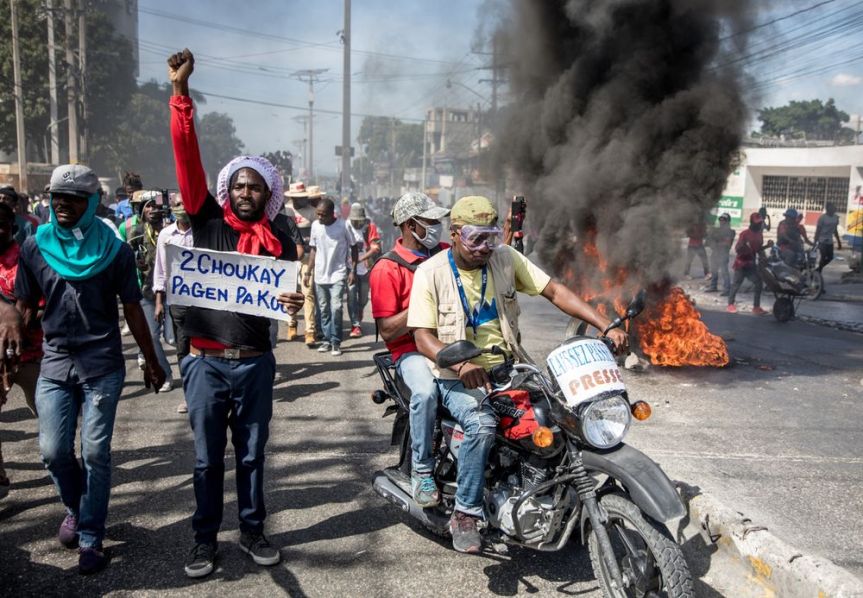
Mass demonstrations have continued intermittently since mid-2018, when two million Haitians were in the streets. At various times, protesters have called for: (1) relief from high prices for oil and gas, the result of IMF austerity decrees; (2) relief from shortages of basic supplies; (3) punishment of government officials who embezzled billions in funds from Venezuela’s PetroCaribe program of low-cost oil for Caribbean peoples (President Jovenel Moïse stole $700,000); (4) Moïse’s resignation. 

Demonstrators targeted Moïse aggressively after he closed down Haiti’s parliament in January 2020. He’s ruled since by decree.  A general strike took place prior to February 7, 2021, which, according to lawyers and judges, marked the end of Moïse’s presidential term. He remains.

Moïse’s 2015 election victory was fraudulent. A transitional president served for one year. Moïse took office in early 2017 after winning a second election weeks earlier. Only 18 percent of Haitian adults voted.

Moïse recently appointed his own electoral council and his own committee for amending the constitution. He cemented ties with President Trump by supporting U.S. regime-change plans for Venezuela. His new National Intelligence Agency looks to one observer like “a new Gestapo-like force of armed spies.” Moïse has disregarded the suffering of Haitians, the most poverty-stricken population in the Americas.

Opposition elements recently named Supreme Court Justice Joseph Mécène as a transitional president replacing Moïse. Moïse responded by arresting 23 officials of whom three were Supreme Court justices. He replaced them.  

Haiti’s opposition is divided between center-right political parties, headed loosely by lawyer André Michel, and protesters in the streets. Many of these belong to social movements and labor unions making up the new Patriotic Forum.

Violence is rampant. Some “150 criminal bands” have carried out murders and massacres. According to Argentinian Lautaro Rivara, active in Haiti, “Most of these groups have been organized and financed by senators, ministers, and presidents – when they are not directed fomented by the imperialist powers.”  Some gangs have united under government auspices as the “G9 and family”.

These various problems reflect political norms from Haiti’s past. On display then and now have been: ineffectual, corrupt, undemocratic governance; governmental inattention to people’s basic needs; persistent, if unsuccessful, popular opposition; and politics mediated through violence. Submission to foreign masters has been less obvious recently than is usually the case. None of these failings operate against U.S. expectations for Haiti.

Setting the stage

The many foreign NGOs active in Haiti function autonomously, rarely collaborating with Haiti’s government. The “Core Group” of nations involving the United States, France, Canada, and others make strategic decisions for Haiti on their own.

The U.S government does likewise. Secretary of State Hillary Clinton inserted singer Michel Martelly into Haiti’s 2010 presidential elections. He won, and named banana tycoon Jovenal Moïse as his successor.

Haiti has long had to cope with burdensome foreign-debt obligations. Between 1825 and 1947, Haiti sent payments to France as compensation for Haiti’s slaves having liberated themselves. Said one observer recently, “the constant of financial needs forces all Haitian governments to take on even more debt with North American and European Banks.”

Bill Quigley, a close observer, notes that, “The US and the US dominated world financial institutions forced Haiti to open its markets [allowing] millions of tons of US subsidized rice and sugar into Haiti – undercutting their farmers and ruining Haitian agriculture.” 

Holding Haiti in Check

The United States has long had its way with Haiti. It withheld recognition of Haiti’s national independence until 1862, and embargoed trade with Haiti until 1863. A U.S. naval squadron arriving at Môle Saint-Nicolas in 1889 sought to occupy the port permanently to block access to Haiti by ships of other nations. The effort failed, partly due to the intercession of U.S. ambassador Frederic Douglass, the famous abolitionist.    

U. S. military units occupying Haiti between 1915 and 1934 encountered armed resistance. Some 15,000 Haitians were killed. U.S. officials wrote a new Haitian Constitution, collected taxes, controlled customs, administered sections of Haiti’s government, and forced payments on loans held by U.S. banks.

The plundering, murderous Duvalier dictatorship, father and son, ruled Haiti from 1957 until 1986. The U.S. government cited anti-communism as justification.  

CIA personnel collaborated with Haitian military officers to plan the coup that in 1991 removed President Jean-Bertrand Aristide. That he returned to power in 1994 by means of a U.S. invasion typifies Haiti’s subservience to decisions made in Washington.

Paramilitaries trained and funded by the United States removed President Aristide in 2004. Canada and France helped out. A U.S. plane conveyed Aristide to the Central African Republic. The three nations arranged for United Nations troops to occupy Haiti. They would remain until 2019.

Particular reasons

“There was hell in Hayti (sic) in the red waning of the eighteenth century … while black men in sudden frenzy fought like devils for their freedom and won it … the shudder of Hayti was running through all the Americas.”  (W. E. B. DuBois, John Brown, 1907)

Reports of the “tempest created by the black revolutionaries … spread rapidly and uncontrollably.” A maritime proletariat brought news to places like Charleston, South Carolina; “Afro-North Americans … derived inspiration from the example of Haitian freedom,” recalls historian Julius Scott. (Common Wind, 2018)

The U.S. slavocracy had much to protect. “Between 1775 and 1825 … a slave-labor large farming system [developed]. There was a close and indissoluble connection with the world’s cotton market.”  (DuBois, Suppression of the African Slave Trade,1896) The labor of enslaved people generated wealth and enabled debt repayment. Slave ownership represented 20 percent of private U. S. wealth.  

Fearful slaveowners had Haiti on their minds, more so when slaves were unruly. Slaves conspired, sometimes were discovered, and rebelled. That Denmark Vesey, leader of a failed slave rebellion in Charleston in 1822, had been enslaved in Haiti was hardly reassuring.

The enslavement of Black people in the United States eventually ended; racism did not.  Haiti manifested a new orientation that would by no means mollify U. S. animosities against its people.

Historian C.L.R. James explains that, “Haiti had to find a national rallying point [and] discovered ‘negritude’ [involving] “substitution of Africa for France.” Until then, “Mulattos who were masters had their eyes fixed on Paris.” At work was the influence of pan-Africanists Marcus Garvey, George Padmore, and Martinican poet Aimé Césaire, regarding whom, says James, “it is Africa and African emancipation that he has in mind.” (Black Jacobins, 1989)

As a kind of African extension in the Western Hemisphere, Haiti solidified its place within the orbit of U.S racism. That showed in 1898 when U.S. troops intervened in Cuba’s war for independence from Spain. Later Cuba would become a U.S. protectorate of sorts. U.S. justification for both endeavors, according to statements, was to prevent “another Haiti,” a “second Haiti.”     

Indeed, Cuba’s rebel army was full of Black soldiers. African-descended General Antonio Maceo led rebel troops. Maceo at the time was a favorite in the U.S. Black community.

Much later, U.S. imperialists were alert to real or imagined socialist stirrings in Guatemala (1954), Dominican Republic (1965), Indonesia, (1965-66), Chile (1973), Cuba perennially, and Haiti. There, anti-communism competed with racism as motivation.

Maybe with the advent of President Jean-Bertrand Aristide in Haiti, whispers were heard in U.S. government circles of “another Cuba” in the making. After all, Haitians are poor, they suffer, they die young, and they are heirs of a revolution.

Aristide was new. His 1991 election victory with a 67% plurality was Haiti’s “first successful democratic election ever,” according to the  conservative National Republican Institute.  Aristide gained reelection in 2000 with 91% of the vote.  

An observer notes that, “In the period of governance by Fanmi Lavalas, the party founded by President Aristide, more schools were built than the total constructed between 1804 and 1994. Twenty percent of the country’s budget was mandated for education.  Women’s groups and popular organizations helped coordinate a literacy campaign …The minimum wage was doubled. …  Health clinics were established in the poorest communities.  The government also launched an aggressive campaign to collect unpaid taxes owed by the wealthy elite.”  

Haiti waits. Maybe Haitian President Moïse will be removed and maybe Haiti’s parliament will reopen. Maybe the new Biden administration will go along with a new array of officeholders.  His representatives may pull strings selectively, or give a nudge to favorites. What the U.S. government does in the short term, however, won’t matter much to masses of Haitian people who are victims. What would matter for them is certainty of their independence, of being able to take charge of their own existence. Movement in that direction depends on change in the United States, forced by popular mobilization there, toward a politics that embraces the notion of human equality.   

Cuba’s COVID-19 Vaccines Serve the People, Not Profits, by Tom Whitney

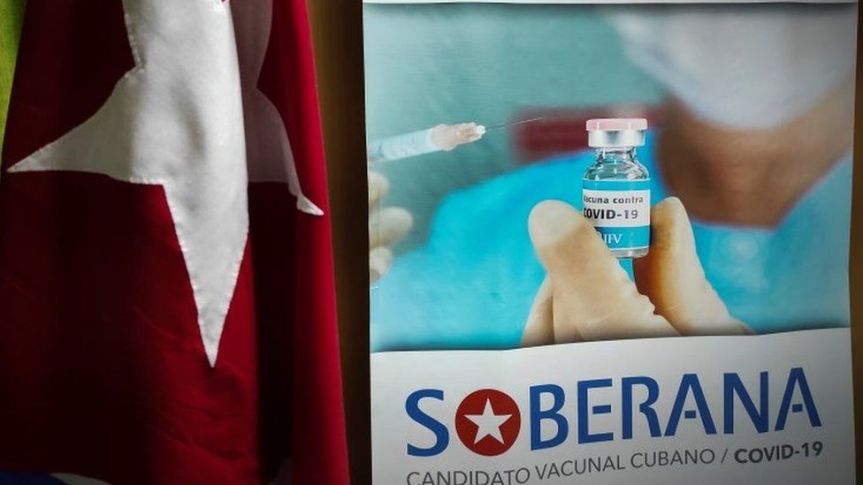
Cuba’s socialist approach to developing vaccines against COVID-19 differs strikingly from that of capitalist nations of the world. Cuba’s production of four vaccines is grounded in science and dedicated to saving the lives of all Cubans, and to international solidarity.

The New York Times’s running report on the world’s vaccine programs shows 67 vaccines having advanced to human trials; 20 of them are in the final phase of trials or have completed them. The United States, China, Canada, the United Kingdom, Germany, South Korea, and India have each produced many vaccines; most vaccine-manufacturing countries are offering one or two vaccines.

Cuba is the only vaccine manufacturer in Latin America; there are none in Africa. The only state-owned entities producing the leading vaccines are those of Cuba and Russia.

Cuba’s Finlay Vaccine Institute has produced two COVID-19 vaccines. Trials for one of them, called Sovereign I, focus on protecting people previously infected with COVID-19. The antibody levels of some of them turned out to be low, and the vaccine might provide a boost.

The other vaccine, Sovereign II, is about to enter final human trials. For verifying protection, these trials require tens of thousands of subjects, one half receiving the vaccine and the other half, a placebo vaccine. Cuba’s population is relatively small, 11 million people, too small to yield enough infected people in the short time required to test the vaccine’s protective effect. That’s why Sovereign II will be tested in Iran.

100 million doses of Sovereign II are being prepared, enough to immunize all 11 million Cubans, beginning in March or April. The 70 million remaining doses will go to Vietnam, Iran, Pakistan, India, Venezuela, Bolivia, and Nicaragua. Sovereign II “will be the vaccine of ALBA,” explained Venezuelan Vice President Delcy Rodríguez, referring to the solidarity alliance established in 2004 by Venezuelan President Hugo Chavez and Cuba’s Fidel Castro.   

Cuba’s strategy in commercializing the vaccine represents a combination of what’s good for humankind and the impact on world health. We are not a multinational where a financial objective comes first,” says Vicente Vérez Bencomo, director of Cuba’s Finlay Vaccine Institute. Income generated by vaccine sales abroad will pay for health care, education, and pensions in Cuba just as happens with exports of medical services and medicines.

Cuba’s Center for Genetic and Biotechnological Engineering is developing two other COVID-19 vaccines; One, named “Mambisa” (signifying a female combatant in wars of liberation from Spain), is administered via the nasal route, just as is Cuba’s hepatitis B vaccine.  The other vaccine, named “Abdala” (a character in a Jose Marti poem) is administered intramuscularly. The two vaccines are involved in early trials.

Cuba was ready

Cuban education emphasizes science and technology. In the 1990s, Cuba accounted for 11% of doctorate-level Latin American scientists. Cuban scientists work in the 50 or so biomedical research and production facilities which together make up Cuba’s state-owned BioCubaFarma Corporation, and which produces vaccines, drugs, medical tests, and medical equipment. It makes 60% of medicines used in Cuba, and 8 of 12 vaccines.

Cuba previously produced a pioneering vaccine that prevents life-threatening infection caused by type B meningococcus. Cuba developed a genetically-engineered hepatitis B vaccine and a vaccine offering palliative treatment for lung cancer. A Cuba-developed vaccine offers protection against infection, particularly childhood meningitis, caused by the Hemophilus Influenza type B bacterium.

In fashioning vaccines, Cuban scientists relied on familiar technology.

To provide an immunological extra, the antigen of Cuba’s Sovereign II vaccine is mixed with tetanus toxoid, as was done with Cuba’s Hemophilus influenza vaccine. As with other vaccines, scientists used a segment of the virus’s protein – here the COVID-19 virus – to form an antigen to stimulate protective antibodies. By contrast, the U. S. Pfizer and Moderna vaccines contain the whole viral protein, not a segment. That protein contains “genetic instructions” which enter human cells, causing them “to make spike proteins, which then get released into the body” where they trigger antibodies.

Observers suggest that this innovative U.S. technology may be less safe than the one used in Cuban vaccines.  Not requiring extremely cold storage, as do the U.S. vaccines, the Cuban vaccines are suited for areas without adequate refrigeration capabilities.

Cuba’s bio-medical production sector has also created drugs for treatingCovid-19 infection. Interferon, an antiviral agent developed in Cuba, produced in China, and used throughout the world, prevents many Covid – infected patients from becoming critically ill. The Cuban anti-inflammatory drug Jusvinza, used for treating auto-immune diseases, and Cuba’s monoclonal antibody Itolizumab, which moderates exaggerated immune responses, are both effective in reducing Covid-19 deaths.

The other way

The U. S. approach to producing and distributing COVID-19 vaccines is based on private enterprise, although the U. S. government did deliver billions of dollars to pharmaceutical companies to produce vaccines free of charge to recipients. The companies have contracted with purchasers abroad.

According to forbes.com in November, 2020,  ‘If Moderna’s [vaccine] can get FDA approval and can make enough doses, its top line could be nearly $35 billion higher … than … in the last 12 months.” Another report suggests that, “The companies (Pfizer and Moderna) stand to earn billions of dollars in profits from their COVID vaccines this year [and] there will be more profits in later years.” The companies “claim the rights to vast amounts of intellectual property.” 

With corporations in charge, distribution of COVID-19 vaccines is skewed. As of Jan. 27, “some 66.83 million doses have been sent out, of which 93 percent were supplied to only 15 countries.” In Latin America, only Brazil, Argentina, Mexico, and Chile have secured purchase contracts adequate for immunizing entire populations. The companies’ contracts with African nations allow for immunization of only 30 percent of Africans in 2021. Meaningful immunization has yet to begin there. 

The wealth divide determines distribution. Epidemiologists at Duke University report that, “While high-income countries represent only 16% of the world’s population, they currently hold 60% of the vaccines for COVID-19 that have been purchased so far.” Cuban journalist Randy Alonso reports that only “27 percent of the total population of low and middle income countries can be vaccinated this year.” 

The world is on the brink of a catastrophic moral failure – and the price of this failure will be paid with lives and livelihoods in the world’s poorest countries,” declared Dr. Tedros Adhanom Ghebreyesus, director of the World Health Organization, on January 18. He warned that, “some countries and companies continue to prioritize bilateral deals, going around COVAX, driving up prices and attempting to jump to the front of the queue.”

The WHO initiated the global vaccine collaboration COVAX to assure access by poor nations to COVID-19 vaccines. The 190 nations that are enrolled agreed to obtain vaccines through COVAX. Rich nations would supply COVAX with funds to enable 90 poor nations to receive no-charge vaccines. COVAX anticipates distributing two billion doses, enough to immunize only 25 % of the populations of poor nations during 2021.

Problems include: wealthy nations order vaccines independent of COVAX; they buy more vaccine than they need; manufacturers set prices; and prices are secret, variable, and very high.

Most other countries producing COVID-19 vaccines are at variance with Cuba through their profiteering and because they are complicit with the U.S. economic blockade of Cuba. Pursuing routine overseas commercial affairs, they all too easily adjust to U.S. regulations by means of which that cruel policy is enforced. More to the point, the U.S. blockade hinders Cuba’s vaccine efforts, and they are silent.

“We don’t have in Cuba all the raw materials and supplies we’ll need for the unprecedented scale of production that vaccinating our whole population requires,” Dagmar García-Rivera, Director of Research at Cuba’s Finlay Vaccine Institute, explained.  “They have to be purchased and for this, we need financing. This is made infinitely more difficult by the US embargo … Procuring the necessary reagents for research and the raw materials for production is a challenge we face daily.”

In confronting the pandemic, Cuba exhibits attention to detail suggestive of a level of caring and concern not readily matched elsewhere. For example, Cuba’s government-friendly cubadebate.cu website provides a daily, detailed update of the infection’s impact. Its report on Jan. 27 presents data relating to cities, provinces, the nation, and the world – and the nation’s intensive care units. Readers learn that of 43 patients in intensive care that day, 16 were in critical condition, stable or unstable, and 27 were in “grave” condition.

All 43 cases are reviewed, beginning with: “Cuban citizen, 75 years old, from Alquízar, in Artemisa, already suffering from arterial hypertension and ischemic cardiopathy who is afebrile, on mechanical ventilation, is hemodynamically stable… with acceptable blood gases (oxygen and CO2), is improving radiologically with inflammatory lesions in the right [lung] base – reported as critical but stable.” The cases of four Cubans who died that day are also presented.

Fighting a pandemic in Cuba, it’s understood, is no casual matter. Nor is the health of Cuba’s people. 

To Normalize US-Cuban Relations, Restore Working Embassies, by Tom Whitney

The new Biden administration may soon ease regulations enforcing the U.S. economic blockade against Cuba.  However, if Oregon Senator Ron Wyden’s new bill, the U.S.-Cuba Trade Act of 2021, becomes law, the blockade itself will disappear.

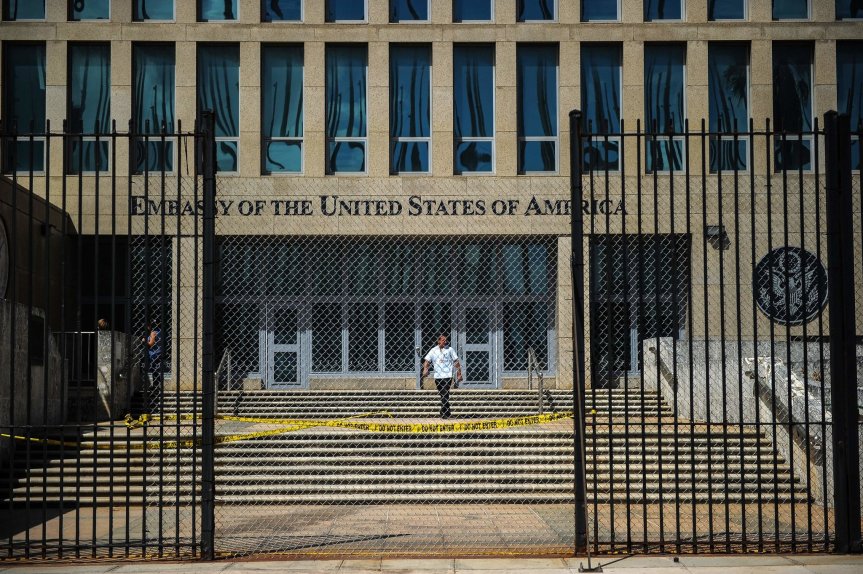
Meanwhile, the two countries’ embassies in Havana and Washington are dysfunctional. No normal relations will obtain until they are fully operative. A report recently issued by the Washington-based National Security Archive (NSA) explores circumstances through which the embassies are disabled.

The NSA is a truth-telling organization that monitors U.S. conduct of international affairs by reviewing declassified U.S. government documents obtained through the Freedom of Information Act.

In September 2017, the State Department reported that some U.S. diplomats stationed at U. S. embassy in Havana had for months, one by one, sought relief from incapacitating symptoms such as dizziness, hearing deficits, visual loss, mental confusion, painfully loud noises, insomnia, headaches, and balance problems. A few Canadian diplomats in Havana were similarly affected.

A“covert sonic device” was mentioned.  President Trump claimed that, “Cuba did some bad things.”  Citing health risks, the State Department recalled 60 percent of Embassy employees and, for the sake of reciprocity, expelled 15 Cuban diplomats from Washington. The Department warned U.S. travelers of health dangers in Cuba.

The Embassy quickly stopped processing entry visas for Cubans seeking to visit the United States.  These are only available now in U.S. embassies in third countries, and few Cubans can travel there to obtain them. Lack of embassy staffing in both countries hinders inquiries about travel, commercial affairs, and regulations. Cuba’s Washington Embassy can no longer provide consular serves to Cubans living in the United States.

The affected diplomats were evaluated at U. S. medical centers under State Department auspices. Specialists, unable to identify a cause for the symptoms, ruled out viral infection, toxins, hysteria, and chemical exposure.

CIA operatives in Havana were among the first to complain of symptoms.  A few U. S. diplomats in China and Tashkent also fell ill. Now for almost three years, no diplomats anywhere have been afflicted.

No visitors to Cuba have suffered in similar ways, nor have diplomatic personnel from countries other than the United States and Canada.

At stake is the future of U.S.  – Cuba relations. Vermont Senator Patrick Leahy claimed in 2017 that, “Whoever is doing this obviously is trying to disrupt the normalization process between the United States and Cuba. Someone or some government is trying to reverse that process.”

The NSA update, noted above, centered on a heavily-redacted report from the Accountability Review Board (ARB), which had been “mandated by Congress in 1986 to assist the State Department in addressing security challenges at U.S. Embassies abroad.”

Although Congress required ARB investigations to take place within 60 days of an incident, “the Trump administration delayed convening the ARB until early 2018.” The ARB submitted its classified report to the Secretary of State 18 months after the first diplomat reported strange symptoms.

The report noted, as regards afflicted diplomats, that, “we do not know how. We do not know what happened, when it happened, who did it, or why.” It confirmed that the CIA closed down its Havana station in September, 2017, just as the illnesses were first being reported.

The ARB report criticized “excessive secrecy that contributed to a delayed response.” It diagnosed “Systemic Disorganization” manifested by “serious deficiencies in the Department’s response in areas of accountability, interagency coordination, and communication, at all levels.” The result was “confusion [and] delayed effective, coordinated action.”

The report judged “the lack of a designated official at the Under-Secretary level to manage the response to be the single most significant deficiency.” It accused the State Department of not following procedural standards.

The ARB faulted the Department for not providing the Centers for Disease Control and Prevention with medical data for one year after it had requested a CDC investigation. The fact of a CDC investigation was unknown until a reference to it cropped up in a document reporting on another evaluation.  

That one, by the National Academy of Sciences, was sent to the State Department in August 2020. It too was unknown to the public, until it was leaked to the New York Times in December, 2020. According to the Times report,  the investigators concluded that, “The most probable cause [of the symptoms] was radiofrequency energy, a type of radiation that includes microwaves.” However, “they could not rule out other possible causes.”

The picture thus is of extreme disarray and secrecy. Nothing emerging from the studies or from U.S. government actions suggests lack of determination to resolve the embassy crisis. Easy tolerance of confusion and mystery is consistent with U.S. inclination to perpetuate initial allegations by officials against Cuba. Lack of closure apparently suited U.S. purposes.  

While the embassy stand-off persists, planning for normal relations by the new Biden administration is hobbled. Planners could, or should, take into consideration the NSA’s revelations suggesting that the impasse stems from cynical opportunism. They could, or should, pay respect to Cuba’s record of protecting foreign diplomats and of honoring international norms on conducting diplomacy.

Diplomatic relations between the two countries will continue. One looks in vain for extraordinary circumstances that would justify anything but normal arrangements. These necessitate a fully- functioning embassy and an ambassador. There’s been no U. S. ambassador to Cuba since diplomatic relations were re-established in July 2015.  

Besides, the U.S. image of concern for the safety of foreign diplomats needs burnishing. No word of sorrow or reassurance emanated from the U.S. government following a serious rifle attack against Cuba’s Embassy in Washington on April 30, 2020.    

UN Report Condemns US Economic Sanctions against Venezuela, by Tom Whitney

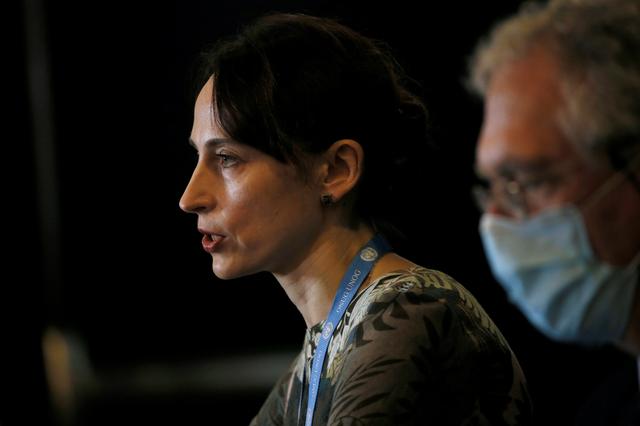
Belarusian lawyer and academician Alena Douhan, who in 2020 became the United Nations “Special Rapporteur on the negative impact of the unilateral coercive measures,” visited Venezuela on February 1-12. She was there “to assess the impact of unilateral [U. S.] sanctions on the enjoyment of human rights.”  At her press conference on the last day, she read aloud a preliminary report. The full report will be presented to the United Nations Human Rights Council in September 2021.

Douhan, in her report, “reminds all parties of their obligation under the UN Charter to observe principles and norms of international law [and] that humanitarian concerns shall always prevail over political ones.”

She “underlines the inadmissibility of applying sanctions extraterritorially and urges the U.S. Government to end the national emergency regarding Venezuela.” The United States must “revise and lift sectoral sanctions against Venezuela’s public sector, review and lift secondary sanctions against third-state parties.” All states need to “review and lift targeted sanctions in accordance with principles of international law.”

The Rapporteur calls upon “the Governments of the United Kingdom, Portugal and the United States and corresponding banks to unfreeze assets of the Venezuela Central Bank.”  

Douhan explains that U.S economic sanctions against Venezuela’s government began in 2005 and intensified after President Obama declared a “state of national emergency” in 2015. Held up as justification then were allegations of “violent repression of protests, persecution of political opponents, corruption, and curtailing of press freedom.”

She recalls that the U.S. government in 2019 imposed “a total economic embargo” that immobilized Venezuela’s state-owned oil company PDVSA and the Venezuelan Central Bank. The U.S. government transferred ownership of Venezuelan assets and properties in the United States to a façade government headed by opposition politician Juan Guaidó, whom the United States named as president.  Britain, Portugal, Canada, and the United States went on to freeze billions of dollars owned by Venezuela and deposited in their banks.

The Special Rapporteur criticizes countries imposing sanctions at the behest of the United States, most of them belonging to the European Union and to the Lima Group of nations. These are members of the Organization of American States recruited by the U.S. government as an anti-Venezuelan bloc of nations.

Douhan clarifies that hyperinflation has aggravated Venezuela’s economic decline and that the fall of oil prices in 2014 accelerated it. Oil sales, she emphasizes, has long accounted for almost all the government’s income and has, consequently, paid for schools, health care, and social programs. Ultimately, she writes, revenues would “shrink by 99%.”

Now “Venezuela faces a lack of necessary machinery, spare parts, electricity, water, fuel, gas, food and medicine.” Remittances arriving from abroad have drastically fallen, due in part to impediments to bank transfers. Now, she notes, only 20% of normal electricity is available, almost 5 million Venezuelans have emigrated, and “2.5 million people” face severe food insecurity because of reduced food imports.

“Medical staff positions in public hospitals are 50–70% vacant,” she reports, adding that, mainly because of sanctions, “90 per cent of the population” lives in conditions of extreme poverty.  

Douhan’s report documents violations of international law. Both the freezing of assets and the U.S. goal of removing Venezuela’s government “violate the sovereign rights” of the nation. The U.S. “state of national emergency” and the reign of sanctions are incompatible with the International Covenant on Civil and Political Rights, she asserts.  U.S. extension of extraterrestrial jurisdiction to third countries “is not justified under international law.” Her reference is to countries whose citizens and companies deal with Venezuela

The United States abuses “the right to the highest attainable state of health.” She points to Venezuela’s “lack of doctors and nurses and of sufficient medicines, medical equipment, spare parts, relevant software updates, vaccines, tests, reagents and contraceptives” – all formerly supplied by the government. She decries violations of the right to water and the right to education.

The Special Rapporteur’s report differs in very significant ways from a United Nations survey and set of recommendations released in September, 2020. The UN Human Rights Council’s “Fact-Finding Mission on Venezuela” produced 409 pages and 65 recommendations. That document’s authors never traveled to Venezuela. Setting the tone, the first recommendation calls for “prompt, effective, thorough, independent, impartial and transparent investigations into the human rights violations and crimes described in the present report.”

Like the Special Rapporteur, the U.S. Government Accountability Office issued a report in February, one that joins in acknowledging a “deteriorating humanitarian situation” in Venezuela.  The sole recommendation of the 50-page report was timidly to suggest that, “Treasury should ensure that [its] Office of Foreign Assets Control systematically tracks information on inquiries” about the suffering. 

Mark Weisbrot of the Center for Economic and Policy Research praised the  GAO report for providing “more evidence that these unilateral, illegal US sanctions are a form of collective punishment against the Venezuelan population and should be ended immediately.” Weisbrot and co-author Jeffrey Sachs in 2019 documented that sanctions had killed tens of thousands of Venezuelans.

Some opposition politicians in Venezuela now oppose U.S. sanctions. They include Timoteo Zambrano, President of the National Assembly’s Foreign Policy Commission, and Henri Falcón, former conservative presidential candidate.

In the United States, a group of 27 senators and representatives on February 11 urged President Biden to “”consider the humanitarian impacts of sanctions.” They did not name specific countries. According to nbcnews.com, President Biden doesn’t plan to negotiate with Venezuela’s government or give up on recognizing Juan Guaidó as Venezuela’s president.

Letter to End the US Embargo against Cuba, from Tom Whitney

Dear Comrades,

I write you on behalf of an ad hoc group of Maine people identifying themselves “Maine Citizens Opposed to the US Embargo against Cuba.”  We are asking you to add your name to the letter appearing below to the two Maine senators.

Now is a crucial time. There is a chance now – dare we say it? – to end the US economic blockade against Cuba. Sixty years is enough, right? The letter below explains.

And, just as important, please send out this communication to people you know, friends, family, anyone.

We are sending this communication also to people we know elsewhere in the US asking them to fashion a similar letter to their own representatives with a lot of names added.

In an email toatwhit@roadrunner.com, please say “Yes” to adding your name, and your town, to the letter to the senators. If you have questions or comments, please be in touch. Thank you.

In solidarity,

Tom Whitney, for the Let Cuba Live Committee of Maine, phone (207) 743-2183

Dear (name of Maine senator).

The U.S. trade embargo against Cuba has been in effect for almost 60 years. We, the undersigned, believe that’s long enough. Senator Ron Wyden of Oregon, Chair of the Senate Finance Committee, on February 4 introduced the U.S.-Cuba Trade Act of 2021. We presume that a similar bill will be introduced soon in the House of Representatives.

Senator Wyden’s proposed legislation appears to nullify regulations that enable the U.S. trade embargo against Cuba — in other words, would end that embargo. We realize that, as required by the Cuban Liberty and Democratic Solidarity (Libertad) Act of 1996, the power to end the embargo against Cuba rests exclusively with the U.S. Congress.

We understand too that public support for the U.S. embargo against Cuba has lessened. On the one hand, many citizens have long pointed to its cruelty and illegality. On the other, even supporters can appreciate that this U. S. policy has failed the test of so many years: it has not worked to bring down Cuba’s government.  Meanwhile, the Cuban people have experienced catastrophic damage at U.S. hands.

Cuba’s government, reporting to the United Nations General Assembly, indicated that between April 2019 and March 2020, U. S. economic sanctions deprived Cuba of $5.6 billion, also that Cuba’s total monetary loss over many decades has amounted to $144.4 billion, which, inflation being considered, is $1.098 trillion.

Therefore, we respectfully request that you, who represent us in the U.S. Senate, do everything in your power to end the U.S. embargo against Cuba. In that regard, we urge you to work toward passage in the Senate of Senator Wyden’s bill.

Any questions or comments relating to our request may be directed to Tom Whitney of Maine Citizens Opposed to the US Embargo against Cuba. His address is 102 Twitchell Road, South Paris, Maine, 04281; telephone (207) 743-2183.

Signed

 Name                                                                Town

1.

2.

3.

Shortage of Black Physicians Is Legacy of Racism and Class-Based Discrimination, by Tom Whitney

1108 words

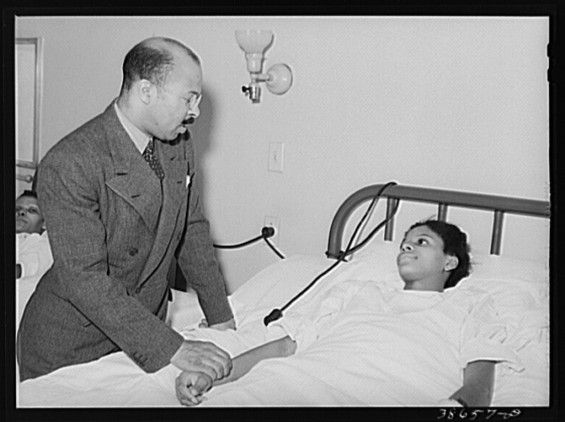
“Nobody wants to be an emergency at Harlem Hospital but if the Negro surgeon is visiting, pride cuts down the pain.”  Author Toni Morrison was alluding to the scarcity of Black physicians in 1926 (Jazz, 1992). Kareem Abdul-Jabbar took similar note almost 100 years later.

The basketball legend pointed out that, “Black babies survive more often under the care of Black doctors than white …  Black people have a reasonable trust issue with the medical profession dating back to the Tuskegee Experiment.” He explained that U.S. government physicians, studying the natural progression of syphilis, administered inert material to Black men rather than actually treat them.

He regards U.S. healthcare as a “more insidious and damaging threat to the health, lives, and economic well-being of Black Americans” than police brutality. He indicates that, “Black men have the lowest life expectancy of any demographic group, living an average of 4.5 years less than white men.”

The number of Black physicians is far less than the proportion of Blacks in the U.S. population.  In 2018,  56.2 % of physicians were white,17.1% Asian, 5.8% Hispanic, and 5.0% Black.  White people that year made up 76% of the population; black people, 13%.

Black people’s health suffers. “Racial and ethnic minority physicians are more likely to practice primary care and serve in underserved communities,” says one investigator. Studies show that Black men trust Black doctors more than they do white doctors; communication is more open. According to one overview, preventative care provided by Black physicians resulted in “a 19% reduction in the black-white male gap in cardiovascular mortality and an 8% decline in the black-white male life expectancy gap.”

Black women die at higher rates than white women from various types of cancer and from complications of pregnancy and childbirth. One factor may be their lack of trust in their physicians, especially white physicians. Another may be that not enough Black doctors are studying medicine.

Of all medical students in the early 1960s, only 2% were Blacks; 75% of them attended all-Black Howard and Meharry medical colleges. Then began the era of affirmative action. Theoretically, affirmative action would allow population groups subjected to discrimination to gain equal access to education and employment. Black youths wanting to be doctors would benefit.  

Applied to the process of deciding who should enter medical schools, affirmative action had results.  By 1969 Blacks were 2.7%  of all first-year medical students. The rates varied subsequently from 6.3% in 1974 to 5.7% in 1980, 8.0% in 1996, 7.2% in 2001, and 7.1% in 2018.

Medical schools were accepting Black applicants almost as readily as they did whites. Data from the American Association of Medical Colleges (AAMC) show 43.8% of the Black applicants being admitted in 1973, 37.6% in 1977, 50.3% in 1989, and 42.6% in 2001. Acceptance rates for whites were 35.8% in 1974, 67% in 1985, 38.5% in 1995, and 51.7% in 2001. The 2019 rates for Blacks and whites were 38% and 45%, respectively.

More Blacks were studying medicine, but not enough to meet affirmative action’s primary goal, which was to match the proportion of Black doctors to the share of Blacks in the general population. Regulation of the admissions process was supposed to have accomplished that.

Entering students, both Black and white, had benefited from favorable family circumstances. They very likely had received encouragement for academic achievement. Their families had provided them with both educational and financial support as they prepared themselves for medical school.

Financial capabilities, of course, are crucial to meet the well-documented high costs of medical education in the United States. Scholarships are in short supply.

Most Black young people don’t grow up in families able to offer the educational and financial resources required for all kinds of advanced education. Any long-term aspirations may be short-circuited at an early stage. Money is short, and even short-term planning is difficult.

Census Bureau data for 10 years from 2010 on show a yearly average of 36.5% Black children living in poverty, compared with 12.4% of all white children. Public schools that Black children attend are often segregated (still), crowded, and inadequate. Their parents may work at low-pay jobs, if they can find work. Homelessness is common. Parents – sometimes “essential workers” – work irregular hours and are often away from their children. Lives are precarious.

These children and their families would have had to move mountains for young people in their circumstances to gain a medical education. They represent a different Black population from the population group that does send Black students to medical schools. 

Data provided the present writer by the AAMC in 2002 is revealing. Parents of all U. S. first-year medical students between 1990 and 2000 provided the AAMC with information. They numbered 11,515 mothers and 11,203 fathers of Black students and 110,587 mothers and 110,315 fathers of white students.

The median yearly income for Black families was $49,000; for all Black families, $29,114. Half the fathers of the Black medical students had completed college; 25% of both fathers and mothers had obtained master’s degree. Half the mothers had attended college. Only 13% of all Black men and 13.6% of all Black women had completed college.

A divide stands between those Black students who have been able to study medicine and the unprepared group of young people who never made the attempt. The two groups are divided by social class. Being a doctor is not in the cards for the great majority of Black working-class children. That’s true also, it must be added, for white young people of working-class origin.

Public health experts Magnus and Mick argued convincingly in 2001 that affirmative action was not equipped to target social and economic discrimination. And so, the vast majority of working-class Black young people are still unable to attend medical school. However, to imagine that affirmative action might have been programed to allow them to attend would be wishful thinking. What’s required, it seems here, is overhaul of an unjust, discriminatory society.

Meanwhile, more Black women are studying medicine than Black men.  In 2018, 60.8% of entering Black medical students were female. Male and female white students were divided more or less equally. What accounts for the disparity? Is it a problem?

At issue is another imbalance, also with adverse consequences.  Kareem Abdul-Jabbar mentions both Black people’s diminished trust in white physicians and a shorter- life span for Black men than for white men. To the extent that Black men bestow more trust in the male doctors caring for them than they do in female doctors, then surely, it’s a problem.

Kerala Communists Serve the People, Look to Youth and Women, by Tom Whitney

Kerala, a state in India, is a bizarre anomaly among developing nations … Kerala has a population as big as California’s and a per capita annual income of less than $300. But its infant mortality rate is very low, its literacy rate among the highest on Earth … Though mostly a land of paddy-covered plains, statistically Kerala stands out as the Mount Everest of social development” – Bill McKibben, environmentalist and author

At 21 years of age, Arya Rajendran is barely eligible to vote. Nevertheless, she is now the mayor of Kerala’s capital city Thiruvananthapuram, population 2,585,000. She is a second-year student at All Saints College. She concentrates in math.

Youngest Mayor from Kerala Capital

Rajendran told a reporter that,  

“From the time I remember my childhood, I was going to Balasangham. … I am now the State President for Balasingham. I am also the Students Federation of India state committee member. My parents are branch committee members of CPI(M). And we firmly believe in what the party stands for.” Balasingham is the youth organization of the Communist Party of India, Marxist – the CPI(M).

In early December, Arya Rajendran was the candidate of Left Democratic Front (LDF) as voting took place in Mudavanmughal ward for the city council. She won 2,872 votes, 549 more than the candidate for the United Democratic Front (UDF), a coalition led by India’s National Congress political party. The CPI(M) is by far the largest force in the LDF, which also includes the Communist Party of India (CPI) and smaller leftist parties.

In city-wide voting, LDF candidates won 51 of the city council’s 100 seats. The council chooses the city’s mayor, and the CPI (M) district committee named Arya Rajendran as the LDF candidate for that office. Gaining the votes of 54 councilpersons on December 28, Rajendra became India’s youngest mayor.

The LDF government in Kerala in 2009 determined that women shall make up at least 50% of elected officials at every level of government. The CPI(M) in Kerala recently took steps to encourage young people to run for political office. One women, 22 years old and a candidate in the  in the local elections, stated that, “In Thiruvananthapuram, 66 per cent of CPI(M)’s candidates are women. Five of them are below 25 years of age. This is a party with a difference.” 

The CPI(M) – led government in Kerala is riding on a wave of good will   following success in organizing life-saving relief after massive floods in 2018 and dealing with outbreaks of the lethal Nipah virus in 2018 and 2019 and the Covid-19 pandemic recently.

Communist – led governments have held power intermittently in Kerala since 1957. That year the CPI gained political control through electoral victory – one of the world’s first socialist political parties to do so – and was immediately removed by India’s central government because of turbulence associated with land reform efforts.

Even so, the CPI retained a strong presence in Kerala during the 1960s.  From then on, however, the new CPI(M) has regularly won state elections as the dominant partner in the LDF coalition. Leadership of the state has alternated between the CPI(M) and India’s National Congress Party, leader of the UDF coalition.  The current LDF government, in office since 2016, will gain a new term if the LDF is victorious in state-assembly elections set for May, 2021.

CPI dissidents formed the CPI(M) in 1964. They were protesting both CPI collaboration with the Congress Party, viewed as serving business interests, and CPI affinity with the Soviet Union. In concert with Chinese Communists, the CPI(M) objected to the Soviet Union’s turn to “peaceful coexistence” with capitalist powers.

The CPI(M) held power in West Bengal state from 1977 until 2011 and in the small state of Tripura intermittently from 1978 until 2018. The Party claimed a national membership of 10,000,520 in 2018.

Kerala governments headed by the CPI(M) instituted social and economic reforms starting with equitable use of land and continuing   with improved access to healthcare and education and programs of social rescue.  Reforms introduced by LDF governments stayed mostly intact during periods of the opposition coalition being in power

Communist reformers in Kerala had the advantage of rudimentary social reforms already in place prior to national independence in 1947. The principalities of Travancore and Cochin, converted into Kerala state in 1956, had avoided some of the depredations of British colonialism, and officials there had collaborated with missionaries and eventually with international aid agencies.  

The new Kerala government quickly integrated illness and preventative care into a single health services agency. It prioritized planning capabilities, attended to urgent healthcare needs in rural areas, and gradually built a system of primary health care that’s been crucial to Kerala’s healthcare achievements.  

Kerala’s Centre for Development Studies, established in 1970 and assisted by the United Nations, has guided efforts of government planners, politicians, healthcare providers, and educators. Teachers and researchers there did much to shape what’s known as the “Kerala model” of development, which implies: high “material quality of life” despite low per-capita income, “wealth and redistribution programs,” and “High levels of political participation and activism among ordinary people.”

Kerala’s government in the mid-1990s decentralized planning and policy-making for healthcare and education; many responsibilities were transferred to local political authorities. According to a report released in 2014, “In 2011, Kerala attained the highest Human Development Index of all Indian states.”  Markers included: 

  • Infant mortality rate of 12 per 1,000 live births in Kerala vs. 40 per 1,000 live births in India
  • Maternal mortality ratio of 66 per 100,000 live births in Kerala vs. 178 per 100,000 live births in India
  • Male literacy – 96% in Kerala vs. 82% in India; female literacy – 92% in Kerala vs. 65% in India 

U.S. Communist, author, and veteran trade unionist Beatrice Lumpkin was a math teacher. She recently extolled the performance of K. K. Shailaja, Kerala’s Minister of Health and Social Welfare, as she took on the Covid-19 Pandemic. The minister is a member of the Central Committee of the CPI(M) and formerly a physics teacher.

Ms. Lumpkin recalls that she “was invited to attend the conference of mathematics teachers in Kerala,” adding that, “To reach Kerala, I overnighted in Mumbai to change planes. In Mumbai, I saw many families living on the sidewalk, with at most a lean-to over their heads. It was a school day, but school-age children were on the sidewalk, with their families … In my two weeks in Kerala, I walked and rode all around the streets of the Kerala capital city of Thiruvananthapuram and never saw anyone living on the streets. In answer to my question my hosts said, ‘You don’t see any homeless because we had a land reform in Kerala. Everybody owns a piece of land, no matter how small.’”