Jesús Santrich explored utopian origins of Marxist and Bolivarian ideologies / by W.T. Whitney, Jr.

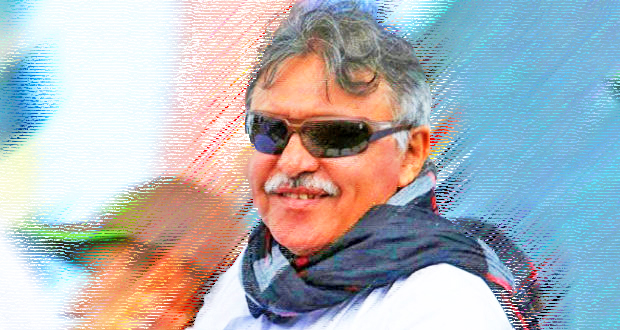
Colombian Army commandos on May 17, 2021 killed Jesús Santrich, a 30 -year veteran of the Revolutionary Armed Forces of Colombia (FARC). The ambush took place in Zulia Province, in northeastern Venezuela; six others died.  Santrich was a spokesperson for the FARC negotiating team in the talks in Havana with Colombia’s government that led to a peace agreement in 2016.

Because former FARC combatants were being killed despite the Agreement and because Colombia’s government and US agents were trying to extradite him to the United States on drug charges, Santrich went into hiding in 2019. He joined the “Second Marquetalia” offshoot of the original FARC insurgency, which was returning to armed conflict.

Santrich’s  22-page essay, written in 2009 in honor of legendary FARC commander Manuel Marulanda, carries the title:  “Bolivarianism and Marxism – a Commitment to the Impossible” (Bolivarismo y marxismo, un compromiso con lo imposible.) Santrich examines the utopian underpinnings of the Marxist movement and the liberation struggles of Simón Bolívar.

With his essay, Santrich challenges our own modes of anti-imperialist struggle and of creating socialism, impeded in both instances, we suggest, by a lack of long-term, visionary aspirations. That’s clear, for example, in the blunted response of progressives and radicals to recent developments in U.S. hybrid war involving Colombia, Haiti, and Cuba. With an expansive view, Santrich insists upon political leadership and political mobilization that attend to the future, embrace great purposes, and fight with determination and commitment.

His words

In his essay, Santrich writes about Simon Bolivar; the fight for independence from Spain; the FARC’s early years; leadership qualities of Manuel Marulanda, pioneer socialists of the French Revolution; Bolivar’s teacher Simón Rodríguez, an early socialist; and more. Along the way, Santrich provides ideas that, taken seriously, might greatly strengthen the revolutionary project in our own era.

For example: “Marxists must keep utopia foremost in their consciousness. It drives mass actions. They must assume that a revolutionary movement, whatever its origins, doesn’t qualify as such if it lacks that component manifesting as irrepressible effort towards change categorized as “impossible.” But utopia must always take off from a basis in realty. We humans have the duty to regard the world we want as another world that’s possible. Paraphrasing Bolívar, we are looking for the “impossible,” while leaving the possible up to everyone else, every day …

He continues: “To declare oneself Bolivarian and, as such, declare oneself a revolutionary on the Marxist path implies lifelong motivation derived from the hope of transforming society and finding justice. This is a constant and is strong enough with its broad vision as to point to utopia as a characteristic of political consciousness and the natural result of rational belief.”

He adds: “Utopia is a higher goal of commitment. That’s so because even at the beginning, the matter of possibility or impossibility is already uncertain due to extreme difficulties ahead, or uncertain survival of purpose as historical implementation evolves. But like history itself, utopia does not end.”

Moreover, “In the hopeful quest for realization of the “impossible,” the process calls upon a mixture of illusions, realism, magic, and love for people as a reason for life … The essential interest of the utopian is preservation of man and nature in absolute equilibrium, thus displaying the potentials of historical memory, faith, dignity, and our identity as vital factors for existence.

Confronting oppression and marching on the path of utopia, the revolutionary no longer is resigned. He or she is unconditionally, permanently, and creatively committed to the poor people of the world … Let’s say then that the Marxist-Bolivarian idea of a revolutionary is of someone who fixes on an ideology that, while encompassing reality, is not yet solidified and is perhaps uncertain. The goal is set of becoming absolutely convinced that this reality will be fulfilled, “impossible” though it may seem….

“The author of the Communist Manifesto, appealing to selfless purpose, was calling for struggle offering the possibility of risks. … Marx was calling for action needing to pass a test of fire in the face of historical commitment prompted by circumstances, even at the risk of death. He was clarifying a concept of living, whose own ethics intermeshed with the dialectics of reality that was moving, but always toward the future. …”

Santrich goes farther afield: “This kind of thinking envisions Marxists and Bolivarians alike as rising up, in our world, to the level of magical realism. And why not? Magical realism goes beyond mere rationalism. We have symbols, imagination, and creativity – all based on rich traditions rooted in indigenous experience in the Americas. It’s founded also on the syncretism of our mixed and oppressed mestizo peoples. Playing out, this proposition looks toward installing social justice, that is to say, accomplishes what’s ideal for the benefit of humankind.”

The stakes are high:“Perhaps one of the most fateful legacies for revolutionaries is apprehension on facing the danger that imperialism poses for the very existence of the planet with its catastrophic kind of developmentalism. In the face of great challenges, great resolve is necessary, really a triple boldness: action that overcomes determinism; recovery of the role of subjectivity, passion, audacity, and recklessness; and faith in the initiative of the masses, as they face the immediate prospect of “defeat.” In such circumstances, uncertainty and silence are worth nothing. …

What’s in play is the very survival of the human species, of life, of nature in general, all put at risk through the destructive power of capitalism. But we will not idle around patiently waiting for an automatic end to capitalism and for a communist alternative automatically to flourish. Humanity’s conscious intervention is necessary. It’s our immediate duty. Revolutionaries must connect utopia with liberation practice, at whatever cost …”

Meanwhile, on the ground

Next on our agenda is a survey of recent developments in Haiti, Colombia, and Cuba that are significant for the weak response they generated from anti-imperialists. Fragmentation and dwarfed ambitions seem to have paralyzed their fight against exploitation, plunder and militarization. We think the far-reaching aspirations of Santrich point to the alternative approach we need.

President Jovenal Moïse of Haiti was assassinated on July 7, presumably the result of rivalry among Haitian oligarchs, encouraged perhaps by leaders in Washington. All but two of the 28 perpetrators were former Colombian army regulars, now employed as mercenary soldiers. Many had received U.S. training. Colombia mercenaries have engaged militarily in the United Arab Emirates, Yemen, Afghanistan and Dubai, Honduras, Venezuela and elsewhere.

CTU Security, a Florida company owned by right-wing Venezuelan émigre Antonio Intriago arranged for the assassination.  Miami – based Intriago has ties to regressive Colombian President Ivan Duque; to Juan Guaidó, the U. S. puppet  president of Venezuela; and to Christian Sanon, a Haitian physician living in Florida and seeking to be president of Haiti. Intriago’s company in 2018 carried out a drone attack against Venezuelan President Nicolas Maduro.

The Cessna four-passenger plane owned by Helidosa company in the Dominican Republic is emblematic of imperialism’s convoluted presence in the region.  Intriago, Sanon, and two others traveled to Haiti on that plane to be on hand at the assassination. After surgical care in Florida for wounds suffered during the attack, Martine Moïse, the assassinated president’s widow, returned to Haiti on the same airplane. In 2019, it transported right-wing Venezuelans to Barbados for negotiations with President Nicolas Maduro’s representatives, and did so again the following year with Juan Guaidó aboard.

The U.S. blockade of Cuba comes into view. Campaigning in 2020, President Biden assured voters he would ease blockade-related restrictions on Cuba imposed by Donald Trump. Biden has added new sanctions. For 60 years, the U.S. government has blockaded Cuba in order to cause suffering there. Suffering is mounting now due to sanctions and adverse health and economic effects of the Covid-19 pandemic

On July 27 Biden met with Cuban-American elected officials in his office. He stated that, “I want Cuban Americans to know that we … hear the cries of freedom coming from the island … We’ve brought to bear the strength of our diplomacy, rallying nations to speak out and increase pressure on the regime.”

Correlations

The opportunistic Biden seeks electoral advantage in Florida. Bipartisan consensus remains as to replacing Cuba’s government. Opposition to the blockade is at the margins of U.S. politics.  No U.S. hand or hierarchy of control is evident in the assassination of Haiti’s president. Marking both cases is a mélange of private interests, transactional relationships, and profit-making opportunities.

The unpleasant details reported here likely will soon be forgotten. Many already distracted and pessimistic progressives probably prefer not to be reminded of politicians’ corrupt and faked behavioral patterns.

It could have been otherwise. A narrative might have been developed that, absorbing the incidents noted here, might have contributed to shaping a powerful indictment against the power structures. That in turn might have helped set the stage for a return of sustained political counter-attack – if, that is, a large and powerful movement actually existed.

That’s the contribution of Jesús Santrich. He traces out characteristics of political leadership and permanent mobilization needed now for fightback and revolutionary optimism. His prescription calls for a movement that satisfies the subjective needs of oppressed peoples. License would be created for great longings and dreams of fulfillment, for these to be normalized.

Santrich draws upon a world that now for many is off-limits. We honor his contribution, a rarity, as it seems, in our own time. But he is not alone. We remember:

Karl Marx, The Civil War in France, 1871 – “The Commune, they explain, intends to abolish property, the basis of all civilization!… Yes, gentlemen, the Commune [aims] at the expropriation of the expropriators … But this is communism, “impossible communism! …  [But] “if cooperative production is not to remain a sham and a snare; if it is to supersede the capitalist system …[W]hat else, gentlemen, would it be but communism, “possible” communism.”

José Mariátegui, founder of the Peruvian Communist Party, 1928 – “We certainly don’t want socialism in America to be a copy or tracing. It must be a heroic creation. We have to give life to Indian-American socialism with our own reality, in our own language.”

Ernesto Che Guevara, Socialism and Man in Cuba, 1965 – “[I]n moments of great peril it is easy to muster a powerful response with moral incentives. Retaining their effectiveness, however, requires the development of a consciousness in which there is a new scale of values. Society as a whole must be converted into a gigantic school.”

Fidel Castro (as recalled by Raul Castro) – “in the mountains of the Sierra Maestra, on Dec. 18, [1956], with seven rifles and a fist full of combatants, [he] stated, ’Now we have won the war!’”

Author: W.T. Whitney Jr. is a political journalist whose focus is on Latin America, health care, and anti-racism. A Cuba solidarity activist, he formerly worked as a pediatrician, lives in rural Maine.

The author translated the excerpts appearing here. Santrich’s entire essay may be read, in Spanish, at https://rebelion.org/bolivarismo-y-marxismo-un-compromiso-con-lo-imposible/

Source: Marxism-Leninism Today / The Electronic Journal of Marxist-Leninist Thought, Aug 15, 2021  | https://mltoday.com/jesus-santrich-outlines-the-utopian-fundamentals-of-marxist-and-bolivarian-ideologies/

Report from Maine: End the US Blockade against Cuba Now!

By W. T. Whitney Jr

The two struggles have continued for decades, even centuries. Cubans fight to end slavery; gain independence from Spain and the United States; and, for 60 years, protect their socialist revolution. Ruling classes in the United States sought to annex Cuba, then to control Cuba’s economy, and for those 60 years have clamped down on the audacity of Cubans who struggle for independence and socialism.

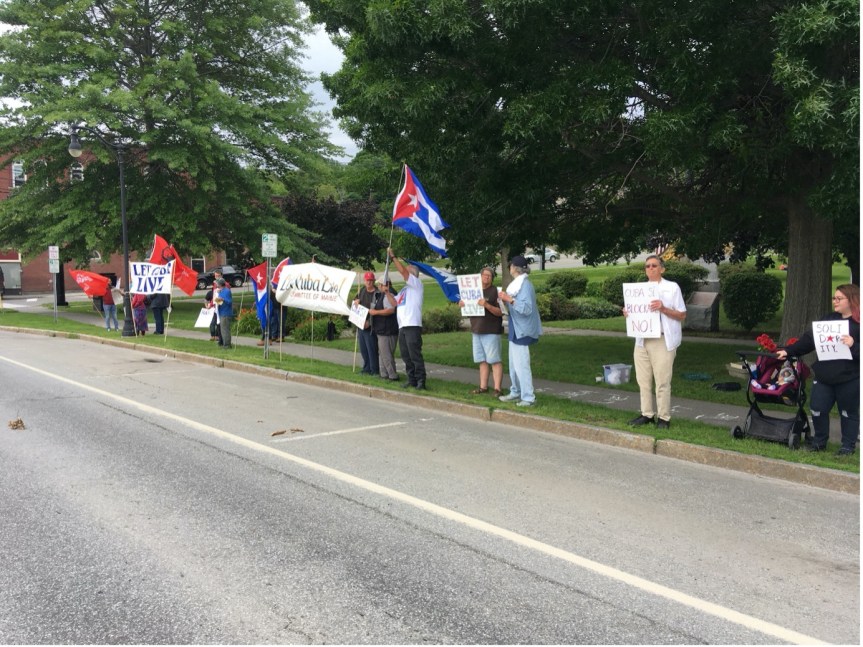
Justice-seeking peoples in the United States have joined in struggle to defend Cuban independence and/or Cuba’s revolution. This report from Maine takes note of two rainy day rallies on July 25, each of 25 or so people and each one held in protest of the U.S. blockade of Cuba. One was in Bangor, the other in Brunswick.

These protesters and other Maine people know that the blockade is purposed to overthrow of Cuba’s socialist government.  The author of a 1960 State Department memo – born in Houlton, Maine – made that perfectly clear.

These Mainers were joining in solidarity with demonstrations carried out on July 25 throughout the United States, for example, in Washington, Seattle, San Francisco, Fresno, Los Angeles, Phoenix, Albuquerque, Dallas, Milwaukee, and Pittsburgh. In Washington, Cuban-Americans calling for Puentes de Amor (Bridges of Love) gathered with supporters in Lafayette Park to protest the blockade. They had walked from Miami to Washington.

Lots of Maine people know that Cuba is at another watershed moment. Many recall the onset in the early 1990s of Cuba’s “Special Period,” which was resulted from the fall of the Soviet Bloc. The powers in Washington at that time sought to finish off Cuba’s revolution. The “Cuba Democracy Act” of 1992 was their big tool.

Similarly, the Biden presidency now takes advantage of three phenomena: economic and healthcare havoc wrought by the Covid 19 pandemic, the Trump administration’s intensified blockade restrictions, and mounting shortages in Cuba of money and goods essential for human survival.

Now Biden inveighs against supposed autocracy in Cuba. His administration remains silent when elected officials viciously threaten Cuban leaders. He and they follow a script fitted out for anti-government demonstrations like the ones playing out in Cuba on July 11. These surely reflected U.S. financial support provided over decades for internal subversion in Cuba. Accompanying them was a massive social-media assault against Cuba’s government orchestrated from abroad.

U.S. media have long cast a blind eye to the political movements in the United States mobilized on behalf of Cuban independence and Cuba’s revolution. Those rallying in Maine on July 25 were testifying to their relevance now.

In 1992, at the beginning of Cuba’s Special Period, veteran Maine activists traveled to the island. Sensing big troubles ahead for Cuba at the hands of the U.S. government, they formed the Let Cuba Live Committee of Maine. The new organization undertook to educate and activate fellow Mainers.

Let Cuba Live arranged for the Pastors for Peace leader Rev. Lucius Walker Jr, to speak before a large crowd in Monument Square, in Portland, Maine on July 21, 2001 – 20 years and four days prior to the protests reported here.

“In issue after issue, in area after area, Cuba lights the way,” Lucius Walker insisted; “Cuba has established the fact that it is the leader in the world community in the affirming of and guaranteeing the rights of the poor people of this world.”

That was not news for the ruling classes in the United States for whom revolutionary Cuba was a threat. Therefore, as pointed out by Lucius Walker: “if we really want to see the world continue to have hope and possibility for the creation of a new society, we must support Cuba.”

Let Cuba Live of Maine – see www.letcubelive.org – admits to gratification.  The slogan that is the group’s name now resonates widely. It’s the title of an appeal to President Biden that, endorsed by 400 prominent activists, may be viewed in a full-page advertisement appearing in the July 23 New York Times. To see the open letter to Biden, go to www.LetCubaLive.com.

The twin rallies putting forth the demand of no more blockade broke new ground in Maine.  They gained support from multiple statewide organizations that oppose U.S. imperialism and war-making and/or try to make good on socialist aspirations.

What follows are excerpts from remarks offered by some of the rally participants at talk-sessions that concluded the two affairs.  A listing appears below of the organizations claiming commentators and many participants as members.

Here’s Barbara West: “We are not gathered today simply to demand a reduction in the criminal measures the US has taken against Cuba for 61 years.  We are here to insist on respect for Cuba as a sovereign country … We insist that land in Guantanamo occupied in defiance of the Cuban people be vacated. … Our respect for Cuba as a sovereign nation, with its people fully able to chart their own path without any US interference, is really our agenda today.”

And Michael Mosely: “I do not believe that there is a difference between a Hispanic family in Maine and a Hispanic family in Cuba. Just like there is no difference between a Black family in Maine and a Black family in Africa. We are all under the same system fighting the same fight.”

And Daniel Carson: “In the over six decades that the United States has enforced such a cruel blockade, the Cuban government has reported that economic losses resulting directly from the blockade total $144.4 billion dollars. These figures are those of 2020. Excluded is an additional $5.4 billion in economic losses this year. When adjusted for dollar depreciation over the life of the blockade the number becomes $1.098 trillion … So when [U. S. leaders] proclaim Cuba to be a failed state or that the Cuban revolution has failed: this is a bold-faced lie. The truth lies in those numbers. That’s why we are here today to say, “End the blockade!”

And Bruce Gagnon: “The US has an MO (modus operandi), a way of repeating its regime change behavior as it desperately attempts to hang-on to its place as ‘king of the hill’. But due to $27 trillion in debt, more than 800 costly military bases around the world, and long-time disinvestment in our own nation, America’s ‘imperial project’ is destined to collapse. US efforts to force regime change in Cuba – like in Nicaragua, Venezuela, Bolivia and other nations – are destined to fail.”

And Ed Jurenas: “When the U.S. talks about democracy, it is hypocritical. It does not support the most basic democratic right to self-determination, but viciously opposes it. And in regard to the economic democracy championed by Cuba – free health care, free education, a right to housing, the just distribution of food – the U.S. is silent in its shame. Cuba ascribes to economic democracy, something the U.S. is incapable of practicing.”

Most of the participants in the Maine rallies belonged to one or more of these organizations: the Let Cuba Live Committee of Maine, The Global Network Against Weapons & Nuclear Power in Space, Maine Veterans for Peace, Maine Socialist Action, Maine Democratic Socialists of America, and the Maine Communist Party. The latter group had responsibility for organizing the rallies.

Lucius Walker has the last word (July 21, 2001): “We must name the powers. We must stand against the powers. And we must realize that in the course of doing so, we wrestle not just with flesh and blood, but with principalities and powers, against spiritual wickedness in high places. We cannot be deterred because they say evil things about us, because they revile us, because they put us in jail. We must continue to march, to work, to struggle, to be in solidarity no matter what obstacles they put in our way, because we are the future hope of the world! “

Report from Maine: End the US Blockade against Cuba Now!

By W. T. Whitney Jr

The two struggles have continued for decades, even centuries. Cubans fight to end slavery; gain independence from Spain and the United States; and, for 60 years, protect their socialist revolution. Ruling classes in the United States sought to annex Cuba, then to control Cuba’s economy, and for those 60 years have clamped down on the audacity of Cubans who struggle for independence and socialism.

Justice-seeking peoples in the United States have joined in struggle to defend Cuban independence and/or Cuba’s revolution. This report from Maine takes note of two rainy day rallies on July 25, each of 25 or so people and each one held in protest of the U.S. blockade of Cuba. One was in Bangor, the other in Brunswick.

These protesters and other Maine people know that the blockade is purposed to overthrow of Cuba’s socialist government.  The author of a 1960 State Department memo – born in Houlton, Maine – made that perfectly clear.

These Mainers were joining in solidarity with demonstrations carried out on July 25 throughout the United States, for example, in Washington, Seattle, San Francisco, Fresno, Los Angeles, Phoenix, Albuquerque, Dallas, Milwaukee, and Pittsburgh. In Washington, Cuban-Americans calling for Puentes de Amor (Bridges of Love) gathered with supporters in Lafayette Park to protest the blockade. They had walked from Miami to Washington.

Lots of Maine people know that Cuba is at another watershed moment. Many recall the onset in the early 1990s of Cuba’s “Special Period,” which was resulted from the fall of the Soviet Bloc. The powers in Washington at that time sought to finish off Cuba’s revolution. The “Cuba Democracy Act” of 1992 was their big tool.

Similarly, the Biden presidency now takes advantage of three phenomena: economic and healthcare havoc wrought by the Covid 19 pandemic, the Trump administration’s intensified blockade restrictions, and mounting shortages in Cuba of money and goods essential for human survival.

Now Biden inveighs against supposed autocracy in Cuba. His administration remains silent when elected officials viciously threaten Cuban leaders. He and they follow a script fitted out for anti-government demonstrations like the ones playing out in Cuba on July 11. These surely reflected U.S. financial support provided over decades for internal subversion in Cuba. Accompanying them was a massive social-media assault against Cuba’s government orchestrated from abroad.

U.S. media have long cast a blind eye to the political movements in the United States mobilized on behalf of Cuban independence and Cuba’s revolution. Those rallying in Maine on July 25 were testifying to their relevance now.

In 1992, at the beginning of Cuba’s Special Period, veteran Maine activists traveled to the island. Sensing big troubles ahead for Cuba at the hands of the U.S. government, they formed the Let Cuba Live Committee of Maine. The new organization undertook to educate and activate fellow Mainers.

Let Cuba Live arranged for the Pastors for Peace leader Rev. Lucius Walker Jr, to speak before a large crowd in Monument Square, in Portland, Maine on July 21, 2001 – 20 years and four days prior to the protests reported here.

“In issue after issue, in area after area, Cuba lights the way,” Lucius Walker insisted; “Cuba has established the fact that it is the leader in the world community in the affirming of and guaranteeing the rights of the poor people of this world.”

That was not news for the ruling classes in the United States for whom revolutionary Cuba was a threat. Therefore, as pointed out by Lucius Walker: “if we really want to see the world continue to have hope and possibility for the creation of a new society, we must support Cuba.”

Let Cuba Live of Maine – see www.letcubelive.org – admits to gratification.  The slogan that is the group’s name now resonates widely. It’s the title of an appeal to President Biden that, endorsed by 400 prominent activists, may be viewed in a full-page advertisement appearing in the July 23 New York Times. To see the open letter to Biden, go to www.LetCubaLive.com.

The twin rallies putting forth the demand of no more blockade broke new ground in Maine.  They gained support from multiple statewide organizations that oppose U.S. imperialism and war-making and/or try to make good on socialist aspirations.

What follows are excerpts from remarks offered by some of the rally participants at talk-sessions that concluded the two affairs.  A listing appears below of the organizations claiming commentators and many participants as members.

Here’s Barbara West: “We are not gathered today simply to demand a reduction in the criminal measures the US has taken against Cuba for 61 years.  We are here to insist on respect for Cuba as a sovereign country … We insist that land in Guantanamo occupied in defiance of the Cuban people be vacated. … Our respect for Cuba as a sovereign nation, with its people fully able to chart their own path without any US interference, is really our agenda today.”

And Michael Mosely: “I do not believe that there is a difference between a Hispanic family in Maine and a Hispanic family in Cuba. Just like there is no difference between a Black family in Maine and a Black family in Africa. We are all under the same system fighting the same fight.”

And Daniel Carson: “In the over six decades that the United States has enforced such a cruel blockade, the Cuban government has reported that economic losses resulting directly from the blockade total $144.4 billion dollars. These figures are those of 2020. Excluded is an additional $5.4 billion in economic losses this year. When adjusted for dollar depreciation over the life of the blockade the number becomes $1.098 trillion … So when [U. S. leaders] proclaim Cuba to be a failed state or that the Cuban revolution has failed: this is a bold-faced lie. The truth lies in those numbers. That’s why we are here today to say, “End the blockade!”

And Bruce Gagnon: “The US has an MO (modus operandi), a way of repeating its regime change behavior as it desperately attempts to hang-on to its place as ‘king of the hill’. But due to $27 trillion in debt, more than 800 costly military bases around the world, and long-time disinvestment in our own nation, America’s ‘imperial project’ is destined to collapse. US efforts to force regime change in Cuba – like in Nicaragua, Venezuela, Bolivia and other nations – are destined to fail.”

And Ed Jurenas: “When the U.S. talks about democracy, it is hypocritical. It does not support the most basic democratic right to self-determination, but viciously opposes it. And in regard to the economic democracy championed by Cuba – free health care, free education, a right to housing, the just distribution of food – the U.S. is silent in its shame. Cuba ascribes to economic democracy, something the U.S. is incapable of practicing.”

Most of the participants in the Maine rallies belonged to one or more of these organizations: the Let Cuba Live Committee of Maine, The Global Network Against Weapons & Nuclear Power in Space, Maine Veterans for Peace, Maine Socialist Action, Maine Democratic Socialists of America, and the Maine Communist Party. The latter group had responsibility for organizing the rallies.

Lucius Walker has the last word (July 21, 2001): “We must name the powers. We must stand against the powers. And we must realize that in the course of doing so, we wrestle not just with flesh and blood, but with principalities and powers, against spiritual wickedness in high places. We cannot be deterred because they say evil things about us, because they revile us, because they put us in jail. We must continue to march, to work, to struggle, to be in solidarity no matter what obstacles they put in our way, because we are the future hope of the world! “

Astounding Victory in Peru of Socialist Candidate for President by Tom Whitney

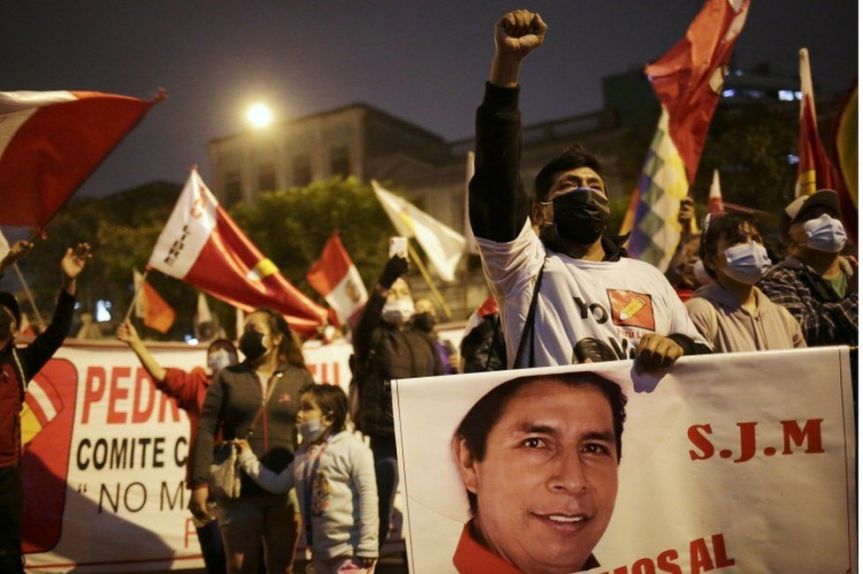
In voting on June 6, Pedro Castillo, candidate of the Perú Libre(Free Peru) political party, defeated three-time presidential candidate Keiko Fujimori, daughter of imprisoned former president Alberto Fujimori. Five days later, with all votes counted, Castillo claimed a victory margin of 69,546 votes, or 50.2 % of the votes. Keiko Fujimori, who gained 49.8% of all votes, is charging fraud and demanding that 200,000 votes from rural areas be recounted.

Castillo’s narrow victory, yet to be officially validated, represents an abrupt shift from Peru’s norm of corruption, right-wing ascendency, and political instability (such that in one week in November 2020, three presidents took office, one after the other.) Castillo’s unexpected first-round victory on April 11, with 18.5% of the votes, was unsettling enough to his competitors that almost all of them backed Keiko Fujimori in the recent voting. Each of Peru’s two Communist parties backed Castillo (as evidenced here and here).

In office, Castillo will face formidable obstacles: a hostile national press, a Congress that overwhelmingly opposes him, business and financial establishments in panic mode, and retired military figures threatening revolt. Additionally, Peru’s total of deaths attributed to climate change is the third highest in Latin America and its rate of deaths due to COVID-19 infection is tops in the world.

Under the auspices of dictator Alberto Fujimori (1990-2000), Peru turned to undiluted neoliberalism characterized by foreign profiteering from mining and oil and gas extraction and by privatization of healthcare and education. A long-established rural-urban gulf widened. Rural disadvantage, affecting Peru’s indigenous population in particular, provided the boost accounting for the victory of Pedro Castillo and his party. 

The divide separates Lima, with 40% of Peru’s population, from rural districts, where Castillo scored overwhelming pluralities, some in the 80-90% range. Political attention to rural life from national centers of power, from Lima, has been sparse. Candidate Fujimori campaigned only fitfully in Peru’s countryside. 

Pedro Castillo, born in 1969 of illiterate parents, has taught in a rural elementary school since 1995. In 2002, he was an unsuccessful mayoral candidate.  Earlier, Castillo had taken a leadership role in autonomous peasant patrols (known as “ronda campesina”) responding to thievery and political turmoil. He gained prominence in 2017 for his part in a teachers’ strike. He and his family operate a small subsistence farm.

The Perú LibreParty, established in 2012, calls for nationalization of extractive industries, a new constitution, and respect for women’s rights, including reproductive rights. It claims to be Marxist, socialist, and anti-imperialist – but not Communist.  Campaigning, Castillo called for “No more poor people in a rich country.” Keiko Fujimori based her campaign on fear as she associated Castillo with terrorism, communism, and Cuban and Venezuelan socialism. She extolled her father’s success in corralling the Shining Path guerrillas.

According to the Party’s website, Perú Libre “originates from the provinces, represents Deep Peru, and is committed to people who are most in need … Perú Libre has governed in the regions and [small] cities … and firmly defends decentralization … We are internationalists … The Party condemns all types of imperialism … interventionism, and foreign dependency.” 

Perú Libre calls for the departure of USAID and closure of U.S. military bases. Castillo supports solidarity alliances such as the Community of Latin American and Caribbean States and the Union of South American Nations.

Vladimir Cerrón, a neurosurgeon educated in Cuba and Peru, founded Perú Libre’s predecessor party in 2012.  He has served as governor of Junim Province, was briefly a presidential candidate in 2016, and continues as Peru Libre’s secretary general. Charged with corruption, Cerrón entered prison in August 2020.  A judge annulled the charges against him on June 9, coincident with the election of Pedro Castillo.

Defeated presidential candidate Keiko Fujimori was imprisoned briefly in 2018 on charges of taking bribes from Brazil’s Odebretch corporation to finance her presidential run in 2011. Presently she is under investigation on charges of money-laundering and obstruction of justice. From age 19 on, she served as “first lady” for her father who, having abandoned his presidency in 2000, is serving a 25-year presidential term on charges of corruption and human rights abuses.

The Perú Libre Party adopted the thinking of José Carlos Mariátegui, founder in 1928 of Peru’s Communist Party. Mariátegui endeavored to adapt Marxist thought to the rural and indigenous realities of Latin America.  As explained by Gilberto Calil, whose report appears on rebelion.org, Mariátegui held that Peru’s elite, concentrated in Lima, despised and oppressed indigenous peoples. The divide was such, according to Mariátegui, that Peru lacked a “national project” and a bourgeois revolution. Only indigenous peoples based on the land were potentially ready to advance social and democratic demands.

Mariátegui insisted that any socialist revolution in Peru and Latin America would have rural and indigenous origins. Accordingly, Calil regards Perú Libre’s program as “coherent … in centering on concrete demands of Peru’s rural population: agrarian reform, social rights, education and healthcare.”

Photo: Pedro Castillo’s supporters took to the streets in the capital, Lima. From: Reuters.

U.S. Imperialists Deprive Cuba of Syringes That Are Needed Now, by Tom Whitney

Editorial note

US stubbornness in hanging on to its economic blockade against Cuba annoys us. Sixty years is enough, don’t you think? We are joining the Let Cuba Live Committee of Maine as it collaborates with IFCO/Pastors for Peace of New York in the project of that group heading to Cuba this Fall.

Pastors for Peace will be taking aid material to Cuba and visiting there, both against US rules for its blockade. We want some Maine people once more to be on this trip.

Every year, for 30 years, these two groups undertake civil disobedience in order to mobilize wider support for ending a policy that, by any definition, is cruel, immoral, and illegal.

Go to these websites to learn more: www.letcubalive.org and   https://ifconews.org/.

The article below reviews aspects of this grim situation and reports on a new horror. We also post the CPUSA’s recent condemnation of President Biden’s failure to remove Cuba from the US list of terrorist sponsoring nations. Your dog presents as much national threat as does Cuba.

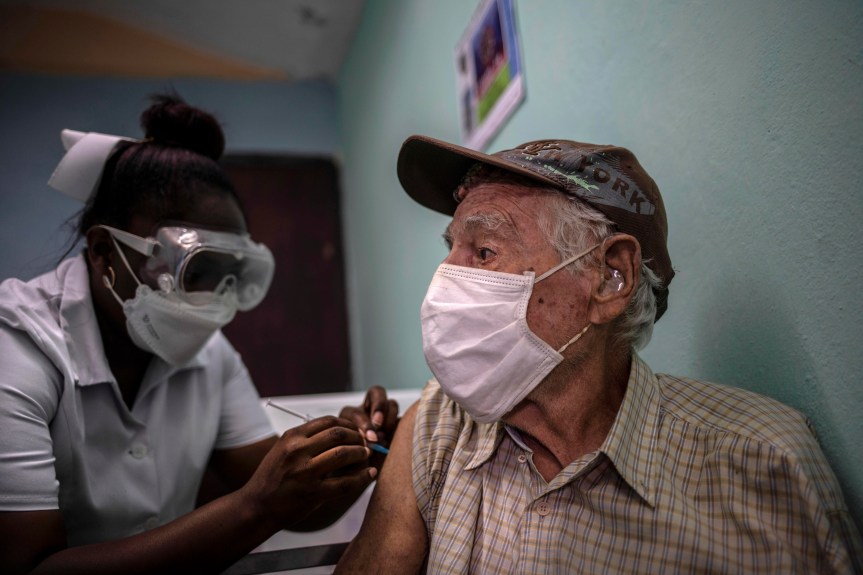
Cuba, the first Latin America country to develop its own COVID-19 vaccines, presently is short of syringes for immunizing its population against the virus. It’s not feasible for Cuba to make its own syringes. The U.S. blockade prevents Cuba from importing them from abroad.

Syringes are lacking all over. The New York Times estimates an overall need of between “eight billion and 10 billion syringes for Covid-19 vaccinations alone.” Manufacturing capabilities are increasing, but that’s of no use to Cuba. 

According to Global Health Partners,Cuba needs roughly 30 million syringes for their mass Covid vaccination campaign and they’re short 20 million.” Solidarity organizations are seeking donated funds to buy syringes and ship them to Cuba. (Readers may donate by contacting Global Health Partners or visiting here.) 

The shortage of syringes poses great hardship for the Cuban people. That’s not new. Calling for economic blockade in 1960, State Department official Lester Mallory was confident that making Cubans suffer would push them toward overthrowing their government.

The U.S. blockade causes shortages of basic materials. Buses lack fuel and spare parts; bus routes have been dropped. Food supplies are precarious. Cuban laboratories and production facilities have developed five kinds of COVID-19 vaccines despite short supplies of reagents and laboratory materials. 

Cuba can’t buy ventilators needed for critically ill COVID-19 patients. Two Swiss manufacturers stopped selling ventilators to Cuba after a U. S. company purchased them. But Cuban technicians devised their own ventilator model which is in production now.

The impact of the blockade is by no means haphazard. Institutionalized processes aimed at asserting U.S. domination involve laws, administrative decrees, regulations, officials’ interpretations of regulations, and caution on the part of third-country traders and financiers.

Authority for the ban on U.S. sales of goods to Cuba stems from legislation accumulating over many years. Then the Cuba Democracy Act of 1992 ensnared foreign companies into the blockade system. That law authorized the Treasury Department to license the foreign subsidiaries of U.S. corporations to export goods to Cuba. It actually created an opening for almost all applications for licensure to be denied.

Since then, the Treasury Department’s Office of Foreign Assets Control (OFAC), enforcer of the blockade, has found leeway to regulate the foreign corporations themselves. Foreign corporations contemplating sales to Cuba contend with U.S. sanctions if they have branches in the United States, partner with U.S. corporations, or handle U.S. dollars.

Most of the world’s syringes are manufactured by three U.S. companies and five companies elsewhere. Each of the latter has ties with a U.S. entity and is prohibited from exporting syringes to Cuba

For example, Germany’s B. Braun Melsungen Corporation partners with Concordance Healthcare Solutions, “one of the largest independent, healthcare distributors in the U.S.” Tokyo-based Terumo Corporation has a headquarters in New Jersey. Osaka-based Nipro Corporation recently “announce[d] the creation of a Vascular Division in the U.S.” “Healthcare heavyweight Cardinal Health” is headquartered in both Ireland and the United States.

Hindustan Syringes and Medical Devices, in India, came under OFAC purview  in January 2021 by virtue of associating with Envigo Global Products as its “digital marketing partner.” Envigo is headquartered in Indianapolis.

Officers of foreign companies presumably seek legal advice. One lawyers’ group maintains that, “OFAC has long held that if a non-U.S. company engages in business transactions in U.S. dollars, the foreign party is availing itself of the U.S. financial system and hence becomes subject to the U.S. sanctions laws.”

Another indicates sanctions are likely, if “the foreign party has a requisite level of contacts with the U.S., such as engaging [with] U.S. products, software or technology.” The National Law Review recommends that, “Foreign companies … need to be aware of board members, directors, or employees who hold U.S. citizenship or U.S. green cards.”

President Barack Obama eased many blockade regulations and re-established U. S. diplomatic relations with Cuba. He never pushed to end the blockade. The Biden Administration chooses not to prioritize improved relations with Cuba. Biden recently upheld the Trump Administration’s reassignment of Cuba to the U.S. list of terrorist-sponsoring nations.

The Helms-Burton Law of 1996 required, for the first time, that Congress determine the fate of the blockade. Except for legislation in 2000 allowing U.S. food products to be exported to Cuba, Congress has protected that policy. 

In February Oregon Senator Ron Wyden introduced his “United States-Cuba Trade Act of 2021,” which would end the blockade. The bill has four co-sponsors. SenatorsAmy Klobuchar of Minnesota, Jerry Moran of Kansas, and Patrick Leahy of Vermont on May 20 reintroduced the “Freedom to Export to Cuba Act.” That bill would facilitate U.S. exports to Cuba, especially agricultural products; allow some Cuban goods to enter the United States; and would retain sanctions imposed because of alleged human rights violations.

In March, 80 congresspersons sent a letter to President Biden urging him to use executive action to reverse restrictions imposed by President Trump.

The U.S. economic blockade of Cuba is calculated, systematic, all-encompassing, and savage. Opponents offer varying pleas. For some, the blockade is cruel and illegal. Others call for defending Cuba, because it’s a model both of human solidarity and of how to provide health care and education. Many insist on respect for Cuba’s sovereignty.

These arguments are disconnected, one from the other.  Blockade critics appear to lack a central focus on root causes. Having such would be essential, it seems, for fashioning a cohesive strategy. Were that in place, new possibilities might exist for recruitment and unity. Anti-racism struggle in the United States displays similar dynamics, and maybe offers lessons.

Reacting to various symptoms of oppression, defenders of racial equality have gone from pillar to post opposing police killings, an unjust criminal justice system, and Black people’s high poverty and death rates. Now, increasingly, analysts link manifestations of racial oppression with durable systems of repression involving capitalism. Writing about a notorious slave-trading firm, historian Joshua Rothman captures that association in the title of his new book, The Ledger and the Chain.

Similarly, if the campaign against the blockade paid more attention to the long history of U. S. ambition to dominate Cuba, it might gain strength by going to the heart of the matter. The premise would be that the European powers and the United States have long sought to draw Cuba and other dependent Latin American territories into their capitalist orbit.

The syringe story reflects U.S schemes in the 19th century to absorb Cuba, U.S. control of Cuba after Spain’s departure in 1902, and U.S. determination after 1959 to restore hegemony lost to the Revolution.

Chile’s Neoliberal nightmare, New Constitution, and Daniel Jadue, by Tom Whitney

Working and marginalized people in Chile can now see possibilities of relief from the political grief of decades.  A new constitution is in the works. And Daniel Jadue, author of an astonishingly progressive program as mayor of Rocoleta municipality, is a presidential candidate. The election is set for November 21, 2021.

Chileans will vote on May15-16 to select 155 members of a constitutional convention. They will also choose city council members, mayors and governors. The vote comes after months of political turbulence. Repeating anti-government demonstrations on a massive scale beginning in October 2019 persuaded the rightwing government of billionaire President Sabastian Pinero, and military leaders, that for the sake of peace in the streets they had better plan for a new Constitution.

After pandemic-related delay, the process started in October 2020 with a plebiscite for approving the convention. The next step, again delayed by the pandemic, is voting in May to select the convention delegates. 

The Communist Party’s electoral coalition, carrying the name Worthy, Green, and Sovereign Chile, Worthy Chile for short, has arranged with the center-left Broad Front coalition to jointly select the leftist candidate delegates to the convention. This will be Chile’s first constitutional convention with delegates being chosen by popular vote. Fifty percent of them will be women. 

Many leftists complain that the convention’s requirement for a two-thirds majority to approve constitutional provisions is a threshold so high as to stymy progressive change. Many are displeased that most delegates are tied to political parties, which are widely distrusted in Chile. They would have preferred more delegates representing social movements.

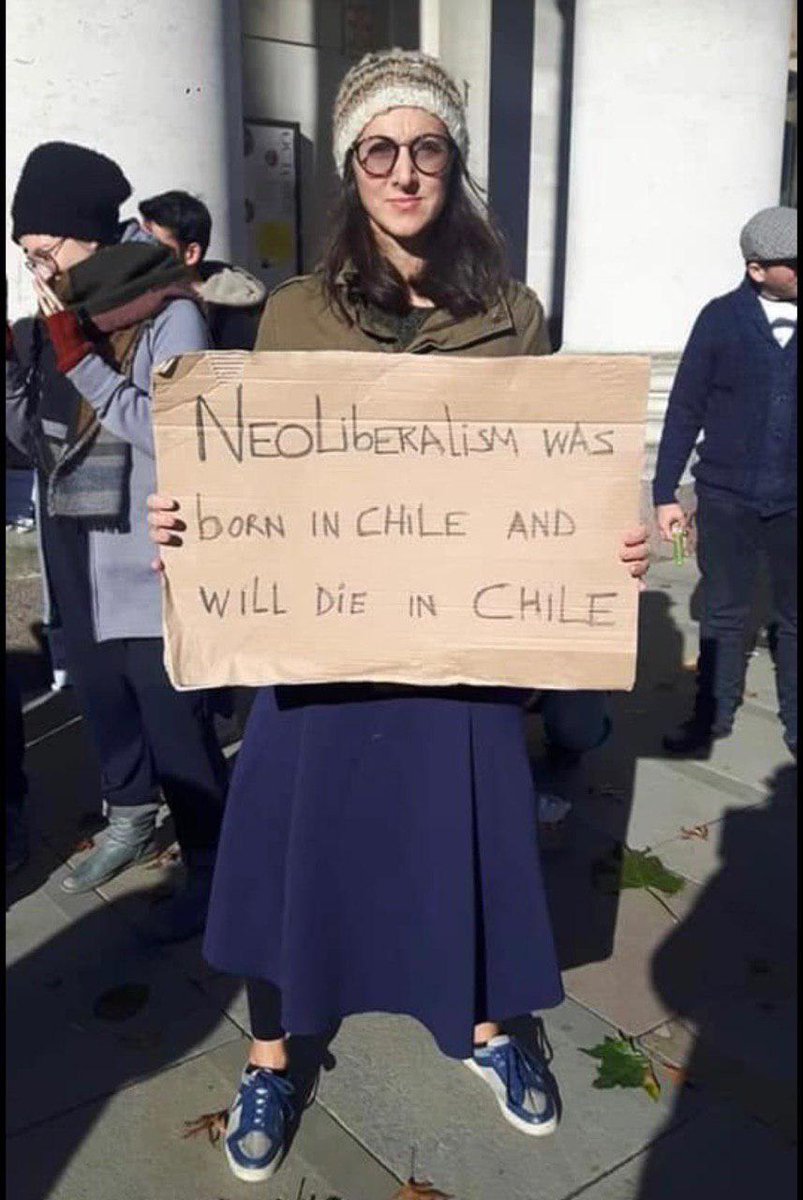
Working class Chileans have good reason to seek a new Constitution. The current one, instituted in 1980 by a military dictatorship to serve neoliberal purposes, lived on after dictator Pinochet departed in 1990. Subsequent governments, even socialist ones, have had to bend to its rules.

That Constitution instituted “radical neoliberalism,” according to the Council on Hemispheric Affairs. It “privatized fundamental aspects of the lives of Chileans, …  imbued principles of profit and capital investment in such key and sensitive sectors as education, healthcare, pensions, labor regulations, and other socially vital areas of the economy.”

According to the report, “Chile is now one of the most dramatic examples of social and economic inequality on the planet; … the richest 1% of Chileans hold 26% of the nation’s wealth … Chile ranks seventh among the most unequal countries on the planet.”

One observer notes that Chile “is the first country in the world to have privatized its sources and management of water.” Another claims that 4000 very wealthy families ultimately determine most of what happens in Chile, which necessarily would include actions of the notably cruel and corrupt militarized police known as carabineros.

Daniel Jadue represents a different Chile. The Communist Party’s Central Committee on April 24 announced that the Party would shortly be advancing Jadue as the most appealing candidate for left-leaning political parties in the upcoming presidential election.  Jadue “has aroused full, cross-the-board support from a large segment of our society,” remarked Communist Party President Guillermo Teillier.

Of Palestinian heritage, Jadue prepared in sociology, architecture, and urban planning; headed the Palestinian Youth Organization of Latin America until 1993; and that year joined Chile’s Communist Party. Born in Recoleta in 1967 and mayor since 2012, Jadue told an interviewer in 2019 that, “We are a very diverse and multicultural community [and] home to large portions of the Santiago’s informal sector.” Recoleta municipality or “commune,” population 162,000, is part of greater Santiago.

The interviewer praises Jadue as “one of the most important figures on the Latin American left.” He thinks “Jadue’s administration is building a laboratory for communism of today and of the future.” That seems to be Jadue’s intention: “In Recoleta, we want to form an open-door state, wherein all that matters are its citizens … We are nothing more than humble employees of the citizenry, those who truly constitute the state. Therefore, whenever our citizens come to us with a problem, we do everything in our power to solve it.”

Jadue describes what’s been done. About the “Open School,” for example, he reports that “some young men came to us, saying they wanted to get off the streets …So, we [are] keeping schools open until 10:00 PM daily, and over the weekend as well. This gave the whole community the opportunity to make use of the spaces as they saw fit …  Our plan is to create an open university that offers anyone in the community access to free university classes in every subject area. Almost 70 percent [of the activities] are self-directed, by both the older and younger people who attend.”

He turns to health care changes: “We had very few doctors in the community and just four medical offices …That’s one medical practice per every 40,000 inhabitants…. So, [we sought] to increase the number of doctors from eleven to forty. But we then ran into problems with overcrowding …We built two medical attention hubs for noninvasive primary care at each of Recoleta’s neighborhood councils. We were able to provide 75 percent of senior citizens with medical access within three blocks of their residence.”

About “the people’s pharmacy project,” Jadue recalls that, “Our residents told us scarcity and high prices were making medication the second biggest obstacle to proper care in Recoleta …Specialized medications were too expensive [and] Recoleta had only two pharmacies …Chilean law prohibits the state from engaging in any kind of commerce … [so we formed] a consumer’s cooperative, with the goal of driving down the cost of medication … Now, Communes of every stripe [throughout Chile] have people’s pharmacies.” 

Asked about the “optician program,” he states that, “we are selling 250 pairs [of glasses] a week now. And, “one last health-related service we offer is our people’s dentistry program. We have dentists who take mobile kits out into the community”

At “the people’s bookstore … all kinds of books are sold … all at an extremely low price. The municipality was able to cover all operational costs, paying for the location, salaries, and all the bills. We can then pass these savings on to the public, selling books at the same price we got them for from the publisher or distributor.”

The commune “invested in the promotion of reading. Our biggest resources are the ten public libraries in Recoleta, which make us the municipality with the most public libraries nationwide.” The municipality invests “about USD $500,000 a year in the public library system.”

To further accessible housing, Recoleta inaugurated its “Social Justice 1” condominium in June 2020. The structure, which cost $1.2 million USD to build, contains 38 rent-subsidized, three-bedroom apartments. “Today in the condominium, 95% of the beneficiaries of the project are women and, of them, 31 % were victims of family violence.” 

Reflecting on changes in Recoleta, Jadue maintains that, “A socialism that doesn’t govern any better than the Right has no future, nor any right to guide society’s destiny. If socialism wants an opportunity, it will have to be much more democratic, much more effective, and much more efficient.”

He points out that, “the Communist Party has been undergoing a resurgence. The accomplishments of local Communist governments have given citizens a renewed hope in the party.”  Overall, “The goal of our Communist administration is to fundamentally transform the state. As it currently exists, it functions purely as a vehicle for class domination. Its structures are completely impervious to the expectations and needs of its citizenry.

Presently Jadue is running second in presidential polling to the current favorite Pamela Jiles, a flamboyant journalist and legislator for the Humanist Party. She recently gained 21.7% approval in one tally and 18% in another, with Jadue scoring 10.3% and 11 %, respectively.

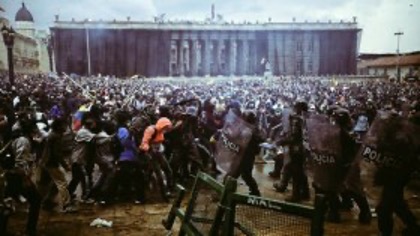
National Strike in Colombia is Massive, Meets Violent Repression, by Tom Whitney

Colombia is afire with a National Strike mounted by working people young people, and the excluded. They are protesting neoliberal reforms that diminish lives and hopes. Tax-reform proposals from President Iván Duque’s rightwing government triggered large demonstrations that began on April 28 and are continuing. Brutal repression has inflamed the rebellion. The government quickly withdrew the tax proposals. The finance minister was dismissed. 

A National Strike Committee coordinates the actions of “26 social sectors at the national level” plus regional, departmental, and municipal strike committees. The demonstrations, unprecedented in size and scope, follow the student uprising of 2011, the agrarian strike of 2013, marches in September 2020 against police abuses, and a large strike in November 2020 against pension and education reforms.

One stimulus for the uprising is the rise in poverty in Colombia from 37.5% of the population in 2019 to almost 50% in 2020; 15% live in extreme poverty. Another is widespread disapproval of the government’s handling of the Covid-19 pandemic. Young people are enraged. Their futures are blunted, claims commentator Germán Muñoz González. Often regarded as “expendable,” they are being killed, he asserts. Polling shows that 75% of Colombians support the National Strike.

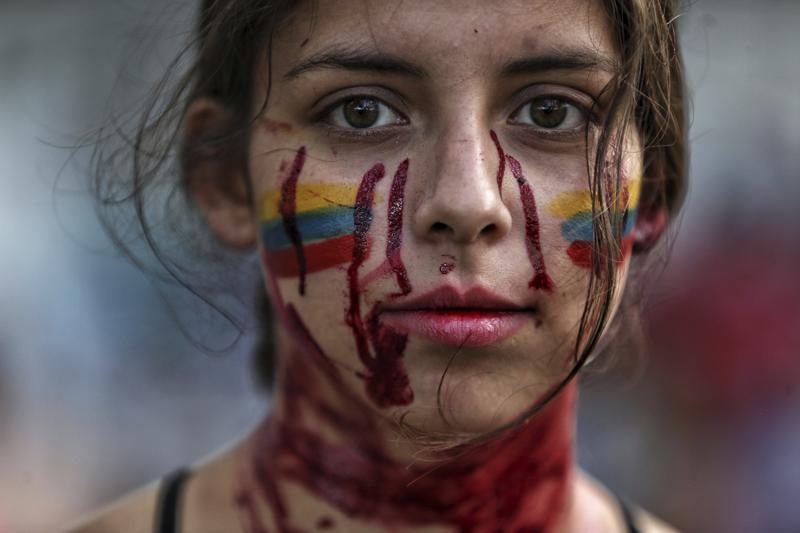
Colombian Cecelia Zamudio paints a grim picture. Protesters “are constantly being attacked by the forces of state repression who shoot with high caliber rifles … use weapons of war … utilize paramilitaries for covert actions.” So far “more than 60 people have been killed … 600 people taken away and disappeared … thousands injured, thousands imprisoned.”

The proposed tax reforms represented the tip of the neoliberal iceberg.  Healthcare privatization after 1993 led to healthcare inequalities because of reduced investment in personnel, training, and facilities. Over the course of three decades, most education at all levels has been privatized. For the “poorest sectors of the population, public education for children and adolescents has deteriorated.”

Flexible labor arrangements developing over three decades has centered on outsourcing. Self-employment, mostly work in the informal sector, now exceeds 60%; the unemployment rate is 18%. In the same neoliberal spirit, the government farmed out management of pension and disability funds to banks. Consequently, the equivalent of $83 billion of workers’ and employers’ money held by bankers is profitably invested and pension benefits are reduced.

The proposed tax-reform program was supposed to have supplied the government with the equivalent of $6.3 billion that would have enabled payment on debt that between 2016 and 2021 jumped from $79 billion to $157 billion, a figure representing 58% of Colombia’s GDP. Payment to foreign creditors consumes 38% of the government’s budgeted expenses.

The tax plan called for assessing a value added tax (VAT) on rent payments by those earning the equivalent of $470 per month or more. Some previously-exempt renters would have now been paying the tax. The plan also required that middle income private and public sector workers pay a 19% VAT on fees for energy use, water, and sewerage. People with big inheritances would have seen higher taxes. Well-to-do Colombians opposed the tax proposals along lower income people.

The National Strike Committee met May 15 with the government’s minister of labor and the high commissioner for peace. The Committee announced that no further negotiations would take place without guarantees assuring “no more violence and freedom to protest.” President Duque quickly responded: “In Colombia full guarantees exist for the exercise of protests.”  He declared that the blocking highways represented criminal action “affecting the economy.”

The National Committee indicated that future negotiations must involve the departmental and municipal strike committees. As with earlier national strikes, people’s assemblies are underway – in Ibagué, for example.

The Colombian state looks to be on the verge of ungovernability. Taken together, longtime negative features of Colombia’s national existence now pose formidable obstacles. They are: divisions between rich and poor, urban and rural; state power in the hands of oligarchs; continuing destitution and precarious lives for the many; their exclusion from meaningful political participation; ruling-class resort to extreme violence; and governmental complicity with U.S. hegemonic ambitions.  Integration of the national economy into the worldwide neoliberal system, with its own set of stern requirements, is relatively new.

The government has failed a three-part stress test. Colombians have suffered more from the Covid-19 pandemic than all but a few peoples of the world. The government’s implementation of the peace agreement between the FARC insurgents and the government was disastrous. There is the debt crisis.

Piedad Córdoba, once a left-leaning Liberal Party senator and always a target of reactionaries, portrays the strike as “only the most prominent symptom of a social order that’s now unsustainable. She calls for the “development of social struggle” and laments that, “in contrast to other countries of Our America, Colombia has not had a revolution of any type.”

She regards the high levels of poverty and debt as “big changes obliging us to look for [new] solutions.” Córdoba rejects neoliberalism and anticipates “a movement of new and developing leaders, and of generational change on the part of young people condemned to no future.”

Observer Fernando Rubio agrees: “The main protagonists of the present Strike are young people impacted by the breakdown of the neoliberal model.” These include “professionally trained people facing bankruptcy, the chronically unemployed, and those living precariously without a future.” 

Hope is alive for some Colombian young people. That’s apparent in the faces of the 200 or so orchestra members performing in Medellin’s Park of Desires on May 5. Under the baton of Susana Boreal, 26 years old, and before 6000 singing onlookers, they played and sang “El pueblo unido jamás será vencido” (The people united will never be defeated), and other numbers.

The symbolism is clear. That song materialized in Chile prior to the overthrow of President Salvador Allende’s socialist government. It’s since been heard worldwide. The title, morphed into a slogan, became a staple of political demonstrations throughout the Western Hemisphere. Readers may go here or here to hear and see the performance.

The youth uprising in Colombia parallels the massive outpourings of young Chilean protesters from October 2019 on, the Occupy phenomenon in the United States in 2011, and the Indignados in Spain. Maybe, one surmises, a new way of doing politics is afoot.

Colombian youth in rebellion, acting spontaneously and mostly unaffiliated with political parties, are maybe attending to moral and community values as they defend their material interests. They are workers – or would-be workers – but presumably don’t carry the sectarianism and memories of failure burdening their left-leaning predecessors.

Preliminary Report on National Strike (and Calamity) in Colombia

From our editorial team

(May 5) According to the website of the Colombian Communist Party, “there is a massacre in progress in Colombia: 21 murders, 208 seriously wounded, 503 arbitrarily detained, dozens of disappeared, ten women raped by Esmad police, attacked human rights defenders and journalists.” A nation strike has been ongoing nationwide in Colombia since April 28.

Analyst Angel Guerra Cabrera provides background information in a report written May 2: 

Presently in Colombia a national strike is underway in rejection of President Iván Duque’s tax reform and a health reform bill that seeks to deepen the failed model of privatization established in the health system.

The tax reform would impose a 19 percent VAT on eggs, meat, fish, coffee and salt, and proposes to tax salaries over 2.4 million pesos per month and pensions over 7 million pesos, to freeze for five years the salaries of public employees and even a scandalous tax on burials. The protesters had to overcome two factors. First, the third peak of the pandemic. The Ministry of Health reported that day an accumulated death toll of 72,725, one of the highest in the world per million inhabitants, higher than that of India and the United States.

A second factor was the judicial prohibition of the protest, which was not heeded by either the organizers or the local authorities. Despite being rejected by the government and the mainstream media, the marches were massive taking place in at least 600 of the country’s 1,100 municipalities.

In a previous survey, 73 percent of the population expressed their support for the strike and 35 percent said they would be willing to take that position to the streets. Seven million people took part in the strike and marches, with mobilization in Bogotá, Medellín, Cali, Barranquilla, Bucaramanga, Manizales and Pereira standing out. Clashes with riot police were severe in Cali and Bogotá. Mirar al Sur reported that there were eight deaths due to police repression.

The crisis in Colombia is very deep, has been going on for a long time, but has deepened with the pandemic. Poverty has recently increased 6.8 percent and now affects 42.5 percent of Colombian which means that 21.2 million of them cannot meet their basic needs. Extreme poverty now impacts 7.4 million people. To make matters worse, the government is trying to take the country back to war and more and more people are opposing it. The assassinations of social activists and former FARC combatants who have joined the peace process continue unabated.

May Day and the Haymarket Martyrs, by Tom Whitney

(Source: Labor Standard, Vol1, No3, 1999)

(Image Credit: Stock Montage/Getty Images)

Jose Marti, author of “A Terrible Drama”, which is cited in the present article, lived in exile in the United States for 15 years until 1895. Having organized Cuban rebel forces fighting in Cuba’s Second War for Independence, Marti died in battle early in the war. In the United States he was a correspondent for Latin American newspapers.

On May 1, 1886, Albert Parsons, head of the Chicago Knights of Labor, led 80,000 people
through the city’s streets in support of the eight-hour day. In the next few days they were joined nationwide by 350,000 workers who went on strike at 1,200 factories, including 70,000 in Chicago.

On May 3, August Spies, editor of the Arbeiter-Zeitung (Workers Newspaper), spoke at a
meeting of 6,000 workers, and afterwards many of them moved down the street to harass scabs at the McCormick plant. The police arrived, opened fire, and killed four people, wounding many more.

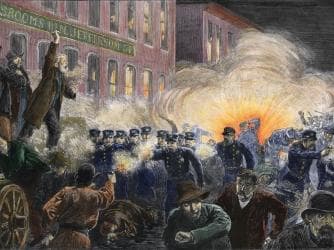
On May 4, Spies, Parsons, and Samuel Fielden were speaking at a rally of 2,500 people held to protest the police massacre when 180 police officers arrived, led by the Chicago police chief. While he was calling for the meeting to disperse a bomb exploded, killing one policeman. The police retaliated, killing seven of their own in the crossfire, plus four others; almost two hundred were wounded. The identity of the bomb thrower remains unknown.

On June 21, 1886, eight labor leaders, including Spies, Fielden, and Parsons went on trial,
charged with responsibility for the bombing. The trial was rife with lies and contradictions, and the state prosecutor appealed to the jury: “convict these men, make an example of them, hang them, and you save our institutions.”

Even though only two were present at the time of the bombing (Parsons had gone to a nearby tavern), seven were sentenced to die, one to fifteen years imprisonment. The Chicago bar condemned the trial, and several years later Governor John P. Altgeld pardoned all eight, releasing the three survivors (two of them had had their sentences reduced from hanging to life imprisonment).

On November 11, 1886, four anarchist leaders were hanged; Louis Lingg had committed suicide hours before. Two hundred thousand people took part in the funeral procession, either lining the streets or marching behind the hearses.

Unfortunately, the events surrounding the execution of the Haymarket martyrs fueled the
stereotype of radical activists as alien and violent, thereby contributing to ongoing repression.

Over the years the remains of many deceased or martyred radicals, among them Emma
Goldman, Bill Hayward, and Joe Hill, were deposited at the Haymarket Monument in Chicago, where seven of the eight men on trial lie buried. Ever since that time, in almost every country except one (guess which?) May 1 has been honored as International Workers Day.

The internationalization (if not “globalization”) of the Haymarket legacy was apparent two days after the hangings when José Martí, leader of Cuba’s struggle for independence from Spain, who was then living in exile in New York, wrote a detailed, emotion-filled report of the events leading up to the executions. Full of analysis, his article entitled “A Terrible Drama” appeared on January 1, 1888, in the Argentine paper La Nación, published in Buenos Aires. Early on in his piece he notes:

“Frightened by the growing power of the plain people, by the sudden coming together of the working masses (previously held back by the rivalries of their leaders), by the demarcation of two classes within the population — the privileged and the discontented (the latter a thorn in the side of European high society) — the republic determined to defend itself with a tacit covenant, a complicity whereby criminal action is triggered by the authorities’ misdeeds as much as by the fanaticism of the accused, in order to use their example to terrify — not by means of pain directly visited upon the rabble, but by the fearsome revival of the hangman’s hood.”

At the end of his long article José Martí quoted from the Arbeiter-Zeitung issued on the day of the executions:

“We have lost a battle, unhappy friends, but we will see in the end an ordered world that
conforms to justice: we will be wise like the serpent and quiet like the dove.”
In our own time the Uruguayan writer Eduardo Galeano has commented on “A Terrible Drama” (in his Memories of Fire, vol. II):

“The scaffold awaited them. They were five, but Lingg got up early for death, exploding a
dynamite cap between his teeth. Fischer was seen unhurriedly humming the ‘Marseillaise.’
Parsons, the agitator who used the word like a whip or a knife, grasps the hands of his comrades before the guards tie his own behind his back. Engel, famous for his sharp wit, asks for port wine and then makes them all laugh with a joke. Spies, who so often wrote about anarchism as the entrance into life, prepares himself in silence to enter into death.

“The spectators in the orchestra of the theater fix their view on the scaffold — a sign, a noise, the trap door gives way, now they die, in a horrible dance, twisting in the air. [Here he quotes Martí.]

“José Martí wrote the story of the execution of the anarchists in Chicago. The working class of the world will bring them back to life every first of May. That was still unknown, but Martí always writes as if he is listening for the cry of a newborn where it is least expected.”

Venezuela Border Conflict Mixes Drug Trafficking and Regime-Change Ambitions , by Tom Whitney

1182 words

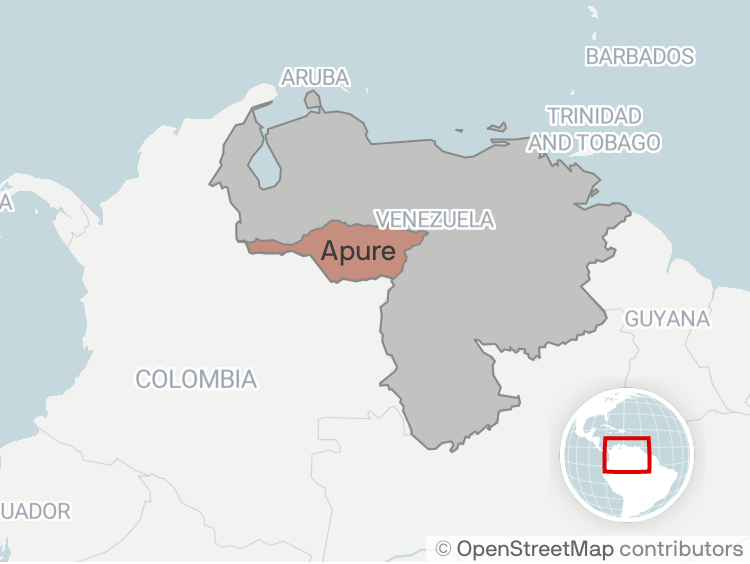
Since mid-March Venezuelan army units have been attacking and expelling Colombian operatives active in Apure state, in western Venezuela. Colombians have long used the border regions to prepare cocaine arriving from Colombia and ship it to the United States and Europe. Fighting has subsided; eight Venezuelan troops were killed. Seeking safety, 3,500 Venezuelans crossed the Meta River – an Orinoco tributary – to Arauca in Colombia.

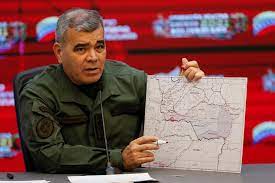
Venezuela’s Defense Minister Vladimir Padrino Lopez addresses the media at Miraflores Palace, in Caracas, Venezuela April 5, 2021. REUTERS/Manaure Quintero

The bi-national border is porous and long enough, at 1367 miles, to encourage smuggling and the undocumented passage of cross-border travelers such as the narcotraffickers in Apure. These include paramilitaries, bands of former FARC-EP insurgents, and drug-trade workers – pilots, truckers, laboratory workers, and more. Also involved are Colombia’s Army; Mexican drug cartels; officials in Washington; and DEA functionaries in Colombia. 

The paramilitaries in Apure represent Colombia’s largest drug cartel, “Los Rastrojos.” Colombia’s paramilitaries in general are the products of advice given Colombia’s government by U.S. Army consultants in the 1960s. They claimed paramilitaries were essential for defeating leftist guerrillas.  The Colombian military controls the paramilitaries’ actions, as verified recently by the prototypic paramilitary leader Salvatore Mancuso.  He was testifying before a Colombian judge virtually from a U.S. prison. 

The former FARC-EP insurgents active in Apure are known by the name of their leader, Gentil Duarte. In 2016 they rejected the forthcoming peace agreement that the FARC-EP would be signing with the Colombian government. They’ve taken up narcotrafficking.  Other dissenting ex-FARC fighters took up arms again in 2019. Calling themselves the “Second Marquetalia,” they are not present in Apure.

In March, the Colombian Army transferred 2000 troops to the Colombian side of the border. U.S. Secretary of State Anthony Blinken spoke with Colombian President Iván Duque by telephone on April 5; they discussed “their shared commitment to the restoration of democracy and rule of law in Venezuela.”  U.S. Ambassador to Venezuela James Story, stationed in Bogota, held meetings from February 19 to 26 with Venezuelan opposition leaders Leopoldo López, Julio Borges, and Manuel Rosales. They style themselves the “Venezuelan Presidential Commission.”

The U.S. Air Force on March 30 and 31 flew four C-17 “Globemaster” troop and equipment-carrying planes to airports in Colombia. Colombia’s Semana newspaper anticipates that the U.S. Congress will soon authorize the sale to Colombia of fighter aircraft worth $4.5 billion. The report laments the “worrisome picture” of air force capabilities in comparison with those of Venezuela.

Colombian President Iván Duque in late February announced the creation of the “Special Command against Narcotrafficking and Transnational Threats.”  This will be a 7000-person elite military force with air assault capabilities.  Its “certain objective,” according to the Communist Party’s website, is war against Venezuela.

During the tenure of left-leaning Venezuelan President Hugo Chavez and that of his successor, President Nicolas Maduro, Colombian paramilitaries repeatedly crossed the border on destabilization missions.  Organizers for a 2000 seaborne anti-Maduro assault called Operation Gedeon were based in Colombia, as were some of the plotters who mounted a drone attack against Maduro in 2018. The U.S. and Colombian governments in February 2019 failed in their attempt to deliver humanitarian aid across the border at Cucuta, Colombia. Their idea had been to divide Venezuela’s military.

The outcome of the fighting in Apure is unclear. The Colombian and U.S. governments undoubtedly would utilize any humanitarian crisis as an opening to further destabilize Venezuela’s government.

It’s certain that the U.S. government in the Biden era continues to seek the overthrow of Venezuela’s government. Without question the reactionary Colombian government is at the beck and call of the U.S. government. The U.S. capitalist hierarchy, of course, has its eye on Venezuela’s massive reserves of crude oil, in excess of 550 billion barrels.

What is underappreciated is the role of drug-trafficking in serving interventionist purposes, as in Apure. U.S. military aid under Plan Colombia, which began in 2000, was supposed to have reduced narcotrafficking. The same was to have happened after the FARC-EP insurgency gave up arms in 2016.   Nevertheless, Colombia afterwards continued to produce 70 percent of the cocaine consumed in the world, according to a 2019 United Nations report. Production has increased since.

Some 70 percent of Colombia’s cocaine heads to the United States – the world’s leading consumer – via the Pacific Ocean route. But much of the remainder does pass through Venezuela, and Washington officials pay attention.  

The Western Hemisphere Drug Policy Commission is “an independent, bipartisan entity” serving U.S. policymakers.  Its December, 2020 report noted that: “Traffickers operate freely in large swaths of the country s territory [and] The US State Department is offering rewards of $15 million for information leading to [President] Maduro’s arrest and $10 million for information on four other top officials.”

The U.S. Fourth Naval monitors Venezuelan waters and air space for supposed Venezuelan drug-trafficking.

The assumption here is that Colombian narcotrafficking has great appeal to Washington deciders on Latin America. Nobody likes drug dependency. The United States suffered some 70,000 drug-overdose deaths in 2019. In short, to trumpet war on drugs has great public-relations value. It’s an easy sell to promise to stem the flow of drugs into the United States in return for free rein for harsh policies in Latin America.

Therefore, the United States uses the presence in Venezuela of Colombian narco-trafficking to serve regime-change purposes. Public support for U.S. Plan Colombia told a similar story. After 2000, U.S. taxpayer money readily flowed into what was billed as war on narcotics. The real purpose was assistance to the Colombian military as it attempted to defeat leftist FARC-EP guerrillas. 

Jaime Caycedo, secretary general of the Colombian Communist Party, outlined these dynamics in writing about Plan Colombia in 2007:

“For the purposes of strategy, it’s essential to have it understood through continued propaganda that the guerrillas are associated with narcotrafficking and understood too that the war is being fought precisely because of that characteristic.”  Drugs become a “demonic phenomenon [and] imperialist military intervention figures as something ‘natural.’” The imperialists offer “no tie to history or realities that might explain things,” with the result that, “violence in the form of daily manifestations of repression and super-exploitation of workers appears simple as a consequence of narco-trafficking.” (Colombia en la Hora Latinoamericana, Ediciones Izquierda Viva)

Capitalists taking a broad view accommodate drug-trafficking for another reason. Selling cocaine yields vast amounts of money; laundered, cocaine becomes a source of liquidity for their financial system.

Former director of the United Nations Office on Drugs and Crime Antonio Maria Costa, writing in 2009, claimed that, “In many instances, drug money is currently the only liquid investment capital.”  According to the Samuel Robinson Institute, “the events in Apure show off Venezuela … as a threat, but only in what has to do with allowing the (narco)metabolism of the West to continue functioning.”  He cited journalist Roberto Saviano who notes that, “Cocaine is a safe asset … an anticyclical asset…. Cocaine becomes a product like gold or oil, but more economically potent than gold or oil. [Without] access to mines or wells, it’s hard to break into the market. With cocaine, no.”

Stopgap Methods Won’t Fix Migration Challenge, by Tom Whitney

The continuing press of migrants from Mexico and Central America arriving at the U.S. southern border has forced the Biden administration to send Vice President Kamala Harris south on a negotiating mission. According to The New York Times, “She will work with the leaders of Central American governments.” Armed with “billions of dollars,” she will seek collaboration in  “reducing the violence and poverty” that predispose to migration.

A look at realities in Honduras and Guatemala suggests her goal is unattainable.  That’s because past U.S. policies and actions in the region, interventionist and exploitative, contributed to the very life-threatening conditions Harris is targeting. To succeed, the Biden administration must grapple with a dark legacy fashioned by the United States itself.

In Honduras presently, 62 percent of the population live in poverty, 40 percent in deep poverty. The impact of the pandemic and of hurricanes during 2020 caused 700,000 more Hondurans to fall into poverty and 600,000 more to lose jobs. Estimates of Hondurans facing food insecurity range from 1.3 million – with 350,000 close to starvation – to   2.9 million.

Journalist Giorgio Trucchi recently catalogued other hazards of Honduran life. He cites at least 2000 attacks on defenders of human rights in 2016-2017, 278 murders of women in 2020, 86 journalists killed over two decades, 372 killings of members of the LGBTQ community over 10 years, and a 12.5 percent GDP loss in 2018 ascribed to corruption.

As of September, 2020, 2.8 million Guatemalans were “severely food insecure. Now 80 percent of Guatemala’s indigenous population are malnourished, and 59 percent of Guatemalans live in poverty. According to the World Food Program, “The number of households that did not have enough to eat during COVID-19 nearly doubled in Guatemala compared to pre-pandemic numbers. In Honduras, it increased by more than 50 percent.”

That agency indicated that, “Hunger in El Salvador, Guatemala, Honduras and Nicaragua has increased … from 2.2 million people in 2018 to close to 8 million people in 2021 – a result of the economic crisis caused by COVID-19 and years of extreme climate events.” Now, “nearly 15 percent of people surveyed by WFP in January 2021 said that they were making concrete plans to migrate.”

U.S. political leaders have turned a blind eye to the suffering. The two governments win points by welcoming multinational corporations and repressing leftist political movements.  All three governments are fine with a worldwide economic system featuring support for healthcare, schools, and pensions; freedom for corporations; and the selling-off of public assets. 

Officials in Washington put Honduras to good use. The country is a transfer point for illicit drugs heading north, with the result that Honduras is a regional center for drug-war activities. The Soto Cano U.S. airbase was ground zero for U.S. support in the 1980s for Contra mercenaries fighting Nicaragua’s leftist Sandinista government. That base, where 1500 U.S. troops are stationed, is the hub of U.S. military operations in the country and farther afield.

President Manuel Zelaya was advancing progressive reforms, that is, until June 29, 2009, when a military coup deposed him. U.S. interventionists played a role.  The plane transporting Zelaya from Tegucigalpa to Costa Rico stopped at the Soto Cano base. And, according to Wikileaks, Secretary of State Hilary Clinton knew beforehand what was happening, but took no action.

Corruption and criminality took over after the coup. The drug-dealing activities of President Porfirio Lobo, winner of a low-turnout election shortly after the coup, recently came to light. Analyst Karen Spring explains that a drug cartel financed Lobo’s campaign; that Lobo reciprocated by arranging for foreign agencies to finance developmental ventures; that he, along with family members, fixed it so that drug money was laundered through projects like mining operations, hydroelectric works, highways, and other energy-related initiatives.

In 2019, a U.S. court convicted Juan Antonio Hernández of drug-trafficking. His brother is Juan Orlando Hernández, who is Lobo’s successor as Honduras’s president. Citing evidence from other trials, The New York Times recently suggested that Juan Orlando is “a key player in Honduras’ drug-trafficking industry [and] that formal charges against Mr. Hernández himself may not be far away.”

Guatemala’s recent history set the stage for another anti-people government.  A 36-year war pitting leftist guerrillas against military forces led by U.S.-trained officers and assisted by the CIA led to the deaths of 200,000 people. Most of them were poor, rural, and indigenous.

In 2019, lawyer and activist Jennifer Harbury lamented that “so many of the high-level Guatemalan intelligence leaders of that era, who were trained in the School of the Americas and who served as CIA paid informants [became] involved in the drug trade and … started their own cartels… And they’re devouring the country using the same techniques of torture and the terror that they used before. Once again, everyone is roaring north.”

According to nacla.org, “Guatemala’s market democracy” was founded on “genocidal violence that murdered successive generations of political leaders.” The peace process itself led to “neoliberal policies of resource extraction, free trade, and privatization” with the result of “poverty, landlessness, decrepit institutions.”

The U.S. Vice President deserves a little sympathy. She and the Biden Administration do get credit for recognizing that migrants from Central America are running for their lives. But as she confers with Central American politicians, her hands are tied.

Her negotiating partners understand the rules of international capitalism: loan payments are continued, labor is cheap, natural resources are plundered. Her government and theirs operate on the premise, one, that “money talks” and, two, that satisfaction of human needs is provisional.

Vice President Harris embodies a contradiction. She wants to fix a migration problem due mostly to capitalism. But to do so, she must betray basic capitalist assumptions.

The pressure is on. News item, March 30: “A new migrant caravan began to form Monday night (March 29) in the Honduran city San Pedro Sula … Hundreds of citizens have gathered at the main bus terminal to organize and begin the new mobilization.”

Recurring Political Crisis in Haiti Connects with US Racism, by Tom Whitney

Haiti faces serious political crisis. The country has experienced great political difficulties ever since gaining independent nationhood in 1804. Impaired governance stems in large measure from U.S. meddling over many years.  We examine the current crisis and the basis for U.S. zeal to curtail Haiti’s future.

Mass demonstrations have continued intermittently since mid-2018, when two million Haitians were in the streets. At various times, protesters have called for: (1) relief from high prices for oil and gas, the result of IMF austerity decrees; (2) relief from shortages of basic supplies; (3) punishment of government officials who embezzled billions in funds from Venezuela’s PetroCaribe program of low-cost oil for Caribbean peoples (President Jovenel Moïse stole $700,000); (4) Moïse’s resignation. 

Demonstrators targeted Moïse aggressively after he closed down Haiti’s parliament in January 2020. He’s ruled since by decree.  A general strike took place prior to February 7, 2021, which, according to lawyers and judges, marked the end of Moïse’s presidential term. He remains.

Moïse’s 2015 election victory was fraudulent. A transitional president served for one year. Moïse took office in early 2017 after winning a second election weeks earlier. Only 18 percent of Haitian adults voted.

Moïse recently appointed his own electoral council and his own committee for amending the constitution. He cemented ties with President Trump by supporting U.S. regime-change plans for Venezuela. His new National Intelligence Agency looks to one observer like “a new Gestapo-like force of armed spies.” Moïse has disregarded the suffering of Haitians, the most poverty-stricken population in the Americas.

Opposition elements recently named Supreme Court Justice Joseph Mécène as a transitional president replacing Moïse. Moïse responded by arresting 23 officials of whom three were Supreme Court justices. He replaced them.  

Haiti’s opposition is divided between center-right political parties, headed loosely by lawyer André Michel, and protesters in the streets. Many of these belong to social movements and labor unions making up the new Patriotic Forum.

Violence is rampant. Some “150 criminal bands” have carried out murders and massacres. According to Argentinian Lautaro Rivara, active in Haiti, “Most of these groups have been organized and financed by senators, ministers, and presidents – when they are not directed fomented by the imperialist powers.”  Some gangs have united under government auspices as the “G9 and family”.

These various problems reflect political norms from Haiti’s past. On display then and now have been: ineffectual, corrupt, undemocratic governance; governmental inattention to people’s basic needs; persistent, if unsuccessful, popular opposition; and politics mediated through violence. Submission to foreign masters has been less obvious recently than is usually the case. None of these failings operate against U.S. expectations for Haiti.

Setting the stage

The many foreign NGOs active in Haiti function autonomously, rarely collaborating with Haiti’s government. The “Core Group” of nations involving the United States, France, Canada, and others make strategic decisions for Haiti on their own.

The U.S government does likewise. Secretary of State Hillary Clinton inserted singer Michel Martelly into Haiti’s 2010 presidential elections. He won, and named banana tycoon Jovenal Moïse as his successor.

Haiti has long had to cope with burdensome foreign-debt obligations. Between 1825 and 1947, Haiti sent payments to France as compensation for Haiti’s slaves having liberated themselves. Said one observer recently, “the constant of financial needs forces all Haitian governments to take on even more debt with North American and European Banks.”

Bill Quigley, a close observer, notes that, “The US and the US dominated world financial institutions forced Haiti to open its markets [allowing] millions of tons of US subsidized rice and sugar into Haiti – undercutting their farmers and ruining Haitian agriculture.” 

Holding Haiti in Check

The United States has long had its way with Haiti. It withheld recognition of Haiti’s national independence until 1862, and embargoed trade with Haiti until 1863. A U.S. naval squadron arriving at Môle Saint-Nicolas in 1889 sought to occupy the port permanently to block access to Haiti by ships of other nations. The effort failed, partly due to the intercession of U.S. ambassador Frederic Douglass, the famous abolitionist.    

U. S. military units occupying Haiti between 1915 and 1934 encountered armed resistance. Some 15,000 Haitians were killed. U.S. officials wrote a new Haitian Constitution, collected taxes, controlled customs, administered sections of Haiti’s government, and forced payments on loans held by U.S. banks.

The plundering, murderous Duvalier dictatorship, father and son, ruled Haiti from 1957 until 1986. The U.S. government cited anti-communism as justification.  

CIA personnel collaborated with Haitian military officers to plan the coup that in 1991 removed President Jean-Bertrand Aristide. That he returned to power in 1994 by means of a U.S. invasion typifies Haiti’s subservience to decisions made in Washington.

Paramilitaries trained and funded by the United States removed President Aristide in 2004. Canada and France helped out. A U.S. plane conveyed Aristide to the Central African Republic. The three nations arranged for United Nations troops to occupy Haiti. They would remain until 2019.

Particular reasons

“There was hell in Hayti (sic) in the red waning of the eighteenth century … while black men in sudden frenzy fought like devils for their freedom and won it … the shudder of Hayti was running through all the Americas.”  (W. E. B. DuBois, John Brown, 1907)

Reports of the “tempest created by the black revolutionaries … spread rapidly and uncontrollably.” A maritime proletariat brought news to places like Charleston, South Carolina; “Afro-North Americans … derived inspiration from the example of Haitian freedom,” recalls historian Julius Scott. (Common Wind, 2018)

The U.S. slavocracy had much to protect. “Between 1775 and 1825 … a slave-labor large farming system [developed]. There was a close and indissoluble connection with the world’s cotton market.”  (DuBois, Suppression of the African Slave Trade,1896) The labor of enslaved people generated wealth and enabled debt repayment. Slave ownership represented 20 percent of private U. S. wealth.  

Fearful slaveowners had Haiti on their minds, more so when slaves were unruly. Slaves conspired, sometimes were discovered, and rebelled. That Denmark Vesey, leader of a failed slave rebellion in Charleston in 1822, had been enslaved in Haiti was hardly reassuring.

The enslavement of Black people in the United States eventually ended; racism did not.  Haiti manifested a new orientation that would by no means mollify U. S. animosities against its people.

Historian C.L.R. James explains that, “Haiti had to find a national rallying point [and] discovered ‘negritude’ [involving] “substitution of Africa for France.” Until then, “Mulattos who were masters had their eyes fixed on Paris.” At work was the influence of pan-Africanists Marcus Garvey, George Padmore, and Martinican poet Aimé Césaire, regarding whom, says James, “it is Africa and African emancipation that he has in mind.” (Black Jacobins, 1989)

As a kind of African extension in the Western Hemisphere, Haiti solidified its place within the orbit of U.S racism. That showed in 1898 when U.S. troops intervened in Cuba’s war for independence from Spain. Later Cuba would become a U.S. protectorate of sorts. U.S. justification for both endeavors, according to statements, was to prevent “another Haiti,” a “second Haiti.”     

Indeed, Cuba’s rebel army was full of Black soldiers. African-descended General Antonio Maceo led rebel troops. Maceo at the time was a favorite in the U.S. Black community.

Much later, U.S. imperialists were alert to real or imagined socialist stirrings in Guatemala (1954), Dominican Republic (1965), Indonesia, (1965-66), Chile (1973), Cuba perennially, and Haiti. There, anti-communism competed with racism as motivation.

Maybe with the advent of President Jean-Bertrand Aristide in Haiti, whispers were heard in U.S. government circles of “another Cuba” in the making. After all, Haitians are poor, they suffer, they die young, and they are heirs of a revolution.

Aristide was new. His 1991 election victory with a 67% plurality was Haiti’s “first successful democratic election ever,” according to the  conservative National Republican Institute.  Aristide gained reelection in 2000 with 91% of the vote.  

An observer notes that, “In the period of governance by Fanmi Lavalas, the party founded by President Aristide, more schools were built than the total constructed between 1804 and 1994. Twenty percent of the country’s budget was mandated for education.  Women’s groups and popular organizations helped coordinate a literacy campaign …The minimum wage was doubled. …  Health clinics were established in the poorest communities.  The government also launched an aggressive campaign to collect unpaid taxes owed by the wealthy elite.”  

Haiti waits. Maybe Haitian President Moïse will be removed and maybe Haiti’s parliament will reopen. Maybe the new Biden administration will go along with a new array of officeholders.  His representatives may pull strings selectively, or give a nudge to favorites. What the U.S. government does in the short term, however, won’t matter much to masses of Haitian people who are victims. What would matter for them is certainty of their independence, of being able to take charge of their own existence. Movement in that direction depends on change in the United States, forced by popular mobilization there, toward a politics that embraces the notion of human equality.