
How Skewed Access to Land Has Fostered War in Gaza / By W.T. Whitney Jr.

This infographic is by visualizing Palestine. It is published under CC BY-NC-ND 4.0 DEED. Fair use.

South Paris, Maine


The humanitarian disaster of war in Gaza shows in both the wreckage of hospitals and the dying in and around hospitals. The need, said Dr. Hammam Alloh, an internist, is “First, we need this war to end, because we are real humans … We have the right to live freely.” 

Healthcare workers at Al-Shifa hospital buried over 180 dead patients. Norwegian physician Mads Gilbert reported that, “Twenty out of the 23 ICU patients had died. Seventeen other patients died because of lack of supplies, oxygen and water. And three, if not five, of the 38 premature newborns have died because of this slow suffocation.”

Asked why he remains at Al-Shifa Hospital, despite the invaders’ orders to leave, Dr. Alloh explained that he didn’t choose to be a physician “to think only about my life and not my patients.” And, “who treats my patients? We are not animals. We have the right to receive proper healthcare.”  Alloh subsequently died from a bomb attack on his living quarters.

Expressions of outrage have circulated widely in the independent media. World Health Organization head Tedros Adhanom Ghebreyesus told the UN General Assembly that, “You must act and you must act now … there are no words to describe the horror.”

The plight of Dr. Shadi Issam Radi is appalling. He is standing in a corridor of the hospital during his  interview. Two little children are at his side. “I have worked in the intensive care department for seven years,” he says. “My wife was killed while I was working. I am obliged to bring the children with me. I am still working. Thank God for everything.”

Condemnations and revulsion are not enough. Fixation on the dire situation of the Gaza doctors contributes little to ending the war, just as treating the symptoms of sick people doesn’t cure them.  But knowing about cause helps to achieve peace and to find curative treatments.

The plan here is to go scientific, to investigate a historical reality that, having fostered relations mired in lethal conflict, may someday usher in more promising realities.

The Palestinian people’s circumstances for living and for communal existence have long been unsustainable. Political prisoner Mumia Abu-Jamal recently explained why that is so:

“[W]ar between Palestine and Israel … is not a war around religion or between faiths or gods. It’s a war for that which is no longer being produced — land … The Palestinians are the Indigenous people of the region. They are thus equivalent to the Navajo, Apache and Seminoles of the West.”

Israeli military leader Moshe Dayan in 1956 spoke about land and the fight for land:

“What can we say against [the Palestinians’] terrible hatred of us? For eight years now, they have sat in the refugee camps of Gaza and have watched how, before their very eyes, we have turned their land and villages, where they and their forefathers previously dwelled, into our home … Without the steel helmet and the cannon’s maw, we will not be able to plant a tree and build a home.”

Immigrants who were part of the Zionist movement, whose mission was to form a Jewish state, began to arrive in Palestine in the earliest years of the 20th century, mostly from Europe. A burgeoning population needed land for sustenance, land with its topsoil, vegetation, crops, trees, space for living, and access to water in rivers, springs, and aquifers.

Israeli historian Ilan Pappe estimates that during the 400-year period of Ottoman rule, from 1517 on, Jewish people made up only two to five percent of the region’s population. A census in 1878 showed that 87% of inhabitants were Muslim, 10% Christian, and 3% Jewish.

Zionist publicists have portrayed pre-immigration Palestine as a “desert,” empty of people. However, Pappe indicates that in the 18th century, “[T]he coastal network of ports and towns boomed through its trade connections with Europe, while the inner plains traded inland with nearby regions.”  Palestine “was part of a rich and fertile eastern Mediterranean world that in the 19th century underwent processes of modernization and nationalization.  It … was a pastoral country on the verge of entering the 20th century as a modern society.” 

He adds that, “By 1945, Zionism had attracted more than half a million settlers to a country whose population was about 2 million …The settlers’ only way of expanding their hold on the land…and of ensuring an exclusive demographic majority was to remove the natives from their homeland.”

Antisemitism in Europe and elsewhere stimulated emigration to Palestine, more so after the Holocaust and Israel’s formation. That government in 1950 instituted its Law of Return which grants “every Jew in the world” the right to settle in Israel.

British rule over Palestine from 1920 to 1948, under a League of Nations “Mandate,” fit with imperialist ambitions, according to Pappe. The United States and France would be joining Britain in a joint venture with the new Israeli state to control the region and assure access to oil and gas. Likely expectations were that Israel would become powerful and its population would grow. Absorption of Palestinian land was part of the package.

In 1945, 84.7% of cultivatable land in Palestine was “Arab-owned.” The “newly established Israeli [military] forces in 1948 launched a major offensive” after Israel declared its independent statehood and after the surrounding Arab nations attacked. This was the setting for the “Nakba” (catastrophe); hundreds of thousands of Palestinians were forcibly displaced from homes and land.

According to one report (Journal of Palestine Studies,1979), “Israel thus began its life with a vast stock of abandoned farmland and in the early years of statehood, when immigrants were pouring in, this land was ‘reclaimed’ for agriculture at an impressive rate. In the four-year period from 1948-49 to 1952-53, the physical area under cultivation in Israel almost doubled.”

Moreover, “About 80 percent, and probably more, of the 2,185,000 dunums (539,925 acres) brought into cultivation since 1948 thus constitutes farmland belonging to the Palestinian refugees.”

A study appearing in 2000 reports on the shrinking of agricultural acreage due to Israeli occupations: “The loss of large stretches of agricultural land, after 1967, due to land confiscation and closures, and limitations on water supply and product markets, has led to a substantial decline in the production of this sector.”

Ultimately, the reality of reduced access to land has left Palestinians with precarious living conditions and has forced them into a toxic relationship with Israel. An accompanying reality is that the international community’s arrangements for the partition of Palestine in 1947, and for enforcement, were flawed.

Other troublesome real-life phenomena include: competing Palestinian claims to oil and gas deposits off-shore and in the West Bank, and the continuous, death-dealing  supply of U.S. weaponry to Israel. 

Meanwhile, appeals to international law, moral principles, human rights, and common decency don’t move the mountain. The conflict continues. Personal or collective grief at the suffering and deaths of the Gaza doctors and their patients has little impact.


W.T. Whitney Jr. is a political journalist whose focus is on Latin America, health care, and anti-racism. A Cuba solidarity activist, he formerly worked as a pediatrician, lives in rural Maine. W.T. Whitney Jr. es un periodista político cuyo enfoque está en América Latina, la atención médica y el antirracismo. Activista solidario con Cuba, anteriormente trabajó como pediatra, vive en la zona rural de Maine.

‘Economic asphyxiation’: U.S. restricts food supplies in bid to strangle Cuban revolution / by W.T. Whitney Jr.

A portrait of Argentine born Cuban revolutionary hero Ernesto ‘Che’ Guevara hangs on a shelf at a food store in Havana with some of the few products for sale. | Ramon Espinosa / AP

Reposted from the People’s World


The civilian victims of U.S. war-making in Gaza—the U.S. government supplies the big weapons—are on full display right now, broadcast on television screens and Twitter feeds around the world.

There’s another group on the receiving end of U.S. imperialism whose plight is not being publicized very much at the moment, though, and that’s the resistance of the long-suffering people of Cuba against an unrelenting economic war.

Differences in scale and immediacy of course distinguish the assault they face due from the U.S. blockade and the bombardment and constant death being visited upon the Palestinians by Washington’s Israeli ally, but for the island nation to our south, the supply of food and other necessities is becoming ever more precarious by the day.

And despite the differences in the war against Palestinians and the economic war against Cubans, there is a common principle that governs in both instances: Subjecting non-combatant populations to potentially lethal danger, under conditions of war, is criminal. That’s reason enough to force an end to the U.S. economic blockade of Cuba.

The blockade promotes food shortages and is putting more and more lives at risk. The U.S. public needs to know about, understand, and reject this blockade, its operation, and its impact. Letting people in the U.S. know the full details of what’s being done in their name is, of course, no small task. The blockade proceeds automatically and quietly; the human suffering it causes is largely hidden.

Economic embargos are a form of war and the people whose government is dishing out such a strategy is often unaware of what’s happening, writes commentator Nicholas Mulder: “Voters in the sanction-imposing country are unlikely to observe or understand the full costs of sanctions on ordinary people abroad.”

Not by accident

The blockade promotes food shortages, and that’s its intention. New Jersey Congressman Robert Torricelli introduced the Cuban Democracy Act in 1992 in the wake of the Soviet Bloc’s collapse. Cuba had just lost 80% of its trade and was vulnerable, which provided what the U.S. government saw as a chance to finish off Cuba’s Revolution.

The law prohibits those exporters abroad who are affiliated with U.S. companies from shipping food and other goods to Cuba under threat of penalties and fines. Torricelli explained the rationale, saying you mus “keep your foot on the snake, don’t let up.”

Companies around the globe had previously been exporting almost $500 million worth of food to Cuba annually, but Torricelli’s law put a stop to that. The legislation, which is still in effect, prohibits ships from entering U.S. harbors for six months after they visit a Cuban port.

The effect has been to raise shipping prices for Cuba and severely limit the number of international companies willing to risk their access to the giant U.S. market in order to sell to a much smaller customer like Cuba.

U.S legislation in 2000, provided some small relief, authorizing exports of U.S. farm products to Cuba. Payments are in cash only—no loans. Shipping costs remain high, though, because the food products must be carried in U.S. ships, and they return empty. Cuba has to pay for a two-way trip to get only one boatload of goods. U.S. food exports to Cuba peaked in 2008 and have fallen since.

The U.S. blockade also restricts financial services provided by international banks and lenders. Under U.S. pressure, they don’t lend money to Cuba and can’t handle U.S. dollars in transactions involving Cuba. The legislation that authorized U.S. presidents to designate other nations as sponsors of terrorism incorporated these prohibitions, along with penalties.

Cuba, as an alleged—falsely so—terrorist-sponsoring nation, lacks the credit and often the cash to pay for food imports and to develop the island’s own domestic agricultural potential. Cuba must spend $4 billion annually to import 80% of the food it consumes.

The U.S. blockade causes other shortages that also hobble food production. Fuel shortages impede the transport of goods and the operation of machinery. Fertilizer, herbicides, pesticides, seeds, spare parts, new equipment, veterinary supplies, irrigation equipment, new breeding stock, and grains used to make animal feed are all constantly in short supply. U.S. limitations on the remittances Cuban-Americans send to their families in Cuba further interfere with food purchases and spending on agricultural projects.

A comparison of agricultural production in Cuba and in the Dominican Republic suggests food shortages are due mostly to the U.S. blockade. The two are neighbors with essentially identical climates. The total of food produced in the unblockaded DR in 2021 exceeded Cuba’s “best historical average” yield by 35.7%, even though agricultural acreage in the Dominican Republic is only 25% of Cuba’s total.

Some difficulties affecting agricultural production result from non-blockade causes, to be sure: mounting inflation, domestic corruption, theft, currency speculation, and shortages of foreign currency due to reduced tourism during the COVID-19 pandemic and subsequently. Higher food prices generally around the globe recently and climate-change effects are also phenomena bearing on food availability in Cuba.

Policy failures also factor into the equation, as Cuba’s government has fallen short in converting the island’s many idle fields into productive farm land. And relatively few Cuban young people are attracted to farming; only 15% of Cubans live in the countryside.

Empty shelves

Agricultural minister Ydael Jesús Pérez Brito, interviewed recently, noted that the agriculture sector has secured only 40% of the diesel fuel it needs, 4% of required fertilizers, and 20% of feed needed for livestock.

He reported that pork production fell from almost 200,000 tons in 2017 to 16,500 tons in 2022, due in part to only 14% of necessary fuel being available. Rice farmers are producing 10% of recently achieved levels of production. Current production of beans and corn amounts to 9% and 30%, respectively, of yields in 2016.

Manuel Sobrino Martínez, the food industry minister, indicated last month that food processing generally and milk processing in particular is down over three years to 50% of capacity. He described a 46% drop over one year of milk received for processing to powdered milk, and reported that a ton of milk costs $4,508 now, up from $3,150 in 2019.

The availability of cooking oil is down 44% in a year; its cost is up from $880 per ton in 2019 to $1,606 now. Wheat processing is at half capacity. Fishing activity has fallen by 23% since 2022; 60 boats are not operating because motors are expensive and suppliers refuse to sell, or demand hard currency up-front. The minister said he must choose between “powdered milk, or wheat, or motors.”

The essence, according to an observer, is that, “owing to low agricultural yields, total food production in 2022 fell to 26% [of food produced] in 2019.”

Cuban President Miguel Díaz-Canel told a reporter recently that, “They have put us in a situation of maximum pressure, of economic asphyxiation to provoke the collapse of the Revolution, to fracture the unity between the leadership and the people, to obliterate the work of the Revolution.”

Production is low, he pointed out, and “the country’s fundamental problem is low availability of foreign currency.” Díaz-Canel said the government would “take advantage of the possibilities we have as a socialist state to plan and distribute available resources to prioritize the production that … could give us more possibilities, and also to protect people who may be in a situation of social disadvantage.”

Grim reality, of which food insufficiency is one aspect, demonstrates that now is the time for action and messaging strong enough to finally end the U.S. blockade. Suffering and distress at U.S. hands should provoke revulsion, just as does U.S. complicity with attacks on hospitals in Gaza, and killings of non-combatants.

A key element of Cubans’ distress is lack of currency and credit. President Joe Biden has only to remove Cuba from the U.S. list of terrorist-sponsoring nations to provide immediate humanitarian relief and restore Cuba’s government some room to maneuver the food crisis. An easing of current living conditions would surely result in fewer Cuban migrants heading to the United States, too.

For the U.S. government to be at peace with Cuba would hardly violate baseline presumptions for war-making, which would indeed be the case if the United States opposed Israel’s war in Gaza. Doing so would disturb respect for ally Israel’s historical memory, profiteering by U.S. weapons manufacturers, and backing for Israel as U.S. beachhead for regional control.

In dropping the blockade, U.S. power-brokers would lose little more than gratification and political reward for fighting communism and opposing Cuba’s efforts to rearrange their U.S. Latin American and Caribbean backyard.


We hope you appreciated this article. At People’s World, we believe news and information should be free and accessible to all, but we need your help. Our journalism is free of corporate influence and paywalls because we are totally reader-supported. Only you, our readers and supporters, make this possible. If you enjoy reading People’s World and the stories we bring you, please support our work by donating or becoming a monthly sustainer today. Thank you!


W.T. Whitney Jr. is a political journalist whose focus is on Latin America, health care, and anti-racism. A Cuba solidarity activist, he formerly worked as a pediatrician, lives in rural Maine. W.T. Whitney Jr. es un periodista político cuyo enfoque está en América Latina, la atención médica y el antirracismo. Activista solidario con Cuba, anteriormente trabajó como pediatra, vive en la zona rural de Maine.
Martin’s Point Joined in on Big Scam of Privatized Healthcare / By W.T. Whitney Jr.

Medical Bill (Getty Images/everydayplus)

South Paris, Maine, 09.11.2023


The U.S. Justice Department accused Martin’s Point Health Center in Portland, Maine, of Medicare fraud. According to a settlement announced on July 31, the Center will return $22.5 million to federal authorities while not admitting to wrong-doing. 

Revelations from whistle-blower Alicia Wilbur, once a Martin’s Point manager, prompted an investigation. She will receive $3.8 million for her pains, as per the False Claims Act

Martin’s Point received extra Medicare funding by means of exaggerating the seriousness of illnesses of older patients in its care. Other health centers and big insurance companies across the nation have done likewise. Many have been investigated and punished.

The Medicare Modernization Act (MMA) of 2003 launched Medicare Advantage (MA) plans. Multi-specialty medical centers, hospital networks, and insurers made use of MA plans as they delivered care or provided health insurance. Doing so, they took advantage of a section of the MMA that authorized extra Medicare funds being released for the care of sicker patients.

To receive funds, the insurers and healthcare centers, Martin’s Point among them, inflated their numbers of sick patients by assigning additional diagnoses to them. Old and even inconsequential diagnoses became active problems. Complicated clinical situations seemed to emerge. So-called “upcoding,” the adding-on of new diagnostic codes, tapped into extra Medicare funding. The money became general-purpose largesse.

The New York Times cites an insurance company that “mine[d] old medical records for more illnesses.” Insurers sent “doctors or nurses to patients’ homes” to find diagnoses. Medical records often lacked documentation of new diagnostic codes. 

Martin’s Point, originally a public health hospital for sailors, became a group medical practice caring mostly for military families. It expanded its patient population and after 2007 enrolled older people into its Medical Advantage plan. Soon the organization was operating six multi-specialty centers in Maine and New Hampshire, and caring for 60,000 MA beneficiaries.

This ostensibly non-profit organization took in revenue of $472,119,641 in 2020. It registered $40,107,975 as net income. Former CEO David Howe’s salary in 2020 was $937,418.

Reporter Joe Lawlor ─ who did much to expose the Martin’s Point scandal ─ cites lawyer David Lipschutz of the Connecticut-based Center for Medicare Advocacy: “These Medicare Advantage plans are getting grossly overpaid” and “incentives are in place for Medicare Advantage plans to maximize profits.”

According to one study, MA plans offered by insurance companies yield an excess of money coming in over payments going out that is “about double” the spread shown by other kinds of health insurance.

It’s no surprise. The legislation that created Medicare in 1965 tied the funding of older people’s healthcare to social security and payroll deductions. It created the Centers for Medicare & Medicaid Services to deliver federal funds directly to hospitals and care providers. The MMA of 2003 upset these arrangements.

Medicare funds began flowing to healthcare centers and big insurance companies. These became intermediaries as they provided care or paid for it, while attending to their business interests. The door opened up to profiteering and chicanery.

The purveyors of healthcare plans or health insurance use MA plans as bait for institutional consumers looking for a bargain.  They target companies, governmental agencies, and public service employers. Many of these entities, through union contracts, have to provide healthcare benefits for current and retired employees. They want to hold back on spending.

Healthcare activist and analyst Kay Tillow explains how MA plans accomplished that. They shifted Medicare benefits to the privatized Medicare Part D prescription-drug plan. They also implemented the Employer Group Waiver Plans authorized by the enabling legislation. The so-called “egg-whip” (EGWP), allows MA plans to skirt traditional Medicare guidelines. They “impose conditions on the promised benefits.”

These include limiting, delaying, and/or denying care, plus subjecting decisions of physicians and other care-givers to “prior authorization.”  Approved providers are rationed through geographical limitations. And “co-payments will escalate with the gravity of the illness.” MA plans offer ways to cut back on care and, on that account, costs go down.  

By moving retired former employees into the privatized MA plans, employers can register savings of 50% or more, one analyst reports. The plans appeal to working-age people nearing retirement and to the already-retired through coverage they offer for prescription drugs and often for dental, eye, and hearing care. The insurance companies and healthcare networks vigorously market their MA plans.

The packaging of MA plans for retirees with health plans for workers works to reduce employer costs. Active workers usually healthier than their elders; their care is less costly.  And funds pocketed from MA plans may be shifted to paying for workers’ care.

The more the [MA] plans are overpaid by Medicare, the more generous to customers they can afford to be,” according to the New York Times. Generosity comes easily: overpayments of Medicare funds to Medicare Advantage plans presently exceed $75 billion annually.

Conclusions are in order. Medicare’s entry into the profit-making realm undermined its goal of better access to care for older citizens. Now it forecloses on the possibility of equitable healthcare for all. Proposals for Medicare-for-All legislation would get rid of profiteering in healthcare. Here is information about Senator Bernie Sanders’s proposal and about one put forth by the group Physicians for a National Health Program.

To imagine that profit-making might be removed from healthcare, and from no other sector, is magical thinking. The reality is that cutbacks on capitalism are required. 

The U.S. connection between paying for healthcare and employment status stymies efforts at universalizing healthcare. Plans fashioned to satisfy employee demands alone are divisive. The healthcare aspirations of other working people are unfulfilled. 

Meanwhile, enrollment in the privatized MA plans has grown, now to the point of at least equaling the population of retirees depending on traditional Medicare. More federal spending on MA plans is “accelerating the rate at which the Medicare trust fund is being exhausted.” Maintaining the quality and quantity of care provided under traditional Medicare will be no easy task. 


W.T. Whitney Jr. is a political journalist whose focus is on Latin America, health care, and anti-racism. A Cuba solidarity activist, he formerly worked as a pediatrician, lives in rural Maine. W.T. Whitney Jr. es un periodista político cuyo enfoque está en América Latina, la atención médica y el antirracismo. Activista solidario con Cuba, anteriormente trabajó como pediatra, vive en la zona rural de Maine.
Report from Maine: End the US Blockade against Cuba Now!

By W. T. Whitney Jr

The two struggles have continued for decades, even centuries. Cubans fight to end slavery; gain independence from Spain and the United States; and, for 60 years, protect their socialist revolution. Ruling classes in the United States sought to annex Cuba, then to control Cuba’s economy, and for those 60 years have clamped down on the audacity of Cubans who struggle for independence and socialism.

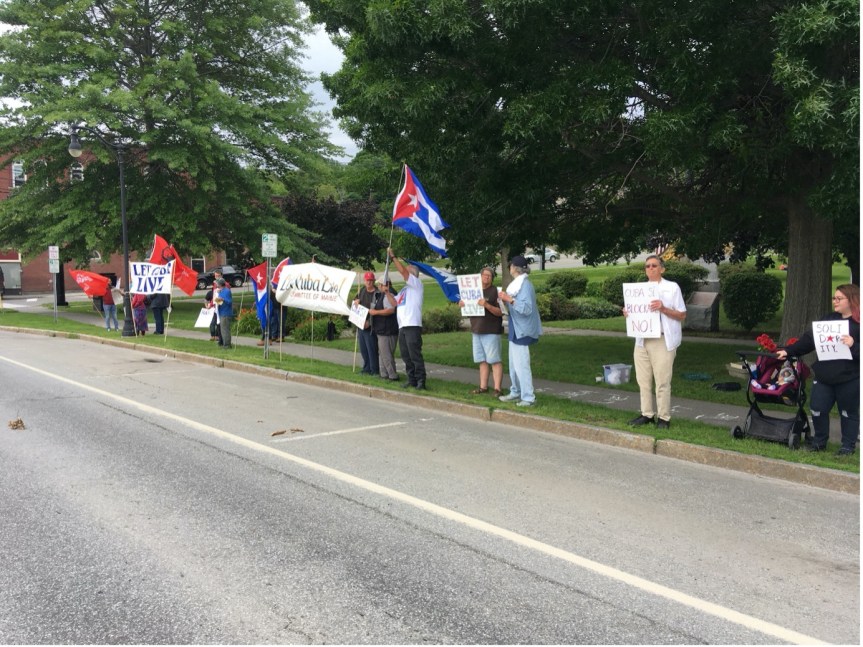
Justice-seeking peoples in the United States have joined in struggle to defend Cuban independence and/or Cuba’s revolution. This report from Maine takes note of two rainy day rallies on July 25, each of 25 or so people and each one held in protest of the U.S. blockade of Cuba. One was in Bangor, the other in Brunswick.

These protesters and other Maine people know that the blockade is purposed to overthrow of Cuba’s socialist government.  The author of a 1960 State Department memo – born in Houlton, Maine – made that perfectly clear.

These Mainers were joining in solidarity with demonstrations carried out on July 25 throughout the United States, for example, in Washington, Seattle, San Francisco, Fresno, Los Angeles, Phoenix, Albuquerque, Dallas, Milwaukee, and Pittsburgh. In Washington, Cuban-Americans calling for Puentes de Amor (Bridges of Love) gathered with supporters in Lafayette Park to protest the blockade. They had walked from Miami to Washington.

Lots of Maine people know that Cuba is at another watershed moment. Many recall the onset in the early 1990s of Cuba’s “Special Period,” which was resulted from the fall of the Soviet Bloc. The powers in Washington at that time sought to finish off Cuba’s revolution. The “Cuba Democracy Act” of 1992 was their big tool.

Similarly, the Biden presidency now takes advantage of three phenomena: economic and healthcare havoc wrought by the Covid 19 pandemic, the Trump administration’s intensified blockade restrictions, and mounting shortages in Cuba of money and goods essential for human survival.

Now Biden inveighs against supposed autocracy in Cuba. His administration remains silent when elected officials viciously threaten Cuban leaders. He and they follow a script fitted out for anti-government demonstrations like the ones playing out in Cuba on July 11. These surely reflected U.S. financial support provided over decades for internal subversion in Cuba. Accompanying them was a massive social-media assault against Cuba’s government orchestrated from abroad.

U.S. media have long cast a blind eye to the political movements in the United States mobilized on behalf of Cuban independence and Cuba’s revolution. Those rallying in Maine on July 25 were testifying to their relevance now.

In 1992, at the beginning of Cuba’s Special Period, veteran Maine activists traveled to the island. Sensing big troubles ahead for Cuba at the hands of the U.S. government, they formed the Let Cuba Live Committee of Maine. The new organization undertook to educate and activate fellow Mainers.

Let Cuba Live arranged for the Pastors for Peace leader Rev. Lucius Walker Jr, to speak before a large crowd in Monument Square, in Portland, Maine on July 21, 2001 – 20 years and four days prior to the protests reported here.

“In issue after issue, in area after area, Cuba lights the way,” Lucius Walker insisted; “Cuba has established the fact that it is the leader in the world community in the affirming of and guaranteeing the rights of the poor people of this world.”

That was not news for the ruling classes in the United States for whom revolutionary Cuba was a threat. Therefore, as pointed out by Lucius Walker: “if we really want to see the world continue to have hope and possibility for the creation of a new society, we must support Cuba.”

Let Cuba Live of Maine – see www.letcubelive.org – admits to gratification.  The slogan that is the group’s name now resonates widely. It’s the title of an appeal to President Biden that, endorsed by 400 prominent activists, may be viewed in a full-page advertisement appearing in the July 23 New York Times. To see the open letter to Biden, go to www.LetCubaLive.com.

The twin rallies putting forth the demand of no more blockade broke new ground in Maine.  They gained support from multiple statewide organizations that oppose U.S. imperialism and war-making and/or try to make good on socialist aspirations.

What follows are excerpts from remarks offered by some of the rally participants at talk-sessions that concluded the two affairs.  A listing appears below of the organizations claiming commentators and many participants as members.

Here’s Barbara West: “We are not gathered today simply to demand a reduction in the criminal measures the US has taken against Cuba for 61 years.  We are here to insist on respect for Cuba as a sovereign country … We insist that land in Guantanamo occupied in defiance of the Cuban people be vacated. … Our respect for Cuba as a sovereign nation, with its people fully able to chart their own path without any US interference, is really our agenda today.”

And Michael Mosely: “I do not believe that there is a difference between a Hispanic family in Maine and a Hispanic family in Cuba. Just like there is no difference between a Black family in Maine and a Black family in Africa. We are all under the same system fighting the same fight.”

And Daniel Carson: “In the over six decades that the United States has enforced such a cruel blockade, the Cuban government has reported that economic losses resulting directly from the blockade total $144.4 billion dollars. These figures are those of 2020. Excluded is an additional $5.4 billion in economic losses this year. When adjusted for dollar depreciation over the life of the blockade the number becomes $1.098 trillion … So when [U. S. leaders] proclaim Cuba to be a failed state or that the Cuban revolution has failed: this is a bold-faced lie. The truth lies in those numbers. That’s why we are here today to say, “End the blockade!”

And Bruce Gagnon: “The US has an MO (modus operandi), a way of repeating its regime change behavior as it desperately attempts to hang-on to its place as ‘king of the hill’. But due to $27 trillion in debt, more than 800 costly military bases around the world, and long-time disinvestment in our own nation, America’s ‘imperial project’ is destined to collapse. US efforts to force regime change in Cuba – like in Nicaragua, Venezuela, Bolivia and other nations – are destined to fail.”

And Ed Jurenas: “When the U.S. talks about democracy, it is hypocritical. It does not support the most basic democratic right to self-determination, but viciously opposes it. And in regard to the economic democracy championed by Cuba – free health care, free education, a right to housing, the just distribution of food – the U.S. is silent in its shame. Cuba ascribes to economic democracy, something the U.S. is incapable of practicing.”

Most of the participants in the Maine rallies belonged to one or more of these organizations: the Let Cuba Live Committee of Maine, The Global Network Against Weapons & Nuclear Power in Space, Maine Veterans for Peace, Maine Socialist Action, Maine Democratic Socialists of America, and the Maine Communist Party. The latter group had responsibility for organizing the rallies.

Lucius Walker has the last word (July 21, 2001): “We must name the powers. We must stand against the powers. And we must realize that in the course of doing so, we wrestle not just with flesh and blood, but with principalities and powers, against spiritual wickedness in high places. We cannot be deterred because they say evil things about us, because they revile us, because they put us in jail. We must continue to march, to work, to struggle, to be in solidarity no matter what obstacles they put in our way, because we are the future hope of the world! “

Stopgap Methods Won’t Fix Migration Challenge, by Tom Whitney

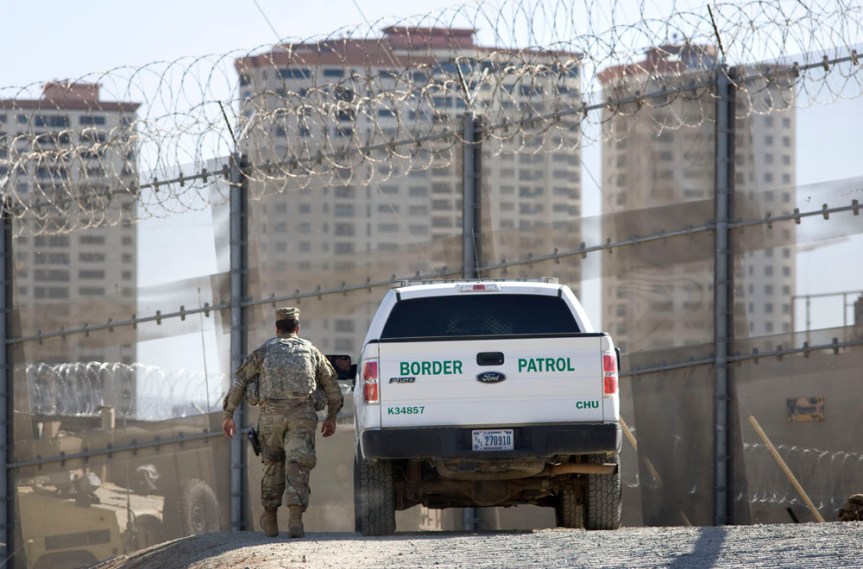
The continuing press of migrants from Mexico and Central America arriving at the U.S. southern border has forced the Biden administration to send Vice President Kamala Harris south on a negotiating mission. According to The New York Times, “She will work with the leaders of Central American governments.” Armed with “billions of dollars,” she will seek collaboration in  “reducing the violence and poverty” that predispose to migration.

A look at realities in Honduras and Guatemala suggests her goal is unattainable.  That’s because past U.S. policies and actions in the region, interventionist and exploitative, contributed to the very life-threatening conditions Harris is targeting. To succeed, the Biden administration must grapple with a dark legacy fashioned by the United States itself.

In Honduras presently, 62 percent of the population live in poverty, 40 percent in deep poverty. The impact of the pandemic and of hurricanes during 2020 caused 700,000 more Hondurans to fall into poverty and 600,000 more to lose jobs. Estimates of Hondurans facing food insecurity range from 1.3 million – with 350,000 close to starvation – to   2.9 million.

Journalist Giorgio Trucchi recently catalogued other hazards of Honduran life. He cites at least 2000 attacks on defenders of human rights in 2016-2017, 278 murders of women in 2020, 86 journalists killed over two decades, 372 killings of members of the LGBTQ community over 10 years, and a 12.5 percent GDP loss in 2018 ascribed to corruption.

As of September, 2020, 2.8 million Guatemalans were “severely food insecure. Now 80 percent of Guatemala’s indigenous population are malnourished, and 59 percent of Guatemalans live in poverty. According to the World Food Program, “The number of households that did not have enough to eat during COVID-19 nearly doubled in Guatemala compared to pre-pandemic numbers. In Honduras, it increased by more than 50 percent.”

That agency indicated that, “Hunger in El Salvador, Guatemala, Honduras and Nicaragua has increased … from 2.2 million people in 2018 to close to 8 million people in 2021 – a result of the economic crisis caused by COVID-19 and years of extreme climate events.” Now, “nearly 15 percent of people surveyed by WFP in January 2021 said that they were making concrete plans to migrate.”

U.S. political leaders have turned a blind eye to the suffering. The two governments win points by welcoming multinational corporations and repressing leftist political movements.  All three governments are fine with a worldwide economic system featuring support for healthcare, schools, and pensions; freedom for corporations; and the selling-off of public assets. 

Officials in Washington put Honduras to good use. The country is a transfer point for illicit drugs heading north, with the result that Honduras is a regional center for drug-war activities. The Soto Cano U.S. airbase was ground zero for U.S. support in the 1980s for Contra mercenaries fighting Nicaragua’s leftist Sandinista government. That base, where 1500 U.S. troops are stationed, is the hub of U.S. military operations in the country and farther afield.

President Manuel Zelaya was advancing progressive reforms, that is, until June 29, 2009, when a military coup deposed him. U.S. interventionists played a role.  The plane transporting Zelaya from Tegucigalpa to Costa Rico stopped at the Soto Cano base. And, according to Wikileaks, Secretary of State Hilary Clinton knew beforehand what was happening, but took no action.

Corruption and criminality took over after the coup. The drug-dealing activities of President Porfirio Lobo, winner of a low-turnout election shortly after the coup, recently came to light. Analyst Karen Spring explains that a drug cartel financed Lobo’s campaign; that Lobo reciprocated by arranging for foreign agencies to finance developmental ventures; that he, along with family members, fixed it so that drug money was laundered through projects like mining operations, hydroelectric works, highways, and other energy-related initiatives.

In 2019, a U.S. court convicted Juan Antonio Hernández of drug-trafficking. His brother is Juan Orlando Hernández, who is Lobo’s successor as Honduras’s president. Citing evidence from other trials, The New York Times recently suggested that Juan Orlando is “a key player in Honduras’ drug-trafficking industry [and] that formal charges against Mr. Hernández himself may not be far away.”

Guatemala’s recent history set the stage for another anti-people government.  A 36-year war pitting leftist guerrillas against military forces led by U.S.-trained officers and assisted by the CIA led to the deaths of 200,000 people. Most of them were poor, rural, and indigenous.

In 2019, lawyer and activist Jennifer Harbury lamented that “so many of the high-level Guatemalan intelligence leaders of that era, who were trained in the School of the Americas and who served as CIA paid informants [became] involved in the drug trade and … started their own cartels… And they’re devouring the country using the same techniques of torture and the terror that they used before. Once again, everyone is roaring north.”

According to nacla.org, “Guatemala’s market democracy” was founded on “genocidal violence that murdered successive generations of political leaders.” The peace process itself led to “neoliberal policies of resource extraction, free trade, and privatization” with the result of “poverty, landlessness, decrepit institutions.”

The U.S. Vice President deserves a little sympathy. She and the Biden Administration do get credit for recognizing that migrants from Central America are running for their lives. But as she confers with Central American politicians, her hands are tied.

Her negotiating partners understand the rules of international capitalism: loan payments are continued, labor is cheap, natural resources are plundered. Her government and theirs operate on the premise, one, that “money talks” and, two, that satisfaction of human needs is provisional.

Vice President Harris embodies a contradiction. She wants to fix a migration problem due mostly to capitalism. But to do so, she must betray basic capitalist assumptions.

The pressure is on. News item, March 30: “A new migrant caravan began to form Monday night (March 29) in the Honduran city San Pedro Sula … Hundreds of citizens have gathered at the main bus terminal to organize and begin the new mobilization.”