Chile’s Neoliberal nightmare, New Constitution, and Daniel Jadue, by Tom Whitney

Working and marginalized people in Chile can now see possibilities of relief from the political grief of decades.  A new constitution is in the works. And Daniel Jadue, author of an astonishingly progressive program as mayor of Rocoleta municipality, is a presidential candidate. The election is set for November 21, 2021.

Chileans will vote on May15-16 to select 155 members of a constitutional convention. They will also choose city council members, mayors and governors. The vote comes after months of political turbulence. Repeating anti-government demonstrations on a massive scale beginning in October 2019 persuaded the rightwing government of billionaire President Sabastian Pinero, and military leaders, that for the sake of peace in the streets they had better plan for a new Constitution.

After pandemic-related delay, the process started in October 2020 with a plebiscite for approving the convention. The next step, again delayed by the pandemic, is voting in May to select the convention delegates. 

The Communist Party’s electoral coalition, carrying the name Worthy, Green, and Sovereign Chile, Worthy Chile for short, has arranged with the center-left Broad Front coalition to jointly select the leftist candidate delegates to the convention. This will be Chile’s first constitutional convention with delegates being chosen by popular vote. Fifty percent of them will be women. 

Many leftists complain that the convention’s requirement for a two-thirds majority to approve constitutional provisions is a threshold so high as to stymy progressive change. Many are displeased that most delegates are tied to political parties, which are widely distrusted in Chile. They would have preferred more delegates representing social movements.

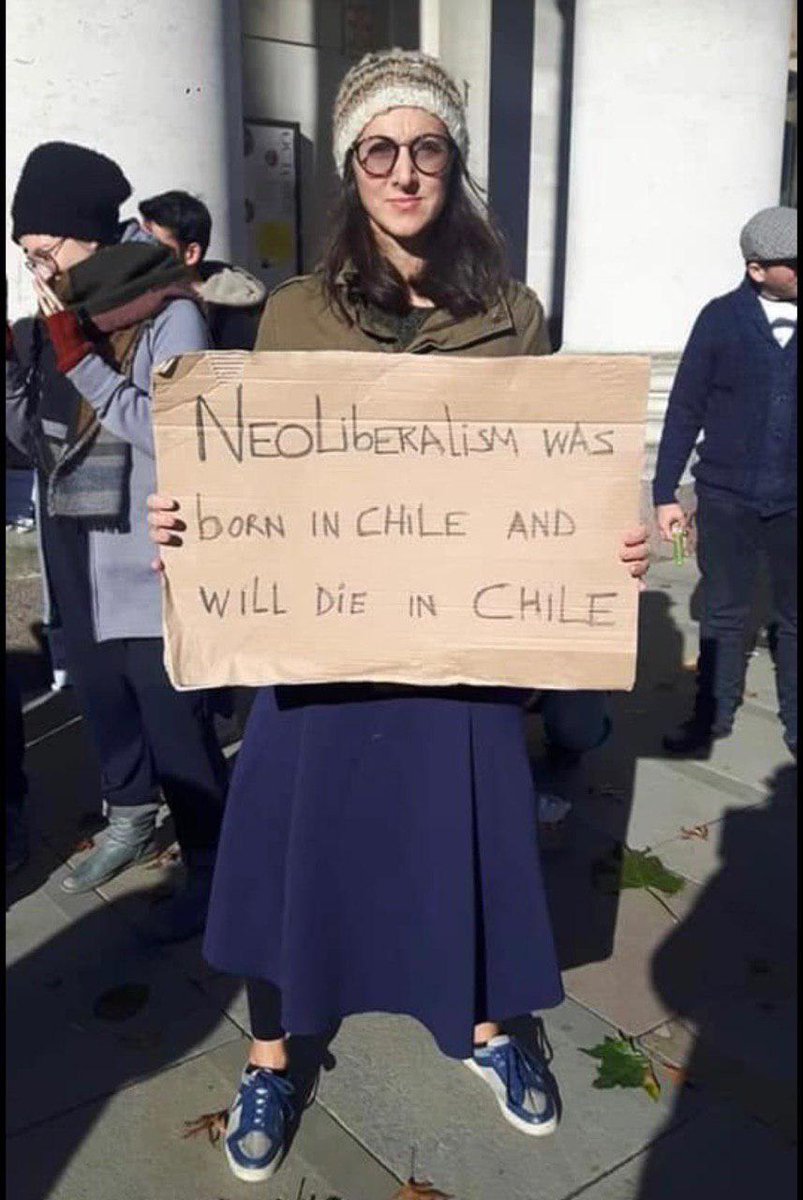
Working class Chileans have good reason to seek a new Constitution. The current one, instituted in 1980 by a military dictatorship to serve neoliberal purposes, lived on after dictator Pinochet departed in 1990. Subsequent governments, even socialist ones, have had to bend to its rules.

That Constitution instituted “radical neoliberalism,” according to the Council on Hemispheric Affairs. It “privatized fundamental aspects of the lives of Chileans, …  imbued principles of profit and capital investment in such key and sensitive sectors as education, healthcare, pensions, labor regulations, and other socially vital areas of the economy.”

According to the report, “Chile is now one of the most dramatic examples of social and economic inequality on the planet; … the richest 1% of Chileans hold 26% of the nation’s wealth … Chile ranks seventh among the most unequal countries on the planet.”

One observer notes that Chile “is the first country in the world to have privatized its sources and management of water.” Another claims that 4000 very wealthy families ultimately determine most of what happens in Chile, which necessarily would include actions of the notably cruel and corrupt militarized police known as carabineros.

Daniel Jadue represents a different Chile. The Communist Party’s Central Committee on April 24 announced that the Party would shortly be advancing Jadue as the most appealing candidate for left-leaning political parties in the upcoming presidential election.  Jadue “has aroused full, cross-the-board support from a large segment of our society,” remarked Communist Party President Guillermo Teillier.

Of Palestinian heritage, Jadue prepared in sociology, architecture, and urban planning; headed the Palestinian Youth Organization of Latin America until 1993; and that year joined Chile’s Communist Party. Born in Recoleta in 1967 and mayor since 2012, Jadue told an interviewer in 2019 that, “We are a very diverse and multicultural community [and] home to large portions of the Santiago’s informal sector.” Recoleta municipality or “commune,” population 162,000, is part of greater Santiago.

The interviewer praises Jadue as “one of the most important figures on the Latin American left.” He thinks “Jadue’s administration is building a laboratory for communism of today and of the future.” That seems to be Jadue’s intention: “In Recoleta, we want to form an open-door state, wherein all that matters are its citizens … We are nothing more than humble employees of the citizenry, those who truly constitute the state. Therefore, whenever our citizens come to us with a problem, we do everything in our power to solve it.”

Jadue describes what’s been done. About the “Open School,” for example, he reports that “some young men came to us, saying they wanted to get off the streets …So, we [are] keeping schools open until 10:00 PM daily, and over the weekend as well. This gave the whole community the opportunity to make use of the spaces as they saw fit …  Our plan is to create an open university that offers anyone in the community access to free university classes in every subject area. Almost 70 percent [of the activities] are self-directed, by both the older and younger people who attend.”

He turns to health care changes: “We had very few doctors in the community and just four medical offices …That’s one medical practice per every 40,000 inhabitants…. So, [we sought] to increase the number of doctors from eleven to forty. But we then ran into problems with overcrowding …We built two medical attention hubs for noninvasive primary care at each of Recoleta’s neighborhood councils. We were able to provide 75 percent of senior citizens with medical access within three blocks of their residence.”

About “the people’s pharmacy project,” Jadue recalls that, “Our residents told us scarcity and high prices were making medication the second biggest obstacle to proper care in Recoleta …Specialized medications were too expensive [and] Recoleta had only two pharmacies …Chilean law prohibits the state from engaging in any kind of commerce … [so we formed] a consumer’s cooperative, with the goal of driving down the cost of medication … Now, Communes of every stripe [throughout Chile] have people’s pharmacies.” 

Asked about the “optician program,” he states that, “we are selling 250 pairs [of glasses] a week now. And, “one last health-related service we offer is our people’s dentistry program. We have dentists who take mobile kits out into the community”

At “the people’s bookstore … all kinds of books are sold … all at an extremely low price. The municipality was able to cover all operational costs, paying for the location, salaries, and all the bills. We can then pass these savings on to the public, selling books at the same price we got them for from the publisher or distributor.”

The commune “invested in the promotion of reading. Our biggest resources are the ten public libraries in Recoleta, which make us the municipality with the most public libraries nationwide.” The municipality invests “about USD $500,000 a year in the public library system.”

To further accessible housing, Recoleta inaugurated its “Social Justice 1” condominium in June 2020. The structure, which cost $1.2 million USD to build, contains 38 rent-subsidized, three-bedroom apartments. “Today in the condominium, 95% of the beneficiaries of the project are women and, of them, 31 % were victims of family violence.” 

Reflecting on changes in Recoleta, Jadue maintains that, “A socialism that doesn’t govern any better than the Right has no future, nor any right to guide society’s destiny. If socialism wants an opportunity, it will have to be much more democratic, much more effective, and much more efficient.”

He points out that, “the Communist Party has been undergoing a resurgence. The accomplishments of local Communist governments have given citizens a renewed hope in the party.”  Overall, “The goal of our Communist administration is to fundamentally transform the state. As it currently exists, it functions purely as a vehicle for class domination. Its structures are completely impervious to the expectations and needs of its citizenry.

Presently Jadue is running second in presidential polling to the current favorite Pamela Jiles, a flamboyant journalist and legislator for the Humanist Party. She recently gained 21.7% approval in one tally and 18% in another, with Jadue scoring 10.3% and 11 %, respectively.

May Day and the Haymarket Martyrs, by Tom Whitney

(Source: Labor Standard, Vol1, No3, 1999)

(Image Credit: Stock Montage/Getty Images)

Jose Marti, author of “A Terrible Drama”, which is cited in the present article, lived in exile in the United States for 15 years until 1895. Having organized Cuban rebel forces fighting in Cuba’s Second War for Independence, Marti died in battle early in the war. In the United States he was a correspondent for Latin American newspapers.

On May 1, 1886, Albert Parsons, head of the Chicago Knights of Labor, led 80,000 people
through the city’s streets in support of the eight-hour day. In the next few days they were joined nationwide by 350,000 workers who went on strike at 1,200 factories, including 70,000 in Chicago.

On May 3, August Spies, editor of the Arbeiter-Zeitung (Workers Newspaper), spoke at a
meeting of 6,000 workers, and afterwards many of them moved down the street to harass scabs at the McCormick plant. The police arrived, opened fire, and killed four people, wounding many more.

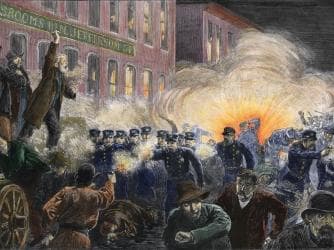
On May 4, Spies, Parsons, and Samuel Fielden were speaking at a rally of 2,500 people held to protest the police massacre when 180 police officers arrived, led by the Chicago police chief. While he was calling for the meeting to disperse a bomb exploded, killing one policeman. The police retaliated, killing seven of their own in the crossfire, plus four others; almost two hundred were wounded. The identity of the bomb thrower remains unknown.

On June 21, 1886, eight labor leaders, including Spies, Fielden, and Parsons went on trial,
charged with responsibility for the bombing. The trial was rife with lies and contradictions, and the state prosecutor appealed to the jury: “convict these men, make an example of them, hang them, and you save our institutions.”

Even though only two were present at the time of the bombing (Parsons had gone to a nearby tavern), seven were sentenced to die, one to fifteen years imprisonment. The Chicago bar condemned the trial, and several years later Governor John P. Altgeld pardoned all eight, releasing the three survivors (two of them had had their sentences reduced from hanging to life imprisonment).

On November 11, 1886, four anarchist leaders were hanged; Louis Lingg had committed suicide hours before. Two hundred thousand people took part in the funeral procession, either lining the streets or marching behind the hearses.

Unfortunately, the events surrounding the execution of the Haymarket martyrs fueled the
stereotype of radical activists as alien and violent, thereby contributing to ongoing repression.

Over the years the remains of many deceased or martyred radicals, among them Emma
Goldman, Bill Hayward, and Joe Hill, were deposited at the Haymarket Monument in Chicago, where seven of the eight men on trial lie buried. Ever since that time, in almost every country except one (guess which?) May 1 has been honored as International Workers Day.

The internationalization (if not “globalization”) of the Haymarket legacy was apparent two days after the hangings when José Martí, leader of Cuba’s struggle for independence from Spain, who was then living in exile in New York, wrote a detailed, emotion-filled report of the events leading up to the executions. Full of analysis, his article entitled “A Terrible Drama” appeared on January 1, 1888, in the Argentine paper La Nación, published in Buenos Aires. Early on in his piece he notes:

“Frightened by the growing power of the plain people, by the sudden coming together of the working masses (previously held back by the rivalries of their leaders), by the demarcation of two classes within the population — the privileged and the discontented (the latter a thorn in the side of European high society) — the republic determined to defend itself with a tacit covenant, a complicity whereby criminal action is triggered by the authorities’ misdeeds as much as by the fanaticism of the accused, in order to use their example to terrify — not by means of pain directly visited upon the rabble, but by the fearsome revival of the hangman’s hood.”

At the end of his long article José Martí quoted from the Arbeiter-Zeitung issued on the day of the executions:

“We have lost a battle, unhappy friends, but we will see in the end an ordered world that
conforms to justice: we will be wise like the serpent and quiet like the dove.”
In our own time the Uruguayan writer Eduardo Galeano has commented on “A Terrible Drama” (in his Memories of Fire, vol. II):

“The scaffold awaited them. They were five, but Lingg got up early for death, exploding a
dynamite cap between his teeth. Fischer was seen unhurriedly humming the ‘Marseillaise.’
Parsons, the agitator who used the word like a whip or a knife, grasps the hands of his comrades before the guards tie his own behind his back. Engel, famous for his sharp wit, asks for port wine and then makes them all laugh with a joke. Spies, who so often wrote about anarchism as the entrance into life, prepares himself in silence to enter into death.

“The spectators in the orchestra of the theater fix their view on the scaffold — a sign, a noise, the trap door gives way, now they die, in a horrible dance, twisting in the air. [Here he quotes Martí.]

“José Martí wrote the story of the execution of the anarchists in Chicago. The working class of the world will bring them back to life every first of May. That was still unknown, but Martí always writes as if he is listening for the cry of a newborn where it is least expected.”

Cuba’s COVID-19 Vaccines Serve the People, Not Profits, by Tom Whitney

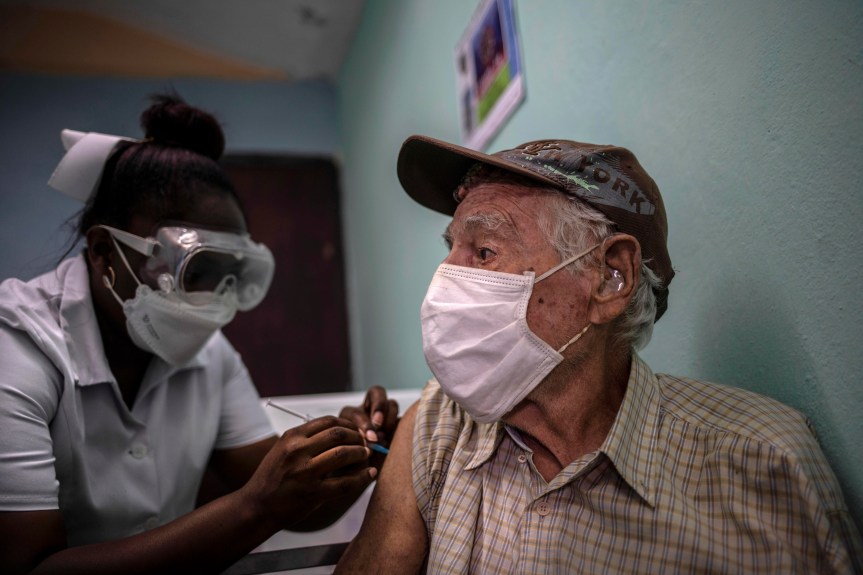
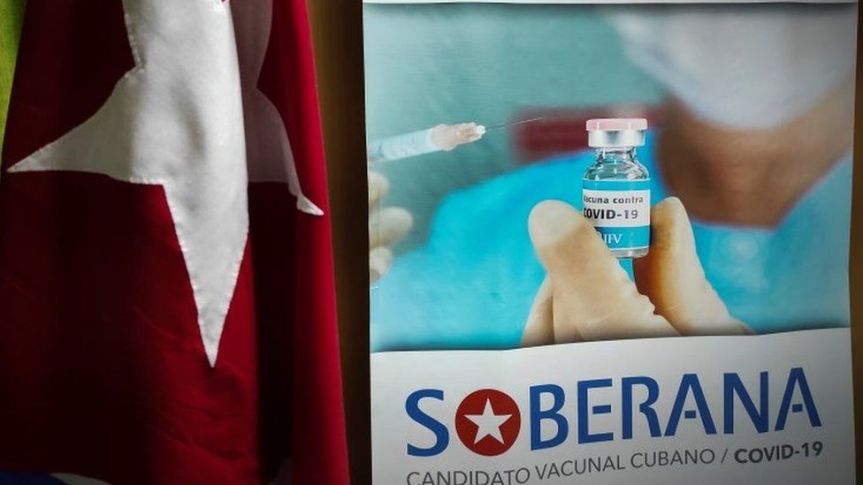
Cuba’s socialist approach to developing vaccines against COVID-19 differs strikingly from that of capitalist nations of the world. Cuba’s production of four vaccines is grounded in science and dedicated to saving the lives of all Cubans, and to international solidarity.

The New York Times’s running report on the world’s vaccine programs shows 67 vaccines having advanced to human trials; 20 of them are in the final phase of trials or have completed them. The United States, China, Canada, the United Kingdom, Germany, South Korea, and India have each produced many vaccines; most vaccine-manufacturing countries are offering one or two vaccines.

Cuba is the only vaccine manufacturer in Latin America; there are none in Africa. The only state-owned entities producing the leading vaccines are those of Cuba and Russia.

Cuba’s Finlay Vaccine Institute has produced two COVID-19 vaccines. Trials for one of them, called Sovereign I, focus on protecting people previously infected with COVID-19. The antibody levels of some of them turned out to be low, and the vaccine might provide a boost.

The other vaccine, Sovereign II, is about to enter final human trials. For verifying protection, these trials require tens of thousands of subjects, one half receiving the vaccine and the other half, a placebo vaccine. Cuba’s population is relatively small, 11 million people, too small to yield enough infected people in the short time required to test the vaccine’s protective effect. That’s why Sovereign II will be tested in Iran.

100 million doses of Sovereign II are being prepared, enough to immunize all 11 million Cubans, beginning in March or April. The 70 million remaining doses will go to Vietnam, Iran, Pakistan, India, Venezuela, Bolivia, and Nicaragua. Sovereign II “will be the vaccine of ALBA,” explained Venezuelan Vice President Delcy Rodríguez, referring to the solidarity alliance established in 2004 by Venezuelan President Hugo Chavez and Cuba’s Fidel Castro.   

Cuba’s strategy in commercializing the vaccine represents a combination of what’s good for humankind and the impact on world health. We are not a multinational where a financial objective comes first,” says Vicente Vérez Bencomo, director of Cuba’s Finlay Vaccine Institute. Income generated by vaccine sales abroad will pay for health care, education, and pensions in Cuba just as happens with exports of medical services and medicines.

Cuba’s Center for Genetic and Biotechnological Engineering is developing two other COVID-19 vaccines; One, named “Mambisa” (signifying a female combatant in wars of liberation from Spain), is administered via the nasal route, just as is Cuba’s hepatitis B vaccine.  The other vaccine, named “Abdala” (a character in a Jose Marti poem) is administered intramuscularly. The two vaccines are involved in early trials.

Cuba was ready

Cuban education emphasizes science and technology. In the 1990s, Cuba accounted for 11% of doctorate-level Latin American scientists. Cuban scientists work in the 50 or so biomedical research and production facilities which together make up Cuba’s state-owned BioCubaFarma Corporation, and which produces vaccines, drugs, medical tests, and medical equipment. It makes 60% of medicines used in Cuba, and 8 of 12 vaccines.

Cuba previously produced a pioneering vaccine that prevents life-threatening infection caused by type B meningococcus. Cuba developed a genetically-engineered hepatitis B vaccine and a vaccine offering palliative treatment for lung cancer. A Cuba-developed vaccine offers protection against infection, particularly childhood meningitis, caused by the Hemophilus Influenza type B bacterium.

In fashioning vaccines, Cuban scientists relied on familiar technology.

To provide an immunological extra, the antigen of Cuba’s Sovereign II vaccine is mixed with tetanus toxoid, as was done with Cuba’s Hemophilus influenza vaccine. As with other vaccines, scientists used a segment of the virus’s protein – here the COVID-19 virus – to form an antigen to stimulate protective antibodies. By contrast, the U. S. Pfizer and Moderna vaccines contain the whole viral protein, not a segment. That protein contains “genetic instructions” which enter human cells, causing them “to make spike proteins, which then get released into the body” where they trigger antibodies.

Observers suggest that this innovative U.S. technology may be less safe than the one used in Cuban vaccines.  Not requiring extremely cold storage, as do the U.S. vaccines, the Cuban vaccines are suited for areas without adequate refrigeration capabilities.

Cuba’s bio-medical production sector has also created drugs for treatingCovid-19 infection. Interferon, an antiviral agent developed in Cuba, produced in China, and used throughout the world, prevents many Covid – infected patients from becoming critically ill. The Cuban anti-inflammatory drug Jusvinza, used for treating auto-immune diseases, and Cuba’s monoclonal antibody Itolizumab, which moderates exaggerated immune responses, are both effective in reducing Covid-19 deaths.

The other way

The U. S. approach to producing and distributing COVID-19 vaccines is based on private enterprise, although the U. S. government did deliver billions of dollars to pharmaceutical companies to produce vaccines free of charge to recipients. The companies have contracted with purchasers abroad.

According to forbes.com in November, 2020,  ‘If Moderna’s [vaccine] can get FDA approval and can make enough doses, its top line could be nearly $35 billion higher … than … in the last 12 months.” Another report suggests that, “The companies (Pfizer and Moderna) stand to earn billions of dollars in profits from their COVID vaccines this year [and] there will be more profits in later years.” The companies “claim the rights to vast amounts of intellectual property.” 

With corporations in charge, distribution of COVID-19 vaccines is skewed. As of Jan. 27, “some 66.83 million doses have been sent out, of which 93 percent were supplied to only 15 countries.” In Latin America, only Brazil, Argentina, Mexico, and Chile have secured purchase contracts adequate for immunizing entire populations. The companies’ contracts with African nations allow for immunization of only 30 percent of Africans in 2021. Meaningful immunization has yet to begin there. 

The wealth divide determines distribution. Epidemiologists at Duke University report that, “While high-income countries represent only 16% of the world’s population, they currently hold 60% of the vaccines for COVID-19 that have been purchased so far.” Cuban journalist Randy Alonso reports that only “27 percent of the total population of low and middle income countries can be vaccinated this year.” 

The world is on the brink of a catastrophic moral failure – and the price of this failure will be paid with lives and livelihoods in the world’s poorest countries,” declared Dr. Tedros Adhanom Ghebreyesus, director of the World Health Organization, on January 18. He warned that, “some countries and companies continue to prioritize bilateral deals, going around COVAX, driving up prices and attempting to jump to the front of the queue.”

The WHO initiated the global vaccine collaboration COVAX to assure access by poor nations to COVID-19 vaccines. The 190 nations that are enrolled agreed to obtain vaccines through COVAX. Rich nations would supply COVAX with funds to enable 90 poor nations to receive no-charge vaccines. COVAX anticipates distributing two billion doses, enough to immunize only 25 % of the populations of poor nations during 2021.

Problems include: wealthy nations order vaccines independent of COVAX; they buy more vaccine than they need; manufacturers set prices; and prices are secret, variable, and very high.

Most other countries producing COVID-19 vaccines are at variance with Cuba through their profiteering and because they are complicit with the U.S. economic blockade of Cuba. Pursuing routine overseas commercial affairs, they all too easily adjust to U.S. regulations by means of which that cruel policy is enforced. More to the point, the U.S. blockade hinders Cuba’s vaccine efforts, and they are silent.

“We don’t have in Cuba all the raw materials and supplies we’ll need for the unprecedented scale of production that vaccinating our whole population requires,” Dagmar García-Rivera, Director of Research at Cuba’s Finlay Vaccine Institute, explained.  “They have to be purchased and for this, we need financing. This is made infinitely more difficult by the US embargo … Procuring the necessary reagents for research and the raw materials for production is a challenge we face daily.”

In confronting the pandemic, Cuba exhibits attention to detail suggestive of a level of caring and concern not readily matched elsewhere. For example, Cuba’s government-friendly cubadebate.cu website provides a daily, detailed update of the infection’s impact. Its report on Jan. 27 presents data relating to cities, provinces, the nation, and the world – and the nation’s intensive care units. Readers learn that of 43 patients in intensive care that day, 16 were in critical condition, stable or unstable, and 27 were in “grave” condition.

All 43 cases are reviewed, beginning with: “Cuban citizen, 75 years old, from Alquízar, in Artemisa, already suffering from arterial hypertension and ischemic cardiopathy who is afebrile, on mechanical ventilation, is hemodynamically stable… with acceptable blood gases (oxygen and CO2), is improving radiologically with inflammatory lesions in the right [lung] base – reported as critical but stable.” The cases of four Cubans who died that day are also presented.

Fighting a pandemic in Cuba, it’s understood, is no casual matter. Nor is the health of Cuba’s people. 

To Normalize US-Cuban Relations, Restore Working Embassies, by Tom Whitney

The new Biden administration may soon ease regulations enforcing the U.S. economic blockade against Cuba.  However, if Oregon Senator Ron Wyden’s new bill, the U.S.-Cuba Trade Act of 2021, becomes law, the blockade itself will disappear.

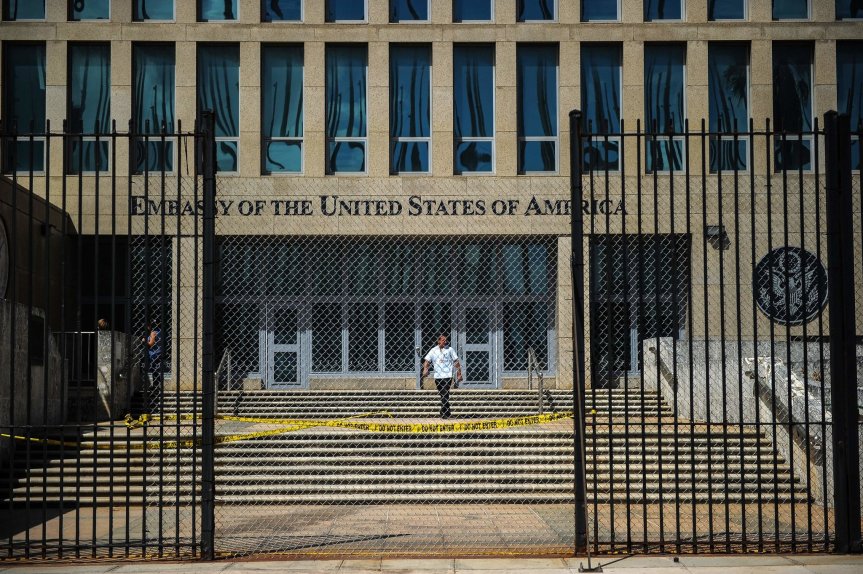
Meanwhile, the two countries’ embassies in Havana and Washington are dysfunctional. No normal relations will obtain until they are fully operative. A report recently issued by the Washington-based National Security Archive (NSA) explores circumstances through which the embassies are disabled.

The NSA is a truth-telling organization that monitors U.S. conduct of international affairs by reviewing declassified U.S. government documents obtained through the Freedom of Information Act.

In September 2017, the State Department reported that some U.S. diplomats stationed at U. S. embassy in Havana had for months, one by one, sought relief from incapacitating symptoms such as dizziness, hearing deficits, visual loss, mental confusion, painfully loud noises, insomnia, headaches, and balance problems. A few Canadian diplomats in Havana were similarly affected.

A“covert sonic device” was mentioned.  President Trump claimed that, “Cuba did some bad things.”  Citing health risks, the State Department recalled 60 percent of Embassy employees and, for the sake of reciprocity, expelled 15 Cuban diplomats from Washington. The Department warned U.S. travelers of health dangers in Cuba.

The Embassy quickly stopped processing entry visas for Cubans seeking to visit the United States.  These are only available now in U.S. embassies in third countries, and few Cubans can travel there to obtain them. Lack of embassy staffing in both countries hinders inquiries about travel, commercial affairs, and regulations. Cuba’s Washington Embassy can no longer provide consular serves to Cubans living in the United States.

The affected diplomats were evaluated at U. S. medical centers under State Department auspices. Specialists, unable to identify a cause for the symptoms, ruled out viral infection, toxins, hysteria, and chemical exposure.

CIA operatives in Havana were among the first to complain of symptoms.  A few U. S. diplomats in China and Tashkent also fell ill. Now for almost three years, no diplomats anywhere have been afflicted.

No visitors to Cuba have suffered in similar ways, nor have diplomatic personnel from countries other than the United States and Canada.

At stake is the future of U.S.  – Cuba relations. Vermont Senator Patrick Leahy claimed in 2017 that, “Whoever is doing this obviously is trying to disrupt the normalization process between the United States and Cuba. Someone or some government is trying to reverse that process.”

The NSA update, noted above, centered on a heavily-redacted report from the Accountability Review Board (ARB), which had been “mandated by Congress in 1986 to assist the State Department in addressing security challenges at U.S. Embassies abroad.”

Although Congress required ARB investigations to take place within 60 days of an incident, “the Trump administration delayed convening the ARB until early 2018.” The ARB submitted its classified report to the Secretary of State 18 months after the first diplomat reported strange symptoms.

The report noted, as regards afflicted diplomats, that, “we do not know how. We do not know what happened, when it happened, who did it, or why.” It confirmed that the CIA closed down its Havana station in September, 2017, just as the illnesses were first being reported.

The ARB report criticized “excessive secrecy that contributed to a delayed response.” It diagnosed “Systemic Disorganization” manifested by “serious deficiencies in the Department’s response in areas of accountability, interagency coordination, and communication, at all levels.” The result was “confusion [and] delayed effective, coordinated action.”

The report judged “the lack of a designated official at the Under-Secretary level to manage the response to be the single most significant deficiency.” It accused the State Department of not following procedural standards.

The ARB faulted the Department for not providing the Centers for Disease Control and Prevention with medical data for one year after it had requested a CDC investigation. The fact of a CDC investigation was unknown until a reference to it cropped up in a document reporting on another evaluation.  

That one, by the National Academy of Sciences, was sent to the State Department in August 2020. It too was unknown to the public, until it was leaked to the New York Times in December, 2020. According to the Times report,  the investigators concluded that, “The most probable cause [of the symptoms] was radiofrequency energy, a type of radiation that includes microwaves.” However, “they could not rule out other possible causes.”

The picture thus is of extreme disarray and secrecy. Nothing emerging from the studies or from U.S. government actions suggests lack of determination to resolve the embassy crisis. Easy tolerance of confusion and mystery is consistent with U.S. inclination to perpetuate initial allegations by officials against Cuba. Lack of closure apparently suited U.S. purposes.  

While the embassy stand-off persists, planning for normal relations by the new Biden administration is hobbled. Planners could, or should, take into consideration the NSA’s revelations suggesting that the impasse stems from cynical opportunism. They could, or should, pay respect to Cuba’s record of protecting foreign diplomats and of honoring international norms on conducting diplomacy.

Diplomatic relations between the two countries will continue. One looks in vain for extraordinary circumstances that would justify anything but normal arrangements. These necessitate a fully- functioning embassy and an ambassador. There’s been no U. S. ambassador to Cuba since diplomatic relations were re-established in July 2015.  

Besides, the U.S. image of concern for the safety of foreign diplomats needs burnishing. No word of sorrow or reassurance emanated from the U.S. government following a serious rifle attack against Cuba’s Embassy in Washington on April 30, 2020.    

Letter to End the US Embargo against Cuba, from Tom Whitney

Dear Comrades,

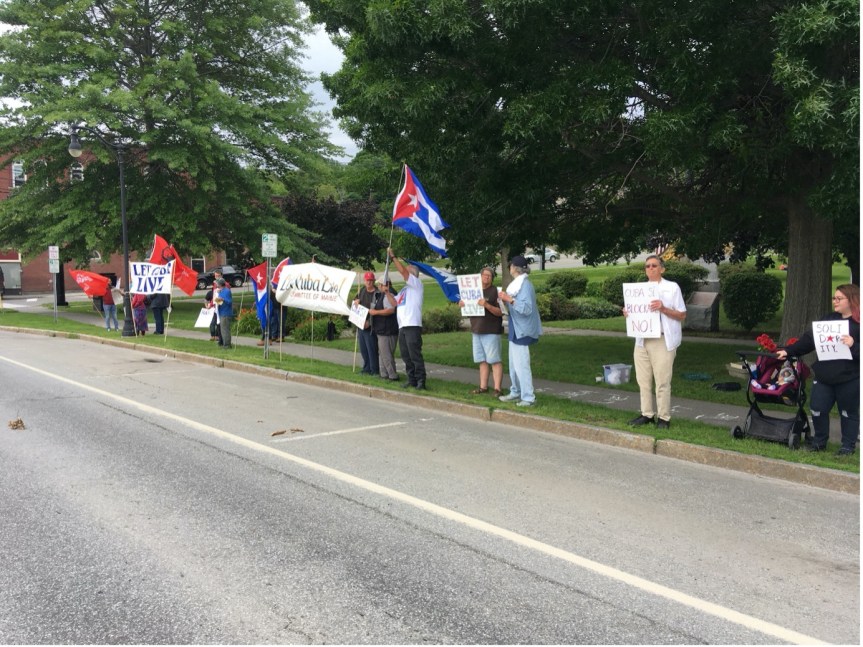
I write you on behalf of an ad hoc group of Maine people identifying themselves “Maine Citizens Opposed to the US Embargo against Cuba.”  We are asking you to add your name to the letter appearing below to the two Maine senators.

Now is a crucial time. There is a chance now – dare we say it? – to end the US economic blockade against Cuba. Sixty years is enough, right? The letter below explains.

And, just as important, please send out this communication to people you know, friends, family, anyone.

We are sending this communication also to people we know elsewhere in the US asking them to fashion a similar letter to their own representatives with a lot of names added.

In an email toatwhit@roadrunner.com, please say “Yes” to adding your name, and your town, to the letter to the senators. If you have questions or comments, please be in touch. Thank you.

In solidarity,

Tom Whitney, for the Let Cuba Live Committee of Maine, phone (207) 743-2183

Dear (name of Maine senator).

The U.S. trade embargo against Cuba has been in effect for almost 60 years. We, the undersigned, believe that’s long enough. Senator Ron Wyden of Oregon, Chair of the Senate Finance Committee, on February 4 introduced the U.S.-Cuba Trade Act of 2021. We presume that a similar bill will be introduced soon in the House of Representatives.

Senator Wyden’s proposed legislation appears to nullify regulations that enable the U.S. trade embargo against Cuba — in other words, would end that embargo. We realize that, as required by the Cuban Liberty and Democratic Solidarity (Libertad) Act of 1996, the power to end the embargo against Cuba rests exclusively with the U.S. Congress.

We understand too that public support for the U.S. embargo against Cuba has lessened. On the one hand, many citizens have long pointed to its cruelty and illegality. On the other, even supporters can appreciate that this U. S. policy has failed the test of so many years: it has not worked to bring down Cuba’s government.  Meanwhile, the Cuban people have experienced catastrophic damage at U.S. hands.

Cuba’s government, reporting to the United Nations General Assembly, indicated that between April 2019 and March 2020, U. S. economic sanctions deprived Cuba of $5.6 billion, also that Cuba’s total monetary loss over many decades has amounted to $144.4 billion, which, inflation being considered, is $1.098 trillion.

Therefore, we respectfully request that you, who represent us in the U.S. Senate, do everything in your power to end the U.S. embargo against Cuba. In that regard, we urge you to work toward passage in the Senate of Senator Wyden’s bill.

Any questions or comments relating to our request may be directed to Tom Whitney of Maine Citizens Opposed to the US Embargo against Cuba. His address is 102 Twitchell Road, South Paris, Maine, 04281; telephone (207) 743-2183.

Signed

 Name                                                                Town

1.

2.

3.

Shortage of Black Physicians Is Legacy of Racism and Class-Based Discrimination, by Tom Whitney

1108 words

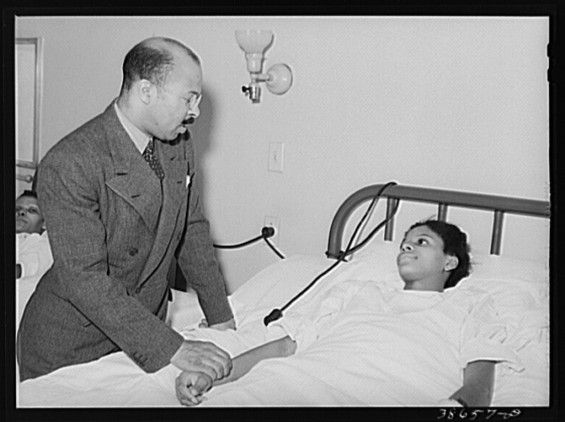
“Nobody wants to be an emergency at Harlem Hospital but if the Negro surgeon is visiting, pride cuts down the pain.”  Author Toni Morrison was alluding to the scarcity of Black physicians in 1926 (Jazz, 1992). Kareem Abdul-Jabbar took similar note almost 100 years later.

The basketball legend pointed out that, “Black babies survive more often under the care of Black doctors than white …  Black people have a reasonable trust issue with the medical profession dating back to the Tuskegee Experiment.” He explained that U.S. government physicians, studying the natural progression of syphilis, administered inert material to Black men rather than actually treat them.

He regards U.S. healthcare as a “more insidious and damaging threat to the health, lives, and economic well-being of Black Americans” than police brutality. He indicates that, “Black men have the lowest life expectancy of any demographic group, living an average of 4.5 years less than white men.”

The number of Black physicians is far less than the proportion of Blacks in the U.S. population.  In 2018,  56.2 % of physicians were white,17.1% Asian, 5.8% Hispanic, and 5.0% Black.  White people that year made up 76% of the population; black people, 13%.

Black people’s health suffers. “Racial and ethnic minority physicians are more likely to practice primary care and serve in underserved communities,” says one investigator. Studies show that Black men trust Black doctors more than they do white doctors; communication is more open. According to one overview, preventative care provided by Black physicians resulted in “a 19% reduction in the black-white male gap in cardiovascular mortality and an 8% decline in the black-white male life expectancy gap.”

Black women die at higher rates than white women from various types of cancer and from complications of pregnancy and childbirth. One factor may be their lack of trust in their physicians, especially white physicians. Another may be that not enough Black doctors are studying medicine.

Of all medical students in the early 1960s, only 2% were Blacks; 75% of them attended all-Black Howard and Meharry medical colleges. Then began the era of affirmative action. Theoretically, affirmative action would allow population groups subjected to discrimination to gain equal access to education and employment. Black youths wanting to be doctors would benefit.  

Applied to the process of deciding who should enter medical schools, affirmative action had results.  By 1969 Blacks were 2.7%  of all first-year medical students. The rates varied subsequently from 6.3% in 1974 to 5.7% in 1980, 8.0% in 1996, 7.2% in 2001, and 7.1% in 2018.

Medical schools were accepting Black applicants almost as readily as they did whites. Data from the American Association of Medical Colleges (AAMC) show 43.8% of the Black applicants being admitted in 1973, 37.6% in 1977, 50.3% in 1989, and 42.6% in 2001. Acceptance rates for whites were 35.8% in 1974, 67% in 1985, 38.5% in 1995, and 51.7% in 2001. The 2019 rates for Blacks and whites were 38% and 45%, respectively.

More Blacks were studying medicine, but not enough to meet affirmative action’s primary goal, which was to match the proportion of Black doctors to the share of Blacks in the general population. Regulation of the admissions process was supposed to have accomplished that.

Entering students, both Black and white, had benefited from favorable family circumstances. They very likely had received encouragement for academic achievement. Their families had provided them with both educational and financial support as they prepared themselves for medical school.

Financial capabilities, of course, are crucial to meet the well-documented high costs of medical education in the United States. Scholarships are in short supply.

Most Black young people don’t grow up in families able to offer the educational and financial resources required for all kinds of advanced education. Any long-term aspirations may be short-circuited at an early stage. Money is short, and even short-term planning is difficult.

Census Bureau data for 10 years from 2010 on show a yearly average of 36.5% Black children living in poverty, compared with 12.4% of all white children. Public schools that Black children attend are often segregated (still), crowded, and inadequate. Their parents may work at low-pay jobs, if they can find work. Homelessness is common. Parents – sometimes “essential workers” – work irregular hours and are often away from their children. Lives are precarious.

These children and their families would have had to move mountains for young people in their circumstances to gain a medical education. They represent a different Black population from the population group that does send Black students to medical schools. 

Data provided the present writer by the AAMC in 2002 is revealing. Parents of all U. S. first-year medical students between 1990 and 2000 provided the AAMC with information. They numbered 11,515 mothers and 11,203 fathers of Black students and 110,587 mothers and 110,315 fathers of white students.

The median yearly income for Black families was $49,000; for all Black families, $29,114. Half the fathers of the Black medical students had completed college; 25% of both fathers and mothers had obtained master’s degree. Half the mothers had attended college. Only 13% of all Black men and 13.6% of all Black women had completed college.

A divide stands between those Black students who have been able to study medicine and the unprepared group of young people who never made the attempt. The two groups are divided by social class. Being a doctor is not in the cards for the great majority of Black working-class children. That’s true also, it must be added, for white young people of working-class origin.

Public health experts Magnus and Mick argued convincingly in 2001 that affirmative action was not equipped to target social and economic discrimination. And so, the vast majority of working-class Black young people are still unable to attend medical school. However, to imagine that affirmative action might have been programed to allow them to attend would be wishful thinking. What’s required, it seems here, is overhaul of an unjust, discriminatory society.

Meanwhile, more Black women are studying medicine than Black men.  In 2018, 60.8% of entering Black medical students were female. Male and female white students were divided more or less equally. What accounts for the disparity? Is it a problem?

At issue is another imbalance, also with adverse consequences.  Kareem Abdul-Jabbar mentions both Black people’s diminished trust in white physicians and a shorter- life span for Black men than for white men. To the extent that Black men bestow more trust in the male doctors caring for them than they do in female doctors, then surely, it’s a problem.

Kerala Communists Serve the People, Look to Youth and Women, by Tom Whitney

Kerala, a state in India, is a bizarre anomaly among developing nations … Kerala has a population as big as California’s and a per capita annual income of less than $300. But its infant mortality rate is very low, its literacy rate among the highest on Earth … Though mostly a land of paddy-covered plains, statistically Kerala stands out as the Mount Everest of social development” – Bill McKibben, environmentalist and author

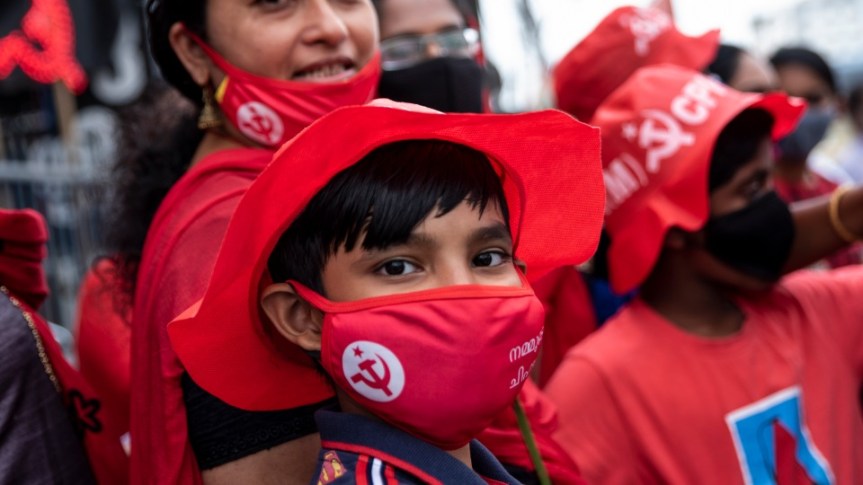
At 21 years of age, Arya Rajendran is barely eligible to vote. Nevertheless, she is now the mayor of Kerala’s capital city Thiruvananthapuram, population 2,585,000. She is a second-year student at All Saints College. She concentrates in math.

Youngest Mayor from Kerala Capital

Rajendran told a reporter that,  

“From the time I remember my childhood, I was going to Balasangham. … I am now the State President for Balasingham. I am also the Students Federation of India state committee member. My parents are branch committee members of CPI(M). And we firmly believe in what the party stands for.” Balasingham is the youth organization of the Communist Party of India, Marxist – the CPI(M).

In early December, Arya Rajendran was the candidate of Left Democratic Front (LDF) as voting took place in Mudavanmughal ward for the city council. She won 2,872 votes, 549 more than the candidate for the United Democratic Front (UDF), a coalition led by India’s National Congress political party. The CPI(M) is by far the largest force in the LDF, which also includes the Communist Party of India (CPI) and smaller leftist parties.

In city-wide voting, LDF candidates won 51 of the city council’s 100 seats. The council chooses the city’s mayor, and the CPI (M) district committee named Arya Rajendran as the LDF candidate for that office. Gaining the votes of 54 councilpersons on December 28, Rajendra became India’s youngest mayor.

The LDF government in Kerala in 2009 determined that women shall make up at least 50% of elected officials at every level of government. The CPI(M) in Kerala recently took steps to encourage young people to run for political office. One women, 22 years old and a candidate in the  in the local elections, stated that, “In Thiruvananthapuram, 66 per cent of CPI(M)’s candidates are women. Five of them are below 25 years of age. This is a party with a difference.” 

The CPI(M) – led government in Kerala is riding on a wave of good will   following success in organizing life-saving relief after massive floods in 2018 and dealing with outbreaks of the lethal Nipah virus in 2018 and 2019 and the Covid-19 pandemic recently.

Communist – led governments have held power intermittently in Kerala since 1957. That year the CPI gained political control through electoral victory – one of the world’s first socialist political parties to do so – and was immediately removed by India’s central government because of turbulence associated with land reform efforts.

Even so, the CPI retained a strong presence in Kerala during the 1960s.  From then on, however, the new CPI(M) has regularly won state elections as the dominant partner in the LDF coalition. Leadership of the state has alternated between the CPI(M) and India’s National Congress Party, leader of the UDF coalition.  The current LDF government, in office since 2016, will gain a new term if the LDF is victorious in state-assembly elections set for May, 2021.

CPI dissidents formed the CPI(M) in 1964. They were protesting both CPI collaboration with the Congress Party, viewed as serving business interests, and CPI affinity with the Soviet Union. In concert with Chinese Communists, the CPI(M) objected to the Soviet Union’s turn to “peaceful coexistence” with capitalist powers.

The CPI(M) held power in West Bengal state from 1977 until 2011 and in the small state of Tripura intermittently from 1978 until 2018. The Party claimed a national membership of 10,000,520 in 2018.

Kerala governments headed by the CPI(M) instituted social and economic reforms starting with equitable use of land and continuing   with improved access to healthcare and education and programs of social rescue.  Reforms introduced by LDF governments stayed mostly intact during periods of the opposition coalition being in power

Communist reformers in Kerala had the advantage of rudimentary social reforms already in place prior to national independence in 1947. The principalities of Travancore and Cochin, converted into Kerala state in 1956, had avoided some of the depredations of British colonialism, and officials there had collaborated with missionaries and eventually with international aid agencies.  

The new Kerala government quickly integrated illness and preventative care into a single health services agency. It prioritized planning capabilities, attended to urgent healthcare needs in rural areas, and gradually built a system of primary health care that’s been crucial to Kerala’s healthcare achievements.  

Kerala’s Centre for Development Studies, established in 1970 and assisted by the United Nations, has guided efforts of government planners, politicians, healthcare providers, and educators. Teachers and researchers there did much to shape what’s known as the “Kerala model” of development, which implies: high “material quality of life” despite low per-capita income, “wealth and redistribution programs,” and “High levels of political participation and activism among ordinary people.”

Kerala’s government in the mid-1990s decentralized planning and policy-making for healthcare and education; many responsibilities were transferred to local political authorities. According to a report released in 2014, “In 2011, Kerala attained the highest Human Development Index of all Indian states.”  Markers included: 

  • Infant mortality rate of 12 per 1,000 live births in Kerala vs. 40 per 1,000 live births in India
  • Maternal mortality ratio of 66 per 100,000 live births in Kerala vs. 178 per 100,000 live births in India
  • Male literacy – 96% in Kerala vs. 82% in India; female literacy – 92% in Kerala vs. 65% in India 

U.S. Communist, author, and veteran trade unionist Beatrice Lumpkin was a math teacher. She recently extolled the performance of K. K. Shailaja, Kerala’s Minister of Health and Social Welfare, as she took on the Covid-19 Pandemic. The minister is a member of the Central Committee of the CPI(M) and formerly a physics teacher.

Ms. Lumpkin recalls that she “was invited to attend the conference of mathematics teachers in Kerala,” adding that, “To reach Kerala, I overnighted in Mumbai to change planes. In Mumbai, I saw many families living on the sidewalk, with at most a lean-to over their heads. It was a school day, but school-age children were on the sidewalk, with their families … In my two weeks in Kerala, I walked and rode all around the streets of the Kerala capital city of Thiruvananthapuram and never saw anyone living on the streets. In answer to my question my hosts said, ‘You don’t see any homeless because we had a land reform in Kerala. Everybody owns a piece of land, no matter how small.’”

In Parting Blow, Trump Administration Hits Again at Cuba, by Tom Whitney

589 words

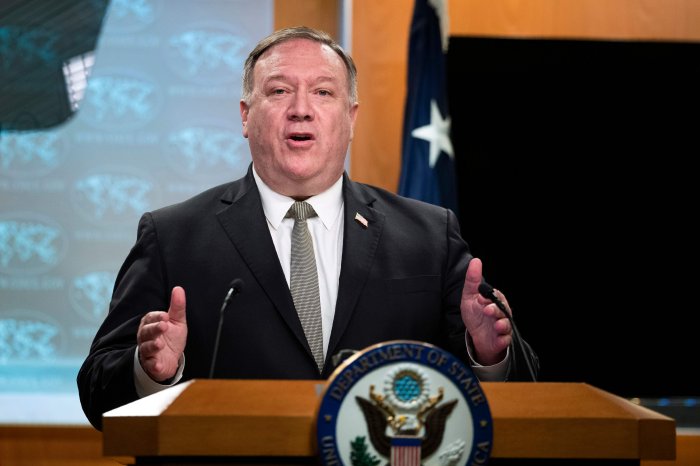
In a stunning announcement on January 11, Secretary of State Mike Pompeo communicated that “The State Department has designated Cuba as a State Sponsor of Terrorism for repeatedly providing support for acts of international terrorism in granting safe harbor to terrorists.”

This additional U.S. insult to Cuba occurs with only a week remaining before President-elect Biden takes office. Many hope that Biden will  restore openings to Cuba initiated by President Obama in late 2014 which the Trump administration trashed.

The U. S. government created its list of “state sponsors of terrorism” in 1979, adding Cuba in 1982. The Obama administration ended that designation in 2015. Re-assigned to the list, Cuba joins Iran, North Korea, and Syria. The U.S. classification of Cuba as a terrorist-sponsoring nation represents one element of U. S. aggression against Cuba that began more than 60 years ago as part of the Cold War.

Nations designated as sponsors of terrorism may expect “prohibition of U. S. arms exports and economic assistance,” controls over exports and services useful to terrorists or various militaries, and “imposition of miscellaneous financial and other restrictions.” The U.S. government uses this provision as one justification for its economic blockade against Cuba and for punishment of international banks and financial institutions dealing with Cuba.

Pompeo harked back to old pretexts for terrorist accusations against Cuba. He mentioned the presence in Cuba of three U.S. citizens charged with crimes in the United Stand and facing punishment. The most well-known of these persons is Black liberation fighter Assata Shakur.

Pompeo also referred to representatives of Colombia’s National Liberation Army (ELN) who remained in Cuba following the collapse of peace talks between that leftist insurgency and the Colombian government. He alleged that Cuban agents are instrumental in helping Venezuelan President Maduro “maintain his stranglehold over his people.”

Senator Bernie Sanders highlighted the irony of a nation recently the victim of domestic terrorism to now turn around and accuse Cuba of terrorist leanings: “This blatantly politicized designation” overlooks the fact that “domestic terrorism in the United States poses a far greater threat to Americans than Cuba does.”

Massachusetts Representative Jim McGovern did likewise:  “Coming less than a week after a failed coup attempt at the hands of his own domestic terrorists, Donald Trump’s reckless and baseless decision is nothing more than a vindictive attempt to make it harder for President-elect Biden to clean up after the last four years of failure.” McGovern lamented Trump’s legacy “of inflicting unnecessary suffering and hardship on the Cuban people.”

Cuba’s Foreign Ministry responded at once, declaring that Cuba “rejects … terrorism in all its forms …  by anybody, against anyone, and from wherever it’s committed.” The Ministry’s statement referred to “an arrogant act by a discredited, dishonest, and morally bankrupt government.” It took note of 3,478 Cubans killed and 2,099 wounded by the U.S. government or by U. S. – based terrorists tolerated by that government.

Change may be in the wind.  On December 17, the 6th anniversary of the announcement of Obama’s opening to Cuba, two foreign-policy advocacy groups, the Washington Office on Latin America and the Center for Democracy in the Americas, presented the Biden Administration with a joint proposal for re-engagement with Cuba.

The first steps would include: Biden personally inviting Cuban President Miguel Díaz-Canel to the Summit of the Americas to be hosted by the United States in late 2021, returning a U.S. ambassador to Havana, and restoring the diplomatic staff there.

[Editorial] The Elections Have Passed, and the US Working Class Lost Ground, by Tom Whitney

The recent election campaign pitted one capitalist-oriented political party against another. But class conflict continued throughout, and working people did not fare well.

The election period was show-time for U.S. racial antagonisms. The candidates of each party showed various reactions to racism.  Working-class voters filling the ranks of each one showed that they too were far from united in responding to racism. Divided, the working class is weakened.

The police killing of George Floyd occurred in late May. Soon crowds of white and Black people were protesting together in little towns and big cities of the United States and even worldwide. This unprecedented display of Black-white unity might have been a golden moment. Justice-minded candidates for office, Black and white, might have raised their voices against the racism permeating the U.S. experience.

It was not to be. Democrats joined Republicans in focusing on public safety. They slandered the protesters as rioters. The police in many cities arrested and/or injured disproportionate numbers of Black and Latinx protesters; extrajudicial killings mounted, right-wing militias materialized, and federal security forces intervened.

The slogan “defund the police” made the rounds, prompting conservatives of both parties to interpret that demand as a call to get rid of or weaken the police. They inveighed against risk to property and lives.  For many Republicans, the issue was respect for authority.   President Trump denounced Black Lives Matter protesters as “symbols of hate.”

Responsibility for dealing with objectionable police behavior lies with governmental bodies hiring the police. In choosing office-holders, voters share that responsibility. But governmental accountability for the police killings was never an issue put before the voters. Many Democratic candidates, Joe Biden among them, denounced racism in general terms. Biden met with George Floyd’s family.

Disunity in the working class represents a gift to the capitalists. Vast numbers of white voters, many belonging to the so-called “white working class,” backed the racist candidate for president:  58% of whites voted for Trump, as did 55% of white women. Latinxs and African Americans turned out in droves. Counter-balancing racists in both parties, they secured the election for Joe Biden.

The New Deal in the 1930s was a case-study in showing off working-class unity as essential in moving toward social reforms. Presently the working class is splintered and, now at least, prospects for the proposed Green New Deal are unfavorable.

The working class took one more big hit during the election campaign; Republicans labeled their opponents as socialists. For their pains they gained support from some immigrants from left-leaning Latin American countries. 

Vice presidential candidate Kamala Harris laughed on being acquainted with the charge. Biden felt obliged to deny speaking “one single syllable” in favor of socialism. Other Democrats followed the lead of the Republicans, and with serious consequences.

Centrist Democrats blamed the defeat of Democratic congresspersons on their embrace of policies associated with Senator Bernie Sanders and Representative Alexandria Ocasio-Cortez. Likewise, Kevin McCarthy, the Republican leader of the House of Representatives, regarded his party’s victories there as a “mandate against socialism.”

Red-scare, implemented through demagoguery and lying, thus took its toll. It reached its apogee in the mid-twentieth century and never entirely disappeared. Intimidation produced by false fears of this nature has discouraged agitation and organization, and governmental action, on behalf of disadvantaged Americans.

Finally: during the election period, the working class and its allies lost political space for debate that might have enabled them to agitate, maybe successfully, for political and social reform. Distractions moved in.  The mix included both jostling over various cultural, social and even religious questions and attention bestowed upon showman Donald Trump, mediated by the corporate media.

The issues themselves – abortion, the role of religious fundamentalism, immigration, disappearing jobs, changing industrial patterns, the snobbery of elites, and wealth inequalities – were not new. Even so, their high visibility in an unsettled time generated rancor and resentment disruptive enough to muddle the electoral process. Whether by accident or design is unclear.  

Leaders of governments adapt their strategic thinking to accommodate their own economic and political imperatives. Presently they face the quandary, some say, of having to preserve the capitalist system while also saving the environment and securing justice for everyone. Intent on preserving power and privileges, they do not act.  Meanwhile, the working class, potentially motivated to act, is put on hold.

US Plot Relying on Extradition Targets Peace in Colombia, by Tom Whitney

December 1, 2020

For 50 years Colombian governments and the Revolutionary Armed Forces of Colombia (FARC) fought a civil war; 200,000 lives were lost. After four years of negotiations, the two sides signed a peace agreement that took effect in November 2016.  

Now the agreement is in trouble, mainly at the hands of rightwing extremists led by former president Alvaro Uribe and represented now by President Iván Duque. They opposed the negotiations, the agreement itself, and now they block implementation.

The U.S. government posted an envoy to the peace negotiations and sent the Secretary of State to one the signings of an agreement. Seemingly, it supported the peace process,

Now it does not. Colombia’s El Espectador newspaper on November 8 published Edinson Bolaños’s report that outlines a U.S. plot aimed at immobilizing FARC leaders.  His information came from 24,000 recordings of wiretapped telephone calls occurring in 2017. 

In most of the conversations Marlon Marín speaks with two U.S. Drug Enforcement Agency (DEA) agents posing as representatives of Mexico’s Sinaloa drug cartel. They talked about 10 tons of cocaine that agents of Marín, posing as FARC members, eventually sold to the cartel for $5 million. The Office of the Attorney General supplied the cocaine, the DEA the money.

According to Bolaños, the conversations introduced names or faked voices to identify accomplices. One was Jesús Santrich, spokesperson for the FARC peace negotiators in Havana. Another was Iván Márquez, who headed the FARC’s negotiating team and is Marlon Marín’s uncle. Over 1,300 recordings of talk on Iván Márquez’s telephone apparently disappeared.

Other names, or voices, cropping up included those of General Oscar Naranjo, former vice president and government peace negotiator; Gustavo Petro, 2018 presidential candidate for the left-leaningHumane Colombia coalition; and Piedad Córdoba, outspoken former Liberal Party senator.

Police agents arrested Santrich on April 9, 2018. Charged with conspiracy to export cocaine to the United States, Santrich faced extradition and trial before the U.S. District Court – Southern District of New York. Colombian authorities also arrested Marlon Marín and quickly flew him to the United States to testify against Santrich.  Iván Márquez went into hiding and wasn’t arrested. The press circulated as information material taken from the recordings provided by the Office of the Attorney General.  

The Special Jurisdiction for Peace (JEP), created by the peace agreement, enters the story.  It was a new court charged with deciding on pardon or punishment for guerrillas who may have committed crimes while they were rebels – but only then. The JEP had accepted Santrich into its program. If he had trafficked in drugs after the civil war, the JEP had no jurisdiction over him.

To make a determination, the JEP sought to examine the audio recordings. It only received 12 of them of the thousands that existed. It did receive a video, publicized by the press, that showed Santrich talking with Marlon Marin. There was no audio. The JEP never saw documentation a grand jury indictment in New York.

Santrich spent 13 months in prison; while there he carried out a 41-day hunger strike. Unable to establish the time-frame of any drug-dealing, the JEP ordered Santrich’s release on May 19, 2019. He was immediately rearrested, but Colombia’s Supreme Court, with jurisdiction over persons serving in Congress, released him on May 31. He was a member, courtesy of the peace agreement.

Attorney General Martínez resigned. The Supreme Court announced plans to prosecute Santrich on the drug-trafficking charge.

On August 31, 2019, Santrich, Iván Márquez, and other former FARC insurgents returned to armed conflict. Almost a year later, the DEA and State Department announced rewards for information leading to the convictions of Santrich and Márquez – up to $10 million for each. 

No peace now

Presently, implementation of the agreement is floundering. Exceptions are the JEP and political participation for FARC members; there’s now a FARC political party. Agrarian reform, prioritized by the FARC negotiators, is moribund. Food-producing crops were to have substituted for coca production, but aerial fumigation with glyphosate has returned, The peace agreement provided for the former guerrillas’ safety. But 242 former combatants plus 1,055social and community activists have been killed.

For the FARC, the essence of the peace agreement was that the former combatants would re-enter civil society as citizens with rights, and that the FARC’s struggle for progressive change would move from insurgency to civilian life. Neither would happen without the JEP, which was, therefore, central to the entire agreement. Conversely, damage to the JEP threatens the agreement itself.  

Prosecution of a Santrich, a FARC leader, as a common criminal, for drug-dealing, would jeopardize his lower-ranking comrades and suggest that the JEP is irrelevant. As it is, the JEP is the Achilles heel of the agreement, as demonstrated by Santrich’s arrest, threatened extradition, and removal from JEP jurisdiction.

The U.S. government opposes the JEP. U.S Ambassador Kevin Whitaker in April 2019 insisted that if the JEP protected former guerrillas from extradition, Colombia would lose U. S. military assistance.  

It would have been difficult for U.S. government hardliners to accept the peace agreement, or to ease up on the FARC. They’ve engaged with the insurgency off and on, in one way or another, since 1964. Pretexts evolved from anti-communism to drug war to narco-terrorism.

From 2000 on, the interventionists dedicated themselves to carrying out out U.S. Plan Colombia with its bases, personnel on the ground, generous funding, new equipment, and presumed gratification on the part of Colombian colleagues. They realize too that the FARC has staunchly opposed U.S. domination of their region and U. S. designs on Colombia’s natural resources. For them to have given up on prospect of the FARC’s military defeat seems unlikely.

General John Kelly, former head of the U.S. military’s Southern Command, surely qualifies as a hardliner. Amid the peace negotiations, he observed that, “[T]he FARC claims the Colombian military has failed to defeat them [but] The truth is that the Colombian military has crippled the FARC, enabling the government of Colombia to begin charting the path to peace.” (Miami Herald, op-ed)  Kelly dismisses FARC ideas on peace.

Extradition weaponized

The government of President Uribe in 2008  arrested 14 paramilitary leaders and extradited them to the United States for prosecution exclusively on drug-trafficking charges. As a result of this maneuver, there would be no trials in Colombia during which the paramilitaries’ dealings with politicians might come to light.

Extradited to the United States in late 2004, FARC leader Simon Trinidad specialized in negotiations and political education. He is serving a 60-year sentence, in isolation, at the supermax federal prison in Colorado. Trinidad escaped conviction on narco-trafficking charges, but went to prison on a charge of conspiring to capture three U.S. drug-war contractors, after FARC gunfire brought their plane down. (1)

His case is a useful entry point for agitating against U.S. imperialism. The argument might focus on U.S. military intervention in Colombia as emblematic of U.S. interventions globally. Then, to introduce the Colombia situation, it would point to the extradition and torture of Simon Trinidad. Interest having been provoked, discussion would proceed.

Piedad Cordoba visited the imprisoned Simon Trinidad. Few others have been allowed to do so. Cordoba commented recently on Simon Trinidad, the Santrich case, and U.S. military intervention. 

Referring to “the recently exposed collusion between the North American DEA agency and the Colombian attorney general,” Cordoba points out that, “War in the 21st century in our country has been sustained with North American assistance.”

And, “the United States owes something to the Havana agreement. The first item would be the repatriation of Commander Simon Trinidad, who has been accepted into the JEP, but who also must be recognized as a victim of the genocide of the Patriotic Union. (2) There must be some form of presidential pardon that exists and would remain valid …This was shown in the case of Puerto Rican patriot [Oscar] López Rivera. A pardon for Simon Trinidad would be excellent news for peace and reconciliation …”

She called for “re-evaluation of [U.S.] military assistance in view of the ongoing crisis of serious violations of human rights by Colombia’s military.”  In any case, “With the intervention persisting and present situation unchanged, we are fated to be a country at war.”  

Notes:

  1. Here’s more on Simon Trinidad: https://mronline.org/2020/06/25/u-s-must-return-its-political-prisoner-simon-trinidad-to-colombia/
  2. For information on the Patriotic Union, see: https://www.peoplesworld.org/article/recalling-colombia-s-patriotic-union-tragedy/

Cuba Responds to Pandemic, Blockade, and New Economic Troubles, By W. T. Whitney Jr.

Buffeted for six decades by the U. S. economic blockade and recently having had to cope with restrictions on daily life and work due to COVID- 19, Cuba’s already shaky economy is deteriorating. Government leaders recently outlined remedial steps leading to what they call a “new normal.”  

The UN’s Economic Commission for Latin America and the Caribbean (CEPAL) reported in October that the region “is experiencing its worst economic crisis in a century” and that Cuba’s GDP this year will be down at least eight percent. Tourist income, remittances, foreign trade, and tax collections have fallen. Oil and gasoline shortages, the result of U.S. sanctions against Cuba and Venezuela, have stressed the economy.

Public spending on health care, unemployment compensation, and pensions is up; I50 000 state workers and 250,000 private sector workers have been idle. Effects of the U.S economic blockade compound matters with restrictions affecting the tourist industry, foreign imports, and access to foreign currency and loans.   

Responding to the pandemic, Cuban officials excluded foreign visitors (tourism resumed in July) and instituted vigorous case-finding, strict isolation of the infected and their contacts, and hospitalization for people infected with COVID-19 who have symptoms. For eight months officials led by Cuba’s president, and always masked, have provided the public with daily televised updates on the pandemic. Vaccines and treatment products are being developed. Health workers have treated pandemic victims in 39 countries.

Data from the Johns Hopkins Coronavirus Resource Center show that, as of October 21, COVID-19 has infected 6305 Cubans; 127 of them died. Deaths per 100,000 persons for the United States, Cuba, China, and Vietnam are, respectively: 67.28 (11th highest), 1.12, 0.34, and 0.03. 

In public presentations in October, Cuban leaders outlined plans for managing the multi-faceted crisis. Summarizing, Alejandro Gil Fernández, Minister of Economy and Planning, pointed out that “We’ve never had this dilemma between health and the economy. Obviously the restrictive measures we’ve adopted … have had an economic impact but there’s no room for doubt that health comes first.” 

Health Crisis

The officials reported that the intensity of viral transmission was down, that fewer new cases were being diagnosed, and that more COVID-19 patients were leaving hospitals than being admitted.  Outbreaks have cropped up recently in Havana, Ciego de Avila, Pinar del Río and Sancti Spíritus provinces, while no new cases have appeared in Cuba’s 11 other provinces.

President Miguel Díaz-Canel on October 8 discussed on television with Cubans the government’s plan to expand economic and social activities, partially ease isolation and  social distancing – especially in provinces where the virus is quiescent – and “strengthen prevention and treatment protocols.” He referred to “a new normality with a minimum of risk.”

Prime Minister Manuel Marrero Cruz the next day presented elaborate protocols aimed at securing a safe transition. Efforts to prevent spread of the virus transmission would proceed together with “mitigation of both the social and economic impact of COVID-19 and the [U.S.] blockade.” New cases would trigger local measures for limiting further infection while activities of daily life would continue with little alteration.

Stages and phases of the pandemic’s evolution figure into how the intensity and reach of preventative measures are determined. Local authorities will participate in decision-making. Under new isolation protocols, infected persons with only minor symptoms will be monitored in the community and no longer in hospitals. The seriously ill will enter specially designated hospitals, allowing other hospitals to be able to resume full care of illnesses other than COVID-19.

Cubans are being asked to take personal responsibility for preventing infection. Many will continue working at home via computer or telephone. Students have been attending school throughout Cuba since September, except in Havana, where schools open on November 2, and except for temporary closings elsewhere due to local clusters of infection.

The impression here is that, without question, explanations provided by multiple officials and the protocols presented by Prime Minister Marrero Cruz testify to a process of planning and analysis marked by rigor, comprehensiveness, and respect for human life.

Economic crisis

For more than 10 years, the government has been working to transform Cuba’s economy. Land-tenure arrangements changed in 2008. The Communist Party’s “Economic, Political, and Social Guidelines,” approved by the Party’s Sixth Congress in 2011, established the framework for change that has been evolving since.  The current crisis is a jolt demanding recalibration.

Priority areas include: production and distribution of food products, enhanced export capabilities, overhaul of state-owned businesses, support for self-employed workers, and monetary reform – in other words, unification of Cuba’s dual currency and exchange rates.

Steps along the way are many. Newly efficient “productive chains” will extend from raw materials, to processing and manufacture, to sales. They will involve state and non-state enterprises and affect both foreign and domestic trade. State businesses will receive incentives for good management. State-owned agricultural marketing enterprises will receive new support.             

Cubans will lose subsidies but some goods and services will be available cost-free. Consumers will have access to more Cuban-produced goods and fewer imported items. Export sales are prioritized. Monetary reform will entail price regulation, currency devaluation, elevated wholesale prices, savings and salary uncertainties, and risk of inflation.

“[E]limination of the dual currency and exchange rate … constitutes the process that is most decisive to the updating of the Cuban economic model.” That was former President Raúl Castro speaking in 2017. Now that change process, anticipated for many years, is in the hands of “14 working subgroups.”

Cuba’s two currencies are the “Cubano peso nacional” (CUP) and the “peso convertible Cubano” (CUC), which is set for elimination. As regards institutions, businesses, and wholesalers, the two are assigned the same value – one US dollar. In retail situations or in transactions among individuals one CUC is also valued at one U.S. dollar, but in those settings it’s worth 25 CUPs.  

To illustrate the problem: a Cuban milk producer selling directly to Cubans receives 4.50 CUP ($4.50) per liter, which equals 450 centavos per liter. But milk produced abroad and sold to a Cuban purchaser yields $3000 (or 3000 CUC) per ton. To cover that cost, the selling price to Cuban consumers need only be 30 centavos per liter. Pity the plight of the Cuban dairy farmer.

There is good news. The Paris Club is a group of European and U.S bank officials who try to ease poor countries’ difficulties with debt-repayment.  On October 15 they agreed to suspend Cuba’s obligation to make a payment by November 1 on debt worth $5.2 billion. How long the delay would be is unknown. 

Speaking to the Cuban people on October 8, President Díaz-Canel pointed out that, “Our socialism excludes the political maneuver of applying shock therapy to the workers. Here, therefore, no one is going to be left helpless. It’s preordained that if someone ends up in a vulnerable situation with the reorganization project, he or she will be helped and supported. We are responsible and promise that the fundamental conquests of the Revolution such as health and free education will be preserved.”

Cuban report says U.S. blockade still causing immense economic loss, By W. T. Whitney Jr.

Cuba’s Foreign Ministry every year prepares a report on Cuba’s experience with the U.S. economic blockade of the island, in force since 1962. On October 22 Foreign Minister Bruno Rodriguez presented this year’s report at a press conference in Havana. The Ministry releases the reports ahead of an annual vote in the United Nations General Assembly on a Cuban resolution calling for an end to the blockade.  Usually the vote takes place in early November, but because of uncertainties relating to the COVID-19 pandemic, it will take place next in May, 2021.

The Report is supposed to inform the General Assembly delegates and the public as to the nature of the blockade and its impact on Cuba and the Cuban people. The blockade is the principal tool the United States uses to undermine Cuba’s government.  A State Department official in the Eisenhower administration, in 1960, expressed counter-revolutionary purpose. In recommending a blockade, Lester D. Mallory sought “a line of action which … makes the greatest inroads in denying money and supplies to Cuba, to decrease monetary and real wages, to bring about hunger, desperation and overthrow of government.”

The 53-page Report, covers U.S. measures taken against Cuba and effects experienced in Cuba and elsewhere during the twelve months between April 2019 and March 2020. It summarizes the U. S. legislation and administrative decrees used to authorize the blockade’s rules and regulations and details U.S. and worldwide opposition to the blockade. 

The authors of the Report condemn the blockade as cruel and as illegal under international law. They speak of genocide, Cuban sovereignty endangered, and Cuba’s economic and social development under assault. The entire report is accessible here.

According to the Report, the Treasury Department’s Office for Foreign Assets Control (OFAC) levied penalties against dozens of U.S. and third-country entities. Examples are listed. OFAC derives its authority mainly from the Cuban Democracy Act of 1992, which stipulates that third-country companies face penalties on exporting goods to Cuba that contain at least 10% U.S. components. In October, 2019 the U.S. government applied that rule also to goods exported to Cuba by a country that had imported them from another country.

In September, 2019, OFAC sharply limited the dollar amount of remittances Cuban Americans may send to families on the island. On October 23, 2020 – not within the period covered by the Report – the U.S. government ruled that Financiera Cimex SA, Cuba’s sole agency for distributing family remittances to Cubans, was no longer eligible to receive them from the United States. Remittances constitute one of Cuba’s major sources of foreign currency. 

The Report devotes much attention to the plethora of fines levied against foreign banks and other financial institutions after they handled transactions involving Cuba and the U.S. dollar. It cites dozens of individual examples.  Intimidation is now so widespread as to have persuaded many such institutions to avoid dealing with Cuba altogether.

The document highlights U.S. implementation of Title III of the Helms Burton Law that, beginning in May 2019, has led to law suits against foreign businesses brought before U.S. courts on behalf of former owners of nationalized property in Cuba. They are seeking damages. The resulting anxiety among foreign investors has led to “cancellation of commercial operations, cooperation actions and foreign investment projects.”

Detailing specific examples, the Report condemns U.S. penalties imposed on ships, companies and individuals involved in shipping oil to Cuba. The Report’s authors regard that new phase of the blockade as “a qualitative leap in the intensification and implementation of non-conventional measures in times of peace.”

Additionally, the U.S. government has threatened thousands of Cuban doctors working abroad in various ways. Many of the doctors working abroad generate income for the government. The Report records the prohibition on cruise ships arriving in Cuba.

The fallout is considerable, especially for the healthcare sector.  Dozens of U.S. companies, on being asked, refused to sell medical equipment and drugs to Cuban importers. When purchased through a third-country agent, they are more expensive. And supplies and medications manufactured in third countries may not be readily available on account of the aforementioned ten-percent rule.  

Cuba’s fight against COVID-19 took one hit when blockade regulations prevented the unloading in Cuba of a Chinese shipment of donated anti-pandemic supplies, and another one when Swiss manufacturers refused to sell ventilators to Cuba.  Cuban food imports are expensive in part because of extra expenses involved with the purchase of U.S. food products, allowed through congressional action in 2000. Blockade-related fuel shortages hamper agricultural production by interfering with planting, transportation, and storage.

The blockade has hit education, sports and cultural development in Cuba. Supplies and fuel are frequently in short supply and transportation and travel are often unavailable.  Cuba’s manufacturing and service sector lost an estimated $610.2 million, 7.7 % more than during the previous year, according to the Report. Losses incurred in the bio-pharmacological industry exceeded $160.3 million. U. S. restrictions interfere with Cuba’s export of drugs, vaccines, and diagnostic tests.

The Report indicates that during the 12-month survey period, Cuba’s tourist industry lost $1.9 billion. Losses stemmed from new U.S. travel restrictions and from prohibitions on tourist services, particularly hotels. OFAC has now prohibited U.S. airlines, or airlines with U.S. connections, from flying into Cuba, except to the Jose Martí Airport in Havana. That action deprived Cuba of an estimated $1.8 billion. OFAC regulations affecting the communications, construction, and transportation sectors made for additional Cuban losses. Cuba’s hobbled foreign trade, both imports and exports, registered losses of $3,013,951,129, of which export losses accounted for$2,475,700,000. 

According to this Report, the workings of the U.S. blockade deprived Cuba of $5,570,300,000 between April 2019 and March 2020 – some $1.2 billion more than during the previous year. Among estimates figured into the amount are expenses incurred in buying materials at inflated prices in distant places, losses from foreign sales that never happened, and revenues the crippled tourist industry might have generated. The human cost in lives lost or blunted is not part of the calculation.

Cuba has lost $144.4 billion over the course of almost six decades.  Dollar depreciation over the period puts the total up to $1.098 trillion. Why, one asks, does the blockade continue?

The U.S. blockade, with moving, interlocking parts that may be at cross purposes, looks like a machine dangerous to human well-being. It could well have provoked the U.S press and politicians into loud complaints. But near silence has reigned.  The absence of real debate signifies overall acceptance of the blockade such that expressions of dissent, even President Obama’s dissent, have gained little support.

Silent acceptance marked other horrors abroad helped along by U.S. agents, especially as they were unfolding, or immediately thereafter. These were killings usually associated with regime change. One recalls Guatemala (1954), Iraq (1963), Brazil (1964) Dominican Republic (1965), particularly Indonesia (1965-1966), Chile (1973), Operation Condor in South America (1975-1976), and Colombia (sporadically from 1964 on).

Anti-Communism became the pretext for these situations in which U.S. emissaries abroad characteristically stopped at nothing. In his recent book The Jakarta Method (Public Affairs Press, 2020), Vincent Bevins connects U.S.-induced atrocities throughout the Global South, anti-Communism, and the installation of neo-liberal governments.  

Reasonably enough, public officials do maintain silence when their governments are complicit with crimes like these. The assumption here is that the U.S. anti-Cuban blockade represents one more instance of resort to extremes in the name of anti-Communism, which, once more, is surrounded by silence.  

The anti-Cuban blockade is a substitute for military action. U.S. strategists evidently perceived that military intervention or provocation of an internal coup wouldn’t work to ensure counter-revolution in Cuba. They perhaps realized that well-heeled, entrepreneurial Cubans friendly to the United States wouldn’t be there to help out, most of them having departed the island. Elsewhere in the Global South, as reported by Bevins, their kind stayed put and were able to collaborate with U.S. facilitators to instigate violence.

They are still there, in their various countries, as are their neo-liberal regimes.  Their staying power validates the U.S. strategic goals pursued in the post- World War II era that were energized by anti-Communism. Perhaps political leaders in Washington associated with both major political parties see continued backing of the Cuban blockade as a way of reassuring their far-flung neoliberal colleagues, and the ones nearby, that their old cause is still intact.