

US research stations in Peru and elsewhere prepare for biowarfare / by W. T. Whitney

DARPA: Some experts fear GM viruses could transform into a new class of biological weapons (Image: Getty)

South Paris, Maine


The U.S. government began preparing for biological warfare during World War II. Biological weapons were employed during the Korean War against North Korea and China. President Nixon in 1969 ended the U.S. use of biological weapons for offensive purposes. The United States joined other nations in approving the Biological Weapons Convention (BWC), which took effect in 1975.

Even so, U.S. agents introduced microorganisms that devastated Cuba’s agriculture intermittently from the 1970s into the1980s. They introduced dengue virus in 1981, thereby provoking an epidemic that killed 169 Cubans. In 2001 the George W. Bush administration disavowed the Protocol that was essential for strengthening the BWC.

sugarcane plantation in rural Cuba | Wikipedia

A 2017 report from the Latin American think-tank CEPRID tells of suspicious U.S. virologic research centers in Ecuador, of Brazilian soldiers dying of an unknown infectious disease, and “research centers located in countries like Brazil, Guatemala, Panama. Honduras, Costa Rica, República Dominicana, Haiti, [and] Guyana.” The report notes the existence in Peru of U.S. biological research laboratories operating under the façade of sponsorship by local universities. 

“What’s certain,” the report says, “is that research is continuing and new viruses are being created or they are muting to become resistant to all the vaccines that are known.” Mention appeared in 2015 of a “laboratory [in Peru] for the development of bacteriologic war.”  The reference was to one operated by a “Naval Medical Research Unit,” by NAMRU-6. Beginning with WWII or shortly thereafter, the U.S. has operated NAMRUs, numbers one through six, within the United States and in Ethiopia, Italy, Southeast Asia, and Peru. Their purposes varied according to location. Three of them have been discontinued.

Officially, NAMRU-6, also known as NAMRU South, “researches and monitors various infectious diseases with military and public health implications in Central and South America.”  With a presence in Peru since 1983, NAMRU-6 occupies a large office building and laboratory in Lima and a smaller laboratory in Iquitos, on the Amazon River.

NAMRU-6 is in the news. In an article appearing on June 13, Brazilian journalist Tereza Cruvinel notes a big increase in dengue cases in Peru, Paraguay, Bolivia, Brazil, and Argentina. She cites “an entomologist in a neighboring country” who describes unexpected resistance of the Aedes Aegypti mosquito, vector of the dengue virus, to usually effective insecticides. She points to the entomologist’s reference to “a fellow researcher” who abandoned the U.S. NAMRU-South laboratory in Peru, because of “experiments there with the participation of the Pentagon and the Peruvian military.”  

She notes that investigators there are creating new strains of the dengue virus, “which spread more quickly among mosquitoes, with a very high viral load.” Cruvinel reports that, “Latin American doctors and scientists suspect scientific manipulation of the mosquito by powerful forces involving the US and the pharmaceutical industry.”

In his article “US biological weapons,” written in response to Cruvinel,  Costa Rican journalist Jose Amesty claims that “the [current] outbreak of dengue fever, which is a record for sickness and death in Nicaragua, Honduras and Peru, is related to Pentagon experiments in 2023 aimed at creating a modified strain of the aforementioned pathogen.” He cites as his source a “scientist from Namru-South in Peru who, involved with experiments with dengue strains, is disillusioned by implications for the health of millions of people.”

Amesty notes that personnel working at NAMRU-6 in Peru, most of them Peruvians, have had to take on U.S. nationality so they could be prosecuted, if need be, under U.S. jurisdiction and “not be responsible to the Peruvian justice system.”  

Amesty learned from Gabriela Paz-Bailey, dengue specialist at the Puerto Rican branch of the U.S. Centers for Disease Control and Prevention, that a new strain of the dengue virus appeared in 2023 in Peru, one that “diffuses more rapidly among mosquitoes,” leaving them with an “an elevated viral load.” And, “the level of virus dosage sufficient to cause infection has diminished ten times.”

Presumably it’s Amesty himself who notes that, “a similar development of a virus over such a brief period would be impossible without human intervention.” He adds that, the “North Americans achieved a high degree of resistance to insecticides on the part of mosquitos, and that reduced the effectiveness of steps taken by national governments to eradicate the insects with fumigation.”

Paz-Bailey informed Amesty that the NAMRU-6 laboratory has long been relying on the “help of insects” in devising “mechanisms for the proliferation of the virus” both in Peru and elsewhere in the region.
DARPA: The controversial project involves infecting insects with viruses (Image: Getty)

In 2016 the Pentagon’s Defense Advanced Research Projects Agency (DARPA) presented its plan for mobilizing “Insect Allies” to protect farmers’ crops from disasters. As described, the program “is poised … [to use] targeted gene therapy to protect mature plants within a single growing season.” Insects would transfer genetically modified viruses to plants where they affect the behavior of a growing plant’s genes, for example, increasing its growth rate in conditions of drought, plant diseases, or pesticide use.

The advent of the CRISPR system in 2012 allowed for this program involving insects to be developed. CRISPR, a relatively simple and readily accessible tool, allows for selective modification of the DNA of living organisms.

DARPA’s project provoked criticism, beginning with a report published in the journal Science on October 5, 2018. The title was “Agricultural research, or a new bioweapon system?” The authors drew attention to the Biological Weapons Convention. Their associations were with the Max Planck Institute and the Institute of International Law, both in Germany, and Montpellier University in France,

A simultaneous statement on this report, from the Max Planck Institute, focused on dual use possibilities: “[T]the findings of the Insect Allies Program could be more easily used for biological warfare than for routine agricultural use.” The statement suggested that “[N]o compelling reasons have been presented by DARPA for the use of insects as an uncontrolled means of dispersing synthetic viruses into the environment.”

Research programm with potential for dual use: scientists fear that the Insect Ally program by the US could encourage other states to increase their own research activities in the field of biological warfare. © MPG/ D. Duneka

Journalist and peace activist Bharat Dogra maintains that, “[T]he DARPA program risks being perceived as a biological warfare research program that is justified on the basis of stated peaceful purposes … [That misperception] can start a trend of similar research with biological warfare implications by other countries as well.”

Dogra observes too that the mosquitoes themselves, the insect vectors, are being genetically modified along with the viruses they are carrying. He writes that, “According to a 2022 review by the Centers of Disease Control and Prevention, USA, since 2019 over a billion modified mosquitos have been released at world level, in several countries.”

The U.S. government maintains facilities across the world that are related to biological warfare.  Fort Detrick in Maryland, the historic bio-weapons center in the United States, extends across hundreds of acres and is the workplace for almost 8000 military and civilian employees. A network of related U.S.-operated facilities shows up in nations bordering Western Russia. Their role in monitoring and facilitating insect transmission of infectious diseases has been documented. Similar centers exist in Africa, the Middle East, and Southeast Asia.

I suggest that the U.S. government and the U.S. military are very likely building offensive capabilities for biological war. The nature of the DARPA program, activities of NAMRU-6 in Peru, and the U.S. record of disregarding the BWC over recent decades are all consistent with this accusation. Also suggestive is the proliferation within the United States and abroad of U.S. installations dedicated to the study of noxious microorganisms and new ways for their transmission. Lastly, the simultaneous emergence of CRISPR technology and wide dispersion of these activities is more than a coincidence.  


W.T. Whitney Jr. is a political journalist whose focus is on Latin America, health care, and anti-racism. A Cuba solidarity activist, he formerly worked as a pediatrician, lives in rural Maine. W.T. Whitney Jr. es un periodista político cuyo enfoque está en América Latina, la atención médica y el antirracismo. Activista solidario con Cuba, anteriormente trabajó como pediatra, vive en la zona rural de Maine.

Economic Crisis in Cuba – Leaders’ Solutions Face Big Obstacle / by W. T. Whitney Jr.

Selling agricultural products in a wheelbarrow in Havana. Photo: Otmaro Rodríguez.

South Paris, Maine


The Cuban economy is the worse it’s been since the “Special Period” following the end of the Soviet Union. The country is in the midst of a years-long economic contraction that’s affecting food production and the availability of medicines.

For the first time ever, the government has officially requested aid from the United Nations World Food Program. Inflation, meanwhile, is soaring, and there is massive emigration and power outages roll across the island. And unlike in the days of the socialist bloc, the country has major international allies to provide financial relief.

Cuba’s economy contracted 1.9% in 2023, and it’s infant mortality rate (IMR) – the number of infants dying in their first year of life per 1,000 live births – is inching upward. It was 4.7 in 2013, 5.0 in 2017, 6.2 in 2022, and 7.9 in 2023. The IMR is generally seen as  reflecting a society’s social conditions.

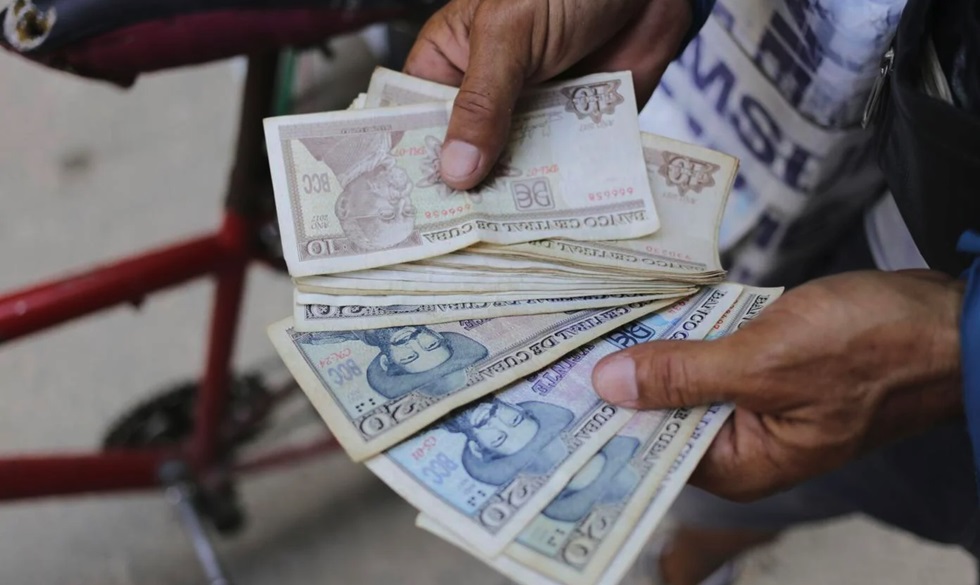
An ice cream street vendor counts his Cuban pesos in Havana, April 20, 2024. | Ariel Ley / AP

The country’s leaders are working overtime to respond to the worsening crisis. Deliberations at a recent meeting of Cuba’s Council of Ministers and a plenary session of the Communist Party’s Central Committee shed light on how government and party officials are reacting and on the resources they have available.

In the Council of Ministers’ meeting, as reported on June 30, President Miguel Díaz-Canel called for a restraining state expenses, limiting pay-outs from the state to the non-state sector, increasing participation of state entities in providing services, and cracking down on tax evasion.

He lauded the “very good experiences of labor collectives…in doing things differently and moving ahead.” He condemned speculation and black marketeering as contributors to inflation.

Prime Minister Manuel Marrero Cruz criticized “bureaucracy and ineffective control of our institutional system that are limiting creative work and promoting undesirable distortions in our society.”  He called for increasing national production and export income, promoting direct foreign investment, capturing remittances for the economy, and identifying sources of financing.

Vice-Minister of Economy and Planning Mildrey Granadillo de la Torre referred to new but unspecified ways of attracting foreign currency; incentivizing national production, especially food products; improving management of non-state entities, and reducing tariffs on importation of raw materials.

She spoke of adjusting the budget to a “war economy” and warned of an expanding deficit. She anticipated “a single, inclusive and equal pricing policy…[on the way] for state and non-state sectors of the economy.”  Vice-Minister of Finances and pPrices Lourdes Rodríguez Ruiz, joined in the assessment, reporting on plans for caps on prices for essential goods sold by non-state enterprises.

The Communist Party Central Committee’s Eighth Plenary Session took place on July 5-6. The agenda, as always, included a rendering of accounts from the Political Bureau and assessment of the implementation of earlier recommendations. The problems of reduced agricultural production, corruption, and crime received special attention.

Social misbehavior

Julio César García Pérez, head of the Justice Ministry’s “Office of Attention,” led a discussion of “crime, corruption, and social illegalities.” He recalled that the party had been called upon at its last congress to take on “strategic leadership” in this area.   As regards “implementation and fulfillment, the results are insufficient,” he reported. Crime rates remain high, with “major incidents of attacks against our patrimony,” often committed by young people and “persons uninvolved in work or study.”

Among the most prevalent crimes: abusive pricing, “illicit commercialization of diverse products,” drug-trafficking, livestock theft, “speculation on goods and services,” hoarding, administrative corruption, tax fraud, marketing of stolen goods, “lack of discipline in public spaces,” damage to public property, and fighting.

Authorities are trying to get a handle on the situation, with García Pérez reporting that “responses on the part of the courts and the attorney general’s office are more rigorous than earlier.”

Having met with party officials at the municipal level, he found that preventative measures were inadequate, however, and follow-up of individual cases lax. Cuba’s attorney general, Yamila Peña Ojeda, assured the Plenary that criminal penalties remain severe while “citizens’ rights and guarantees are respected.”

Comptroller-General Gladys Bejerano Portela, recognizing that “the Party is…working to maintain the soul of the Cuban Revolution,” confessed that she “could not understand why” many party members “are indifferent to deeds of corruption,” adding that “to not fight [corruption] is counterrevolution.”

Food is short 

The Plenary’s discussion of food shortages and low agricultural production focused on implementation of the 2021 Law of Food Sovereignty and Security.

Food and Agriculture Minister José Ramón Monteagudo Ruiz, returning to old themes, called for increasing national food production, reducing food imports, and generating competitive exports. Emphasizing the decisive role to be played by party members, he reported on consultations on agricultural production with mass organizations, provincial governing councils, and municipal assemblies.

Monteagudo Ruiz discussed follow-up of legislation of 2022 that prioritized local food production systems and local self-sufficiency. Party officials have interacted with companies, production units, cooperatives, and markets in 50 municipalities, he said.

The minister observed that the reforms of 2008 which gave individuals and cooperatives long-term use of what now amounts to 31% of all agricultural land have fallen short and not adequately bolstered production.

He attributed production deficits to the worsening economic crisis and adverse effects of the U.S. blockade. Cuban agriculture is being undone, he stated, by shortages of miscellaneous supplies, fuel, spare parts, pesticides, veterinary medications, fertilizers, and raw materials for animal feed.

Agriculture Minister Ydael Pérez Brito lamented that, “Harvests do not even approach 50% of what is needed,” despite various plans having been fulfilled. Consensus prevailed that levels of planting and harvesting are reduced, such that the population’s food requirements are not being met. Proposals re-emerged for enabling companies, organizations, and cooperatives to grow their own food for their own workers and members.

The president speaks

President Díaz-Canel, addressing the plenary, still found reason for optimism:

“If we work in all these areas simultaneously, in a decisive, organized, coherent manner, in a short time we will be managing fundamental issues such as the budget deficit, the excess of circulating cash, tax evasion, abusive prices; We will be managing the proper relations between the state sector and the non-state sector; We will be confronting crime and corruption more decisively…. Doing all this will indirectly and gradually influence changes in the exchange rate and in inflation.”

Aside from just recounting the list of challenges, though, he also elaborated on the job ahead:

I call upon you to correct things on an ongoing basis with determination, effort, and imagination, and to confront those negative tendencies that emerge like weeds in difficult moments. The call now is to go out as combatants, which we know how to do and as we have done so many times before.”

He offered perspective: “Every day that we manage to subdue these great difficulties with tenacity, effort, creativity, talent, and with unity of purpose against the genocidal plan of our historical enemy is a victory.”

He praised the party’s “authentic commitment to the people” and said that party cadres have to lead by example. The Communist Party, the president declared, has “the enormous responsibility of preserving the Revolution… to preserve its conquests and keep on advancing on the path of perfecting society, working tirelessly.”

As regards goals: “The Party and its cadres have the mission to stimulate, inspire, mobilize, and engage with members and the people, aware that an ideal will triumph only as long as it exists for all of us.”

The president said that party members and government leaders had a responsibility to “guarantee a better and greater access to food.” Food production and self-sufficiency, he said, “are tasks of the first order, in which the entire population must participate.”

Díaz-Canel indicated the need to “implement concrete actions” and to ensure that decisions are fulfilled in adherence with a strict timeline.

‘We are here to save the homeland, the Revolution, and socialism,” he insisted. “In six decades, the blockade has not been able to defeat the dignity of the Cuban people nor the immense collective…work of the Revolution. Even as it intensifies now, the blockade will not succeed.”

No money

Words spoken in the meetings were mostly about plans and remedies already in place, about revolutionary values, and virtues of the Cuban people.

In contrast to deliberations of earlier years, the presentations offered no new remedies for fixing Cuba’s economic downturn and shortages. Perhaps something novel will emerge from the commissions and plenary sessions of Cuba’s National Assembly, which started its meeting on July 15.

International solidarity on Cuba’s behalf wasn’t mentioned, and there were indications that divisions disrupting the unity of Cuban society have cropped up. Their extent of and how they may differ from earlier fracturing are unclear.

Shortages, long the central element of ongoing economic crisis in Cuba, featured prominently. The role of the U.S. blockade in causing shortages of specific products from abroad was mentioned, but its importance was downplayed in comparison to past assessments.

Allusions to the fact that the country has essentially no money, and thus no purchasing power on the international market, surfaced in the form of sporadic mention of budget deficits and of non-payment on earlier loans. The basic message was that Cuba’s international credit is nil.

Photograph Source: Susan Ruggles – CC BY 2.0

U.S. power brokers do their bit toward this end. They designate Cuba as a State Sponsor of Terrorism (SSOT). Countries so designated may not benefit from transactions involving U.S. dollars, according to the enabling law. Fearing U.S. penalties, international financial institutions refuse to respond to Cuba’s credit needs.

Any reference to external causation of economic disaster in Cuba, U.S. aggression in particular, broadens the story. Cuba’s leaders, mindful of their revolutionary origins and persistently in search of solutions, and Cuba’s people, their basic unity intact, are not alone in struggle. The reality remains of Cuba’s multifaceted appeal to the wider world. Her people’s aspirations for national independence, socialist revolution, and justice for all working people still call forth strong international support.

The next chapter in the United States turns to continuing and enhanced solidarity activities. These would be humanitarian aid, the never-ending campaign to end the U.S. economic blockade of Cuba, and, crucially, the fight against the SSOT designation. Recently, the U.S. Catholic Bishops called for removing that label. The story will continue.


W.T. Whitney Jr. is a political journalist whose focus is on Latin America, health care, and anti-racism. A Cuba solidarity activist, he formerly worked as a pediatrician, lives in rural Maine. W.T. Whitney Jr. es un periodista político cuyo enfoque está en América Latina, la atención médica y el antirracismo. Activista solidario con Cuba, anteriormente trabajó como pediatra, vive en la zona rural de Maine.