President Biden Must Remove the Designation of Cuba as Terrorist-Sponsoring Nation / By W. T. Whitney

Via Cuba Solidarity Campaign UK

South Paris, Maine


President Obama in 2015 removed Cuba from the U.S. list of state sponsors of terrorism (SSOT). President Trump reversed that action in January 2020, thereby aggravating economic difficulties for Cuba. President Joe Biden needs to end the designation. The time is now for representatives, senators, and other elected officials to pressure him.

Cuba is no terrorist-sponsoring nation. In accusing Cuba of hosting terrorists, the Trump administration disregarded Cuba’s invitation to Colombian guerrillas to join representatives of Colombia’s government on the island to negotiate peace.

The SSOT designation requires that targeted nations not use dollars in international transactions. The U.S. Treasury Department punishes institutional offenders. Dollars are the world’s dominant currency, and in normal circumstances, banks would use them in transactions involving Cuba. Now, however, foreign lenders steer clear of Cuba. Payments for exported goods and services may not arrive. Cuba is financially paralyzed.

Cubans are suffering. Food is short, as are spare parts, raw materials for domestic production, school and healthcare supplies, spare parts, consumer goods, and cash.  The aim of U.S. policy, as specified by a State Department memo of April 1960, is to cause shortages, despair and suffering serious enough to induce Cubans to overthrow their government.

The labeling of Cuba as a terrorist-sponsoring nation is part of the decades-long U.S. policy of embargo, which is more accurately characterized as an economic blockade, this in recognition of its worldwide reach. Reasons for removing the SSOT designation are the same ones for ending the blockade.

After all, ending the blockade is the Cuba solidarity movement’s prime goal. The campaign to persuade congresspersons to pressure the president to remove Cuba from the SSOT list must refer to the blockade, even as it pursues the more limited goal.

Congresspersons know that, as per the Helms-Burton Law of 1996 congressional action is required for the blockade’s end. They know that current political realities are unfavorable for such action.  Were they to agitate for presidential action on the SSOT matter, they would, in effect, be preparing for a fight against the whole blockade. That’s why it makes sense to use the one rationale to back up each fight.

Ending the blockade (and SSOT designation) has its uses

·        Producers and manufacturers would sell goods in Cuba.

·        With despair and discouragement having diminished, fewer Cubans would be heading to the United States; 425,000 Cuban migrants arrived in 2022 and 2023.

·        U.S. citizens could visit Cuba for recreation, cultural enrichment, and education. Their exposure to Cuban artists, scientists, and educators visiting in the United States would be gratifying.

·        For the blockade to end would disappoint proponents.  They should have been disappointed by the results of the decades-long experiment showing that the blockade did not work. Regime change did not happen. Blockade apologists could reasonably enough move on to something else.

·        An end to the U.S. blockade (and SSOT designation) would gratify nations in the UN General Assembly that annually, and all but unanimously, vote to approve a resolution calling for the blockade’s end. Critics of U.S. interventionist tendencies, wherever they are, would be pleased. The U.S. government would earn some love.

Ideals and values

·        The blockade is cruel. It causes human suffering.

·        It violates international law: “Whatever view is adopted, either that of coercion or aggression, it is quite evident that the imposition of the U.S. economic blockade of Cuba constituted an illegal act … the blockade is a fragrant violation of the contemporary standard which is founded on … sovereign equality between states.” (Paul A. Shneyer and Virginia Barta, The Legality of the U.S. Economic Blockade of Cuba under International Law, 13 Case W. Res. J. Int’l L. 451 (1981)

·        The blockade is immoral. It contributes to sickness and deaths: “By reducing access to medicines and medical supplies from other countries and preventing their purchase from US firms, the embargo contributes to this rise in morbidity and mortality.” (Richard Garfield, DrPH, RN, commenting on Cuba’s “Special Period” of shortages following the fall of the Soviet Bloc – Am. J. Public Health 1997, 877, 15-20.)

·        The blockade exposes certain failings of U.S. democracy. U.S. political leaders remain oblivious to polling data showing strong support for normal U.S.-Cuba relations and for ending the blockade. Leaders of the Cuban exile community have long exerted undue influence in determining U.S. policies toward Cuba. The appearance is that of an important aspect of foreign policy having been farmed out to a strident minority. 

Contradictions

The U.S. government claims the blockade serves as punishment of Cuba for allegedly violating human rights. But the United States has easily co-existed with governments famous for disregarding human rights, like Nicaragua’s Somoza regime, Chile under Pinochet, Haiti ruled by the Duvaliers, and the Kingdom of Saudi Arabia.

U.S. policymakers see Cuba as a Communist dictatorship and, on that account, as deserving of economic blockade. Even so, the United States trades with Vietnam and China, where Communist parties are in power.

Vice President Joe Biden presumably backed President Obama’s action in removing Cuba from the SSOT list. Contradicting himself, he refuses to reverse former President Trump’s placement of Cuba back on the list.

Contradictions point to Cuba as special case in the history of U.S. relations with other countries. Only Cubans find an open door on arrival in the United States as irregular migrants. Such red-carpet treatment stands alone in the record of how the U.S. government handles immigration. 

The Cuban Adjustment Act of 1966 ensured that Cubans arriving in the United States without documents would at once receive social services and a work permit and a year later be granted permanent residence and the opportunity for citizenship.

The fact of U.S. hegemonic intent and actions regarding Cuba for 200 years must be extraordinary in the history of international relations. From Thomas Jefferson’s time until the 20th century, leaders in Washington sought to own or annex Cuba. They would later on find other modalities.

U.S.- Cuba relations have long been on automatic pilot. Pursuing justice and fairness, elected officials in Washington would be moving beyond that history. They would go against the grain as they pressure a U.S. president to no longer designate Cuba as a state sponsor of terrorism. Persevering, they would fight to relieve Cuba of all U.S. harassment.


W.T. Whitney is a political journalist whose focus is on Latin America, health care, and anti-racism. A Cuba solidarity activist, he formerly worked as a pediatrician, lives in rural Maine. W.T. Whitney Jr. es un periodista político cuyo enfoque está en América Latina, la atención médica y el antirracismo. Activista solidario con Cuba, anteriormente trabajó como pediatra, vive en la zona rural de Maine.

Letter from Congress to Biden: Cuba is No Sponsor of Terrorism / by William T. Whitney Jr.

South Paris, Maine


The Massachusetts congressional delegation was irritated. The Biden administration, taking office, had promised to remove Cuba from the U.S. list of State Sponsors of Terrorism (SSOT). Massachusetts Representative Jim McGovern, favoring the change, took comfort from Congress having been informed at some point that the process was underway. However, in a closed-door congress briefing in early December, 2023, State Department official Eric Jacobstein indicated no action had been taken.

McGovern and Representatives Ayanna Pressley, Lori Trahan, Seth Moulton and Stephen Lynch and Senators Elizabeth Warren and Edward Markey, all Democrats, were indignant. That any removal of Cuba from the list would require a six-month long review process beforehand aggravated their displeasure.

They wrote a letter to President Joe Biden on December 14, 2023. Unaccountably, it did not become public knowledge until January 2.

The letter credited “President Obama and yourself after thorough review” for having removed Cuba from the list of SSOT nations in 2015, for declaring “the designation is without merit.” The authors decry “vindictive action taken by the Trump Administration in January 2021” in restoring the designation. They inform Biden that, “We believe the time to act and remove Cuba from the SSOT list is now – not months from now.”

The congresspersons note that, “In fact, Cuba and the United States have a functioning bilateral cooperation agreement on counterterrorism.” They mention that Colombian President Gustavo Petro had called for lifting of the designation, thus shattering one argument favoring the designation, the allegation that Cuba had hosted Colombian terrorists.

These, of course, were the representatives of the FARC and ELN insurgencies who were negotiating peace agreements, in Havana.

They pointed to mounting humanitarian disaster in Cuba now: “From the poorest and most vulnerable to the struggling private sector to religious, humanitarian and cultural actors, the Cuban people are enduring the most dire deprivations in recent memory – everyone is suffering.”

The letter identified placement of Cuba on the SSOT list as a “significant contributing factor” to the suffering. To explain: under U.S. law, the U.S. Treasury Department penalizes international banks and lending institutions that handle dollars on behalf of presumed terrorism-sponsoring nations.

To avoid fines, often immense, international financial institutions steer clear of transactions with Cuba, more specifically, the large universe of transactions involving dollars, the dollar being the dominant currency in international banking and commercial activities. Cubans suffer because of a great wall that prevents borrowing, buying supplies, and sometimes receiving payments for exported goods, and so money is short.

In their letter, the congresspersons cite hardship in Cuba as contributing to irregular Cuban migration into the United States, that now is massive. Their implied message is that removing Cuba from the SSOT list will alleviate humanitarian crisis in Cuba and so will reduce migration.

Mexican President Andrés Manuel López, conferring recently with Secretary of State Antony Blinken on migration, asked that Cuba be removed from the list. But Secretary of State Anthony Blinken, in a congressional hearing in March, 2023, indicated that Cuba had not met “the requirements to be removed from the list.”

The idea that Cubans are suffering so much that they are going to rebel has long circulated in official Washington circles. That approach to Cuban affairs dates from a memorandum on suffering in Cuba presented by State Department official Lestor Mallory in 1960.

Interviewed by Prensa Latina, Merri Ansara, board member of Massachusetts Peace Action, associated the letter with “a campaign initiated eight months ago to unify the state of Massachusetts in calling for Cuba to be removed from the SSOT” list. She indicated “We will now ask our elected representatives and senators in the state legislature to send a similar letter to Biden, and then we will ask our governor.”

By no means is this people’s campaign for removing Cuba from the SSOT list new. By mid-September in 2022, “[m]ore than 10,000 people and 100 progressive advocacy groups” had signed the Code Pink advocacy group’s open letter demanding that Biden do exactly that.

Calling for definitive action to remove Cuba from the U.S. list, Chris McKinnon, Chair of the Communist Party of Maine, urged Maine people, and progressive organizations, to register their backing for the Massachusetts congresspersons’ letter to Biden.

The time is now, he explained, “for everyone to update their information on U.S. – Cuban relations, think through their positions, reach out to unions, faith-based social justice committees, and others willing to listen, and meet with the Maine congressional delegation, and other elected officials, to insist upon this policy change.”


W.T. Whitney Jr. is a political journalist whose focus is on Latin America, health care, and anti-racism. A Cuba solidarity activist, he formerly worked as a pediatrician, lives in rural Maine. W.T. Whitney Jr. es un periodista político cuyo enfoque está en América Latina, la atención médica y el antirracismo. Activista solidario con Cuba, anteriormente trabajó como pediatra, vive en la zona rural de Maine.

A Plea for Simón Trinidad / By W. T. Whitney Jr.

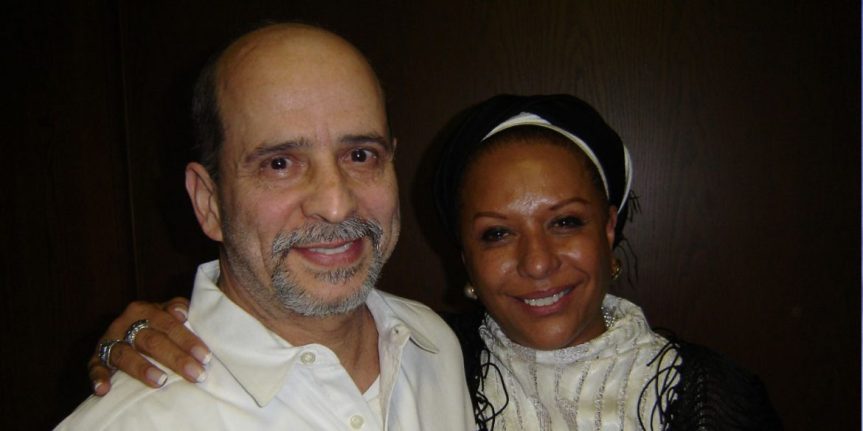
“Simon Trinidad” and Piedad Cordoba (Image: Piedad Cordoba)

South Paris, Maine


The title recalls the title of Henry David Thoreau’s essay “A Plea for Captain John Brown.” Trinidad, like John Brown, is remarkable for his implacable resolve and regard for justice.

Trinidad was 58 years of age when a U.S. court in 2008 sentenced him to 60 years in prison. His alleged crime was that of conspiracy to hold hostage three U.S. drug-war contractors operating in Colombia. In effect, he is serving a life sentence. He had nothing to do with the hostage-taking.

The contractors, captured in 2003, went free in 2008. U.S. drug war in Colombia has obscured the big U.S. role in Colombia’s war against leftist insurgents, primarily the Revolutionary Armed Forces of Colombia (FARC).

Simon Trinidad

Simón Trinidad was a FARC leader. The FARC and Colombia’s government signed a peace agreement in 2016 and Trinidad and other ex-combatants expected to be part of a peace process. Now he is a prisoner in a super-max prison in the United States and is confined to his cell for all but two hours per day, receives no mail, and is allowed very few visitors.

On July 27, Simón Trinidad unexpectedly was a featured item in the news in Colombia. An undated letter he had written to Colombian chancellor Álvaro Leyva requesting repatriation to Colombia had appeared on social media. News reports were reproducing it.

Observers associated Trinidad’s letter with the U.S. government’s announcement the day before that the bloodthirsty former paramilitary chieftain Salvatore Mancuso, also jailed in the United States, soon would be extradited to Colombia. President Gustavo Petro designated Mancuso as a “promotor of peace.”

Trinidad, not so favored as this, in his letter wrote of his determination to testify before the Special Jurisdiction for Peace, as other former FARC combatants have done, and Mancuso too, virtually. This court, established under the Peace Agreement of 2016, offers former combatants an opportunity to tell the truth about crimes they may have committed during the civil war and, having done so, to be pardoned or punished.

Trinidad apparently hopes not only that that Chancellor Leyva will inform the U.S. Secretary of State of his request to be repatriated but also that his message will be passed on to President Biden, who has the power to release him from prison.

Progressive Colombian Senator Iván Cepeda, “one of the people who speaks of peace on behalf of President Gustavo Petro,” welcomed “Simón Trinidad’s proposal [and] sent it directly to Chancellor Álvaro Leyva.”

Trinidad had joined the left-leaning Patriotic Union (UP) electoral coalition after it formed in 1985. A year later, paramilitaries began their massacre of UP adherents that, with impunity from Colombia’s government, lasted for years. In response, Trinidad in 1987 joined the FARC and, in the process, dropped his name Ricardo Palmera Pineda. For the FARC, Trinidad was responsible for political education and propaganda and was a negotiator.

The U.S. government in 2000 introduced its “Plan Colombia” through which Colombia’s military secured U.S. weapons and training assistance; U.S. troops and military contractors were deployed in Colombia. The appearance of Plan Colombia doomed peace negotiations between the FARC and Colombia’s government that were in progress at the time.

As a lead FARC negotiator in those talks, Simón Trinidad became known to international observers. His course with the FARC ended abruptly on January 2, 2004, when Colombian military personnel and the CIA seized him in Quito. Trinidad was there seeking UN assistance for a proposed prisoner exchange.

Colombia’s government extradited Trinidad to the United States on New Year’s Eve, 2004. According to his U.S. lawyer Mark Burton, Trinidad’s U.S. captors regarded him as a “trophy prisoner.”

Trinidad’s U.S. handlers had to stage four trials for them to finally gain a conviction. His capture and his multiple appearances in U.S. courtrooms from 2005 to 2008 served as real-time advertising that testified to U.S. commitment to anti-insurgency war and drug war in Colombia.

Trinidad’s misfortune was to have fallen into the clutches of a nation whose record on prisoners is horrific. After all, “The United States stands alone as the only nation that sentences people to life without parole for crimes committed before turning 18.” (No wonder: of 196 countries, only the United States has yet to ratify the UN’s Convention on the Rights of the Child.)

As a U.S. political prisoner, Simón Trinidad harks back to the Scottsboro Boys, who in Alabama faced death penalties in the 1930s; to Communist Party members jailed under the Smith Act; to Black Panther Party members caught up in the U.S. government’s COINTELPRO project. Simón Trinidad is also representative of prisoners gathered up in U.S. wars and other interventions abroad. They include: Ricardo Flores Magón, Mexican revolutionary who died in Leavenworth Federal Prison in 1922; the “Cuban Five” prisoners who resisted U.S. hostilities against Cuba; and the unfortunates ending up in the U.S. prison in Guantanamo during and after the Iraq War.

Despite the Peace Agreement, paramilitaries or other thugs have since killed almost 400 former FARC fighters; 300 FARC prisoners of war are still in prison almost seven years later.

Violence in the countryside persists. Colombia’s military is unable or unwilling to suppress a new breed of paramilitaries. One report highlights the paramilitaries’ “symbiotic relationship with Colombian state actors.” Declassified State Department and CIA documents from George Washington University’s National Security Archives say the same. The plot thickens: the tight relationship between the U.S. and Colombian militaries and the U.S. alliance with Colombia’s government together suggest U.S. complicity with a violence that Colombia’s Army and state are unable or unwilling to control.

The bad news for Simón Trinidad is that the U.S. government is betting not on peace in Colombia, but on continuing war. For that reason, Simón Trinidad confronts formidable barriers in satisfying his need to join Colombia’s peace process. Mark Burton’s words end this report: “Simón Trinidad is a man with a clear vision for a new Colombia, a Colombia in peace and with social justice. Colombia needs to listen to his voice, his vision, his proposals for peace. His continued imprisonment in the United States on false charges is an insult to Colombia, its history, and its people.”

Burton’s comments appear in a remarkable new eBook, accessible here. It contains commentary, in Spanish, from activists, writers, and intellectuals seeking Trinidad’s repatriation. The announcement of this book offers a video presentation, here, of reflections and documentary material.


W.T. Whitney Jr. is a political journalist whose focus is on Latin America, health care, and anti-racism. A Cuba solidarity activist, he formerly worked as a pediatrician, lives in rural Maine. W.T. Whitney Jr. es un periodista político cuyo enfoque está en América Latina, la atención médica y el antirracismo. Activista solidario con Cuba, anteriormente trabajó como pediatra, vive en la zona rural de Maine.