Honduras – next in line for US-imposed coup / By W.T. Whitney

Image: Honduras: Background and U.S. Relations | CRS Report

South Paris, Maine


After narrowly losing elections in 2013 and 2017, Xiomara Castro and her social democratic Freedom and Refoundation Party (Libre) won the next set of elections such that, as of January 2022, she was Honduras’s new president. The defeated National Party had presided over worsening corruption, electoral fraud, poverty, and violent repression for 12 years – President Juan Orlando Hernández (JOH), for eight of them.

The U.S. government played a part in the military coup that in June 2009 removed President José Manuel Zelaya. He is President Casto’s husband and longtime “coordinator” of the Libre Party. Now the United States is promoting another coup.

Interviewed by media outlet HCH TV on August 28, U.S Ambassador in Honduras Laura Dogu stated that, “We are very concerned about what has happened in Venezuela. It was quite surprising for me to see the Minister of Defense (José Manuel Zelaya) and the head of the Joint Chiefs of Staff (General Roosevelt Hernández) sitting next to a drug trafficker in Venezuela.”

The seat-mate was Venezuela’s Minister of Defense Vladimir Padrino López. The occasion was the World Cadet Games of the International Council of Military Sports taking place in Caracas from August 16 on. The U.S. government had charged Padrino López with “conspiring with others to distribute cocaine” and on March 26, 2020 announced bounties for his capture and that of 14 other Venezuelan officials facing drug-related charges.

Responding, Castro immediately declared that “Interference and interventionism by the United States … is intolerable.” Denouncing “U.S. violation of international law,” she canceled Honduras’s 114- year-old extradition treaty with the United States. Honduras has extradited 40 or so individuals to the United States over 10 years for prosecution on drug-related causes. JOH, the best-known of them, was recently sentenced to a 45-year prison term.

Slippery slope

On August 29, President Castro told reporters, “I will not allow extradition be used as an instrument for blackmailing the armed forces …  Yesterday they attacked the head of the armed forces and the minister of defense in our country… [such an] attack weakens the Armed Forces as an institution and makes the upcoming process of elections [in 2025] very precarious.”

In a television interview , Foreign Minister Eduardo Enrique Reina indicated Dogu’s comments could set off a “barracks coup” aimed at removing General Roosevelt Hernández. Schisms do exist. A year ago, for example, General Staff head José Jorge Fortín Aguilar’s warned four retired military chiefs to desist from their anti-government activities. 

Reina claimed that the extradition treaty, long used as a “political tool to influence the country internal affairs,” could be used “to bring Roosevelt Hernández or Secretary of National Defense José Manuel Zelaya Rosales to trial in the United States, in order to disrupt the Libre Party’s electoral plans.”

Primary elections take place in April 2025 and elections for president and Congress on November 30, 2025. The Libre Party is vulnerable.

The attorney general is investigating secretary of Parliament and Libre Party deputy Carlos Zelaya following his recent acknowledgement that two narco-traffickers in 2013 offered him money for the Libre Party’s election campaign that year.

Implicated in other drug-related crimes, Carlos is the brother of former President José Manuel Zelaya and brother-in-law of President Castro. On August 31, Carlos Zelaya and Defense Minister José Manuel Zelaya each resigned. The latter is Carlos’s son; he and the former president share the same name.

President Castro replaced the resigned defense minister with lawyer Rixi Moncada. She is running for president in the 2025 elections. As such, she would “continue reshaping Honduras’s economic and financial apparatus to fit with the people’s revolution,” according to an admirer.

The situation for Castro and the Libre Party deteriorated even more after September 3 with wide publicity given to a video showing Carlos Zelaya conferring in 2013 with the narco-traffickers. Obtained by InSight Crime and allegedly leaked by the U.S. government, the video is accessible here. It shows the drug-traffickers “offering to give over half a million dollars” to the Libre Party. They mention “previous contributions” to former President José Manuel Zelaya. 
On September 6, President Castro condemned Carlos Zelaya’s meeting with narco-traffickers where they “discussed bribes” as a “deplorable error.”  That day opposition politicians demanded her resignation. They were leading “more than a thousand Hondurans” in a march through Tegucigalpa.

Fallout and implications

The Libre Party’s loss of political power would jeopardize the already precarious lives of most Hondurans. Government data show a poverty rate of 73.6% in 2021 that fell to 64.1% in 2023. According to UNICEF, “Deprivations are highest in nutrition, followed by deprivations in sanitation, education, water, and overcrowding, respectively.” UNICEF reports that, “The homicide rate was 38.1 per 100,000 inhabitants in 2022, the highest in Central America and the second highest in Latin America.”

Honduran writer, lawyer, political commentator, and Libre Party partisan Milson Salgado outlines programs introduced by the Xiomara Castro government that promote national development and social rescue.

He cites these: public enterprises recovered from privatization; “high social investment … in the construction of hospitals, repair of educational centers, construction and reconstruction of recreation centers;” extension of the electricity network; and new highways.

The Castro government has funded rural development, provided “educational scholarships at all school levels,” “support[ed] the agricultural sector with loans at the lowest interest rates in history,” provided financial relief for small farmers, “recovered “65,000 hectares of forest,” and provided support for the elderly and disabled.

The U.S. – assisted coup in progress in Honduras is remarkable in two ways. First, it illustrates U.S. reliance on drug war as justifying military and other interventions in targeted Latin American countries. Salgado notes that the United States has “no interest in the fight against narco-trafficking other than to use it selectively as a weapon for blackmailing governments, countries, and people.”

As regards Colombia, the U.S. government invoked the pretext of narco-trafficking as cover for its direct role in combating leftist insurgents. In Peru, a burgeoning drug trade recently prompted the United States to send in troops, most likely out of solicitude for natural resources on tap there. Exaggerated concern about narco-trafficking in Venezuela has rationalized various kinds of U.S. intervention directed at regime change.

Secondly, U.S. strategists altered the device called lawfare that Latin American coup-plotters rely on these days to remove governments not to their liking. That happened in ParaguayBrazilPeru, and Ecuador  through perverse manipulation of legal norms.

The U.S. gets credit for innovation. Treaties of extradition are legal instruments that, under international law, enable one country to ensure that its criminals staying in another country can be returned for prosecution. It’s a regular legal process that the United States has adapted for Honduras to bring about regime change there.

In any event, government supporters are planning a “big national mobilization” in Tegucigalpa on September 15 “in support of Honduras’s leader, in defense of the homeland’s independence and the building of democratic socialism, and in condemnation of interventionist activities.”


W.T. Whitney Jr. is a political journalist whose focus is on Latin America, health care, and anti-racism. A Cuba solidarity activist, he formerly worked as a pediatrician, lives in rural Maine. W.T. Whitney Jr. es un periodista político cuyo enfoque está en América Latina, la atención médica y el antirracismo. Activista solidario con Cuba, anteriormente trabajó como pediatra, vive en la zona rural de Maine.

Vietnam Is Precedent as US Prepares for War with China / By W. T. Whitney

Near Da Nang, South Vietnam, Marines move through ankle-deep mud carry their poncho-covered comrade towards higher ground were, when the weather permits, he will be air-lifted to the rear areas, Jan. 16, 1968. (AP Photo/John T. Wheeler)

South Paris, Maine


Popular struggle for national independence under socialism has regularly provoked U.S. war or hostile interventions, as with Cuba, North Korea, China, Vietnam and other nations. We explore both the extreme danger of possible U.S. war with China and also the changing U.S rationale for fighting wars. This shows in the difference between why the U.S. war in Vietnam was fought and why U.S. war with China may be on the way.   

Vietnam recently commemorated agreements reached 70 years ago in Geneva that on July 21, 1954 ended war between Vietnamese revolutionary forces and the French military, defeated two months earlier at Dien Bien Phu. According to official media, the object of a “scientific conference” held on July 19 was “to emphasize the historical importance of the agreements for the struggle for national liberation of the Vietnamese people and the peoples of the world.”

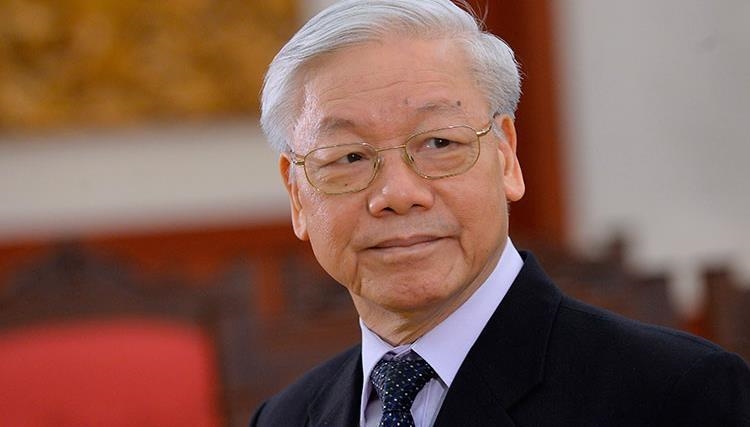
Nguyen Phu Trong | Photo: Anadolu Ajnsi

Also on July 19, Nguyen Phu Trong died. Once chairperson of the National Assembly and president of Vietnam, this paramount leader, a student and teacher of Marxist theory, had long served as general secretary of the Communist Party of Vietnam. His death is a reminder, if such is needed, that for Vietnam revolutionary socialism and national liberation were kindred struggles.

To prevent the unification of Vietnam as a socialist nation, the U.S. government went the last mile, first diplomatically and then militarily – from the 1954 Geneva agreements that established Vietnam’s national independence to the departure of defeated U.S. troops on April 30, 1975. The U.S. leadership class, involved in spreading U.S. power and influence across the globe, created and then defended South Vietnam, while attempting to defeat Vietnam’s Revolution, all at enormous human and material cost.

The enclave remaining after a U.S. victory might have ended up as a beachhead for counter-revolution and U.S. control in Southeast Asia. In their various situations, that’s the role performed by South Korea, Taiwan, and even Ukraine in relation to Russia, and Israel vis-a-vis the rest of the Middle East.

U.S. planners, in thinking about what to do about Vietnam, were not entirely devoid of reason. For U.S. imperialists, to beat back Vietnamese Communists – think “domino theory” – and heat up the Cold War against the Soviet Union had a certain logic, according to their own lights.

After the Vietnam disaster, official U.S. planning for war has built upon a variety of ostensible reasons for fighting. Having emerged from World War II well-resourced and strong, the U.S. government consistently demonstrated limited tolerance for the risings of oppressed, colonialized peoples. However, once newly formed independent states showed signs of strength, regional prominence, or even strategic rivalry, U.S. strategists turned to action.

War materialized as the ultimate U.S. fix, no matter the circumstances and under a variety of pretexts, as shown with U.S. war-making in Libya, Afghanistan, and Iraq. The rationales for fighting were more diffuse. The threat of U.S. war now looms over Iran and, more ominously, over China. Each is under the gun because they are strong, assertive states.  

Anti-communism was a safer kind of rationale. Vietnam won its “American War,” and the U.S. government backed off. That’s the story. Incidentally, the Vietnamese people scored a clear win. They live according to plans and socialist purpose in a free and independent nation.  

Vietnam has established diplomatic relations with 190 countries. A Vietnamese writer cites “important achievements with infrastructure gradually meeting the needs of industrialization and modernization.”  Since reforms in the 1980s, an economy resting mainly on foreign direct investment in manufacturing and tourism has expanded. Economic growth ranged between 9.5 and 5.5 percent between 1993 and 2022, save for sharp drops in 2020 and 2021. GDP rose 5.05 percent in 2023. By 2022, the poverty rate was down to 4.3%.

Vietnam’s government since 2008 has spent 20 percent of its budget on education. The same report mentions “high primary school completion rates, strong gender parity, low student/teacher ratios,” and school attendance rates that are high.  The British medical journal Lancet indicates that, “Along with the economic growth, the health of the Vietnamese people has significantly improved between 1990 and 2020, whereby the life expectancy grew from 69 to 75 years, and the under-five child mortality rate decreased from 30 to 21 per 1000 live births.” 

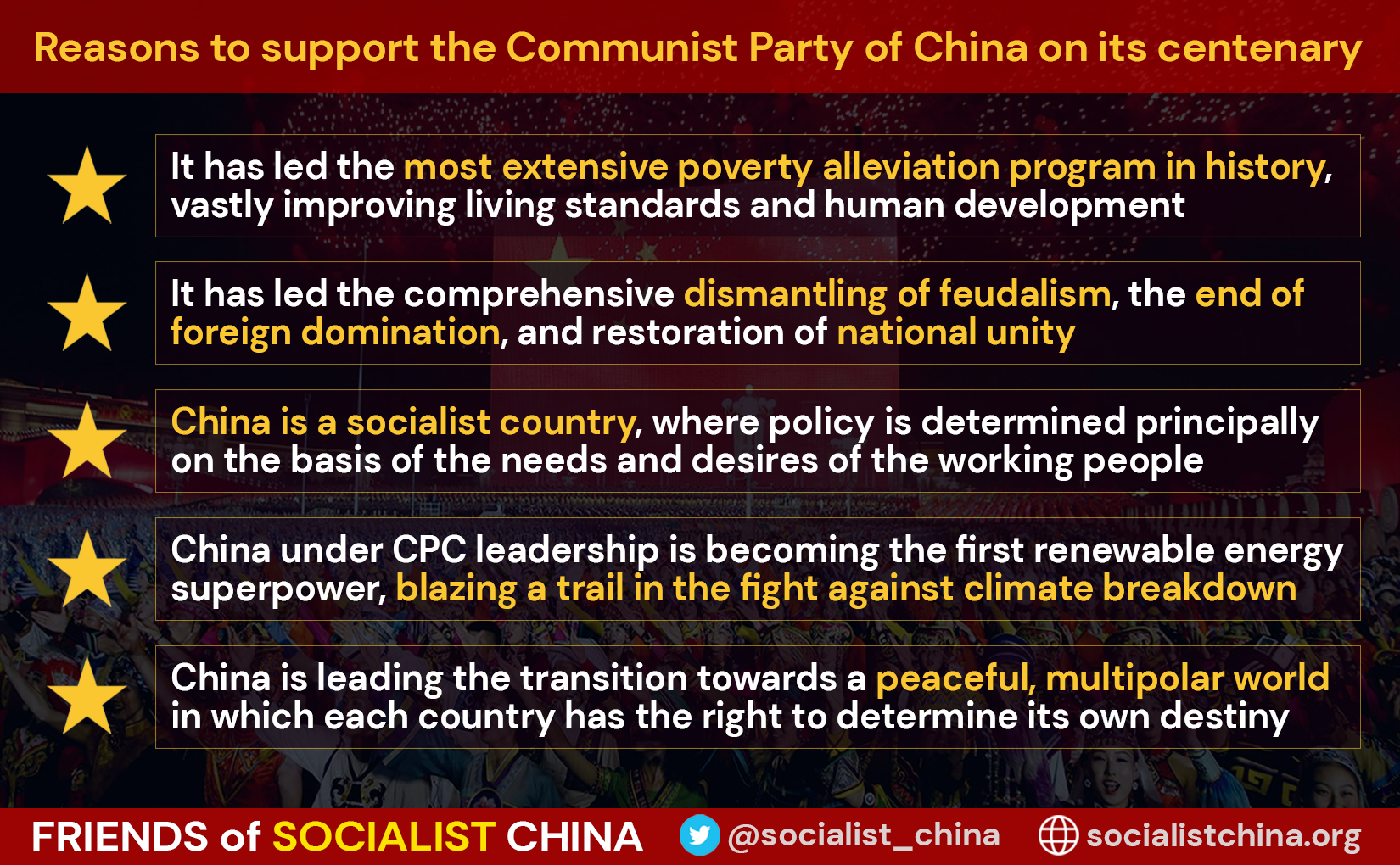
Socialist China restored dignity to the vast majority of its citizens, has afforded them decent lives, and created a well-functioning state that responds effectively to the climate crisis and other challenges. It too warrants a pass from the U.S. government.

That’s not happening: the U.S. government, in the hands of a divided leadership class, deals only haphazardly with major problems afflicting U.S. society. It satisfies the material wants of the upper echelons, and presides over war preparations as part of what is, in effect, a new Cold War.

Indeed, the USA has accumulated over 750 bases in 80 countries and posted 173,000 troops in 159 counties. The U.S. share of global arms exports in 2019-23 was 42 percent, up from 34 percent during the previous four-year period, according to sipri.org.

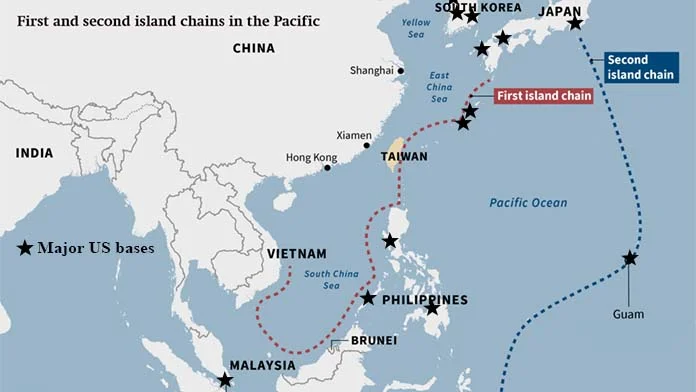
The US has two island chains around the coast of China. The stars indicate major US bases | via solidarity.net.au

In the Pacific waters surrounding China, the United States has expanded the capabilities of its bases; it operates nuclear-equipped naval vessels, arranges for multi-national naval exercises, has vessels engaging in provocative “freedom of navigation exercises,” and will be introducing nuclear-powered submarines.

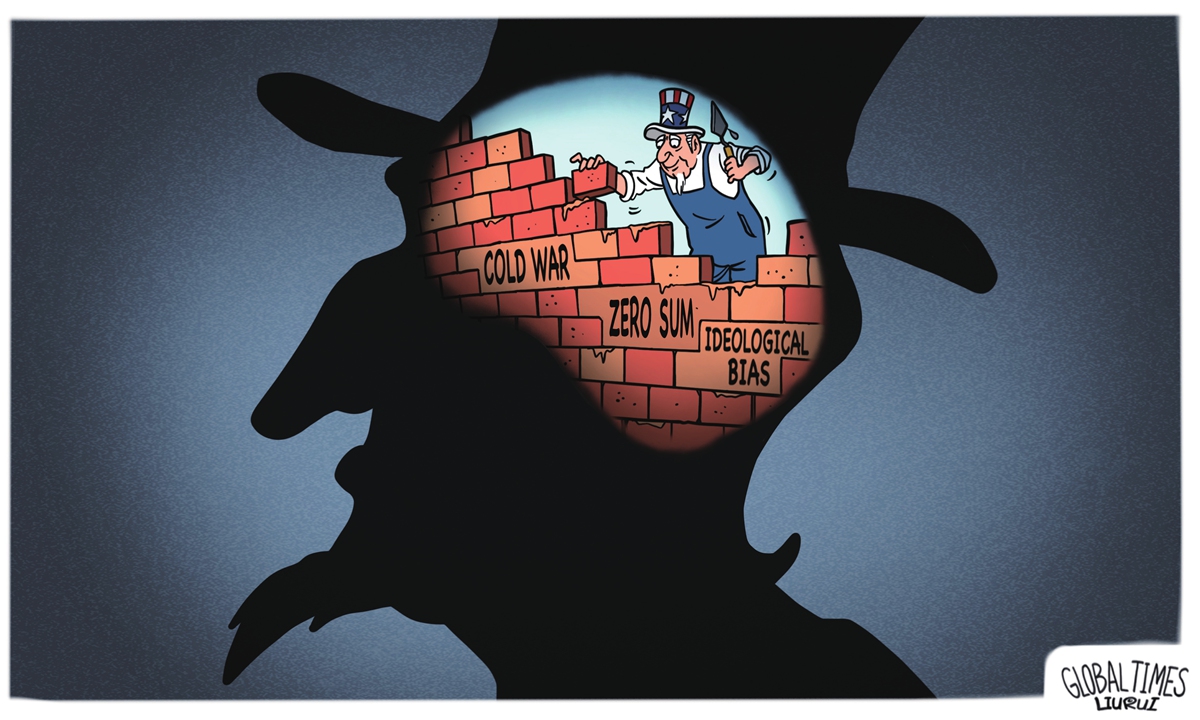
The idea of multiple and varied reasons for fighting wars, presented above, folds neatly into the overarching notion of a new Cold War, something that by nature is ambitious, far-reaching, and long term.  Where is the justification for that?

Here is a guess: The United States decades ago turned to a great variety of activities related to military preparation, financing, and recovery. These now intrude massively in the U.S.  economy and in society itself, so much so that, in theory, something has to happen to explain and justify such a state of affairs. War provides meaning, without which the whole apparatus might disappear. What then of the economy and of the collective experience of a U.S population variously oriented to the military?

The Costs of War Project of the Watson Institute of Brown University weighs in. Author Heidi Peltier points out that:

Federal spending on the military and on veterans makes up more than half of the federal discretionary budget. Employment in the federal government is dominated by civilian defense workers and uniformed military personnel. Because the majority of taxpayer dollars and federal resources are devoted to the military and military industries, and most government jobs are in the defense sector, the political power of this sector has become more deeply entrenched and other alternatives have become harder to pursue. Instead of having a federal government that addresses various national priorities … the U.S. has a government that is largely devoted to war and militarism.

Illustration: Liu Rui/GT

Unfortunately, protecting both the U.S. economy and habituation to the military has its downside, specifically extreme danger to humanity itself. Writing in the most recent issue of Monthly Review magazine, John Bellamy Foster and Brett Clark explain, pointing to China. Discussing “Imperialism in the Indo-Pacific,” they state that:

“Most U.S. strategies for winning the New Cold War directed at China are aimed at a strategic-geopolitical defeat of the latter that would bring down Chinese President Xi Jinping and destroy the enormous prestige of the Communist Party of China, leading to regime change from within and the subordination of China to the U.S. imperium from without … (It) is the United States, which sees China’s rise as a threat to its own global preeminence, with the Indo-Pacific super-region increasingly being viewed as the pivotal site in the New Cold War, that is propelling all of humanity toward a Third World War.”


W.T. Whitney Jr. is a political journalist whose focus is on Latin America, health care, and anti-racism. A Cuba solidarity activist, he formerly worked as a pediatrician, lives in rural Maine. W.T. Whitney Jr. es un periodista político cuyo enfoque está en América Latina, la atención médica y el antirracismo. Activista solidario con Cuba, anteriormente trabajó como pediatra, vive en la zona rural de Maine.