President Biden, release Simón Trinidad from prison now! Let him return to Colombia! / By W. T. Whitney

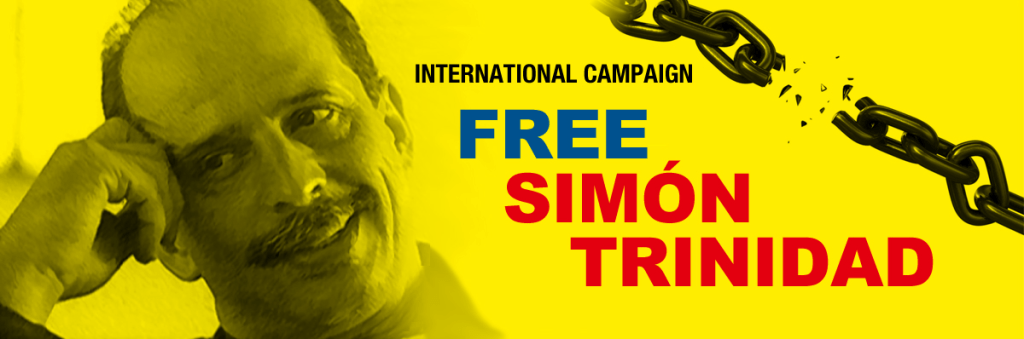
Simón Trinidad, leader of the former guerrilla organization Revolutionary Armed Forces of Colombia. File photo / via Orinoco Tribune

South Paris, Maine


President Biden recently pardoned his son Hunter Biden and commuted the sentences of 1499 drug offenders. Analyst Charles Pierce insists Biden should pardon Simón Trinidad also. Here we join this plea on behalf of the Colombian Ricardo Palmera, whose nom de guerre is Simón Trinidad. Biden indeed must release Trinidad and let him return to Colombia.

Trinidad, a former leader of the Revolutionary Armed Forces of Colombia (FARC), has been imprisoned since 2008. U.S. agents arranged for his capture in Ecuador in 2003. Charged with drug-trafficking, Trinidad was extradited from Colombia to the United States in late 2004. Juries in two of his four trials there failed to convict him of narco-trafficking. Two trials were required to convict Trinidad of terrorist conspiracy to hold hostage three U.S. military contractors operating in Colombia.

The Peace Agreement of 2016 between Colombia’s government and the FARC offered a process for combatants to leave war behind. The Agreement produced the Special Jurisdiction for Peace (JEP), a device whereby Trinidad, once he arrives in Colombia, would be able to tell the truth about participating in civil war and possibly gain immunity from further punishment.

Trinidad’s defenders claim that his earlier experience as a negotiator on behalf of the FARC amply qualify him to help with overcoming difficulties still damaging prospects for peace in Colombia.

Trinidad is presently serving a 60-year sentence – 20 years for each of the captured North Americans.  Early release from prison for Trinidad would make partial amends for an excessively long sentence and relieve him of the cruelty marking his prison experience.

President Gustavo Petro’s Colombia’s government is now finally pressuring the Biden administration to return Trinidad to Colombia. A note sent from the Colombian Embassy on November 12 proposes that “in a humanitarian spirit and for the purpose of [Trinidad] contributing to Colombia’s peace agenda, we present a request for a presidential pardon.”

In a request first made in early 2023, Colombia still seeks “necessary technical facilities” provided for Trinidad so that he might participate in “virtual sessions” of the Special Jurisdiction for Peace.  Once repatriated, he could then participate fully in “the search for total peace in Colombia.”

The U.S. government, ironically enough, has expressed support for the peace process in Colombia, both during four years of negotiation and subsequently after the Agreement was signed in 2016.

Simón Trinidad came from a wealthy, politically powerful, and landowning family in Cesar Department in northern Colombia. He prepared as an economist. Before he joined the FARC in 1987, he was managing an agricultural bank and his family’s estates, and teaching at a local university.

In reaction to accentuation of class-based bloody conflict in Colombia’s rural areas, ongoing for decades, his politics changed. Joining with others, he opposed the Colombian government’s tolerance of paramilitary killings of office-holders and adherents of the Patriotic Union electoral coalition, from 1985 on. They were Communist Party members, former FARC guerrillas, and other progressives. Well over 5000 of them would be massacred.

Within the FARC, Trinidad attended to political education, propaganda, and negotiations with foreign agencies and political leaders. He served as a lead negotiator and spokesperson during the failed FARC-Colombian government peace negotiations taking place in San Vicente del Caguen in 1998-2002.

Here are good reasons for Trinidad’s U.S. imprisonment to end, and for him to return to Colombia now:  

·        The federal prison in Florence, Colorado where Trinidad is held “is one of the strictest maximum-security prisons in the world.” He remained in solitary confinement for 12 years. Authorities restrict his outside communication to infrequent contacts with a very few family members. Visits are few and far between.

·        The conspiracy charge against him amounts to no more than membership in the FARC. That insurgency sought revolutionary social change. International law recognizes both the right of revolution, and rights for prisoners of war.

·        FARC guerrillas in 2003 shot down the plane carrying the three U.S. military contractors and took them hostage. They were “three retired military officers who provided intelligence services through private companies.” The FARC regarded them as enemy combatants. They went free in 2008. Simón Trinidad was far-removed geographically and command-wise from the decision to bring down their plane. In view of such circumstances, Trinidad’s 60-year jail sentence is wildly disproportionate.

·        Mind-reading has its hazards, but appearances may be suggestive. Pains taken to prosecute and persecute Simón Trinidad speak to his status as “trophy” prisoner for his U.S. captors – as indicated by Trinidad’s U.S. attorney Mark Burton. Under the pretext of drug war, the U.S. government in 2000 had introduced its “Plan Colombia” program of military assistance directed at ridding Colombia of leftist insurgents – to the tune eventually of $10 billion. Simón Trinidad’s prominent role in the recently failed Caguen peace talks showed off Plan Colombia as meeting expectations; an exalted prisoner like Trinidad was now in U.S. hands.

There would be the possibility too that Trinidad had earned the special ire of the entitled classes in both Colombia and the United States. Born with a silver spoon, he was indeed a traitor to his class. 

SimónTrinidad as a special case is clear on comparing his fate with that of major paramilitary boss Salvatore Mancuso, reliably accused of killing 1500 Colombians. Each faced trials in the United States after extradition on narco-trafficking charges. Mancuso served his 15-year sentence and in February 2024 was allowed to return to Colombia. President Gustavo Petro honored him through an appointment as “peace manager as part of’ [his] ‘Total Peace’ initiative.” Mancuso, but not Simón Trinidad, has testified before the JEP.

Attorney Mark Burton regards Trinidad as a friend: “To know him is to admire him, because he is an intelligent, human man, and also very firm in his political and social ideas. There are not many people like him in life. He is a person that in the worst prison in the United States they have not been able to break him. He is a person with firmness, ideas, and character. That alone is worth admiration.”


W.T. Whitney Jr. is a political journalist whose focus is on Latin America, health care, and anti-racism. A Cuba solidarity activist, he formerly worked as a pediatrician, and lives in rural Maine.
A Plea for Simón Trinidad / By W. T. Whitney Jr.

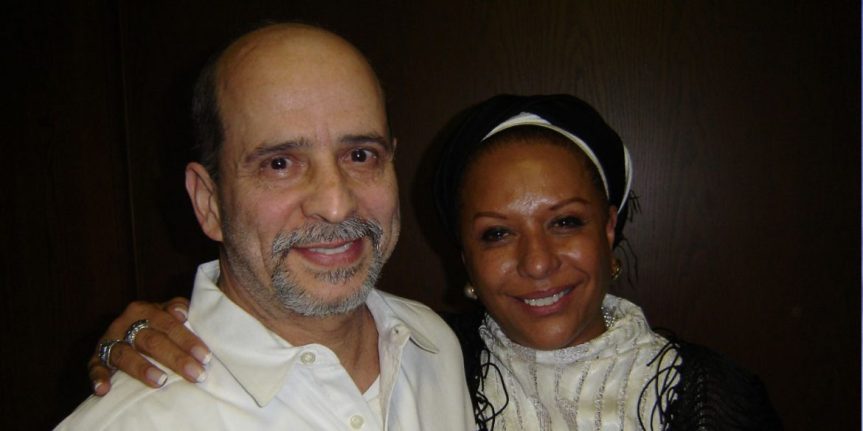
“Simon Trinidad” and Piedad Cordoba (Image: Piedad Cordoba)

South Paris, Maine


The title recalls the title of Henry David Thoreau’s essay “A Plea for Captain John Brown.” Trinidad, like John Brown, is remarkable for his implacable resolve and regard for justice.

Trinidad was 58 years of age when a U.S. court in 2008 sentenced him to 60 years in prison. His alleged crime was that of conspiracy to hold hostage three U.S. drug-war contractors operating in Colombia. In effect, he is serving a life sentence. He had nothing to do with the hostage-taking.

The contractors, captured in 2003, went free in 2008. U.S. drug war in Colombia has obscured the big U.S. role in Colombia’s war against leftist insurgents, primarily the Revolutionary Armed Forces of Colombia (FARC).

Simon Trinidad

Simón Trinidad was a FARC leader. The FARC and Colombia’s government signed a peace agreement in 2016 and Trinidad and other ex-combatants expected to be part of a peace process. Now he is a prisoner in a super-max prison in the United States and is confined to his cell for all but two hours per day, receives no mail, and is allowed very few visitors.

On July 27, Simón Trinidad unexpectedly was a featured item in the news in Colombia. An undated letter he had written to Colombian chancellor Álvaro Leyva requesting repatriation to Colombia had appeared on social media. News reports were reproducing it.

Observers associated Trinidad’s letter with the U.S. government’s announcement the day before that the bloodthirsty former paramilitary chieftain Salvatore Mancuso, also jailed in the United States, soon would be extradited to Colombia. President Gustavo Petro designated Mancuso as a “promotor of peace.”

Trinidad, not so favored as this, in his letter wrote of his determination to testify before the Special Jurisdiction for Peace, as other former FARC combatants have done, and Mancuso too, virtually. This court, established under the Peace Agreement of 2016, offers former combatants an opportunity to tell the truth about crimes they may have committed during the civil war and, having done so, to be pardoned or punished.

Trinidad apparently hopes not only that that Chancellor Leyva will inform the U.S. Secretary of State of his request to be repatriated but also that his message will be passed on to President Biden, who has the power to release him from prison.

Progressive Colombian Senator Iván Cepeda, “one of the people who speaks of peace on behalf of President Gustavo Petro,” welcomed “Simón Trinidad’s proposal [and] sent it directly to Chancellor Álvaro Leyva.”

Trinidad had joined the left-leaning Patriotic Union (UP) electoral coalition after it formed in 1985. A year later, paramilitaries began their massacre of UP adherents that, with impunity from Colombia’s government, lasted for years. In response, Trinidad in 1987 joined the FARC and, in the process, dropped his name Ricardo Palmera Pineda. For the FARC, Trinidad was responsible for political education and propaganda and was a negotiator.

The U.S. government in 2000 introduced its “Plan Colombia” through which Colombia’s military secured U.S. weapons and training assistance; U.S. troops and military contractors were deployed in Colombia. The appearance of Plan Colombia doomed peace negotiations between the FARC and Colombia’s government that were in progress at the time.

As a lead FARC negotiator in those talks, Simón Trinidad became known to international observers. His course with the FARC ended abruptly on January 2, 2004, when Colombian military personnel and the CIA seized him in Quito. Trinidad was there seeking UN assistance for a proposed prisoner exchange.

Colombia’s government extradited Trinidad to the United States on New Year’s Eve, 2004. According to his U.S. lawyer Mark Burton, Trinidad’s U.S. captors regarded him as a “trophy prisoner.”

Trinidad’s U.S. handlers had to stage four trials for them to finally gain a conviction. His capture and his multiple appearances in U.S. courtrooms from 2005 to 2008 served as real-time advertising that testified to U.S. commitment to anti-insurgency war and drug war in Colombia.

Trinidad’s misfortune was to have fallen into the clutches of a nation whose record on prisoners is horrific. After all, “The United States stands alone as the only nation that sentences people to life without parole for crimes committed before turning 18.” (No wonder: of 196 countries, only the United States has yet to ratify the UN’s Convention on the Rights of the Child.)

As a U.S. political prisoner, Simón Trinidad harks back to the Scottsboro Boys, who in Alabama faced death penalties in the 1930s; to Communist Party members jailed under the Smith Act; to Black Panther Party members caught up in the U.S. government’s COINTELPRO project. Simón Trinidad is also representative of prisoners gathered up in U.S. wars and other interventions abroad. They include: Ricardo Flores Magón, Mexican revolutionary who died in Leavenworth Federal Prison in 1922; the “Cuban Five” prisoners who resisted U.S. hostilities against Cuba; and the unfortunates ending up in the U.S. prison in Guantanamo during and after the Iraq War.

Despite the Peace Agreement, paramilitaries or other thugs have since killed almost 400 former FARC fighters; 300 FARC prisoners of war are still in prison almost seven years later.

Violence in the countryside persists. Colombia’s military is unable or unwilling to suppress a new breed of paramilitaries. One report highlights the paramilitaries’ “symbiotic relationship with Colombian state actors.” Declassified State Department and CIA documents from George Washington University’s National Security Archives say the same. The plot thickens: the tight relationship between the U.S. and Colombian militaries and the U.S. alliance with Colombia’s government together suggest U.S. complicity with a violence that Colombia’s Army and state are unable or unwilling to control.

The bad news for Simón Trinidad is that the U.S. government is betting not on peace in Colombia, but on continuing war. For that reason, Simón Trinidad confronts formidable barriers in satisfying his need to join Colombia’s peace process. Mark Burton’s words end this report: “Simón Trinidad is a man with a clear vision for a new Colombia, a Colombia in peace and with social justice. Colombia needs to listen to his voice, his vision, his proposals for peace. His continued imprisonment in the United States on false charges is an insult to Colombia, its history, and its people.”

Burton’s comments appear in a remarkable new eBook, accessible here. It contains commentary, in Spanish, from activists, writers, and intellectuals seeking Trinidad’s repatriation. The announcement of this book offers a video presentation, here, of reflections and documentary material.


W.T. Whitney Jr. is a political journalist whose focus is on Latin America, health care, and anti-racism. A Cuba solidarity activist, he formerly worked as a pediatrician, lives in rural Maine. W.T. Whitney Jr. es un periodista político cuyo enfoque está en América Latina, la atención médica y el antirracismo. Activista solidario con Cuba, anteriormente trabajó como pediatra, vive en la zona rural de Maine.

US Must Return Its Political Prisoner Simón Trinidad to Colombia – W.T. Whitney Jr.

In this Jan. 13, 2002 photo, Commander of the Revolutionary Armed Forces of Colombia, (FARC) Simón Trinidad reads a declaration during a press conference in Los Pozos, Colombia. | AP

Murderous violence and oligarchy were at the center of Colombian political life during the 20th century. Colombians by the millions were marginalized, impoverished, and/or displaced from small land holdings. Violence and the failings of liberal democracy turned Simón Trinidad into a revolutionary. Few in the United States and Europe know about him. Colombia’s allies in both places overlook the Colombian terror regime. 

Simón Trinidad matters; his time has come. This leader of the former Revolutionary Armed Forces of Colombia (FARC) faced bizarre and unfounded criminal charges in a U.S. court. He’s being held under the cruelest of conditions in a federal prison in Florence, Colorado. He will die there unless he is released. Simón Trinidad will be 70 years old on July 30. 

An international campaign is demanding that the U. S. government return Simón Trinidad to Colombia. What follows is an appeal on behalf of that campaign. Here are some facts: 

Trinidad’s birth name was Ricardo Palmera. His family included lawyers, politicians and landowners and was based in Valledupar, Cesar Department, Colombia. There, Palmera worked as a banker, taught economics in a regional university, and managed his family’s agricultural holdings. Affiliated with the Liberal Party, he favored agrarian reform. Then Palmera joined the left-leaning Patriotic Union, formed in 1985.   

That electoral coalition was immediately smothered in violence and murder. Palmera’s close comrades were being killed. Others departed for exile. On October 11, 1987, assassins killed Patriotic Union presidential candidate Jaime Pardo Leal, someone whom Palmera greatly admired. Discovering that he too was about to be killed, Palmera left Valledupar and joined the FARC. He took the name Simón Trinidad.

With that insurgency, Trinidad was responsible for propaganda and political education. He served as a peace negotiator. In December, 2003, Trinidad was in Ecuador preparing to meet with United Nations official James Lemoyne to discuss FARC plans to liberate hostages. On January 2, 2004, he was arrested there – with CIA help – and within two days had been delivered to Colombia. He remained in custody until December 31, 2004, when the Colombian government extradited him to the United States.

Simón Trinidad faced four jury trials between October, 2006 and April, 2008. The first trial ended in a deadlocked jury, the second one yielded a conviction, and the third and fourth trial each ended with juries deadlocked on a drug-trafficking charge. He was convicted of having conspired with other members of the FARC – terrorists in U. S. government eyes – to capture and hold hostage three U.S. drug-war contractors. 

Trinidad’s first trial judge was replaced after he had illegally interviewed jurors to secure information potentially useful to the prosecutors in his second trial. 

The new judge sentenced Simón Trinidad to 60 years in prison, 20 years for each of the three U.S. contractors being held hostage by the FARC. Trinidad was 57 years old.

He is serving his sentence at a U.S. “supermax” federal prison. Trinidad remained in solitary confinement from the time of his arrival in the United States until 2018. Now he may eat a midday meal in a dining hall. He is not allowed to receive letters, emails, or periodicals. Phone calls are limited.  Visitors are rare and very few, apart from his U.S. lawyers. 

Peace negotiations between the FARC and Colombian government took place in Havana from 2012 until 2016. The FARC delegation sought Simón Trinidad’s presence there as spokesperson and negotiator. Colombia’s government never requested authorities in Washington to release him for that purpose. There’s no indication that the latter would have done so. 

The eventual Peace Agreement provided for a “Special Jurisdiction for Peace.” There, former combatants on both sides of the conflict have the opportunity, if they choose, to speak the truth about crimes they may have committed and have the court decide upon pardon or punishment. Simón Trinidad chose to participate. To do so he needs to be in Colombia.

Making the case

As someone who sought justice for the oppressed and was faithful to his principles, Trinidad now is asking for justice for himself. Some solidarity activists may justify their support for him on the basis of only one or two aspects of his political life. Actually, there’s a full menu of good reasons for demanding that the U.S. government return Simón Trinidad to Colombia. 

1. The U.S. government must allow Simón Trinidad to appear before the Special Jurisdiction for Peace. It would thereby show respect for the Peace Agreement between the FARC and Colombian government.

2. The U.S. government has violated Trinidad’s basic legal and human rights. Trinidad was extradited as a drug-trafficker, which he was not. He was guilty of rebellion, which is a political crime. Extradition treaties and international human-rights law prohibit extradition for political crimes. The U.S. government subjected Trinidad to irregular court proceedings. His judge applied a wildly excessive sentence to a crime he didn’t commit. His prison conditions are inhumane. 

3. U.S. intervention in Colombia occasioned Simón Trinidad’s mistreatment at U.S. hands. His rescue would have anti-imperialist overtones. The U.S. government has long provided Colombia with military assistance, notably through its Plan Colombia, in effect after 2000. While ostensibly targeting drug-traffickers, Plan Colombia laid siege to the FARC. As a highly visible FARC peace negotiator in talks with the Colombian government in Caguán (1999-2001), Simón Trinidad became a trophy prisoner.  Plan Colombia set the stage, having already helped torpedo the peace talks. 

On display with Trinidad’s capture and extradition was the top-down nature of imperialist relations with client nations. Perhaps to please its boss, Colombia’s government almost immediately signaled its intention to extradite Trinidad to the United States, doing so even before a criminal charge had been announced. And Colombia’s political opposition regularly claims that national sovereignty is diminished every time prisoners like Simón Trinidad are referred to the United States for prosecution and punishment.

4. Solidarity activists in many countries have long admired those working and marginalized peoples in Colombia who have stood up to a ruling class intent upon plunder and oppression. They did so by joining indigenous and Afro-Colombian resistance movements, labor unions, leftist political parties, the FARC and other insurgencies. Simón Trinidad was in that fight. On that basis too he is worthy of support in his campaign to return to Colombia.   

5. Simón Trinidad was and is a revolutionary. The job description of progressives everywhere is to fight oppression and injustice. But now many of them are learning the truth about capitalism. They see climate change on the horizon and pandemic and economic collapse already here. Many of those who now embrace the revolutionary option have good reason to be at Simón Trinidad’s side. 

As a member of the FARC, Simón Trinidad saw violence against the Patriotic Union turn into massacre. Many of the estimated 5000 murder victims were former FARC members who were participating in electoral politics. Murderous violence and war between rich and poor are still at the center of Colombian politics. Following the signing of the Peace Agreement, assassins have killed more than 200 ex-FARC combatants and hundreds of community and political leaders, mainly in rural areas. The U.S. government, allied to the partisans of violence in Colombia, is complicit. 

That kind of violence helped to put Simón Trinidad on the revolutionary path. One good way to demonstrate abhorrence of U.S. promotion of violence in Colombia, we think, is to join the fight for Simón Trinidad’s return now to Colombia. 

For more information about the campaign to return Simón Trinidad to Colombia, go to https://www.libertadsimontrinidad.com/. Contact simontrinidadlibre@gmail.com. with questions or with your offer to join the campaign.