In Parting Blow, Trump Administration Hits Again at Cuba, by Tom Whitney

589 words

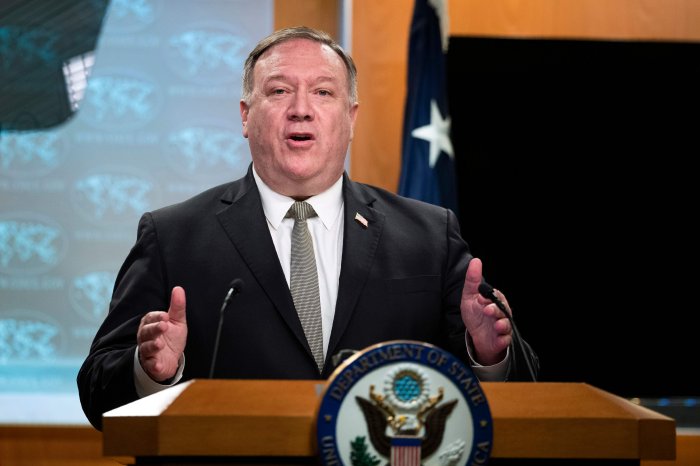
In a stunning announcement on January 11, Secretary of State Mike Pompeo communicated that “The State Department has designated Cuba as a State Sponsor of Terrorism for repeatedly providing support for acts of international terrorism in granting safe harbor to terrorists.”

This additional U.S. insult to Cuba occurs with only a week remaining before President-elect Biden takes office. Many hope that Biden will  restore openings to Cuba initiated by President Obama in late 2014 which the Trump administration trashed.

The U. S. government created its list of “state sponsors of terrorism” in 1979, adding Cuba in 1982. The Obama administration ended that designation in 2015. Re-assigned to the list, Cuba joins Iran, North Korea, and Syria. The U.S. classification of Cuba as a terrorist-sponsoring nation represents one element of U. S. aggression against Cuba that began more than 60 years ago as part of the Cold War.

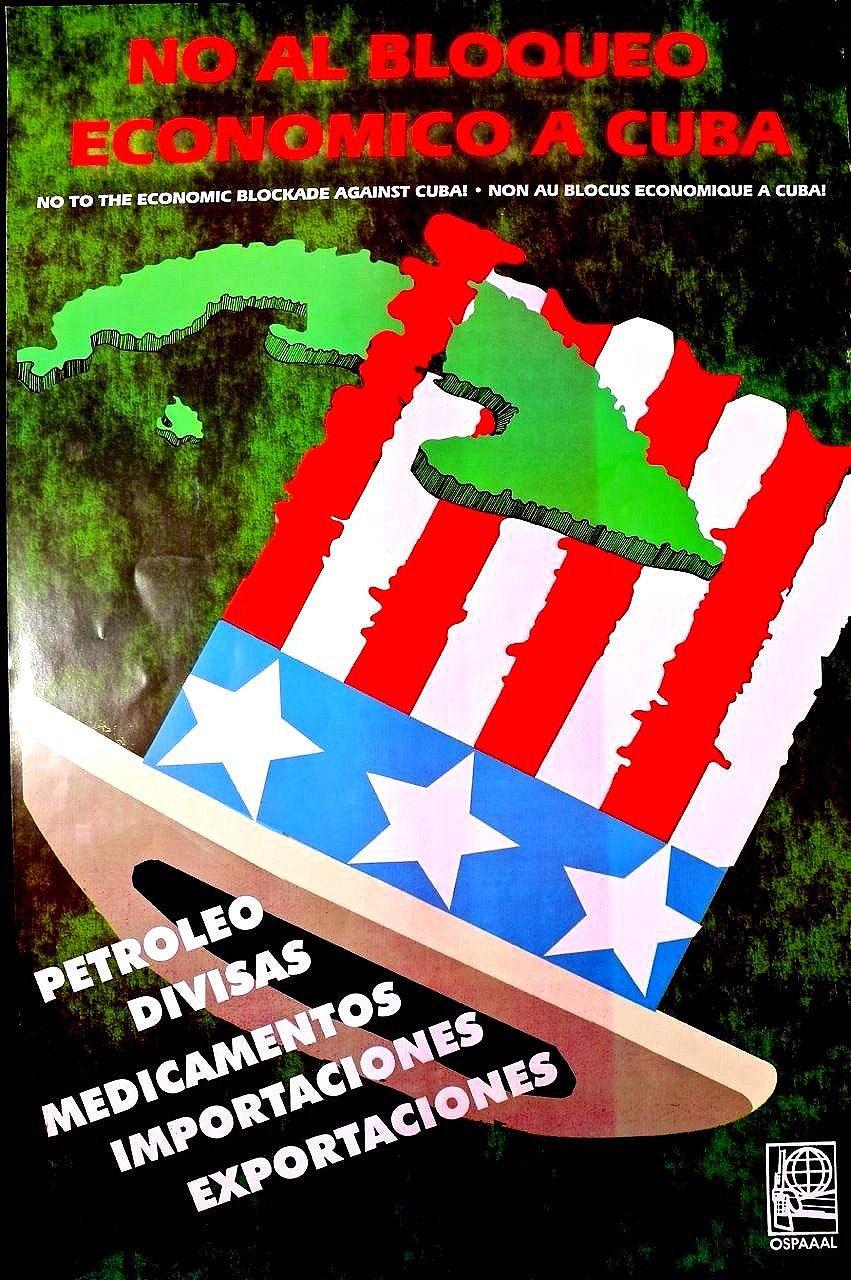
Nations designated as sponsors of terrorism may expect “prohibition of U. S. arms exports and economic assistance,” controls over exports and services useful to terrorists or various militaries, and “imposition of miscellaneous financial and other restrictions.” The U.S. government uses this provision as one justification for its economic blockade against Cuba and for punishment of international banks and financial institutions dealing with Cuba.

Pompeo harked back to old pretexts for terrorist accusations against Cuba. He mentioned the presence in Cuba of three U.S. citizens charged with crimes in the United Stand and facing punishment. The most well-known of these persons is Black liberation fighter Assata Shakur.

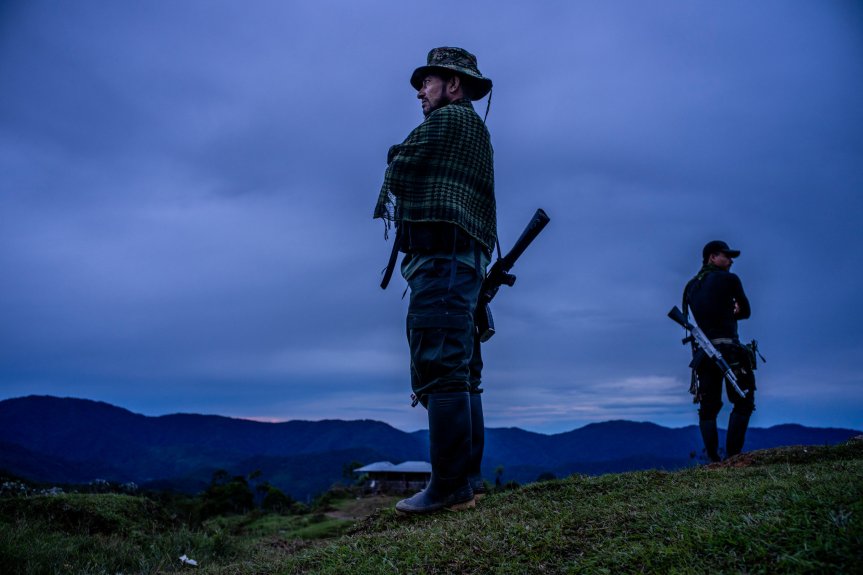
Pompeo also referred to representatives of Colombia’s National Liberation Army (ELN) who remained in Cuba following the collapse of peace talks between that leftist insurgency and the Colombian government. He alleged that Cuban agents are instrumental in helping Venezuelan President Maduro “maintain his stranglehold over his people.”

Senator Bernie Sanders highlighted the irony of a nation recently the victim of domestic terrorism to now turn around and accuse Cuba of terrorist leanings: “This blatantly politicized designation” overlooks the fact that “domestic terrorism in the United States poses a far greater threat to Americans than Cuba does.”

Massachusetts Representative Jim McGovern did likewise:  “Coming less than a week after a failed coup attempt at the hands of his own domestic terrorists, Donald Trump’s reckless and baseless decision is nothing more than a vindictive attempt to make it harder for President-elect Biden to clean up after the last four years of failure.” McGovern lamented Trump’s legacy “of inflicting unnecessary suffering and hardship on the Cuban people.”

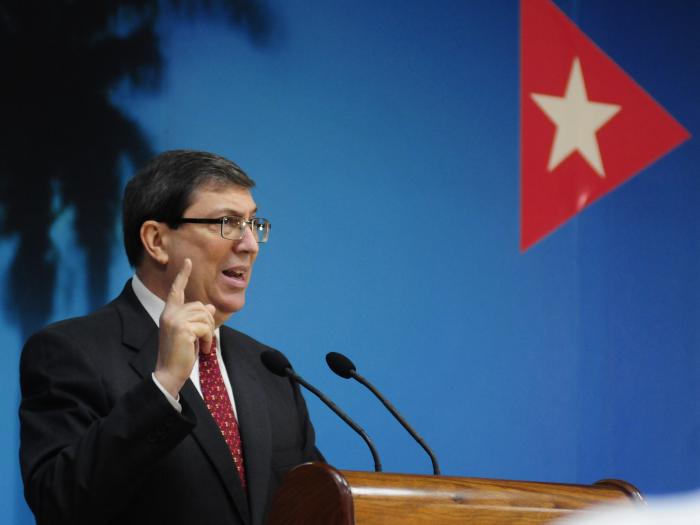
Cuba’s Foreign Ministry responded at once, declaring that Cuba “rejects … terrorism in all its forms …  by anybody, against anyone, and from wherever it’s committed.” The Ministry’s statement referred to “an arrogant act by a discredited, dishonest, and morally bankrupt government.” It took note of 3,478 Cubans killed and 2,099 wounded by the U.S. government or by U. S. – based terrorists tolerated by that government.

Change may be in the wind.  On December 17, the 6th anniversary of the announcement of Obama’s opening to Cuba, two foreign-policy advocacy groups, the Washington Office on Latin America and the Center for Democracy in the Americas, presented the Biden Administration with a joint proposal for re-engagement with Cuba.

The first steps would include: Biden personally inviting Cuban President Miguel Díaz-Canel to the Summit of the Americas to be hosted by the United States in late 2021, returning a U.S. ambassador to Havana, and restoring the diplomatic staff there.

[Editorial] The Elections Have Passed, and the US Working Class Lost Ground, by Tom Whitney

The recent election campaign pitted one capitalist-oriented political party against another. But class conflict continued throughout, and working people did not fare well.

The election period was show-time for U.S. racial antagonisms. The candidates of each party showed various reactions to racism.  Working-class voters filling the ranks of each one showed that they too were far from united in responding to racism. Divided, the working class is weakened.

The police killing of George Floyd occurred in late May. Soon crowds of white and Black people were protesting together in little towns and big cities of the United States and even worldwide. This unprecedented display of Black-white unity might have been a golden moment. Justice-minded candidates for office, Black and white, might have raised their voices against the racism permeating the U.S. experience.

It was not to be. Democrats joined Republicans in focusing on public safety. They slandered the protesters as rioters. The police in many cities arrested and/or injured disproportionate numbers of Black and Latinx protesters; extrajudicial killings mounted, right-wing militias materialized, and federal security forces intervened.

The slogan “defund the police” made the rounds, prompting conservatives of both parties to interpret that demand as a call to get rid of or weaken the police. They inveighed against risk to property and lives.  For many Republicans, the issue was respect for authority.   President Trump denounced Black Lives Matter protesters as “symbols of hate.”

Responsibility for dealing with objectionable police behavior lies with governmental bodies hiring the police. In choosing office-holders, voters share that responsibility. But governmental accountability for the police killings was never an issue put before the voters. Many Democratic candidates, Joe Biden among them, denounced racism in general terms. Biden met with George Floyd’s family.

Disunity in the working class represents a gift to the capitalists. Vast numbers of white voters, many belonging to the so-called “white working class,” backed the racist candidate for president:  58% of whites voted for Trump, as did 55% of white women. Latinxs and African Americans turned out in droves. Counter-balancing racists in both parties, they secured the election for Joe Biden.

The New Deal in the 1930s was a case-study in showing off working-class unity as essential in moving toward social reforms. Presently the working class is splintered and, now at least, prospects for the proposed Green New Deal are unfavorable.

The working class took one more big hit during the election campaign; Republicans labeled their opponents as socialists. For their pains they gained support from some immigrants from left-leaning Latin American countries. 

Vice presidential candidate Kamala Harris laughed on being acquainted with the charge. Biden felt obliged to deny speaking “one single syllable” in favor of socialism. Other Democrats followed the lead of the Republicans, and with serious consequences.

Centrist Democrats blamed the defeat of Democratic congresspersons on their embrace of policies associated with Senator Bernie Sanders and Representative Alexandria Ocasio-Cortez. Likewise, Kevin McCarthy, the Republican leader of the House of Representatives, regarded his party’s victories there as a “mandate against socialism.”

Red-scare, implemented through demagoguery and lying, thus took its toll. It reached its apogee in the mid-twentieth century and never entirely disappeared. Intimidation produced by false fears of this nature has discouraged agitation and organization, and governmental action, on behalf of disadvantaged Americans.

Finally: during the election period, the working class and its allies lost political space for debate that might have enabled them to agitate, maybe successfully, for political and social reform. Distractions moved in.  The mix included both jostling over various cultural, social and even religious questions and attention bestowed upon showman Donald Trump, mediated by the corporate media.

The issues themselves – abortion, the role of religious fundamentalism, immigration, disappearing jobs, changing industrial patterns, the snobbery of elites, and wealth inequalities – were not new. Even so, their high visibility in an unsettled time generated rancor and resentment disruptive enough to muddle the electoral process. Whether by accident or design is unclear.  

Leaders of governments adapt their strategic thinking to accommodate their own economic and political imperatives. Presently they face the quandary, some say, of having to preserve the capitalist system while also saving the environment and securing justice for everyone. Intent on preserving power and privileges, they do not act.  Meanwhile, the working class, potentially motivated to act, is put on hold.

US Plot Relying on Extradition Targets Peace in Colombia, by Tom Whitney

December 1, 2020

For 50 years Colombian governments and the Revolutionary Armed Forces of Colombia (FARC) fought a civil war; 200,000 lives were lost. After four years of negotiations, the two sides signed a peace agreement that took effect in November 2016.  

Now the agreement is in trouble, mainly at the hands of rightwing extremists led by former president Alvaro Uribe and represented now by President Iván Duque. They opposed the negotiations, the agreement itself, and now they block implementation.

The U.S. government posted an envoy to the peace negotiations and sent the Secretary of State to one the signings of an agreement. Seemingly, it supported the peace process,

Now it does not. Colombia’s El Espectador newspaper on November 8 published Edinson Bolaños’s report that outlines a U.S. plot aimed at immobilizing FARC leaders.  His information came from 24,000 recordings of wiretapped telephone calls occurring in 2017. 

In most of the conversations Marlon Marín speaks with two U.S. Drug Enforcement Agency (DEA) agents posing as representatives of Mexico’s Sinaloa drug cartel. They talked about 10 tons of cocaine that agents of Marín, posing as FARC members, eventually sold to the cartel for $5 million. The Office of the Attorney General supplied the cocaine, the DEA the money.

According to Bolaños, the conversations introduced names or faked voices to identify accomplices. One was Jesús Santrich, spokesperson for the FARC peace negotiators in Havana. Another was Iván Márquez, who headed the FARC’s negotiating team and is Marlon Marín’s uncle. Over 1,300 recordings of talk on Iván Márquez’s telephone apparently disappeared.

Other names, or voices, cropping up included those of General Oscar Naranjo, former vice president and government peace negotiator; Gustavo Petro, 2018 presidential candidate for the left-leaningHumane Colombia coalition; and Piedad Córdoba, outspoken former Liberal Party senator.

Police agents arrested Santrich on April 9, 2018. Charged with conspiracy to export cocaine to the United States, Santrich faced extradition and trial before the U.S. District Court – Southern District of New York. Colombian authorities also arrested Marlon Marín and quickly flew him to the United States to testify against Santrich.  Iván Márquez went into hiding and wasn’t arrested. The press circulated as information material taken from the recordings provided by the Office of the Attorney General.  

The Special Jurisdiction for Peace (JEP), created by the peace agreement, enters the story.  It was a new court charged with deciding on pardon or punishment for guerrillas who may have committed crimes while they were rebels – but only then. The JEP had accepted Santrich into its program. If he had trafficked in drugs after the civil war, the JEP had no jurisdiction over him.

To make a determination, the JEP sought to examine the audio recordings. It only received 12 of them of the thousands that existed. It did receive a video, publicized by the press, that showed Santrich talking with Marlon Marin. There was no audio. The JEP never saw documentation a grand jury indictment in New York.

Santrich spent 13 months in prison; while there he carried out a 41-day hunger strike. Unable to establish the time-frame of any drug-dealing, the JEP ordered Santrich’s release on May 19, 2019. He was immediately rearrested, but Colombia’s Supreme Court, with jurisdiction over persons serving in Congress, released him on May 31. He was a member, courtesy of the peace agreement.

Attorney General Martínez resigned. The Supreme Court announced plans to prosecute Santrich on the drug-trafficking charge.

On August 31, 2019, Santrich, Iván Márquez, and other former FARC insurgents returned to armed conflict. Almost a year later, the DEA and State Department announced rewards for information leading to the convictions of Santrich and Márquez – up to $10 million for each. 

No peace now

Presently, implementation of the agreement is floundering. Exceptions are the JEP and political participation for FARC members; there’s now a FARC political party. Agrarian reform, prioritized by the FARC negotiators, is moribund. Food-producing crops were to have substituted for coca production, but aerial fumigation with glyphosate has returned, The peace agreement provided for the former guerrillas’ safety. But 242 former combatants plus 1,055social and community activists have been killed.

For the FARC, the essence of the peace agreement was that the former combatants would re-enter civil society as citizens with rights, and that the FARC’s struggle for progressive change would move from insurgency to civilian life. Neither would happen without the JEP, which was, therefore, central to the entire agreement. Conversely, damage to the JEP threatens the agreement itself.  

Prosecution of a Santrich, a FARC leader, as a common criminal, for drug-dealing, would jeopardize his lower-ranking comrades and suggest that the JEP is irrelevant. As it is, the JEP is the Achilles heel of the agreement, as demonstrated by Santrich’s arrest, threatened extradition, and removal from JEP jurisdiction.

The U.S. government opposes the JEP. U.S Ambassador Kevin Whitaker in April 2019 insisted that if the JEP protected former guerrillas from extradition, Colombia would lose U. S. military assistance.  

It would have been difficult for U.S. government hardliners to accept the peace agreement, or to ease up on the FARC. They’ve engaged with the insurgency off and on, in one way or another, since 1964. Pretexts evolved from anti-communism to drug war to narco-terrorism.

From 2000 on, the interventionists dedicated themselves to carrying out out U.S. Plan Colombia with its bases, personnel on the ground, generous funding, new equipment, and presumed gratification on the part of Colombian colleagues. They realize too that the FARC has staunchly opposed U.S. domination of their region and U. S. designs on Colombia’s natural resources. For them to have given up on prospect of the FARC’s military defeat seems unlikely.

General John Kelly, former head of the U.S. military’s Southern Command, surely qualifies as a hardliner. Amid the peace negotiations, he observed that, “[T]he FARC claims the Colombian military has failed to defeat them [but] The truth is that the Colombian military has crippled the FARC, enabling the government of Colombia to begin charting the path to peace.” (Miami Herald, op-ed)  Kelly dismisses FARC ideas on peace.

Extradition weaponized

The government of President Uribe in 2008  arrested 14 paramilitary leaders and extradited them to the United States for prosecution exclusively on drug-trafficking charges. As a result of this maneuver, there would be no trials in Colombia during which the paramilitaries’ dealings with politicians might come to light.

Extradited to the United States in late 2004, FARC leader Simon Trinidad specialized in negotiations and political education. He is serving a 60-year sentence, in isolation, at the supermax federal prison in Colorado. Trinidad escaped conviction on narco-trafficking charges, but went to prison on a charge of conspiring to capture three U.S. drug-war contractors, after FARC gunfire brought their plane down. (1)

His case is a useful entry point for agitating against U.S. imperialism. The argument might focus on U.S. military intervention in Colombia as emblematic of U.S. interventions globally. Then, to introduce the Colombia situation, it would point to the extradition and torture of Simon Trinidad. Interest having been provoked, discussion would proceed.

Piedad Cordoba visited the imprisoned Simon Trinidad. Few others have been allowed to do so. Cordoba commented recently on Simon Trinidad, the Santrich case, and U.S. military intervention. 

Referring to “the recently exposed collusion between the North American DEA agency and the Colombian attorney general,” Cordoba points out that, “War in the 21st century in our country has been sustained with North American assistance.”

And, “the United States owes something to the Havana agreement. The first item would be the repatriation of Commander Simon Trinidad, who has been accepted into the JEP, but who also must be recognized as a victim of the genocide of the Patriotic Union. (2) There must be some form of presidential pardon that exists and would remain valid …This was shown in the case of Puerto Rican patriot [Oscar] López Rivera. A pardon for Simon Trinidad would be excellent news for peace and reconciliation …”

She called for “re-evaluation of [U.S.] military assistance in view of the ongoing crisis of serious violations of human rights by Colombia’s military.”  In any case, “With the intervention persisting and present situation unchanged, we are fated to be a country at war.”  

Notes:

  1. Here’s more on Simon Trinidad: https://mronline.org/2020/06/25/u-s-must-return-its-political-prisoner-simon-trinidad-to-colombia/
  2. For information on the Patriotic Union, see: https://www.peoplesworld.org/article/recalling-colombia-s-patriotic-union-tragedy/

Cuba Responds to Pandemic, Blockade, and New Economic Troubles, By W. T. Whitney Jr.

Buffeted for six decades by the U. S. economic blockade and recently having had to cope with restrictions on daily life and work due to COVID- 19, Cuba’s already shaky economy is deteriorating. Government leaders recently outlined remedial steps leading to what they call a “new normal.”  

The UN’s Economic Commission for Latin America and the Caribbean (CEPAL) reported in October that the region “is experiencing its worst economic crisis in a century” and that Cuba’s GDP this year will be down at least eight percent. Tourist income, remittances, foreign trade, and tax collections have fallen. Oil and gasoline shortages, the result of U.S. sanctions against Cuba and Venezuela, have stressed the economy.

Public spending on health care, unemployment compensation, and pensions is up; I50 000 state workers and 250,000 private sector workers have been idle. Effects of the U.S economic blockade compound matters with restrictions affecting the tourist industry, foreign imports, and access to foreign currency and loans.   

Responding to the pandemic, Cuban officials excluded foreign visitors (tourism resumed in July) and instituted vigorous case-finding, strict isolation of the infected and their contacts, and hospitalization for people infected with COVID-19 who have symptoms. For eight months officials led by Cuba’s president, and always masked, have provided the public with daily televised updates on the pandemic. Vaccines and treatment products are being developed. Health workers have treated pandemic victims in 39 countries.

Data from the Johns Hopkins Coronavirus Resource Center show that, as of October 21, COVID-19 has infected 6305 Cubans; 127 of them died. Deaths per 100,000 persons for the United States, Cuba, China, and Vietnam are, respectively: 67.28 (11th highest), 1.12, 0.34, and 0.03. 

In public presentations in October, Cuban leaders outlined plans for managing the multi-faceted crisis. Summarizing, Alejandro Gil Fernández, Minister of Economy and Planning, pointed out that “We’ve never had this dilemma between health and the economy. Obviously the restrictive measures we’ve adopted … have had an economic impact but there’s no room for doubt that health comes first.” 

Health Crisis

The officials reported that the intensity of viral transmission was down, that fewer new cases were being diagnosed, and that more COVID-19 patients were leaving hospitals than being admitted.  Outbreaks have cropped up recently in Havana, Ciego de Avila, Pinar del Río and Sancti Spíritus provinces, while no new cases have appeared in Cuba’s 11 other provinces.

President Miguel Díaz-Canel on October 8 discussed on television with Cubans the government’s plan to expand economic and social activities, partially ease isolation and  social distancing – especially in provinces where the virus is quiescent – and “strengthen prevention and treatment protocols.” He referred to “a new normality with a minimum of risk.”

Prime Minister Manuel Marrero Cruz the next day presented elaborate protocols aimed at securing a safe transition. Efforts to prevent spread of the virus transmission would proceed together with “mitigation of both the social and economic impact of COVID-19 and the [U.S.] blockade.” New cases would trigger local measures for limiting further infection while activities of daily life would continue with little alteration.

Stages and phases of the pandemic’s evolution figure into how the intensity and reach of preventative measures are determined. Local authorities will participate in decision-making. Under new isolation protocols, infected persons with only minor symptoms will be monitored in the community and no longer in hospitals. The seriously ill will enter specially designated hospitals, allowing other hospitals to be able to resume full care of illnesses other than COVID-19.

Cubans are being asked to take personal responsibility for preventing infection. Many will continue working at home via computer or telephone. Students have been attending school throughout Cuba since September, except in Havana, where schools open on November 2, and except for temporary closings elsewhere due to local clusters of infection.

The impression here is that, without question, explanations provided by multiple officials and the protocols presented by Prime Minister Marrero Cruz testify to a process of planning and analysis marked by rigor, comprehensiveness, and respect for human life.

Economic crisis

For more than 10 years, the government has been working to transform Cuba’s economy. Land-tenure arrangements changed in 2008. The Communist Party’s “Economic, Political, and Social Guidelines,” approved by the Party’s Sixth Congress in 2011, established the framework for change that has been evolving since.  The current crisis is a jolt demanding recalibration.

Priority areas include: production and distribution of food products, enhanced export capabilities, overhaul of state-owned businesses, support for self-employed workers, and monetary reform – in other words, unification of Cuba’s dual currency and exchange rates.

Steps along the way are many. Newly efficient “productive chains” will extend from raw materials, to processing and manufacture, to sales. They will involve state and non-state enterprises and affect both foreign and domestic trade. State businesses will receive incentives for good management. State-owned agricultural marketing enterprises will receive new support.             

Cubans will lose subsidies but some goods and services will be available cost-free. Consumers will have access to more Cuban-produced goods and fewer imported items. Export sales are prioritized. Monetary reform will entail price regulation, currency devaluation, elevated wholesale prices, savings and salary uncertainties, and risk of inflation.

“[E]limination of the dual currency and exchange rate … constitutes the process that is most decisive to the updating of the Cuban economic model.” That was former President Raúl Castro speaking in 2017. Now that change process, anticipated for many years, is in the hands of “14 working subgroups.”

Cuba’s two currencies are the “Cubano peso nacional” (CUP) and the “peso convertible Cubano” (CUC), which is set for elimination. As regards institutions, businesses, and wholesalers, the two are assigned the same value – one US dollar. In retail situations or in transactions among individuals one CUC is also valued at one U.S. dollar, but in those settings it’s worth 25 CUPs.  

To illustrate the problem: a Cuban milk producer selling directly to Cubans receives 4.50 CUP ($4.50) per liter, which equals 450 centavos per liter. But milk produced abroad and sold to a Cuban purchaser yields $3000 (or 3000 CUC) per ton. To cover that cost, the selling price to Cuban consumers need only be 30 centavos per liter. Pity the plight of the Cuban dairy farmer.

There is good news. The Paris Club is a group of European and U.S bank officials who try to ease poor countries’ difficulties with debt-repayment.  On October 15 they agreed to suspend Cuba’s obligation to make a payment by November 1 on debt worth $5.2 billion. How long the delay would be is unknown. 

Speaking to the Cuban people on October 8, President Díaz-Canel pointed out that, “Our socialism excludes the political maneuver of applying shock therapy to the workers. Here, therefore, no one is going to be left helpless. It’s preordained that if someone ends up in a vulnerable situation with the reorganization project, he or she will be helped and supported. We are responsible and promise that the fundamental conquests of the Revolution such as health and free education will be preserved.”

Cuban report says U.S. blockade still causing immense economic loss, By W. T. Whitney Jr.

Cuba’s Foreign Ministry every year prepares a report on Cuba’s experience with the U.S. economic blockade of the island, in force since 1962. On October 22 Foreign Minister Bruno Rodriguez presented this year’s report at a press conference in Havana. The Ministry releases the reports ahead of an annual vote in the United Nations General Assembly on a Cuban resolution calling for an end to the blockade.  Usually the vote takes place in early November, but because of uncertainties relating to the COVID-19 pandemic, it will take place next in May, 2021.

The Report is supposed to inform the General Assembly delegates and the public as to the nature of the blockade and its impact on Cuba and the Cuban people. The blockade is the principal tool the United States uses to undermine Cuba’s government.  A State Department official in the Eisenhower administration, in 1960, expressed counter-revolutionary purpose. In recommending a blockade, Lester D. Mallory sought “a line of action which … makes the greatest inroads in denying money and supplies to Cuba, to decrease monetary and real wages, to bring about hunger, desperation and overthrow of government.”

The 53-page Report, covers U.S. measures taken against Cuba and effects experienced in Cuba and elsewhere during the twelve months between April 2019 and March 2020. It summarizes the U. S. legislation and administrative decrees used to authorize the blockade’s rules and regulations and details U.S. and worldwide opposition to the blockade. 

The authors of the Report condemn the blockade as cruel and as illegal under international law. They speak of genocide, Cuban sovereignty endangered, and Cuba’s economic and social development under assault. The entire report is accessible here.

According to the Report, the Treasury Department’s Office for Foreign Assets Control (OFAC) levied penalties against dozens of U.S. and third-country entities. Examples are listed. OFAC derives its authority mainly from the Cuban Democracy Act of 1992, which stipulates that third-country companies face penalties on exporting goods to Cuba that contain at least 10% U.S. components. In October, 2019 the U.S. government applied that rule also to goods exported to Cuba by a country that had imported them from another country.

In September, 2019, OFAC sharply limited the dollar amount of remittances Cuban Americans may send to families on the island. On October 23, 2020 – not within the period covered by the Report – the U.S. government ruled that Financiera Cimex SA, Cuba’s sole agency for distributing family remittances to Cubans, was no longer eligible to receive them from the United States. Remittances constitute one of Cuba’s major sources of foreign currency. 

The Report devotes much attention to the plethora of fines levied against foreign banks and other financial institutions after they handled transactions involving Cuba and the U.S. dollar. It cites dozens of individual examples.  Intimidation is now so widespread as to have persuaded many such institutions to avoid dealing with Cuba altogether.

The document highlights U.S. implementation of Title III of the Helms Burton Law that, beginning in May 2019, has led to law suits against foreign businesses brought before U.S. courts on behalf of former owners of nationalized property in Cuba. They are seeking damages. The resulting anxiety among foreign investors has led to “cancellation of commercial operations, cooperation actions and foreign investment projects.”

Detailing specific examples, the Report condemns U.S. penalties imposed on ships, companies and individuals involved in shipping oil to Cuba. The Report’s authors regard that new phase of the blockade as “a qualitative leap in the intensification and implementation of non-conventional measures in times of peace.”

Additionally, the U.S. government has threatened thousands of Cuban doctors working abroad in various ways. Many of the doctors working abroad generate income for the government. The Report records the prohibition on cruise ships arriving in Cuba.

The fallout is considerable, especially for the healthcare sector.  Dozens of U.S. companies, on being asked, refused to sell medical equipment and drugs to Cuban importers. When purchased through a third-country agent, they are more expensive. And supplies and medications manufactured in third countries may not be readily available on account of the aforementioned ten-percent rule.  

Cuba’s fight against COVID-19 took one hit when blockade regulations prevented the unloading in Cuba of a Chinese shipment of donated anti-pandemic supplies, and another one when Swiss manufacturers refused to sell ventilators to Cuba.  Cuban food imports are expensive in part because of extra expenses involved with the purchase of U.S. food products, allowed through congressional action in 2000. Blockade-related fuel shortages hamper agricultural production by interfering with planting, transportation, and storage.

The blockade has hit education, sports and cultural development in Cuba. Supplies and fuel are frequently in short supply and transportation and travel are often unavailable.  Cuba’s manufacturing and service sector lost an estimated $610.2 million, 7.7 % more than during the previous year, according to the Report. Losses incurred in the bio-pharmacological industry exceeded $160.3 million. U. S. restrictions interfere with Cuba’s export of drugs, vaccines, and diagnostic tests.

The Report indicates that during the 12-month survey period, Cuba’s tourist industry lost $1.9 billion. Losses stemmed from new U.S. travel restrictions and from prohibitions on tourist services, particularly hotels. OFAC has now prohibited U.S. airlines, or airlines with U.S. connections, from flying into Cuba, except to the Jose Martí Airport in Havana. That action deprived Cuba of an estimated $1.8 billion. OFAC regulations affecting the communications, construction, and transportation sectors made for additional Cuban losses. Cuba’s hobbled foreign trade, both imports and exports, registered losses of $3,013,951,129, of which export losses accounted for$2,475,700,000. 

According to this Report, the workings of the U.S. blockade deprived Cuba of $5,570,300,000 between April 2019 and March 2020 – some $1.2 billion more than during the previous year. Among estimates figured into the amount are expenses incurred in buying materials at inflated prices in distant places, losses from foreign sales that never happened, and revenues the crippled tourist industry might have generated. The human cost in lives lost or blunted is not part of the calculation.

Cuba has lost $144.4 billion over the course of almost six decades.  Dollar depreciation over the period puts the total up to $1.098 trillion. Why, one asks, does the blockade continue?

The U.S. blockade, with moving, interlocking parts that may be at cross purposes, looks like a machine dangerous to human well-being. It could well have provoked the U.S press and politicians into loud complaints. But near silence has reigned.  The absence of real debate signifies overall acceptance of the blockade such that expressions of dissent, even President Obama’s dissent, have gained little support.

Silent acceptance marked other horrors abroad helped along by U.S. agents, especially as they were unfolding, or immediately thereafter. These were killings usually associated with regime change. One recalls Guatemala (1954), Iraq (1963), Brazil (1964) Dominican Republic (1965), particularly Indonesia (1965-1966), Chile (1973), Operation Condor in South America (1975-1976), and Colombia (sporadically from 1964 on).

Anti-Communism became the pretext for these situations in which U.S. emissaries abroad characteristically stopped at nothing. In his recent book The Jakarta Method (Public Affairs Press, 2020), Vincent Bevins connects U.S.-induced atrocities throughout the Global South, anti-Communism, and the installation of neo-liberal governments.  

Reasonably enough, public officials do maintain silence when their governments are complicit with crimes like these. The assumption here is that the U.S. anti-Cuban blockade represents one more instance of resort to extremes in the name of anti-Communism, which, once more, is surrounded by silence.  

The anti-Cuban blockade is a substitute for military action. U.S. strategists evidently perceived that military intervention or provocation of an internal coup wouldn’t work to ensure counter-revolution in Cuba. They perhaps realized that well-heeled, entrepreneurial Cubans friendly to the United States wouldn’t be there to help out, most of them having departed the island. Elsewhere in the Global South, as reported by Bevins, their kind stayed put and were able to collaborate with U.S. facilitators to instigate violence.

They are still there, in their various countries, as are their neo-liberal regimes.  Their staying power validates the U.S. strategic goals pursued in the post- World War II era that were energized by anti-Communism. Perhaps political leaders in Washington associated with both major political parties see continued backing of the Cuban blockade as a way of reassuring their far-flung neoliberal colleagues, and the ones nearby, that their old cause is still intact.  

Medical Doctors Seek Social and Political Solutions for COVID 19 Crisis, W. T. Whitney Jr.

By W. T. Whitney Jr.

It didn’t seem to fit. The website of the Colombian Communist Party on October 5 published an article in which author Félix León Martínez MD recharacterizes a disease. Martínez quotes extensively from an editorial appearing in the famous British medical journal Lancet. There, editor Richard Horton MD claims that COVID 19 is a “syndemic” rather than a disease. 

A disease manifests signs and symptoms. Usually causation and treatment of a disease are familiar. COVID 19 has signs and symptoms too, but Martínez and Horton say that as a syndemic, COVID 19 has causes and treatment methods that are still unknown. In his article, Martínez draws from Horton’s editorial to study the COVID 19 situation in Colombia. The present report aspires to do likewise in regard to the United States. We explore how the insights of both authors apply to managing the disease.   

Martínez, who is an academic investigator specializing in social protection and public health, maintains that “the [COVID 19] pandemic, although in principle a phenomenon of biological origin, affects each nation differently, according to the political, economic and social organization it has established.” His article’s title is “From Pandemic to Syndemic: Poor Prognosis.”  

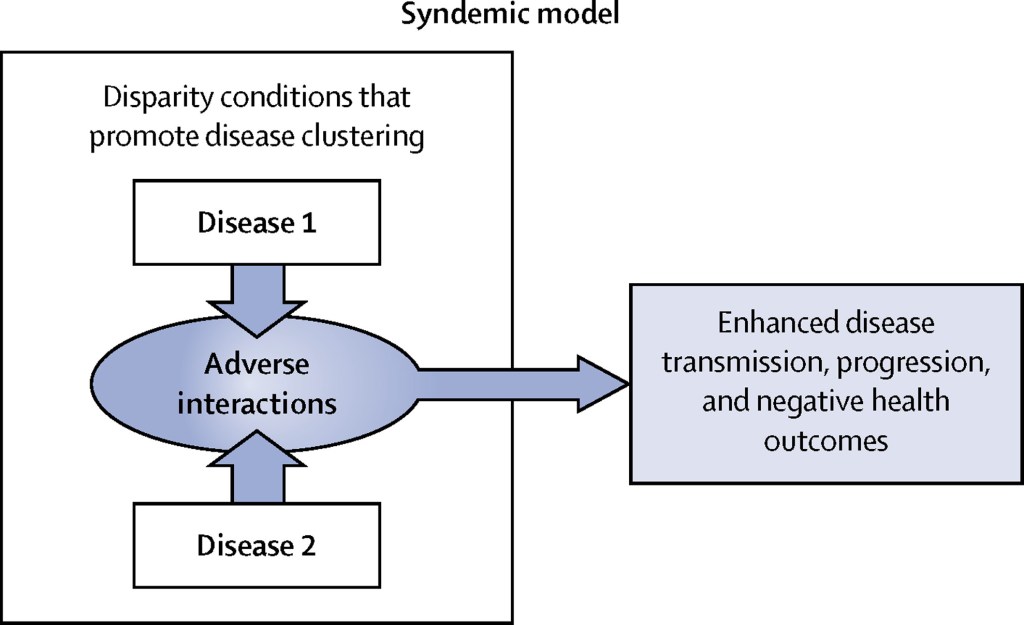
(Singer et. al, “Syndemics and the Biosocial Conception of Health”, 2017)

Horton, as quoted by Martínez, states that, “We have viewed the cause of this crisis as an infectious disease … But … the story of COVID-19 is not so simple. Two categories of disease are interacting within specific populations—infection with severe acute respiratory syndrome coronavirus 2 (SARS-CoV-2) and an array of non-communicable diseases (NCDs). These conditions are clustering within social groups according to patterns of inequality deeply embedded in our societies. The aggregation of these diseases on a background of social and economic disparity exacerbates the adverse effects of each separate disease.”

As described by Horton, “Syndemics are characterized by biological and social interactions between conditions and states, interactions that increase a person’s susceptibility to harm or worsen their health outcomes … The hallmark of a syndemic is the presence of two or more pathological states that interact adversely with each other, adversely affecting the mutual course of each disease trajectory.” COVID-19, is more than a pandemic.

Horton observes that, “For the world’s poorest billion people today, Noncommunicable Diseases (NCDs) account for more than one-third of their disease burden.” And, “The most important consequence of seeing COVID-19 as a syndemic is to highlight its social origins. The vulnerability of older citizens, black, Asian and minority ethnic communities, and key workers, who are commonly underpaid and have fewer social protections, points to a hitherto barely recognized truth, namely that no matter how effective a treatment or protective vaccine is, the search for a purely biomedical solution to COVID-19 will fail.”

In his article Martínez highlights Colombia’s extreme economic inequalities. For example, 10% of landholders own 82% of the productive land, and soon “three of every five persons in Colombia will be living in a state of precariousness or poverty,” and “24% of the vulnerable middle class will fall again into poverty.”  

He notes that even before COVID 19 appeared in Colombia, mortality was increasing from heart attacks, cerebrovascular illnesses, and hypertension – the three major causes of death – and from diabetes. And these conditions, plus obesity, had become more frequent. Too many Colombians were finding healthcare to be inaccessible and/or of poor quality. Martínez points out that on being infected with COVID 19, the chronically ill are highly susceptible to terrible sickness and even death.

At this writing, nearly 29,000 Colombians have died from COVID 19, The case fatality rate is 3.1%, the 10th highest in the world. Martínez cites a recent poll indicating that 16% of people in Bogota lack food and that 65% of households there include at least one person who is unemployed due to COVID 19.

Similarly in the United States, societal dynamics determine the likelihood of dying from COVID 19.  According to the CDC, Blacks, Indians, and Latinxs face at least 2.6 times the risk of being infected by COVID 19 as do white people. And COVID 19 death rates for Indians and Blacks are 1.4% and 2.1% greater, respectively, than the rate for white people.

But according to epidemiologist Sharrelle Barber, writing in the Lancet, “Blacks comprise 13% of the US population but roughly one quarter of COVID-19 deaths and are nearly four times more likely to die from COVID-19 compared to whites … Blacks across all age groups are nearly three times more likely than white people to contract COVID-19.”

Prior to the arrival of the virus, Black people and Latinxs were already more likely than whites to die from cancer, diabetes, hypertension, chronic respiratory disease, and other noncommunicable diseases. Their life expectancy at age 50 is significantly reduced, compared to U.S. whites.  As with Colombians, their burden of chronic ill health becomes dangerous on being infected with COVID 19. Multiple studies highlight the racial discrimination and racist attitudes that often limit their access to healthcare or the quality of care they receive.

The average African American family income in 2018 was $41,361; for white families, $70,642. The poverty rate for African Americans that year was 20.8%, more than twice that of whites. Indeed, poverty alone predisposes Blacks and Latinxs to serious illness or death from COVID 19. Low income often translates into lack of insurance or inability to pay; African-Americans may have no regular healthcare provider. Their work and housing situations frequently allow for easy exposure to the virus. Nevertheless, effects of low income and racism often merge, and are not easily separated for study.

Ideally, healthcare practice is collaborative. Physicians regularly seek help from colleagues knowledgeable about unusual medical conditions or skilled in special treatment methods. They seek consultation. Editor Richard Horton was advising infectious disease specialists themselves to seek consultation as they deal with COVID 19. Specifically: “Limiting the harm caused by SARS-CoV-2 will demand far greater attention to NCDs and socioeconomic inequality than has hitherto been admitted [and] Unless governments design policies and programs to reverse the deep disparities, our societies will never be truly safe from COVID-19.”

Both Horton and Martínez were inviting political practitioners – politicians and the people’s movement – to participate in fashioning all-encompassing programs of prevention and treatment. Also, in publishing Martínez’s article, the editors of the Colombian Communist Party website were, in effect, calling upon healthcare workers to attend to a sick society and, doing so, know who their consultants would be. These would include Communists and socialists who have advanced skills in this area.

Socialists win big in Bolivia; Morales expected to return from exile by W. T. Whitney Jr.

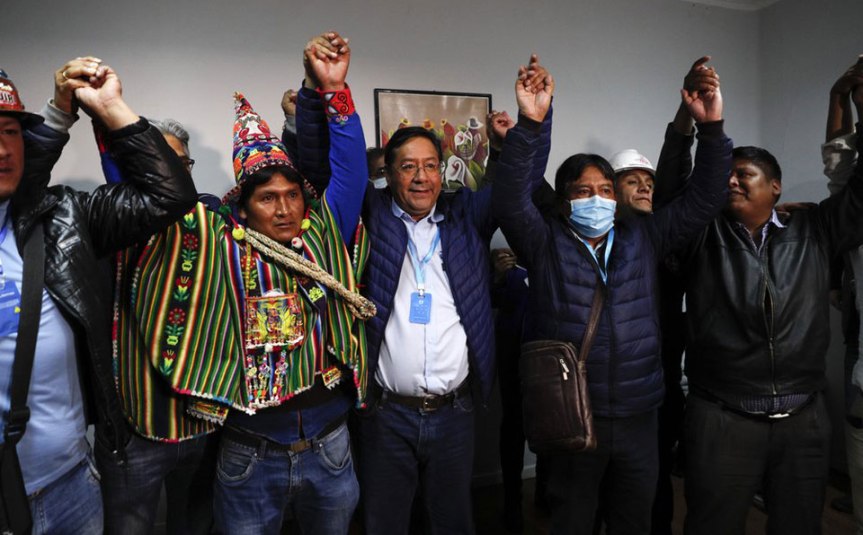
Luis Arce, center, Bolivian presidential candidate for the Movement Towards Socialism Party, MAS, and running mate David Choquehuanca, second right, celebrate during a press conference where they claim victory after general elections in La Paz, Bolivia, Monday, Oct. 19, 2020. Early results indicate Bolivian voters massively rejected the right-wing policies of the government that took power after former President Evo Morales was overthrown in a coup last year.| Juan Karita / AP

Luis Arce and David Choquehuanca, presidential and vice-presidential candidates, respectively, for Bolivia’s Movement Toward Socialism Party (MAS), scored an overwhelming first-round election victory on Oct. 18. They won 53% of the vote, showing strength in cities and rural areas alike. MAS was formerly headed by deposed President Evo Morales.

The Supreme Election Tribunal certified the voting results based on exit polls. Right-wing presidential candidate Carlos Mesa, president of Bolivia from 2003 to 2005, garnered only 31.2% of the vote. Right-wing nationalist Luis Fernando Camacho accounted for another 14.1% of the total. Some 7.3 million Bolivians cast ballots.

An Indigenous supporter of presidential candidate Luis Arce stands outside the headquarters of the Movement Towards Socialism (MAS) party one day after elections in La Paz, Bolivia, Monday, Oct. 19, 2020, amid the COVID-19 pandemic. | Martin Mejia / AP

From Buenos Aires, where he lives in exile, former President Morales proclaimed, “We have recovered democracy.” MAS gained control of both houses of parliament. At a Monday morning press conference, Morales said the ending of his exile was imminent. “Sooner or later we are going to return to Bolivia, that is not in debate.”

Morales, in power from 2006 until being overthrown in 2019, was Bolivia’s first Indigenous president. On his watch, Bolivia’s poor and mostly Indigenous majority secured rights and economic gains. Nationalization of oil and natural gas production turned into a revenue bonanza for social programs. Bolivia’s government was put on a secure financial footing. Morales gained worldwide attention for espousing Indigenous rights and for bringing attention to the global environmental crisis.

A military coup backed by the United States and the Organization of American States brought down Morales’s government on Nov. 10, 2019. In the process, Luis Fernando Camacho, a lead plotter and a recent presidential candidate, displayed fascist-like ideology and own brand of Protestant fundamentalism. Jeanine Añez, the coup government’s interim president, did not run in the recently completed elections.

Late on election day, the Supreme Election Tribunal and government officials for several hours delayed the release of early election results. A spokesperson for MAS  leveled the accusation that they sought a period of uncertainty that “might yield a climate of violence leading to the elections being nullified.”

Following the coup of 2019, the government of Añez canceled presidential elections set for May and for September. Her pretext was danger from COVID-19; though many viewed it as an effort to stall a bad outcome for the right wing. An observer suggested the delays actually gave time to Bolivians, allowing them to experience “[White] supremacist, racist, fascist-like politics [and] to make comparisons with what had been a revolutionary process that over 14 years changed the face and whole nature of this Bolivia.”

Indeed, unemployment moved from 3.9% in mid-2019 to 11.8% a year later; poverty increased markedly in 2020, and the rate of economic growth fell almost 6%.

Luis Arce served as economics minister under Morales from 2006 until the November 2019 coup. He arranged for nationalization of hydrocarbon extraction and the financing of social programs. He was chiefly responsible for Bolivia achieving the highest rate of GDP growth for Latin America and accumulating great amounts of foreign cash reserves.

Former Bolivian President Evo Morales speaks at a press conference in Buenos Aires, Argentina, after general elections in his home country, Monday, Oct. 19. 2020. | Marcos Brindicci / AP

Arce has proposed new taxation on Bolivia’s very wealthy. He recently claimed that MAS was “the only political party that guarantees that natural resources, including lithium, will not be privatized and handed over to transnationals.”

Many technology companies, including those that manufacture batteries for electric cars and mobile phones, have an interest in controlling the country’s lithium reserves, believed to be among the world’s largest.

Bolivia’s incoming vice president, David Choquehuanca, whose heritage is Indigenous and who is experienced in union organizing among rural workers, served as President Morales’s foreign minister from 2006 until January 2017.

Bolivian journalist and educator Mario Rodríguez saluted, “a victory in enemy territory, in a conservative enclave where the most fascist politics that can be are concentrated. [It’s] … a triumph over money, media power, and the dominant powers.”

In his own remarks, Luis Arce said nothing about inevitable speculation among democratic forces worldwide that his victory might strengthen resistance against recently installed neoliberal, U.S.–aligned governments in Latin America.

“We are recovering hope,” he declared, plus “the certainty that small, medium-sized, and big businesses will benefit, as will the public sectors and Bolivian families. I will govern for all Bolivians and, above all, with work to revamp efforts at achieving economic stability for the country.”

W. T. Whitney Jr.
W.T. Whitney Jr. grew up on a dairy farm in Vermont and now lives in rural Maine. He practiced and taught pediatrics for 35 years and long ago joined the Cuba solidarity movement, working with Let Cuba Live of Maine, Pastors for Peace, and the Venceremos Brigade. He writes on Latin America and health issues for the People’s World.

Labor Voices: A vision of true democracy – Organizing the vast majority to take collective control of their lives / by E. Martin Schotz, MD

I am writing for anyone who is concerned about the lack of a serious worldwide approach to climate chaos, anyone who is concerned about racism, poverty, patriarchy, violence, poor health of so many, anyone who is concerned about peace — anyone who wants to participate in and see political change on these issues.

The great German physician Rudolph Virkow, a pioneer in the field of public health, once remarked, “Politics should be practiced as if it was medicine on a grand scale.”  I am thinking about this as I ponder the weakness of the labor movement in the United States, the weakness of the peace movement, and the left in general.  What is the diagnosis?  And where does a cure lie?

If these questions concern you, I am writing to request that you gather a group of like-minded people in order to explore three  books and how the wisdom in them can be developed and applied.  These three books were written by the same author, Jane McAlevey.  Their subject is complex and of the utmost importance. — how the vast majority can be organized to take collective control of their lives.  The books are entitled in order of their appearance Raising Expectations and Raising Hell: My Decade Fighting for the Labor Movement; No Shortcuts: Organizing for Power in the New Gilded Age; and A Collective Bargain:  Unions, Organizing, and the Fight for Democracy.

Who is Jane McAlevey?  She has a long history as a leader and political organizer beginning in high school and college around issues of women’s equality, the dangers of nuclear power, and the struggle against apartheid in South Africa.  After traveling and working in Central America she worked for the Earth Island Institute educating the environmental movement in the US about ecological consequences of US military and economic policies in Central America and then worked at the Highlander Research and Education Center in New Market, Tennessee on environmental issues.  From there the New Voices leadership of the AFL-CIO recruited her for an experimental AFL-CIO organizing in Stamford Connecticut.   The Stamford Organizing Project was working on a model for rank and file worker-based social movement unionism.  In this project, in addition to focusing on workplace issues, unions connected workers to non-workplace issues that affected their communities.  Union members utilized their connections to churches and faith based institutions, sports clubs, and social groups of all kinds to build alliances between labor struggles and community struggles.  Following this work she joined the SEIU where she worked as Director of Strategic Campaigns and then as Executive Director and Chief Negotiator for SEIU Nevada in the process demonstrating the power of the Stamford approach.

The reason I recommend reading all three books is that taken together you get a rounded picture of McAlevey’s background, development, experience in and practice of an approach to union organizing and community organizing that is needed, if the vast majority are to be effectively engaged in tackling the pressing problems that confront us as capitalism collapses.  If three books seems like too much, start with one.   I want to emphasize that although union organizing and community organizing are not the same thing, what McAlevey discusses seems to me to be of great relevance to community organizing as well as union organizing.

The roots of McAlevey’s approach go back to the industry-wide organizing that was critical to the emergence of the CIO in the 1930’s.    The books focus on the most difficult kinds of labor struggles, in which it is necessary to organize 90% of the shop floor and 90% of the community in support of the union, if the union is to be able to win. As described above, in order to accomplish this, it is not enough to approach workers as just people on a job.  It is also necessary to see workers as whole people, as community members whose needs and interests extend beyond just wages and benefits.   For McAlevey the union is there to aid in the struggle for wages and benefits, but it is there primarily as a means by which workers can take collective control of their lives.  McAlevey’s approach is radically democratic with no such thing as a “labor aristocracy” or “labor bureaucracy”.  There are the workers and there are the employers.  The union belongs to the workers completely.

It is not by accident that this approach, which communists helped develop, was largely abandoned after World War II.    Coming out of World War II “the powers-that-be” in the United States wanted to quiet the unrest that had developed in the 1930’s and to be able to pursue US corporate imperial interests at home and throughout the world.  The population had to be propagandized to support the “Cold War” and to see the Soviet Union as their enemy.  And there was a determined effort during the McCarthy Period to demonize communists and exclude them not only from the labor movement but from the life of our society generally.  The “powers-that-be” needed to turn the US labor movement away from class struggle and toward what McAlevey calls “class snuggle”.   “Class snuggle” is a process in which employers and certain labor leaders collaborate to narrowly define workers’ interests and in the process help labor bureaucrats become powerful, wealthy and corrupt.

Fortunately the approach that McAlevey describes was not completely abandoned, and where it is still being practiced, it has yielded some big wins.  As examples amongst other campaigns McAlevey discusses the recent teachers’ union organizing and strikes in Chicago and Los Angeles.

As I read through McAlevey’s books I was stunned by the fact that what she was talking about was completely new to me despite years working within the left.  Of the many things that impressed me I will mention here only four.

First, McAlevey emphasizes the importance of setting concrete goals so that you can know if you are succeeding or not.  Contrary to this,  most of the organizations, with which I have been associated, have pursued a line of action that could never fail and consequently could never succeed, because the goals of the organization’s activity were always vaguely defined.

Second McAlevey discusses the importance of making a power analysis of the community or group you are hoping to organize.  Who knows whom?  Who influences whom?  Who are the community’s “organic leaders”, the people to whom others listen.  These “organic leaders” often don’t see themselves as activists or leaders, but their opinions carry great weight with many others.  If you are going to organize 90%,  reaching these “organic leaders” and winning their active involvement is critical.

Third, McAlevey describes in detail what she calls the “Structured Organizing Conversation”, a specific way an organizer can go about connecting with organic leaders and uniting with them in the organizing effort.

Fourth, McAlevey makes a clear distinction between what she calls “advocacy”, “mobilizing” , and “organizing.”  Advocacy involves advocating for something.  This essay is an example of advocacy.   Mobilizing involves calling out the people who are already on your side.  Organizing involves reaching and involving in the struggle the vast majority, those who don’t yet understand that they have a vital interest in being actively involved.  From this perspective, the organizations, with which I have worked, have been involved in education, advocacy, and mobilization, but not really organizing.  This is why what these books can teach us is so critical.

Becoming an accomplished organizer is no small achievement.  It is every bit as complex as becoming a true artist in any field.  So reading these books won’t turn anyone into an accomplished organizer.  But they can provide crucial insight into the science and art of organizing.  Reading them as a group may ignite a desire in some to begin experimenting with organizing in a different way.  Such an endeavor will need the support of a group.   At the very least these books will help partisans of a people’s movement to more concretely conceive of how radically democratic labor unions and communities can be organized for the political battle that is needed.

Dr. Schotz is a child psychiatrist who is active in the peace movement in Western Massachusetts

Under Capitalism Black Lives Are Adrift and Vulnerable

By W. T. Whitney Jr.

It’s true. Too often, in too many circumstances, for too long, the lives of Black people in the United States don’t matter. Black people fill prisons; their children fill terrible schools; too many are poverty-stricken. But at issue here are the killings and the people left to die.

Post-Civil War arrangements by which the victorious North settled with the defeated slavocracy ensured that Black people would not matter and that many would die. A thousand or so were killed in the South in 1866, reports W.E. B Du Bois. Over 2000 more would be lynched during the Reconstruction years, as documented recently by the Equal Justice Initiative. (1) That organization had already documented and memorialized thousands of lynching deaths occurring between 1877 and 1950.

Epitomized by the suffocation death of George Floyd on May 25, police killings of Black people – a matter of lynching under state auspices – brought the Black Lives Matter movement into being. But Black people are dying quite unnecessarily in the United States in other ways.  

Life expectancy is far shorter and infant mortality far greater for U.S. Blacks, for example, than for white people. And, as the Covid19 pandemic plays out, “The lives of disproportionately black and brown workers are being sacrificed to fuel the engine of a faltering economy.”

Journalist Adam Serwer, writing in the Atlantic, adds that, “workers at the front lines of the pandemic … have been deemed so worthless that legislators want to immunize their employers from liability.” 

Significantly, even white people viewed as worthless may be in trouble. Texas Lt. Governor Dan Patrick, commenting on the Covid 19 pandemic, told a reporter that “there are more important things than living. And that’s saving this country.” Representative Hollingsworth of Indiana identified Coronavirus deaths as “the lesser of these two evils,” the other being economic collapse. 

That white people die because they don’t matter is revealing.  They too may be disposable – if they are unnecessary, in the way, or far off. The victims of Hiroshima, Nagasaki, and Dresden are remembered, as are indigenous peoples decimated by settlers and invaders, and civilians and combatants dying in U.S. wars. The political powers do not deal realistically with the near certainty that soon many millions will be dying due to climate change. 

Dan Glazebrook, writing for Counterpunch is a witness. He asserts that, “one product has defined capitalism above all else: human waste.” Criticizing Britain’s management of the Covid 19 crisis, he notes that, “Superfluous people, not necessary for production, not able to participate in the market, and an ever-present threat to the stability of the system [are] the main output of the bourgeois epoch. … [S]urplus Europeans were exiled … to the colonies … to continue the process of exterminating surplus non-Europeans.

Glazebrook cites urban theoretician and historian Mike Davis’s observation that up to 3 billion informal workers constitute “the fastest-growing and most novel social class on the planet.” But this “is not a labor reserve army in the nineteenth-century sense: a backlog of strikebreakers. [It’s] a mass of humanity structurally and biologically redundant to global accumulation and the corporate matrix.”

Marxist scholar Andy Merrifield identifies some people as “residues.” “They’re minorities who are far and away a global majority. They’re people who feel the periphery inside them, who identify with the periphery, even if sometimes they’re located in the core. Residues are workers without regularity, workers without any real stake in the future of work … A lot of these residues know that now work is contingent [and] life itself is contingent.” George Floyd’s live was contingent. The lives of U.S. Black people who don’t matter are residues.

Under capitalism, human beings are valued for their use. Enslaved, Black workers were useful, even essential. Then their agrarian society merged with the larger one embarked upon industrial production and territorial expansion. They acquired a distant master that, like the old one, measured the worth of workers with an economic yardstick. 

Black agricultural workers, bereft of education, their ancestors stolen from Africa, didn’t fit the capitalist mold. European immigrants ready to work in factories or to occupy land being opened up by the railroads amply fulfilled capitalist objectives.  From Reconstruction on, Black people were marginalized in a country where social needs are neglected and public attention distracted. The violent thugs hovering over them have had free rein. 

Du Bois in his Black Reconstruction in America (1935) offers an explanation for how the failure of Reconstruction led to limited political rights for Black people and exclusion from real participation in the larger society. Initially, “the reconstructed states were in the power of the rebels and … they were using their power to put the Negro back into slavery.” But the North “united its force with that of the workers to uproot the still vast economic power of the planters. It hoped …to induce the planter to surrender his economic power peacefully, in return for complete political amnesty.” 

The northern business class was insecure: “the Republican party which represented it was a minority party.” But “united with abolition-democracy [with its] tremendous moral power and popularity,” the party hoped to “buttress the threatened fortress of the new industry.” Giving Blacks the vote “would save the day.” The Republicans sought to nullify apportionment based on non-voting slaves, as provided for in the Constitution. Southerners had relied on that device to inflate their representation in Washington. 

But poor whites in the South regarded Blacks as wage competitors. Landowners proceeded to “draw the color line and convince the native-born white voter that his interests were with the planter class.” Poor whites “thought of emancipation as giving them a better chance to become rich planters, landowners, and employers of Negro labor.” They wanted “to check the demands of the Negroes by any means” and were willing “to do the dirty work of the revolution that was coming, with its blood and crass cruelties.”

In the North, “Abolitionists failed to see that … the nation did not want Negroes to have civil rights and that national industry could get its way easier by alliance with Southern landholders than by sustaining Southern workers.” And so, “labor control passed into the hands of white southerners, who combined with white labor to oust northern capitalists” and themselves manage a southern-style capitalist economy.  

What resulted remained for decades. Wages for Black people, initially non-existent or very low, stayed depressed. Aspiring Black landowners met resistance, eventually at the hands even of New Deal officials. Because the methods of exploitation available to southern overlords, sharecropping and the convict-leasing system, were less profitable than those available to northern capitalists, the material value of southern Blacks was low.    

Most Black people were barred from occupying a sustainable niche in the productive apparatus of the U.S. economy. They’ve verged on the irrelevant, remaining as a “residue,” at risk of being disposed of. 

Nevertheless, the U.S. political system has been open enough to allow many Black people to find remunerative work, elevate their social-class status, and be safe.  Even Black workers defied expectations: in 1950, 43% of Black men in Michigan were working in the auto industry. (2)

The argument here has centered on social-class difference. But racism, which operates as a means for imposing differentiation among humans, also had a part. The notion of racism elaborated by political scientist Adolph Reed Jr. is relevant.  Reed explains that racism showed up historically as a tool devised by oppressors for dealing with social conflict. He claims that white settlers and other exploiters configured differences among humans – physical, cultural, and religious plus others fashioned out of upper-class snobbery – into an all-embracing concept of race. They thus gained the ability to weaponize inequalities within human society, the better to enforce oppression. 

One example: southern elites, from Reconstruction on, arranged for Blacks and the white underclass to be at each other’s throats. Their northern counterparts did likewise, leaving it so that Blacks and whites don’t easily unite in common struggle. 

Racism serves as an adjunct to classed-based oppression. Causing pain, racism works for maintaining social-class boundaries. The combination of the two has resulted in Black people being relegated to a generally precarious role within U.S. society and remaining vulnerable to lethal violence. 

Some basic ideas, no less true for being platitudinous, may suffice to conclude this effort. One, an injury to one is an injury to all. Two, ruling class prerogatives and oppression travel in the same lane. Three, dedication to equality, radical or otherwise, does matter.  

Anti-colonialist intellectual and activist Franz Fanon has the last word: “For my part, the deeper I enter into the cultures and the political circles the surer I am that the great danger that threatens Africa is the absence of ideology.” You need to replace “Africa” with “USA.” 

Notes:

  1. Reconstruction in America – Racial Violence After the Civil War, 1865 – 1876, Equal Justice Initiative, Montgomery, Alabama; pp 118; eji.org  
  1. Victor Perlo, People vs. Profits, (International Publishers, NY, 2003), p. 181. 

The police killings of Black people prompted the formation of Black Lives Matter.  But they die unnecessarily in others ways. Life expectancy is far shorter and infant mortality far greater for U.S. Blacks, for example, than for white people.

According to journalist Adam Serwer, writing in the Atlantic, “The lives of disproportionately black and brown workers are being sacrificed to fuel the engine of a faltering economy.” Specifically, “workers at the front lines of the [Covid 19] pandemic—such as meatpackers, transportation workers, and grocery clerks—have been deemed so worthless that legislators want to immunize their employers from liability.” 

Epitomized by the suffocation death of George Floyd on May 25, police killings of Black people – a matter of lynching under state auspices – brought the Black Lives Matter movement into being. But Black people are dying quite unnecessarily in the United States in other ways.  

Life expectancy is far shorter and infant mortality far greater for U.S. Blacks, for example, than for white people. And, as the Covid19 pandemic plays out, “The lives of disproportionately black and brown workers are being sacrificed to fuel the engine of a faltering economy.” Journalist Adam Serwer, writing in the Atlantic, adds that, “workers at the front lines of the pandemic … have been deemed so worthless that legislators want to immunize their employers from liability.” 

That white people die because they don’t matter is revealing.  They too may be disposable – if they are unnecessary, in the way, or far off. The victims of Hiroshima, Nagasaki, and Dresden are remembered, as are indigenous peoples decimated by settlers and invaders, and civilians and combatants dying in U.S. wars. The political powers seem to be at ease presently with the probability that millions will be dying soon due to climate change. 

The political powers do not deal realistically with the near certainty that soon many millions will be dying due to climate change. 

Black agricultural workers, bereft of education, their ancestors stolen from Africa, didn’t fit the capitalist mold. European immigrants ready to work in factories or to occupy land being opened up by the railroads amply fulfilled capitalist objectives.  From Reconstruction on, Black people were marginalized in a country where social needs are neglected and public attention distracted. Violent thugs threatening them have had free rein. 

Black agricultural workers, bereft of education, their ancestors stolen from Africa, didn’t fit the capitalist mold. European immigrants ready to work in factories or to occupy land being opened up by the railroads amply fulfilled capitalist objectives.  From Reconstruction on, Black people were marginalized in a country where social needs are neglected and public attention distracted. The violent thugs hovering over them have had free rein.

Remembering Claudia Jones, Communist leader who spoke for black women

By W. T. Whitney Jr. 

Source: https://www.peoplesworld.org/article/remembering-claudia-jones-communist-leader-who-spoke-for-black-women/

December 24 marks the death in 1964 of Claudia Jones. A member of the U.S. Communist Party’s National Committee and executive secretary for its Women’s Commission, Jones died in England, nine years after her deportation there. We recall her life and contributions. Her analysis of black women’s oppression and her vision of black women as political activists are meaningful today.

Her 16 – page article titled “An End to the Neglect of the Problems of Negro Women” appeared in the June 1949 issue of “Political Affairs.” (1) There, Jones describes the origins and varieties of oppression against black women. What with continuing subjugation of black women, her message is relevant now. The ripple effect of what happens to women adds to the staying power of Jones’ ideas: children’s education, health, and even survival depend on women flourishing. Men who no longer dominate women may themselves gain a measure of liberation.

Jones begins: “Negro women – as workers, as Negros, and as women – are the most oppressed stratum of the whole society.”   There is “growth in the militant participation of Negro women in all aspects of the struggle for peace, civil rights, and economic security.” In fact, “the capitalists know, far better than most progressives seem to know, that once Negro women take action, the militancy of the whole Negro people, and thus of the anti-imperialist coalition, is greatly enhanced.” 

Jones identifies black women’s special capabilities. “From the days of the slave traders down to the present,” they’ve been the guardians, protectors, and advocates for their children and families. Thus, “it is not accidental that the American bourgeoisie has intensified its oppression, not only of the Negro people in general, but of Negro women in particular.” She observes black women organizing their own mass organizations; they “are the real active forces – the organizers and workers – in all the institutions of the Negro people.” 

Claudia Jones sees “a developing consciousness on the women question today.”  Therefore, “the Negro woman who combines in her status the worker, the Negro, and the woman, is the vital link to this heightened political consciousness.”  But “the Negro question is prior to and not equal to the woman question,” she states. 

Jones points to economic abuse of black people.  She examines the plight of domestic workers and organized labor’s exclusion of black workers. But she finds the line separating race – based oppression from oppression as workers to be blurred. That’s natural, because black women “far out of proportion to other women workers, are the main breadwinners in their families.” She calls upon unions to take in black women and for domestic workers to be organized. 

Employed white women, she notes, were receiving twice the hourly wage granted to black women workers. The median family income of whites in northern cities exceeded that of black families by 60 percent. (In 2015, the average hourly income for white and black women workers was $17 and $13, respectively; white families’ median income that year was 70 percent higher than black families’ income.)

Jones laments that, “The maternity death rate for Negro women is triple that of white women.”  She points to high death rates for black children. (Death rates for black mothers in our own era – in 2012 – are almost four times that of white mothers. Yes, death rates for black infants and older children in Jones’ era were twice those for white children, and that hasn’t changed.) 

Jones castigates white chauvinism.  She objects to the label “girl” applied to older black women, to progressives’ and even Communists’ hesitation at socializing with black women associates, and to Communists’ reluctance to recruit black women, alleging they are “too backward.” She denounces “bourgeoisie ideologists” for relegating all women to “kitchen, church, and home,” but also for ignoring the presence of black domestic workers “in other people’s homes.”  She thinks black men have “a special responsibility in rooting out attitudes of male superiority as regards women in general.”  

Included in Jones’ survey are emblematic news stories of assaults on black women and snippets of dialogue highlighting regressive attitudes. She identifies individual black women who resisted and/or organized labor actions. Jones argues for black women – the “most exploited” women – joining progressive organizations and the Communist Party. 

Through “active participation” as workers in the “national liberation movement,” black women will “contribute to the entire American working class, whose historic mission is the achievement of a Socialist America – the final and full guarantee of women’s emancipation.” 

Her essay concludes: “The strong capacities, militancy, and organizational talents of Negro women can … be a powerful lever for bringing forth Negro workers – men and women – as the leading forces of the Negro people’s liberation movement, for cementing Negro and white unity in the struggle against Wall Street imperialism.”  

Claudia Jones wrote and acted by the light of her own life experience. Extreme poverty forced her family’s emigration from Trinidad to New York. Her over-worked mother died there, and living conditions for Claudia and her sisters deteriorated. Jones spent a year recuperating in a tuberculosis sanatorium. She was a superior high – school student, but instead of college, she worked in laundries and factories to support her family.  

Soon – in 1936 – she was organizing for the Young Communist League and working for the Communist Party’s “Daily Worker” newspaper. She moved to writing and editorial assignments with other Party publications and to the Party’s “Negro Commission.” Her “Half the World” column – meaning women – appeared regularly in the Daily Worker. 

Claudia Jones’ life took a tragic turn.  Tried and imprisoned under the anti-communist Smith Act, she was deported to England in 1955. She died prematurely at age 49. Elements of Caribbean culture and politics, and of black people’s nationalism, had informed Claudia Jones’ activism and writings in the United States.  In London, she founded and edited the West Indian Gazette. To counter “white racists,” she organized the Notting Hill Caribbean Carnival, which continues. 

(1) Jones’ 1949 article “An end to the neglect…” may be read at: https://palmm.digital.flvc.org/islandora/object/ucf%3A4865  On December 2, 2016, Rebelion.org featured a version in Spanish of Jones’ article. It had appeared on the Basque Communist Party platform (Boltxe Kolektiboa) at: https://www.boltxe.eus/acabar-abandono-los-problemas-las-mujeres-negras/

Exploring and Praising Cuban Healthcare, for the People

By W. T. Whitney Jr. 

Book Review: Don Fitz, Cuban Health Care, (Monthly Review Press, NY, 2020), ISBN paper: 978-158367-860-2, pp.303, monthlyreview.org. 

If they are paying attention, progressives worldwide know that Cuba provides healthcare that saves lives and prevents disease more effectively than does the United States, its major capitalist enemy. They know that Cuban health workers have been caring for people throughout the global South and, during the Covid -19 pandemic, in Europe too. And the word is out that Cuba educates vast numbers of physicians for much of the world. 

Many U.S. fans of Cuba’s Revolution know that, early on, care was extended to desperate rural areas of the island, that large number of new health workers were trained, that disease prevention was prioritized. They may know that healthcare planners pioneered in devising an exemplary primary medical care system. They had tried and abandoned versions of the so-called polyclinics, then arrived at the pathbreaking family doctor – nurse program.

The polyclinics featured general practitioners, pediatricians, gynecologists, dentists, pediatricians, and sometimes psychologists working in one setting. Once the family doctor-nurse teams took responsibility for primary care, in 1984, the polyclinics were assigned consulting and teaching duties. Essential to the family doctor-nurse program was the creation of a new medical discipline, comprehensive general medicine, for which a new post-graduate, multi-year training program was devised. 

Cuban Health Care, written by Don Fitz’ and recently published by Monthly Review Press, explores these developments and more. Fitz explains how healthcare was integrated into the community and how the notion of health itself came to include social, psychological, economic, and nutritional wellbeing. His book surveys Cuba’s highly successful management of the HIV/AIDS epidemic; the role of Cuban doctors – and anti-apartheid troops – in southern Africa; disaster relief and general healthcare provided in countries throughout the world, and medical training for tens of thousands of young people from Latin America, Africa, and even Asia and the United States. Fitz explores the origins and mission of Cuba’s Latin American School of Medicine (ELAM)  that between 2006 and 2019 provided training at no personal cost for 29,749 students from 115 nations. 

Readers of this valuable book learn about difficulties confronted by Cuban leaders as they developed a new kind of health system. These included shortages of medical practitioners and teachers due to emigration in the early 1960s, competing revolutionary goals, frictions with Cuba’s Soviet ally, fallout from the collapse of the Soviet Bloc, harmful effects of the U.S. economic blockade, and false accusations of homophobia directed at those responsible for Cuba’s HIV/AIDS treatment program. 

There would have no reformation of Cuba’s healthcare system, the author points out, without revolutionary change in the larger society. He praises Cuban healthcare as emblematic for what a revolution can achieve. His insertion of a chapter on the failings of U.S. healthcare – and a very coherent account it is – conveys the suggestion that Cuba’s model may be useful for healthcare reformers in the United States. 

No specifics are offered – and certainly no call for political revolution in the United States. Fitz critiques U. S. healthcare in terms like “profit-based health care,” or the “sickness industry,” but without explicit reference to capitalism. He finds solutions in a “post-capitalist society” or through “the emergence and consolidation of a new consciousness,” but not through socialist change. 

Cuban Health Care benefits from the author’s first-hand observations and from his interviews with providers, officials, and students – particularly students at ELAM – and interviews conducted by others that he cites. Many of the personal experiences and opinions expressed in interviews convey revolutionary purpose, enthusiasm for change, and hope for a better world. Several former Cuban soldiers who fought apartheid in southern Arica offer reflections that, intentionally or not on the author’s part, lay out the horrors of war.   

Don Fitz’s book brings together information on Cuba’s Revolution and Cuba’s brand of healthcare; it communicates a vision of progressive social change. Clearly written and easily read, it deserves a wide audience. 

One notes, however, that information, opinion, and data contained in some chapters had appeared in earlier ones. Articles the author had written for periodicals found new life as chapters in his book and those articles may have contained repetitions that made their way into the book. Plus, some data in the book is not current, due perhaps to data in the older articles not having been updated for the book.  

This is a wide-ranging book, but significant aspects of Cuban healthcare escaped mention. For example, Cuban healthcare planners are pragmatic. Ready to abandon tradition or an initiative if it doesn’t work, they experiment – as illustrated by their moving from one kind of polyclinic to another, and ultimately to the family doctor-nurse program. And, as reported by Fitz, the prevailing mode of scientific medicine co-exists with community-based healing practices.    

Secondly, healthcare renovation in Cuba made ample provision for complicated and/or unusual illnesses – to be expected of any health system, revolutionary or not, aiming at comprehensive care. Cuba has maintained an expanded corps of clinical specialists and scientists and has supported a variety of specialized care institutions. 

The New England Journal of Medicine reported (December 8, 1983) that, “Cuba has engineered a national medical apparatus that is the envy of many developing nations. For some of these nations, it is not Boston, Massachusetts but Havana Cuba, that is the center of the medical world.” The report describes “National medical institutes [that] carry out highly specialized procedures, such as kidney transplantations and some heart operations … Children are sent to separate pediatric facilities, and almost all newborns (98.9 per cent) are delivered in maternity hospitals. Cuba has a wide range of hospitals offering other kinds of specialized care. [And] most of the drugs (83 percent) used in Cuba are manufactured by its own pharmaceutical industry.” 

For a blockaded, impoverished, and tiny nation over the course of a few years to have prepared and mobilized skilled personnel and to have arranged for supplies, equipment, and appropriate physical structures was an extraordinary achievement. 

Third, Cuban revolutionaries in power embarked upon a many-faceted bio-medical-pharmacological venture with research and production capabilities. Cuban-produced vaccines, drugs and other therapeutic and testing products have benefited Cubans themselves and peoples throughout the world.  Export sales of these products have provided much-needed foreign currency. 

In a recent report, analyst Charles Mckelvey states that, “In the period 1962 to 1973, fifty-three ‘units of science and technology’ were created, including research institutions in the natural sciences, medicine, technology, agricultural sciences, and social sciences. … On October 17, 1962, the “Victoria de Girón” Institute of Preclinical and Basic Sciences was inaugurated. Formed by a group of fifteen university professors of medicine and other teaching and laboratory personnel, its mission was to strengthen education in the medical sciences. However, it soon became evident that it was necessary to considerably expand the facilities for biomedical research.” 

Fourth, a defining characteristic of Cuban-style healthcare is competence.  Measuring competence in such an arena verges on the impossible, but there are indications. In her 1991 report on “the Road to a Family Medicine Nation”, Margaret Gilpin describes an elaborate process toward that end. Advice was sought from other countries and from international agencies.  Multiple planning commissions were involved. The introductory phase was closely watched.  Little was left to chance. 

It must be noted, lastly, that the book devotes little attention to struggle between social classes as contributing to a progressive mode of healthcare. The author emphasizes instead the creativity and initiative of individuals, as with his final chapter entitled, “How Che Guevara Taught Cuba to Confront COVID 19.”  Our idea is that Cuba’s brand of healthcare grew out of social stresses, and out of ideological ferment. The socialist roots of Cuban healthcare are not explored.

The book sporadically mentions adverse effects of the U.S. economic blockade against Cuba, which indeed is a manifestation of class conflict in the international sphere. The author missed the opportunity in his hands of systematically condemning the U.S. blockade as he was praising healthcare in Cuba. 

US Government Must Let Cubans Eat – W.T. Whitney Jr.

Food availability was the top concern of 21 percent of Cubans responding to a recent opinion survey. The U.S. economic blockade has promoted food shortages. In 1960 the idea of a blockade was appealing to the U.S. State Department because it would cause deprivation and suffering.  Those intentions resurfaced in 1992 with the so-called Cuban Democracy Act, which, still in force, restricts foreign partners of U.S. companies from exporting goods to Cuba. It covers exports of food and agricultural supplies. 

Cuba’s food-supply system is presently unstable, due in part to a fragile Cuban economy. How it functions in the future will depend on the government’s management of agriculture and on the impact of the U.S. economic blockade. Economic fallout from the COVID-19 pandemic will play a role.

Some problems won’t be fixed soon. Sugarcane monoculture took a toll on soil fertility. The woody marabou plant, useful only for making charcoal and removable only with heavy machinery, has invaded 4.2 million acres of Cuban land – 18 % of the total.  Cuba has recently experienced severe drought conditions interspersed with intense rains and flooding; 60 percent of the land is at risk of desertification. The agricultural sector accounts for 40 percent of hurricane-related financial losses.

According to one report, disempowerment of women in rural areas “impedes progress in the agricultural sector.” Many young people lack incentive to work in agriculture. The burden of feeding urban dwellers has increased. They accounted for 58 percent of the population in 1960, 77 percent in 2018. 

Cuba’s food –supply problem manifests in the perennial need to import 60-80 % of food consumed on the island – at an annual cost of $2 billion.  

Beginning in 2008, Cuba’s government instituted economic changes affecting the entire society, agriculture included. The government and Communist Party alike fashioned ambitious documents that outlined comprehensive reforms. The first was the Party’s 2011 “Guidelines for Economic and Social Policies.” 

In 2008, private individuals and collectives gained long-term usage rights to small tracts of land. Now some 500,000 new, independent farmers work 4.9 million acres of agricultural land. Private farmers in general, new and old, occupy 5.93 million acres, which yield almost 80 percent of Cuba’s food.  

The largest class of farmers, the UBPC cooperatives, heirs of the dismembered state farms, control 8.42 million acres of Cuba’s total of 15.56 million acres of arable land; 1.16 million acres remain idle and unfarmed.

The new private farmers ought to be producing “even more food,” says one observer.  Supplies, equipment, spare parts, fertilizers, and seeds provided by state agencies are often unavailable, delayed, or of low quality. Access to credit and insurance may be limited. 

Cuban farmers face gasoline and diesel fuel shortages, mainly because of drastically reduced shipments from Venezuelan oil producers, paralyzed by U.S. sanctions. The impact on food production in May 2019 led to increased food rationing. 

Food distribution is inefficient. The National Union of [food] Collection, otherwise known as the “Acopio” (“collection” in English) is the Agriculture Ministry entity responsible for distributing food. Problems include delayed payments to producers, inadequate storage facilities, transportation delays, regional variations in service, and “cumbersome” criteria for defining food quality. 

The Acopio operates 400 state agricultural markets and 1200 other food-selling facilities. Consumers experience long wait times, unavailability of desired food products, and variable quality. Vendors setting their own prices often reserve higher-quality food for consumers paying with the convertible currency used by foreign visitors. Cubans relying on rationed food may be left with lower quality food and smaller amounts – and forced to pay high prices for food they still lack.

Some government efforts at bolstering food supplies look like the ecologically-oriented initiatives for feeding urban populations that appeared during the Special Period, after the fall of the Soviet Bloc. They bear names like “Program for Municipal Self-supply;” “the Program of Urban, Suburban, and Family Agriculture” (focused on growing food in small spaces), and the “Program of Local Support for Agricultural Modernization,” for 37 municipalities. 

Speaking in February, President Miguel Díaz-Canel called for local self-sufficiency and for the Acopio to collect farm products promptly and thoroughly. With more food arriving at markets, he suggested, the state could regain control over food sales and prices, and thereby push out speculators and black marketeers.  Later Díaz-Canel spoke approvingly of producers bypassing the Acopio and selling at local markets. There’s discussion of “participation of other state and non-state actors” in the Acopio system.

Citing the examples of Vietnam and China – socialist countries that export food – reformers propose using remittances from Cubans living abroad for investing in food production, thus promoting farmer autonomy. Díaz-Canel recently advocated greater involvement of scientists and academicians in food production, just as with the coronavirus pandemic. 

Overall, the official response to food-supply problems seems to lack focus and coherence. If so, maybe it’s because planners are stymied as they deal with a regimen of shortages cemented in place and intractable. 

The imagination sees a specter-like U.S. presence as government officials deliberate and as farmers and consumers complain. It’s in the room as officials look abroad to transfer money, secure credit, import food, and seek investment in agriculture, or when they want to import farm machinery, tools, spare parts, premium seeds, fertilizers, pesticides, purebred livestock. and hydrocarbon fuels. 

U.S. pressures on foreign financial institutions are unrelenting. Foreign suppliers face merciless penalties if they ship agricultural supplies to Cuba, especially if they have associations with U.S. companies or if their goods contain some tiny U.S. component. 

When agricultural projects end up badly in Cuba or when food is short, surely recriminations crop up and perhaps animosities and anti-government ideas also. These would be exactly what the U.S. doctor ordered.