
In Distress, Niger Expels US Military, Resurrects Hope / By W. T. Whitney

Supporters of Niger’s governing military council, gather for a protest called to fight for the country’s freedom and push back against foreign interference, in Niamey, Niger, Aug. 3, 2023. A top Pentagon official says that the U.S. has not yet received a formal request from Niger’s rulers to depart the country. | Sam Mednick / AP

Reposted from the People’s World


On March 16, Amadou Abdramane, spokesperson for Niger’s governing military council, announced that Niger was dropping its 12-year-old military-cooperation agreement with the United States. Niger’s military council had assumed power following the coup in July, 2023 that removed Mohamed Bazoum, the elected president.

U.S. military intervention in Niger is now a poor fit with grim realities in the western Sahel region of Africa and with the Nigerien people’s needs and aspirations.

The U.S. military presence there co-exists with danger posed by Islamic extremist military groups. These expanded after 2011 when NATO destroyed the Libyan government, a stabilizing force in the region. Niger faces a humanitarian crisis worsened by environmental disaster. The military council is seeking alternative arrangements for security cooperation and looking to China for help with societal development.

Abdramane denounced “the attitude of the [recently visiting] U.S. delegation in denying the sovereign right of Niger’s people to choose partners and allies capable of really helping them fight terrorism.” General Michael Langley, delegation member and head of the U.S. Africa Command (AFRICOM), “expressed concerns” that Niger was pursuing close ties with Russia and Iran.

AFRICOM, headquartered in Stuttgart, Germany, operates 20 bases in Africa. The two largest are air bases in Djibouti, in East Africa, and Agadez, in central Niger. Niger hosts two other U.S. bases, an airbase nearNiamey, the capital city, and a CIA base in the northeast.

According to a report, the Agadez base cost $110 million to build and costs $30 million annually to maintain. It is “the largest Air Force-led construction project in history.” By means of these two large bases, the United States conducts air war, with drones, over a significant portion of the earth’s surface.

In moving to end U.S. military involvement, the coup government had backing “from the trade unions and the protest movement against French presence.”  The new government had already pressured France, Niger’s colonizer, to remove its military units from the country; the last of them departed in January, 2024. Coup governments in Mali and Burkina Faso expelled French troops in February 2022 and February 2023, respectively.

Also in January 2024, the three countries abandoned the Economic Community of West African States (ECOWAS). France had led in forming this trade bloc in 1975; it would include 15 African nations. Critics cited by the BBC claim that France, through ECOWAS, was able to “meddle … in the politics and economics of its former territories after independence.”

The French government failed in an attempt to mobilize an ECOWAS military force to punish Niger for leaving the trade bloc. Mali, Burkina Faso, and Niger reacted by forming their Alliance of Sahel States. They “are exploring alternative security relations, including with Russia.” Niger also looks to Iran for security assistance.  

Investigator Nick Turse points to U.S. failures to explain why Niger is looking elsewhere for military assistance. He documents the vast number of deaths in the western Sahel region at the hands of extremist Islamist groups over the course of 20 years. The killings skyrocketed despite the U.S. military presence in Niger.

Niger may have given up on the United States also on considering that U.S. and NATO military action in Libya in 2011 contributed to worsening living conditions in the region now. A commentator notes that, “The toppling of Gaddafi created a power vacuum that fostered civil war and terrorist infiltration, with disastrous regional ramifications.”

Additionally, in a Niger unable on its own to adequately fulfill human needs, U.S. focus on military advantage without attention to human suffering would have been disheartening. The scale of suffering is the Sahel region is immense, as evidenced by diminished food production and migration, with climate-change contributing to both.

The International Rescue Committee reports that, “The Central Sahel region of Africa, which includes Burkina FasoMali and Niger, is facing an unprecedented humanitarian crisis. Over 16 million people need assistance and protection, marking a 172 percent increase from 2016.”

China responded and Washington officials are perturbed. A report from Mali indicates that, “In Niger, the main areas of [Chinese] investment are energy ($5.12 million); mining ($620 million) and real estate ($140 million), other aspects of cooperation include: the construction of stadiums and schools, medical missions, military cooperation, infrastructure (roads, bridges, rolling stock, thermal power plants).”

A “Nigerien security analyst” told investigator Nick Turse that “the trappings of paternalism and neocolonialism” have marred Niger’s military-cooperation agreement with the United States. 

Expanding upon these polite words while commenting on Niger’s current situation, Casablanca academician Alex Anfruns observes that, “international capitalism has destroyed the hopes of entire generations of Africans while inflicting its policies like a thug with white gloves. Actors like the International Monetary Fund and World Bank are complicit as key functionaries of the neocolonial system.”

U.S. policy-makers, enablers of world capitalism, look longingly at Africa. Africa claims “98% of the world’s chromium, 90% of its cobalt, 90% of its platinum, 70% of its coltan, 70% of its tantalite, 64% of its manganese, 50% of its gold, and 33% of its uranium.” Even more: “The continent holds 30% of all mineral reserves, 12% of known oil reserves, 8% of known natural gas, and 65% of the world’s arable land.”

Alex Anfruns sees hope: the leaders of Niger, Mali, and Burkina Faso,  with their Alliance of Sahel States, “have sent a powerful message of solidarity to millions of Africans who share a vision and an emancipatory project, that of pan-African unity.” Indeed, “From now on neither the United States or France under the flag of NATO can destroy an isolated African country, as happened in Libya in 2011.” 

Burkina Faso president Thomas Sankara expressed a far-ranging kind of hope in 1984, at the United Nations: “We refuse simple survival. We want to ease the pressures, to free our countryside from medieval stagnation or regression. We want to democratize our society, to open up our minds to a universe of collective responsibility.”


We hope you appreciated this article. At People’s World, we believe news and information should be free and accessible to all, but we need your help. Our journalism is free of corporate influence and paywalls because we are totally reader-supported. Only you, our readers and supporters, make this possible. If you enjoy reading People’s World and the stories we bring you, please support our work by donating or becoming a monthly sustainer today. Thank you!


W.T. Whitney Jr. is a political journalist whose focus is on Latin America, health care, and anti-racism. A Cuba solidarity activist, he formerly worked as a pediatrician, lives in rural Maine. W.T. Whitney Jr. es un periodista político cuyo enfoque está en América Latina, la atención médica y el antirracismo. Activista solidario con Cuba, anteriormente trabajó como pediatra, vive en la zona rural de Maine.

U.S. migration policy change eases border rules but hurts Cuba / by W. T. Whitney Jr.

Migrants line up for processing in Eagle Pass, Texas. President Biden’s immigration policy allows a limited number of Cubans to enter the U.S. on so-called “humanitarian” grounds. The real aim is to hurt Cuba by decreasing its population of skilled workers. | Eric Gay/AP

Reposted from the People’s World


Undocumented Migrants crossing into the United States disturb U.S. politics. Cuban migrants, part of the mix, hard-pressed like the others, but privileged, are provocative in their own way.

For many years and even now displaced Cubans are portrayed as victims of a brutal dictatorship and as recipients of “rescue” by freedom-loving Americans. Cubans who have special skills are often lured out of the country with promises of “the good life” in the U.S. and with the intent of hurting Cuba as it loses people with skills needed their at home.

Changing U.S. regulations and new migration patterns highlight the anomaly of special U.S. dispensation for migrating Cubans.

U.S. district judge Drew Tipton on March 8 ruled that migrants from Cuba, Venezuela, Nicaragua, and Haiti may enter the United States via humanitarian parole. The plaintiffs had been 21 Republican-governed states that had unsuccessfully claimed that immigrants enabled by humanitarian parole required services they could not pay for.

Under humanitarian parole, a program the Biden administration announced on January 6, 2023, migrants entering from those four countries are assured of legal residence for two years – renewable at that point – and a work permit.

Humanitarian parole is limited to 30,000 immigrants arriving every month from the four countries. Migrants need sponsors in the United States.

Instituted under the Immigration and Nationality Act of 1952, the program allowed entry into the United States of refugees from the former Soviet Union, Afghanistan, Ukraine, and other countries. This time, 138,000 Haitians, 86,000 Venezuelans, 58,000 Nicaraguans, and 74,000 Cubans – a total 357,000 migrants –entered via humanitarian parole as of February, 2024.

The would-be migrants from the four countries travel by air to ports of entry inside the United States, pass quickly through immigration screening, and proceed to new homes. Before leaving their home country or a third country, they had found sponsors, presented documentation to U.S. immigration officials, and been approved– all via the Internet.

An analyst claims that, “Combined with the other parole process at the U.S.-Mexican border …, parole has transformed most migration from [the four] countries from mostly illegal to mostly legal in less than a year.” And, “This policy has transformed migration to the United States. By July 2023, parole had already redirected about 316,000 people away from long, perilous treks through Mexico.”

The Biden administration adopted the parole system in part because of difficulties associated with repatriating migrants from the four countries. They stemmed from a U.S. lack of full diplomatic relations and repatriation agreements with those countries. Normal relations with Mexico and the northern Central American countries allow for more convenient U.S. handling of refugees from those countries.

Humanitarian parole came into effect after the administration’s repeal of Title 42, its role having been to exclude migrants because of health risk. Many migrants saw an opening and attempted a border crossing. But many of those from the four countries opted for humanitarian parole.

Scoring political points

By diverting migrants to other locations and relieving pressures along the southern border, the administration might have scored political points, had not administrative delays with humanitarian parole led to big backlogs of migrants waiting to enter.

Cuban migrants to the United States are a special case. Immigration officials on the southern border have long used an “Order of Release on Recognizance,” the so-called “Form I-220A,” to release border-crossers from custody.  Officials dealing with Cubans being released ended up accommodating Form I-22A with the objectives of the Cuban Adjustment Act (CAA).

The aim of that legislation passed in 1966 was to legalize the already large population of Cubans who had arrived in the United States after Cuba’s Revolution in 1959 and the many who would follow, all presumed to be enemies of the Revolution. The CAA enables newly arrived Cubans immediately to receive social services and a work permit and, after a year, to be granted permanent-resident status, a pathway to citizenship.

No other migrant from any other country is so favored. The displaced Cubans are portrayed as victims of a brutal dictatorship, and the U.S. government and people as their rescuer.

To apply the CAA to the fate of those Cuban migrants released from custody according to Form I-220A is now off limits, as per a ruling by a U.S. immigration court in September 2023. But now they can make use of humanitarian parole.

Curiously, the governments of three of the countries whose migrants benefit from humanitarian parole – Cuba, Venezuela, and Nicaragua – are socialist in nature, and the U.S. government regularly harasses them.

Humanitarian parole entices migrants to the extent that great numbers of citizens depart for the United States. As a result, the human resources of Cuba and the other countries are depleted so much so as to impinge upon the countries’ future development.

The U.S. government with its humanitarian-parole policy, at the very least, has stumbled upon a tool that contributes to destabilizing three governments that variably represent the threat of a good example – Cuba’s government more than the others.

The 425.000 Cuban migrants who arrived in the United States in 2022 and 2023 constituted the greatest exodus since the one following the victory of the Revolution in 1959. Factors pushing Cubans to emigrate are low pay, inflation, and shortages of food, electrical power, medical supplies and drugs. These factors reflect the impact of the U.S. economic blockade, as aggravated by effects of the COVID pandemic and declining tourist income.

Emblematic of the great challenges to Cuba’s future development are the nine percent of  Cuba’s healthcare workers who departed in 2021 and 2022, and the loss of teachers at all levels of education – 17,278 posts being unfilled in October 2023.

Speaking at a multi-national meeting on migration taking place in Chiapas, Mexico in October, 2023, Cuban president Miguel Díaz-Canel declared that, “The hostile policy of the United States is what stimulates the potential of Cuban migration in a very significant way.” U.S. hostility is expressed, he indicated, primarily through “the economic blockade that, reinforced in recent years in a criminal manner, … is by definition aimed at depressing the standard of living of the Cuban population.”

He might have mentioned U.S. economic and political interventions in most of the region’s countries that leave their governments unable to serve and protect their people; their option is to leave home and head north.


We hope you appreciated this article. At People’s World, we believe news and information should be free and accessible to all, but we need your help. Our journalism is free of corporate influence and paywalls because we are totally reader-supported. Only you, our readers and supporters, make this possible. If you enjoy reading People’s World and the stories we bring you, please support our work by donating or becoming a monthly sustainer today. Thank you!


W.T. Whitney Jr. is a political journalist whose focus is on Latin America, health care, and anti-racism. A Cuba solidarity activist, he formerly worked as a pediatrician, lives in rural Maine. W.T. Whitney Jr. es un periodista político cuyo enfoque está en América Latina, la atención médica y el antirracismo. Activista solidario con Cuba, anteriormente trabajó como pediatra, vive en la zona rural de Maine.
Enlightened Working People Expect a Lot from Their Political Party: Reply to Brooks / by W.T. Whitney Jr.

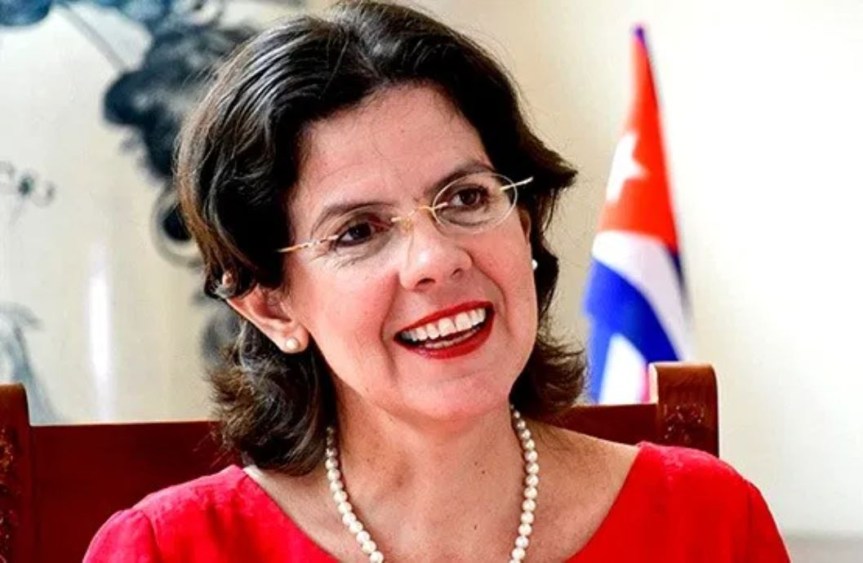
Photo via CPUSA

South Paris, Maine


White working-class voters who recently switched to the Republicans have not yet returned to the Democratic Party. They should do that, New York Times columnist David Brooks points out. After all, the Biden administration has “pursued an ambitious agenda to support the working class … [and] economic results have been fantastic.”

He outlines a divide between Republican voters, who mostly lack college degrees and may live in rural areas and small towns, and Democrats, whom he reports as being urban-based, college-educated, and snobby. He mentions a “seismic political realignment,” which “is more about culture and identity than it is about economics.”

Brooks suggests that, if the Biden administration matched the commitment shown by the New Deal, a Democratic Party legacy, many former Democrats voting Republican would return home. Those less attentive to working-class interests and more susceptible to demagoguery and myth-making would presumably remain where they are.

Brooks doesn’t explain why cultural phenomena and the political use of people’s identity led to voters moving to another party. These played out in a way that encouraged a kind of politics that overwhelmed political undertakings crucial to various sectors of the working class.

The object here is to examine some of these political projects and thereby identify certain causes that are off limits to working people who vote Republican. Whether they are compelling enough to persuade errant Democrats to return to the fold is uncertain. So too is the Biden Administration’s dedication to pursuing such struggles.

In any case aspirations inspiring the kinds of activism described below are not far removed from urgings toward a coherent and consistent working-people’s political movement or political party.

Culture and its variations

Brooks’s use of the term “culture” seemingly embraces religious beliefs, persisting racial prejudice, views on abortion and gender nonconformity, rural distrust of city life, and support for gun ownership.

Working-class history is about another kind of culture. The French and American Revolutions of the late 18th century left behind a culture of democracy. It involved popular elections, expanded legislative power, and guarantees of political rights. Royalty and feudal remnants mostly disappeared. Political newspapers and public debate flourished.    

Some of the founders thought George Washington ought to be king. Fearful of democracy, they provided for indirect presidential and Senate elections, gave big and little states equal representation in the Senate and Electoral College, counted enslaved people as three-fifths of a person, and denied women the vote.

Democratic malaise manifests now as: disappearing consensus that elections decide who becomes president, gerrymandered congressional districts, elections given over to money-power, and the Electoral College’s disregard of the idea of one person-one vote.

But democratic forces return. Even as the Constitution took effect, struggling farmers and backwoodsmen rebelled against wealthy politicians in charge of new state governments. Agitation for democracy would resurface in fights for women’s suffrage, voting for the racially excluded and propertyless, economic justice for small farmers (in the progressive era), better wages and working conditions, and civil rights – and fights also to abolish corporate monopolies, slavery, child labor, and police violence.

Working people, socialists included, have long defended democracy. Socialists have realized that the democratic rights achieved by early revolutionists enabled struggles later on for social and economic change.

Presently, working-class voters allied to the Democratic Party most certainly prioritize renewed struggle for democratic guarantees aimed at shoring up a U.S. democracy in trouble.

Hazards of identity politics

Brooks doesn’t explore exactly how misuse of people’s identity disturbs U.S. politics. He implies that working people are somehow hurt.

The identity of being a woman often leads to trouble. Their political struggles have provoked anti-women biases and stereotypes. The origins and evolution of these are so nebulous as to not provide a basis for criticism that would actually end them. They recur, as with current fight over abortion. No end is in sight.

There is another way. Many women struggle now to overcome remnants of the dependency and obligation visited upon them at the beginning of industrialization. It’s an unfinished battle.

Men, and even women and children, were working in the new factories as independent contractors. The state and employers were oblivious to their domestic circumstances. Families were on their own to raise children, find and prepare food, and seek protection. Women were the ones who were responsible.

Factory owners and other capitalists even now regard women’s work at home as a “free gift.” Although less onerous, women’s state of dependency verging on oppression remains.

The manufacturing and service industries today cannot do without women’s work; it has long served them well in quality and quantity. That factor, and women’s struggle too, have induced power-brokers reluctantly to attend to women’s collective demands for fairness and basic equality. Women’s fight continues, but on the basis of realities in their lives, not on their identity.

As women and their families gain access to the social and economic resources needed for preparing new generations, women work toward a new independence freeing them from governmental intrusions in their private affairs, notably their freedom to choose an abortion.

Racial identity

The idea of affirmative action was to open up access to higher education and jobs for previously excluded persons. Racial and gender identity has been the marker of such exclusion. That’s what admissions officers and employers pay attention to. 

The process of expanding admissions to colleges and universities is unfair. Large numbers of U.S. young people eligible for affirmative action through their racial identity can’t aspire towards higher education. Their families are poor and vulnerable to social catastrophe. Their schools likely are inadequate. 

The families of most students benefiting from affirmative action have economic resources. Those students usually have originated from the middle and upper strata of the various minority groupings.  Most have attended good schools. They thrived from encouragement and high expectations at home.

A fix is at hand in the form of economic security for all, better schools, and universal availability of decent jobs. Capable young people of the working class would understand that they are due high-quality education from start to finish. It would be a kind of affirmative action that leads to hope and overcomes division.

David Brooks credits the Biden administration for creating new jobs, including jobs for workers without a college degree. Wondering why working-class people don’t return to the Democrats, he could have produced a more direct answer than one based on speculation about effects of culture and identity. 

Working people’s needs other than jobs go unrecognized. Brooks might have mentioned good schools, healthcare for all, housing for all, and guaranteed income. He would then have been entering territory of the unspeakable, which is redistribution of wealth.


W.T. Whitney Jr. is a political journalist whose focus is on Latin America, health care, and anti-racism. A Cuba solidarity activist, he formerly worked as a pediatrician, lives in rural Maine. W.T. Whitney Jr. es un periodista político cuyo enfoque está en América Latina, la atención médica y el antirracismo. Activista solidario con Cuba, anteriormente trabajó como pediatra, vive en la zona rural de Maine.

Maine Activists Meet with Cuban Ambassador in South Portland / W.T. Whitney Jr.

Chargé d’Affaires Lianys Torres Rivera, Ambassador of Cuba | Credit: July 26.org

South Paris, Maine


Word came to the Let Cuba Live Committee of Maine that Cuba’s ambassador to the United States, Lianys Torres Rivera, would be in Portland on other business and wanted to meet with Mainers working for decent U.S. relations with Cuba.

Accordingly, on February 13, in the evening, 40 or so activists from throughout Maine gathered at the hall of Teamsters Local 340 in South Portland to dialogue with the ambassador. Ms. Torres Rivera previously served as Cuba’s ambassador in Vietnam.

She began with a brief survey of Cuba’s current situation, emphasizing that while the country’s economic situation is very difficult, her government’s priorities are unchanged. All citizens’ basic needs are being met, education and healthcare receive maximum support, and Cuba’s solidarity extends throughout the world, to the Global South in particular.

Citing Cuba’s great need for economic development, the ambassador critiqued the U.S. economic blockade as causing shortages that affect every aspect of life in Cuba. She mentioned the false U.S. designation of Cuba as a terrorist-sponsoring nation. That’s the mechanism the U.S. government uses to block the flow of money to Cuba from international financial institutions.

She and her audience agreed that President Biden could remove that misplaced label “with the stoke of a pen.” 

Questions and answers occupied most of the session with Ms. Torres Rivera.  Questions touched on: education in Cuba, increased Cuban migration to the United States, Cuban medical solidarity with the rest of the world, visits of U.S. delegations to Cuba, and U.S. promotion of social media as a device for broadcasting U.S. anti-Cuba propaganda.  

In a comment that particularly resonated with her listeners, Torres Rivera recalled that it was through Cuba’s revolution that she, a daughter of a poor farming family, gained an education preparing her to be an ambassador.

Two members of the Portland City Council were on hand. Great enthusiasm was evident as discussion turned to the prospect of the Portland Council joining other city councils in the United States in passing a resolution condemning the U.S. economic blockade of Cuba.

Facilitating the meeting was Barbara West of Let Cuba Live. Other organizations represented at the encounter were Maine Veterans for Peace, Peace Action Maine, a couple of labor unions, Women’s International League for Peace and Freedom, Democratic Socialists of America, and the Communist Party of Maine – that had made arrangements for the meeting.

To conclude: Anyone wanting to work toward ending the U.S. blockade of Cuba and/or learn more about Cuba might contact Let Cuba Live. Call Barbara at (207) 841-2917 or Tom at (207) 743-2183.


W.T. Whitney Jr. is a political journalist whose focus is on Latin America, health care, and anti-racism. A Cuba solidarity activist, he formerly worked as a pediatrician, lives in rural Maine. W.T. Whitney Jr. es un periodista político cuyo enfoque está en América Latina, la atención médica y el antirracismo. Activista solidario con Cuba, anteriormente trabajó como pediatra, vive en la zona rural de Maine.
Anti-Petro Coup Imperils Historic Pact Government in Colombia / by W.T. Whitney Jr.

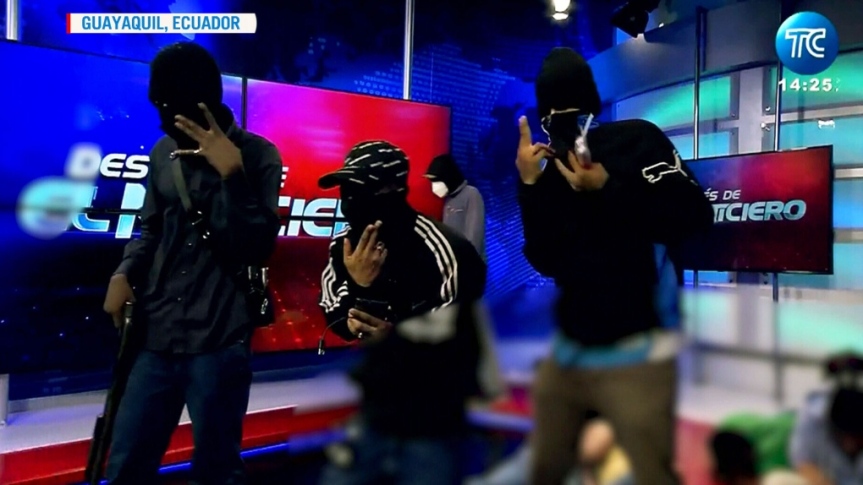
Colombians protest outside the Attorney General’s Office in Bogota, Feb. 8, 2024. | Photo: X/ @hugomilenio

South Paris, Maine


President Gustavo Petro, head of the left-leaning Historic Pact coalition, took office on August 8, 2022. He is Colombia’s most progressive president ever. Now he faces a coup. The fate of Petro’s government connects with prospects for peace in Colombia

On social media Petro indicated that, “Unions have been raided and witnesses have been tortured and otherwise pressured so as to accuse the president (himself)  …  Narcotrafficking sectors, perpetrators of crimes against humanity, corrupt politicians and sections of the attorney general’s office are desperately looking to remove him from … office.”  

The lead coup-plotters have been former Attorney General Francisco Barbosa and Vice-Attorney General Martha Mancera, hold-overs from previous administrations.  Peculiarities of Colombian governmental arrangements have officials installed in the top levels of government whom the president did not select and does not control.  

Barbosa is the public face of the opposition. He ended his four-year term of office on February 12. The Supreme Court of Justice, charged with replacing him, failed to choose one of the three candidates Petro offered for the post. The Court named Mancera as temporary attorney general.

According to one commentator, Mancera has long had actual charge of the attorney general’s office; Francisco Barbosa was “a façade.” She is accused of protecting corrupt officials and drug traffickers.

Provocateur

Barbosa charged the Colombian Federation of Educators with illegally providing Petro’s presidential campaign with funds amounting to the equivalent of $128,000. Searching for evidence on January 22, his agents trashed the union’s headquarters.

Barbosa announced December 1, 2023 he would detain young people whom Petro had released from prison, praising their dedication to peace.  The release would occur long after they had been jailed originally following participation in protest rallies in mid-2021.

Barbosa in January visited the Justice Department in Washington. He reported on “his stewardship [as attorney general] and sought U.S. support for Martha Mancera to become Colombia’s new attorney-general.”

Inspector general Margarita Cabello on February 2 ordered a three-month suspension of Chancellor Álvaro Leyva Duran. His ministry, she charged, had illegally contracted the preparation of passports to a new company. A defender claimed he was breaking a monopoly in passport preparation held by an “old Bogota family.”

In street demonstrations taking place throughout Colombia on February 8, unionists, students, and teachers demanded that the Supreme Court name a Petro nominee as Colombia’s new attorney general.

Military intelligence reports revealed plans for expanded use of social media to broadcast news of destabilizing activities. Reserve and retired army officers, a powerful sector, have held anti-government protests.

Commentators liken Colombia’s evolving coup to the other “soft coups,” or exercise of “lawfare,” that removed Paraguayan President Fernando Lugo (2012), Brazilian President Dilma Rousseff (2016), Bolivian President Evo Morales (2019), and Peruvian President Pedro Castillo (2023).

Distant dream

For the Petro government to disappear would deliver a major blow to Colombians who for decades have sought and struggled for peace in their country. Petro had campaigned for “total peace.” It was a signature cause for him.

The signing of a Peace Agreement between the Revolutionary Armed Forces of Colombia (FARC) and the Colombian government in 2014 came close to satisfying the longings of peace advocates. From then on, however, it was downhill. In that very year, rightwing political forces engineered a watered-down version of the Agreement reached months earlier. Subsequently, the governments of Presidents Juan Manuel Santos and Iván Duque, Petro’s predecessor as president, failed to implement crucial parts of the Agreement.  

Beginning in 2015, 419 former FARC combatants and 1596 social and community leaders have been assassinated – 188 of them in 2023, while Petro was president.  Continuing armed conflict has led to 154 instances of “massive forced displacement” affecting 56,665 persons.

Dissident FARC groups, the National Army of Liberation, and paramilitaries – often in the service of narco-traffickers – account for most of the killings and turmoil.  The current government is negotiating with the remaining insurgencies.

Information from the historical record, recent and remote, suggests that causative factors accounting for violent conflict and the incipient coup are identical.

September 26, 2016 saw a revealing moment. The Peace Agreement was being signed in Cartegena, Colombia. “Timochenko,” the FARC leader, was speaking to notables assembled from several continents. At precisely that point, fighter planes of the Colombian Air Force zoomed by overhead. As noted by an observer: “The face of ‘Timo’ gave the impression of being under a bombardment.” 

Colombia’s U.S.-supported military was weighing in. The nation’s military forces have long been at the disposal of the established sectors of Colombian society. A well-to-do landowning, religious, and commercial elite has charge of Colombia, now and ever since the Europeans’ arrival. That sector is not happy with either Petro or with peace in the countryside.

Analyst Carlos Rangel Cárdenas sees Petro’s “total peace” as “constructing peace by involving civil society in binding dialogues.” He points out that violence in the countryside increased so much during the presidency of Iván Duque as to approach the excesses of earlier eras.  Dialogues do not thrive in conditions of war, presumably. The coup plotters and their soulmates who tolerate war in the countryside are linked.

An urban-based oligarchy, with cooperation from big landowners, controls the financial, commercial, business and media entities in Colombia that shepherd economic development in rural areas. The heavy hitters there, economically, are industrial-scale agriculture, mining operations, energy production, and narcotrafficking. These activities attract investment and enable wealth accumulation.

Colombia’s majority population is different. They are marginalized urban inhabitants, often refugees from an inhospitable countryside.  They are rural people, overwhelmingly poverty-stricken and poorly-educated, who, most of them, have limited access to social services and to land that would allow for subsistence farming.

Defenders of the Historic Pact government confront a set of rulers equipped with money power, a big army, ample police, and ready access to U.S. military resources. They have been on the losing side of struggle between one social class and another. They are quite unable to project the appearance or reality of the kind of political power that matters.

Social movements have more of a hold on Colombians, especially in rural areas, than do political parties. Writer Sidney Tarrow concludes that parties “seek to gain or retain power” while “Movements are more ideological.” The latter, he implies, are weaker. 

In a 2021 interview, Petro suggested that, “The necessities of Colombian society are not based on building socialism, but on building democracy and peace, period.” He is pondering the matter, evidently. On February 9, he indicated that, “We believe and desire that the means of production are in the hands of the people and not the state.”

In any event, an opinion survey shows young Colombians turning increasingly to “rightwing ideological views,” from “7% in May, 2021 to 37% in October, 2023.” 


W.T. Whitney Jr. is a political journalist whose focus is on Latin America, health care, and anti-racism. A Cuba solidarity activist, he formerly worked as a pediatrician, lives in rural Maine. W.T. Whitney Jr. es un periodista político cuyo enfoque está en América Latina, la atención médica y el antirracismo. Activista solidario con Cuba, anteriormente trabajó como pediatra, vive en la zona rural de Maine.
U.S. Drug War Arrives in Ecuador, with Baggage / By W. T. Whitney Jr.

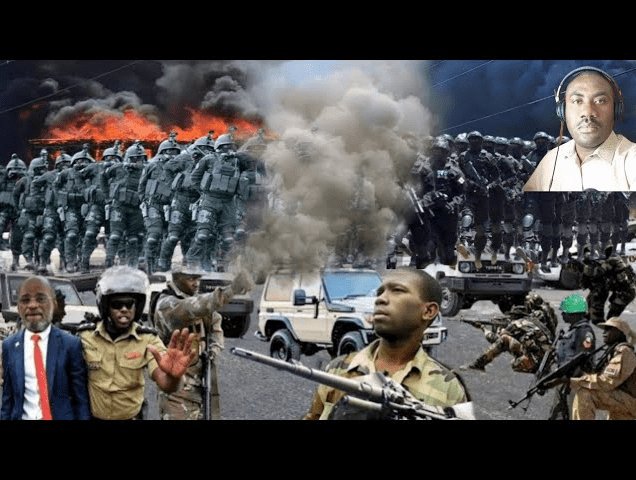
Photo via People’s Dispatch

South Paris, Maine


Joined by other U.S. officials, Laura Richardson, commander of the U.S. Army’s Southern Command, was in Ecuador January 22-25 to confer with government leaders there about U.S. military assistance. They included recently elected, and very wealthy, President Daniel Noboa. She mentioned to reporters an “investment portfolio…worth $93.4 million including not only military equipment … [but also] humanitarian assistance and disaster response, [and] professional military education.”

Prompting the visit was recently intensifying crime and turmoil manifesting as prison riots, escapes from prisons, and assassinations of political figures. A homicide rate of 5.8 per 100,000 persons in 2017 increased to 43 murders per 1000 Ecuadorians in 2023.

In the “grip of drug gangs,” Ecuador has been receiving cocaine and other illicit drugs produced and processed in countries such as Colombia, Peru, Bolivia, and Brazil. From Guayaquil and Esmeraldas, ports in Ecuador, the goods move on to U.S. and European consumers. The cartels’ former routes, through Central America and the Caribbean, are less active.

Ecuador’s government recently decreed a state of “internal armed conflict.” Its Army now has charge of domestic security.  From 2017 to 2023, governments under presidents Lenin Moreno and Guillermo Lasso arranged for privatizations, fiscal austerity, and a reduced package of state services. Resources are lacking to deal with powerful region-wide drug cartels now operating in the country.  U.S. military intervention would fill the gap.

The U.S. so-called drug war, as waged in Latin America and the Caribbean, began during the Nixon administration. Notable examples are Plan Colombia from 1999 until 2015 and the Merida Initiative, applied to Mexico from 2007 until 2021. The U.S. media provocatively associates drug cartels with international terrorism.  U.S. drug war spending has reached $1 trillion over four decades, says a report.

Ecuador’s situation has special features. Analyst Pablo Dávalos sees “convergence among political power, organized crime, and narcotrafficking to allow [Ecuador’s] use of the dollar as its national currency to enable money laundering.” Organized crime “controls vast areas” and Ecuadorians “refusing to pay extorsions are being systematically eliminated.”

Eloy Osvaldo Proaño of the Latin American Center of Strategic Analysis points out that the “neoliberal recipe reduces institutional presence, which weakens control of borders and facilitates penetration of criminal gangs.” What President Noboa has proposed “is part of a regional plan of paramilitaries occupying wide areas to instill terror, tear apart the social fabric and subdue populations.”   

The “22 organizations declared [by Noboa] to be ‘terrorist groups’ … have a capacity of maneuver and omnipresence enabling them to control territories and prisons, even to penetrate the institutions [of the state].”

Ecuador recently became the leading recipient of U.S. military assistance in Latin America and the Caribbean area. More is on the way. Ecuador’s defense minister indicated the U.S. government will be “investing” $3.1 billion in military assistance over seven years.  

Planning has been elaborate:

·        The FBI in 2017 assisted the “lawfare” campaign of President Guillermo Lasso against President Rafael Correa, his progressive predecessor.

·        The U.S. Congress on December 15, 2022, approved the United States-Ecuador Partnership Act of 2022.

·        A memorandum of understanding was signed in Washington in July 2023. It covers U.S. efforts to strengthen Ecuador’s military capacities and combat the drug trade.

·        A binational agreement was signed on August 16, 2023 for cooperation in building the capacity of Ecuador’s military, police, and judiciary.

·        President Lasso in Washington on September 28, 2023 signed agreements allowing U.S. troops and naval personnel to deploy in Ecuador.

·        Ecuador’s foreign minister signed a status of forces agreement with the U.S. ambassador on October 6, 2023 relating to privileges, immunities, and guarantees for U.S. armed forces personnel.

·        Ecuador’s Constitutional Court on January 11, 2024 ratified the U.S.- Ecuador security agreement.

Colombian President Gustavo Petro in September, 2022 recalled an earlier conversation with General Richardson about “the failure of [U.S.] anti-drug policies.” He mentioned to her that, “It’s our obligation … to say that and also to propose alternatives that don’t allow a million more Latin Americans to die.”  

Petro has company. Many progressives in the United States and elsewhere also regard the U.S. drug war as a failure. Facts are on their side:

·        Narcotrafficking has increased despite drug war.

·        Moneys spent on drug war is money not spent on preventative programs and poverty reduction.

·        U.S.-assisted militarization of targeted countries undermines democratic renewal.

·        Drug war means profits to weapons suppliers, narco-traffickers, and money-laundering banks and businesses.

·        The United States, the great consumer of illicit drugs, bears responsibility for not reducing consumption.

This consensus resonated at the Latin American and Caribbean Conference on Drugs – for Life, Peace, and Development that took place September 7-9, 2023 in Cali, Colombia. President Petro and Mexican President Andrés Manuel López Obrador had called for the gathering. Attending were officials of 19 regional nations and representatives both of observer countries and international social organizations.  

The object was “to rethink drug policies in response to the failure of the punitive strategy imposed by the United States.” The most impactful recommendations emerging were these:

·        Change basic assumptions by recognizing the failure of the U.S. war on drugs.

·        Contain the drug problem internally by dealing with structural causes of poverty, inequalities, lack of opportunities, and violence.

·        Block drug trafficking through “principles of justice and through development.” Fight poverty by giving people opportunities, youth especially.

·        Explore legal modes of drug consumption.

·        Reduce demand through “universal prevention” and attending to mental health problems.

Why does the U.S. government fight narcotrafficking in Ecuador? Its agenda is full already. Its prohibitions on narcotics use at home are less than effective.

Here’s a hint. Indigenous peoples organized by Ecuador’s Confederation of Indigenous Nationalities (CONAIE) carried out week-long national strike in June 2022.  At issue were labor rights, rescuing the environment, poor families’ unmet needs, and support for small farmers. A people’s political resistance movement evidently exists there.

Leonidas Iza, the CONAIE leader, now speaks out in regard to General Richardson’s visit. He told an interviewer that, “We struggle for the Ecuadorian people” and that, “We are ceding not only military sovereignty, sovereignty over our country but even more: we are submitting to their desire to control our resources.”

All is revealed. What’s happening is nationwide political resistance striking at U.S. economic and political interests abroad. The U.S. government characteristically takes protective action in such circumstances.

Drug war serves as a cover for putting U.S. troops and U.S. proxies on the ground for preventative purposes. In Colombia, under Plan Colombia, the U.S. military joined up with Colombia’s Army to confront leftist insurgencies. A U.S. military presence would have been handy in Peru and Bolivia to ward off indigenous mobilizations led, respectively, by former presidents Pedro Castillo and Evo Morales.


W.T. Whitney Jr. is a political journalist whose focus is on Latin America, health care, and anti-racism. A Cuba solidarity activist, he formerly worked as a pediatrician, lives in rural Maine. W.T. Whitney Jr. es un periodista político cuyo enfoque está en América Latina, la atención médica y el antirracismo. Activista solidario con Cuba, anteriormente trabajó como pediatra, vive en la zona rural de Maine.

On US Hesitation, Guy Philippe, and Saving Haiti / By W. T. Whitney Jr.

Coup leader Guy Philippe repatriated to Haiti from the U.S. | AP Archive [Youtube]

South Paris, Maine


Reports have circulated of gang warfare in Port-au-Prince and other Haitian cities, and of killings, shortages, social catastrophe and a government gone AWOL.  Also entering the news cycle was the UN Security Council’s approval in October 2023 of plans for troops from nine nations, other than the United States, to jointly occupy Haiti

The U.S. Defense Department had arranged for 1000 Kenyan troops to lead the multi-national force. The international force did not arrive in Haiti pending a decision of Kenya’s High Court on Kenyan forces serving overseas. On January 26, that court prohibited the deployment, and plans for the international force are in disarray.

Less is known about U.S. planning on Haiti that takes into account the most acute of Haiti’s intractable problems. There are the well-known ones, but also political corruption, business-class financing of gangs, U.S. supply of weapons for the gangs, a government headed by the unelected and widely-reviled Aaron Henry, no workable plans for a transition government, and the murky circumstances of president Jovenel Moise’s murder in July, 2021.

Instructions

The U.S. government in April 2022 announced that a new relationship with Haiti was in the works. The description relies on generalities such as: “a long-term, holistic view,” “forward-thinking rather than reactive mindset,” “Seeking innovation while scaling success,” and “Prioritizing locally driven solutions.”

The statement offers ideas on ways to implement guidelines from the Global Fragility Act (GFA) of 2019. That legislation sets forth concepts informing a new U.S. strategy for dealing with nine troubled countries in the Global South. Haiti is the only one in the Western Hemisphere.

It’s a “comprehensive, integrated, ten-year strategy” for achieving “the stabilization of conflict-affected areas,” and with the purpose of “strengthen[ing] the capacity of the United States to be an effective leader of international efforts to prevent extremism and violent conflict.”

Another statement, also released in April 2022, is about overall GFA implementation, not specific to Haiti The GFA would “build peace across divided communities, leverage and enable societal resiliencies … anchor interventions in communities … [and be] informed by the insights of expert practitioners and academics.”  The United States is seeking “true mutual partners and [would] commit to multilateral solutions.”

The GFA represents for Haiti “a “repackaging” of U.S. interventionist policies.” Analyst Travis Ross also suggests that U.S. troops would encounter “fiercer resistance than they did in their 1915, 1994, and 2004 interventions.”

The package is new, but substance is scarce. Specific objectives and precise methods for influencing affairs inside Haiti are lacking. There’s no mention of military and/or police action. Policymakers’ hesitation may be due in part to the ill-defined, if tumultuous, nature of difficulties they anticipate.

Loose cannon

Guy Philippe may be a case in point. The former narco-trafficker, imprisoned in the United States for money laundering since 2017, finished his term and returned to Haiti in November 2023. He has been touring Haiti’s cities and towns.

He speaks to crowds about Haitians choosing their own government, building their economy, rejecting foreign oversight and intervention, removing de facto government head Ariel Henry, and restoring Haiti’s Army.

Heading a paramilitary force of hundreds, Guy Philippe’s destabilization campaign prepared the way for the coup in 2004 that removed the progressive and democratically-elected president Jean-Bertrand Aristide.

Trained by U.S. special forces in Ecuador, Philippe in the 1990s was a brutal police chief in two Haitian cities notable then for extra-judicial killings. In 2001 he organized a failed coup. Philippe ran for president in 2006, was elected senator in 2016, and heads his own political party.

Philippe has visited Haiti’s northeastern region, particularly Ouanaminthe, at least twice. This small city on the west side of the south-to-north flowing Massacre River, part of the boundary between Haiti and the Dominican Republic (DR), is a crossing point for binational commerce and for Haitians traveling to and from low-paying jobs in the DR.

The region is a display case for the hostility and racism experienced by Haitians in the DR. Dominican dictator Rafael Trujillo’s massacre of thousands of Haitians took place along the Massacre River in 1937. (The name derives from massacres in the 17th century.)

Guy Philippe has joined the fight local people are pursuing with Dominicans over a canal for diverting water from the Massacre River into Haiti for agricultural purposes. The process of building the Pittobert irrigationcanal has extended over years, but enthusiasm for completing it recently brought small farmers and agricultural workers together as voluntary work crews.

Although 10 diversion canals deliver water to the DR side, the government there denounces the Haitians’ canal as depriving DR farmers and nearby mines of needed water. The Dominican government, in protest, closed the border between September 15 and October 8, 2023.

Speaking “to a multitude” in Ouanaminthe on Jan 3, Philippe insisted that, “We can construct as many canals as we think are necessary. I come to salute the determination and the bravery of these men and women who say that we are independent and sovereign in our country.” Philippe was honoring canal workers and security officers who had stood up to Dominican troops entering Haitian territory on November 7.

The latter are members of the Brigade for Surveillance of Protected Spaces (BSAP), a police unit of 15,000 officers charged with protecting national parks.  Observer Kim Ives explains that, “Guy Philippe sees a future for [the BSAP] as a sort of popular militia that can be a surrogate or support for the PNH (Haitian National Police) and Haitian army.”

The incident [on November 7] didn’t happen by chance,” opined a pro-Haiti commentator; “it’s part of the US plan under the Global Fragility Act to set the DR against Haiti … to unite the entire island under a single government … [This] provocation by the United States, mediated by the racist government of the Dominican Republic, accompanies war and American imperialist domination in the Caribbean and Latin America.

On January 24, “Sympathizers of the revolution led by Guy Philippe” filled the streets of Ouanaminthe, according to a report. They attacked banks and public offices, and demanded protection for a BSAP leader.  

Taken as a whole, the account offered here is of a U.S. response to Haiti’s extreme difficulties that, apart from charitable sentiments, is directionless, lacking in specifics, and incomplete. As a dispensation from on high, it represents a kind of noblesse oblige.

Either the U.S. government is turning away from Haiti’s affairs – not bad news – or has other, unknown plans for Haiti, which is more likely. The U.S commercial and investing class will undoubtedly be weighing in.

From that quarter may come concern about lost opportunity in allowing  Haitians alone to decide what happens with deposits of gold and other minerals worth $20 billion. They lie in the mountainous areas of northern Haiti, not far from the Massacre River.


W.T. Whitney Jr. is a political journalist whose focus is on Latin America, health care, and anti-racism. A Cuba solidarity activist, he formerly worked as a pediatrician, lives in rural Maine. W.T. Whitney Jr. es un periodista político cuyo enfoque está en América Latina, la atención médica y el antirracismo. Activista solidario con Cuba, anteriormente trabajó como pediatra, vive en la zona rural de Maine.

The terror returns: Cuba discloses latest attacks by the U.S. / by W. T. Whitney Jr.

Some of the weapons seized from a Florida-based terrorist captured on Cuban soil after he snuck onto the island via jet ski. | Photo courtesy of Granma

Reposted from the People’s World


When the U.S. government launched its so-called “Global War on Terror” after the al Qaeda attacks of Sept. 11, 2001, U.S.-led terror attacks against Cuba had already been ongoing for over 40 years.

They included: military invasion (1961), CIA-sponsored counter-revolutionary paramilitaries in the countryside (1960s), a fully loaded Cuban airliner brought down by U.S. agents (1976), attacks on coastal towns and fishing boats, biowarfare, hundreds of killings in Cuba and abroad, sabotage, and bombings of hotels and tourist facilities (1997).

With the new century, however, violence and terror seemed to be on vacation. The Cuban media and sympathetic international media were reporting little or nothing about U.S.-based terror attacks that had been their stock in trade.

On Dec. 17, 2023, Cuban Chancellor Bruno Rodríguez released a statement harking back to the violent past. He insisted that the “U.S. government is very aware of the official, public, and repeated denunciations by the Cuban government of the assistance, protection, and tolerance that promotors and perpetrators of terrorist acts against Cuba enjoy in the United States.”

He added that, “Recently Cuba’s Interior Ministry has reported on the dismantling of destabilization plans developed in the United States by terrorists of Cuban origin in a security operation that led to the detention of several persons tied to this conspiracy.”

Rodríguez’s statement followed a report appearing on the Communist Party’s Granma newspaper on Dec. 9, 2023. A Florida resident, traveling on a jet ski, came ashore near Matanzas on Cuba’s northern coast in late 2023; no date was specified. Carrying pistols, ammunition, and loading clips, the individual headed for Cienfuegos, his province of origin, and was arrested.

The unnamed man “contacted several people in order to recruit them.” He allegedly had ties in South Florida with “terrorists who publicly promote violent actions against Cuba … [and who] have received military training with weapons, have the physical equipment … and other resources to carry out their plans.”

Granma stated that, “the terrorists, with their plans for actions aimed at undermining internal order, go beyond a virtual setting; they concentrated on promoting violence so as to cause pain, suffering, and death at the year’s end.”

These “instigators of hate and death … appear on [Cuba’s] National List … [Cuban security officials] have investigated actions they’ve taken in the national territory or in other countries.”

report on Jan. 4 from Mexican journalist Beto Rodríguez discusses the Interior Ministry’s “National List of persons and entities … associated with terrorism against Cuba.” Since 1999, they “have planned, carried out, and plotted acts of extreme violence in Cuban territory.’’

The List first appeared on Dec. 7 in Cuba’s Official Gazette as  Resolution 19/2023. It names 61 individuals and 19 terrorist organizations, all based in the United States, presumably most of them in South Florida. One of the names on the List belongs to the jet skier, but which one is unspecified.

According to Beto Rodríguez, criminal investigations in Cuba revealed that some of the listed persons targeted “governmental and tourist installations and carrying out sabotage, illegal incursions, human trafficking, and preparations for war.” They “made plans for assassinating leaders of the revolution.”

He also reported that the arrested jet skier “intended to recruit Cubans for burning sugarcane plantations, provoke disturbances, disturb tourist centers, and hand out propaganda.” “[C]itizen denunciation” led to his arrest.

Appearing on the List is Alexander Alazo Baró, who shot at Cuba’s embassy in Washington with a semiautomatic weapon on April 30, 2020. He is still “under investigation.” Two Molotov cocktails exploded at the embassy on Sept. 24, 2023. The perpetrator is unknown.

Beto Rodríguez notes that on Nov. 24, 2023, the U.S. State Department, warning prospective travelers to Cuba of “potential terrorist actions … against the United States,” advised them to avoid “sites commonly used for demonstrations.”

A day earlier, a large pro-Palestinian march headed by Cuban President Miguel Díaz-Canel passed by the U.S. embassy in Havana. Journalist Rodríguez surmises that, “Washington already knew beforehand that anti-Cuban groups were planning to enter onto the island to commit acts of terrorism.”

Hernando Calvo Ospina, veteran analyst of U.S. terror against Cuba, reported on Jan. 10 that Cuba’s government referred the National List to the International Criminal Police Organization (Interpol), which deals with crime extending across borders.

Describing activities of the listed persons, Calvo Ospina highlights their new use of social media to communicate propaganda and to “incite internal violence, the assassination of State personalities, the destruction of common goods and all kinds of sabotage.”

Ospina states that, “the objectives now being pursued are similar to those of the so-called ‘historical exile group.’ Only the method has changed. Both have one thing in common: they use terrorist methods.” Some of those whose names appear were carrying out terrorist activities in the 1990s.

He indicates that, “Many received direct funding from the U.S. State Department, and also from the CIA, which uses various entities and NGOs to deliver it.”

According to the Congressional Research Service, the government’s so-called “democracy and human rights funding” for Cuba, a reference to support provided for interventionist programming, amounted to $20 million annually from 2014 to 2022. In July 2023, Rep. Mario Diaz-Balart, R-Fla., chairman of the House Appropriations Subcommittee, sought “to boost funding by 50% for democracy promotion efforts in Cuba.”

What looks like a revival of the U.S. government’s former anti-Cuba terror campaign may point to one or more of several possibilities:

  • Terror attacks had actually continued during the past two decades, but Cuba’s government, for unknown reasons, opted not to publicize them.
  • Terror attacks did continue, but at a low ebb, and now the Cuban government, at a difficult time, seeks to inform world opinion of illegal and dangerous U.S. actions, the object being to promote multi-national mobilization against prolonged U.S. all-but-war against Cuba.
  • The U.S. government, taking advantage of Cubans’ discouragement aggravated by a terrible economic crisis, has successfully recruited dissidents and once more is capable of mounting terror attacks.
  • The U.S. government, true to its ideologic core, to its imperialist self, stops at nothing while dominating or beating up on lesser peoples of the world.

We hope you appreciated this article. At People’s World, we believe news and information should be free and accessible to all, but we need your help. Our journalism is free of corporate influence and paywalls because we are totally reader-supported. Only you, our readers and supporters, make this possible. If you enjoy reading People’s World and the stories we bring you, please support our work by donating or becoming a monthly sustainer today. Thank you!


W.T. Whitney Jr. is a political journalist whose focus is on Latin America, health care, and anti-racism. A Cuba solidarity activist, he formerly worked as a pediatrician, lives in rural Maine. W.T. Whitney Jr. es un periodista político cuyo enfoque está en América Latina, la atención médica y el antirracismo. Activista solidario con Cuba, anteriormente trabajó como pediatra, vive en la zona rural de Maine.

Letter from Congress to Biden: Cuba is No Sponsor of Terrorism / by William T. Whitney Jr.

South Paris, Maine


The Massachusetts congressional delegation was irritated. The Biden administration, taking office, had promised to remove Cuba from the U.S. list of State Sponsors of Terrorism (SSOT). Massachusetts Representative Jim McGovern, favoring the change, took comfort from Congress having been informed at some point that the process was underway. However, in a closed-door congress briefing in early December, 2023, State Department official Eric Jacobstein indicated no action had been taken.

McGovern and Representatives Ayanna Pressley, Lori Trahan, Seth Moulton and Stephen Lynch and Senators Elizabeth Warren and Edward Markey, all Democrats, were indignant. That any removal of Cuba from the list would require a six-month long review process beforehand aggravated their displeasure.

They wrote a letter to President Joe Biden on December 14, 2023. Unaccountably, it did not become public knowledge until January 2.

The letter credited “President Obama and yourself after thorough review” for having removed Cuba from the list of SSOT nations in 2015, for declaring “the designation is without merit.” The authors decry “vindictive action taken by the Trump Administration in January 2021” in restoring the designation. They inform Biden that, “We believe the time to act and remove Cuba from the SSOT list is now – not months from now.”

The congresspersons note that, “In fact, Cuba and the United States have a functioning bilateral cooperation agreement on counterterrorism.” They mention that Colombian President Gustavo Petro had called for lifting of the designation, thus shattering one argument favoring the designation, the allegation that Cuba had hosted Colombian terrorists.

These, of course, were the representatives of the FARC and ELN insurgencies who were negotiating peace agreements, in Havana.

They pointed to mounting humanitarian disaster in Cuba now: “From the poorest and most vulnerable to the struggling private sector to religious, humanitarian and cultural actors, the Cuban people are enduring the most dire deprivations in recent memory – everyone is suffering.”

The letter identified placement of Cuba on the SSOT list as a “significant contributing factor” to the suffering. To explain: under U.S. law, the U.S. Treasury Department penalizes international banks and lending institutions that handle dollars on behalf of presumed terrorism-sponsoring nations.

To avoid fines, often immense, international financial institutions steer clear of transactions with Cuba, more specifically, the large universe of transactions involving dollars, the dollar being the dominant currency in international banking and commercial activities. Cubans suffer because of a great wall that prevents borrowing, buying supplies, and sometimes receiving payments for exported goods, and so money is short.

In their letter, the congresspersons cite hardship in Cuba as contributing to irregular Cuban migration into the United States, that now is massive. Their implied message is that removing Cuba from the SSOT list will alleviate humanitarian crisis in Cuba and so will reduce migration.

Mexican President Andrés Manuel López, conferring recently with Secretary of State Antony Blinken on migration, asked that Cuba be removed from the list. But Secretary of State Anthony Blinken, in a congressional hearing in March, 2023, indicated that Cuba had not met “the requirements to be removed from the list.”

The idea that Cubans are suffering so much that they are going to rebel has long circulated in official Washington circles. That approach to Cuban affairs dates from a memorandum on suffering in Cuba presented by State Department official Lestor Mallory in 1960.

Interviewed by Prensa Latina, Merri Ansara, board member of Massachusetts Peace Action, associated the letter with “a campaign initiated eight months ago to unify the state of Massachusetts in calling for Cuba to be removed from the SSOT” list. She indicated “We will now ask our elected representatives and senators in the state legislature to send a similar letter to Biden, and then we will ask our governor.”

By no means is this people’s campaign for removing Cuba from the SSOT list new. By mid-September in 2022, “[m]ore than 10,000 people and 100 progressive advocacy groups” had signed the Code Pink advocacy group’s open letter demanding that Biden do exactly that.

Calling for definitive action to remove Cuba from the U.S. list, Chris McKinnon, Chair of the Communist Party of Maine, urged Maine people, and progressive organizations, to register their backing for the Massachusetts congresspersons’ letter to Biden.

The time is now, he explained, “for everyone to update their information on U.S. – Cuban relations, think through their positions, reach out to unions, faith-based social justice committees, and others willing to listen, and meet with the Maine congressional delegation, and other elected officials, to insist upon this policy change.”


W.T. Whitney Jr. is a political journalist whose focus is on Latin America, health care, and anti-racism. A Cuba solidarity activist, he formerly worked as a pediatrician, lives in rural Maine. W.T. Whitney Jr. es un periodista político cuyo enfoque está en América Latina, la atención médica y el antirracismo. Activista solidario con Cuba, anteriormente trabajó como pediatra, vive en la zona rural de Maine.

Cuba’s Government Analyzes and Responds to Economic Woes / By W. T. Whitney Jr.

People look at food prices at a private business in Havana on December 20, 2023. Cuba’s economy will shrink by up to 2 percent this year, Finance Minister Alejandro Gil estimated on Wednesday, after acknowledging that the country will not be able to achieve the projected economic growth of 3 percent by 2023 | Yamil Lage / AFP / Getty

Reposted from Counterpunch


“Our joy is immense … We don’t deceive ourselves thinking that everything ahead will be easy, when perhaps everything is going to be more difficult.” That was Fidel Castro, hours after the victory of Cuba’s Revolution.

Difficulties were center stage 65 years later, at a plenary session of the Central Committee of Cuba’s Communist Party on December 15 and 16 and at the National Assembly of People’s Power, meeting on December 20-22.

The views of Cuban leaders on problems now enveloping Cuba shed light on realities of a nation under siege and a revolution in trouble. The information is pertinent to the solidarity efforts of Cuba’s friends abroad. Addressing the Central Committee’s plenary session, Cuban President Miguel Díaz-Canel noted that, “We have discussed efforts that have not
yielded solutions, measures that did not prosper, and goals that were not fulfilled …The scenario is that of a war economy … [We] are all here to reverse the present situation … with consensus as to decisions and with collective work, with passion and energy.”

Díaz-Canel called for “creative resistance” and “confidence in victory,” while insisting that dissatisfaction “is a motor that moves revolutionary energies. It provokes embarrassment that ends up activating people’s full participation, without which socialism is impossible.”

“We would be surrendering beforehand, if we see this war as an insuperable calamity. We must see it … as the opportunity to grow and to overcome our own selves, while the adversary is nakedly evil before the world … On the eve of the 65th anniversary of the Cuban Revolution … we are called to act together for a common objective: Save the
homeland, the Revolution, socialism, and overcome.”

The Assembly meets

Speaking to the National Assembly were: Alejandro Gil Fernández, minister of the economy and planning; Prime Minister Manuel Marrero Cruz; and President Miguel Díaz-Canel. Gil Fernández regards the U.S. economic, commercial and financial blockade of Cuba as the principal obstacle Cuba faces in restoring its economy.

He indicated that in 2023 Cuba’s GDP will have fallen almost two percent. Exports were $770,000 million below predictions. Food production was less than that of 2022. Tourism income increased by $400 million in 2023 but represented only 69% of the yield in 2019.
Overall production was down due mainly to state enterprises held back by shortages of supplies and fuels. Currency shortages and loss of workers to migration hampered the healthcare and education sectors. Electricity generation was up 32% in 2023, according to Gil Fernández. Cuba’s 30% inflation rate for 2023 was lower than the 77.3% rate in 2021.

State business entities showed “gradual recuperation.” They employ 1.3 million workers while accounting for 92% of goods and services produced in Cuba and 75% of exported products. He attributed price inflation to international price hikes, the government’s release of money to finance its budget deficit, fewer goods being produced, and an agriculture sector burdened by labor shortage, high costs, and low yields.

“What isn’t being produced cannot be imported,” Gil Fernández lamented. His message is that importing goods is almost impossible what with “the effect of high prices on the international market.” But, paradoxically, “a lack of production resources” forces Cuba to import over 70% of the food that is being consumed.

He proposed measures for increasing food production, including:

+ Creation of a financial mechanism for bolstering production based on farmers using Cuban currency derived from agricultural sales to buy supplies they need.
+ Build a farm labor force through moonlighting, employing students, and having young people do agricultural work as part of their military service.
+ Use food produced in Cuba, not imported food, to fill the “normal family food basket.”

Prime Minister Manuel Marrero Cruz critiqued the government’s lack of control over production and distribution which “adversely affects production by state entities and lets currency exchanges on the illegal market determine the pricing of products from the non-state sector.” e reported that social inequalities are growing, and that the tendency exists while state subsidies continue to nourish less distressed sectors of the economy. Equally worrisome: “The former state monopoly in production is now consolidating in the private sector.”

He was referring to the recent appearance of 9000 or so mostly private small-and-medium-sized businesses and to independent farmers and cooperatives that took over land from the state under long-term usage arrangements. They now control 80% of Cuba’s agricultural land. Marrero Cruz called for “stimulation of government-operated small-and-
medium-size business entities.”

Both private businesses and the farming sector sell products at highly inflated prices with prices being set by black market operatives. The prime minister condemned the state subsidies such entities receive in the form of low prices assigned to the fuel, water, transportation and electricity they buy from the state. Similarly, the government pays high
prices to farmers for food that, under the rationing system, is sold inexpensively to the population.

Henceforth, according to Marrero Cruz, the government will be subsidizing people, not products. According to one report, “The Ministry of Work and Social Security will be charged with undertaking a survey of ‘vulnerable’ social sectors.” “Nobody will be abandoned,” Marrero Cruz insisted.

The government, he indicated, will increase sales taxes on final products such as water, gas, electricity, transport and reduce import tariffs by 50% on the “intermediate products” used in food production and manufacturing. More tourist dollars will be harvested. Municipal assemblies will present budgets and in the case of deficits will generate more income and reduce administrative expenses.

For the prime minister, “food production needs to be prioritized and by all sectors. Many countries are saying to us: ‘We’ll put up the money, you provide the land and then pay back the money with production.’” He pointed out that, despite the non-availability of imported fertilizer and pesticides, “there are many instances of countries producing food; an
agricultural country must produce its food.”

Marrero Cruz sees “speculative prices … and intermediaries earning a lot more than producers” and non-state entities now controlling imports rather than the government, the result being “abusive and speculative pricing.” He called for paying for imports with income from exports: “[W]e prefer importing supplies and products essential to the economy and
paying for them by offering other countries certain products and/or services.”

Responding to inflation, the government, collaborating with the Central Bank of Cuba, will change the official exchange rate for the peso. According to Marrero Cruz, the government will be restricting prices for goods and services with a system of “maximum prices.”

President Miguel Díaz-Canel, addressing the National Assembly on December 22, focused on Cuba’s “war economy … [It’s] a political scenario of maximum asphyxia, designed and applied against a small country by the most powerful empire in history.” He also attributed
economic problems to “the crisis in international economic relations and our own errors.”

Economic war takes the form of economic blockade aimed at “reduced supplies of goods used by the population, inflated prices, and low purchasing power for most Cubans.” “Together with constant acts of subversion and disinformation against Cuba, the goal is to break the country, provoke social decomposition, and make for ungovernability.”

Díaz-Canel spoke of errors as “part of the complexity of making decisions in a context of extreme tension … [and of] commitment to preserving social conquests.” He mentioned mistakes, particularly in the “design and implementation of currency unification” and in “approving new economic actors without performance norms having been established.”

The effectiveness of new measures will “depend on generating more wealth, more work incentives, and more distribution of resources.” The president promised there will be no “neoliberal package … no crusade against small businesses, no elimination of the basic food allocation.” The president highlighted: “food production, localities taking care of
more of their needs, the revival of tourism, rescue of the sugar industry, state control of currency and the exchange market, redesign of the financial system, and guarantees for self-financing, and managing currency so as to serve those whose production generates income.”

Díaz-Canel took note of Cubans’ high regard for healthcare workers and teachers, promising that “they will be the first to benefit from additional pay, which the prime minister announced in his intervention.” Testifying earlier before the Economics Commission of the National Assembly, Díaz-Canel emphasized “taking advantage of the facilities of the municipalities and articulating strategies of local development.” Recalling that the “[f]oundation of government is the municipal assembly of people’s power,” he insisted on “mapping out actors in the municipalities and integrating them with state and private businesses.”

In the end

The information and opinions provided by Cuban leaders and reviewed here clarify difficult realities, among them: adverse effects of diminished tourism, inflation, and emigration; social inequalities based on varying access to resources; production stymied by shortages of resources; inadequate food production; lack of buying-power for most Cubans, and
for importing necessary goods; and the near impossibility of securing foreign investment.

Cuba is fashioning responses. They are: decentralization of political and economic administration; cut backs on expenditure of central government funds, reduced subsidies for the purchase of water, fuel, transport, and electricity by business entities; adjustment of import tariffs to favor the availability of resources for production, capturing more tourist dollars, protecting state-operated production entities, fixing prices, and producing more food.

These will be palliative remedies unless basic causes are dealt with. A prime goal of U.S. policy has been to deprive Cuba of money, and that has come to pass. Revolutionary Cuba’s very survival depends on U.S. citizen activists forcing their government to shed its blockade of Cuba. There, the great need now is for Cuba to be removed from the U.S. list of terrorist-sponsoring nations. That designation causes most international financial institutions to refuse handle dollars on Cuba’s behalf.

There is a larger context. The U.S. use of economic sanctions everywhere rests on planet-wide dollar dependency. That emerged out of the Bretton Woods Conference of 1944 and has coincided since with unrelenting U.S. assertion of worldwide power. That’s the basis for a global constituency on Cuba’s behalf. How it will be set in motion is the
big question.


W.T. Whitney Jr. is a political journalist whose focus is on Latin America, health care, and anti-racism. A Cuba solidarity activist, he formerly worked as a pediatrician, lives in rural Maine. W.T. Whitney Jr. es un periodista político cuyo enfoque está en América Latina, la atención médica y el antirracismo. Activista solidario con Cuba, anteriormente trabajó como pediatra, vive en la zona rural de Maine.
U.S. military appears to favor Israeli plan for permanent Gaza occupation / By W.T. Whitney Jr.

Israeli soldiers eye their targets at the Israel-Gaza border on Monday, Dec. 18, 2023. | AP

Reposted from the People’s World


Nearly 20,000 Gaza civilians, mostly children and women, have died from bombs and gunfire in Israel’s war so far. Many more will be dying soon from lack of medical care, food, water, and the spread of infectious diseases. Healthcare and social service facilities—along with the homes of a million or more—have been reduced to rubble.

The U.S. government provides the support for all of this to happen, as it continues to financially and militarily back Israel in its war against Hamas in Gaza in retaliation for the latter’s attacks of Oct. 7.

Prospects for Gazans who survive the war are grim, or worse. The families of many are gone, and international aid agencies have mostly disappeared. Dire shortages of necessities are on the horizon.  Repairing the physical damage won’t happen anytime soon, and Israeli settlers are already eyeing prime Gaza lands.

With humanitarian disaster on full display, Human Rights Watch points out that, “by continuing to provide Israel with weapons and diplomatic cover as it commits atrocities…the U.S. risks complicity in war crimes.”

Either the charge or the fact of complicity will very likely bedevil the United States for as long as Gazan civilians are dying in large numbers or being removed to camps somewhere else and, all the while, the U.S. goes on supplying Israeli occupiers with weapons.

A recently released Israeli military analysis raises the possibility that the U.S. government courts very serious condemnation if it provides material support for a permanent Israeli occupation of Gaza.

Dr. Omer Dostri, the study’s author, is associated with the Jerusalem Institute for Strategy and Security and the Israel Defense and Security Forum. Each is oriented to Israel’s military establishment. His study appeared Nov. 7 in the Military Review, the self-described “Professional Journal of the U.S. Army.”

As reported by journalist Dan Cohen, Dostri declared on social media that, he “authored [the study] on behalf of the U.S. Department of Defense and the U.S. Army’s Military Review journal.” For the Military Review’s editors to have invited Dostri’s submission suggests they already knew about and were at least tolerant of, Dostri’s iron-fist approach toward Gaza.

The author and editors alike presumably expected their respective military superiors to accept some or all of the views expressed in the paper. Perhaps, then, the two military leaderships have common ground regarding Gaza. Publication of this Israeli analysis becomes a straw in the wind as to future U.S.-Israel military collaboration on Gaza, and, on that score, to U.S. war crimes.

The title of Dostri’s article reads in part, “The End of the Deterrence Strategy in Gaza.” He notes the failure of Israeli military intelligence, Israel’s lack of combat readiness, and Hamas’s “exceptional military and professional approach.” Referring to Israel’s “disregard for the fundamentalist religious dimension of Hamas as an extreme Islamic terrorist organization,” he diagnoses faulty “political perception”

Dostri reviews options for control of Gaza following the envisioned defeat of Hamas. They are: a local Gazan administration, the Palestinian Authority taking charge, a mandate exercised by another government or an international agency, or occupation and governance by Israel’s military. He favors the latter, “from a security perspective.”

The main reason for establishing Israeli settlements in Gaza, he states, is that “seizing and securing land constitutes a more substantial blow to radical Islamist terror groups than the elimination of terrorist operatives and high-ranking leaders.”

Summarizing, Dostri indicates that:

“[A] robust ground campaign in the Gaza Strip, encompassing the occupation of territories, the creation of new Israeli settlements, and the voluntary relocation of hundreds of thousands of Palestinians to Egypt with no option for return will greatly fortify Israeli deterrence and project influence throughout the entire Middle East.”

Dostri examines Israel’s conduct in the ongoing Gaza war. He calls for a military strategy aimed at securing “a swift surrender of the enemy” that would allow “political maneuverability to make decisions.” The goal “is to defeat Hamas and assume control of the Gaza Strip for the benefit of future generations.”

Israel, he says though, runs “the risk of a multifront war.” Planners are “in the process of altering…policy and military strategy, not only concerning Gaza but also across other fronts.” The Gaza experience is instructive: “Successive Israeli governments…regarded Hamas in the Gaza Strip as a legitimate governing entity that could be managed and engaged through diplomatic and economic means. Not anymore.”

Now “Israel should shift from a strategy of deterrence…[to a] strategy of unwavering decisiveness and victory.” In particular, “Israel will have no choice but to invade Lebanon and defeat Hezbollah.” In addition, “Israel cannot afford to allow the Houthis [in Yemen] to significantly bolster their military strength over time.”

U.S. political leaders for the most part have yet to weigh in on the fate of Gazan civilians in the post-war period. Dostri’s view of Gaza’s future, seemingly acceptable, more or less, to the militaries of the two countries, leaves no room for the niceties of civilians being abused and dying as part of the coming occupation.

By Dec. 1, the U.S. Congress was considering a proposal for assisting Israeli forces as they clear Gaza of Gazans:  Egypt, Turkey, Yemen, and Iraq would receive U.S. monetary support for taking in Gazans fleeing from Israeli attacks.

The next day, however, Vice President Kamala Harris indicated that “Under no circumstances will the United States permit the forced relocation of Palestinians from Gaza or the West Bank.”

At issue for U.S. policymakers are competing realities: the suffering of Gaza civilians, obligations to U.S. ally Israel, the prospect of a region-wide war, and the control of oil, whether Israeli or Palestinian.

Reporting on counterpunch.org, Charlotte Dennett cites “oil and natural gas, discovered off the coast of Gaza, Israel, and Lebanon in 2000 and 2010 and estimated to be worth $500 billion.” The Palestinians in 2000 claimed that the “gas fields…belonged to them.”

Yasser Arafat, the then-President of the Palestinian National Authority, “learned they could provide $1 billion in badly needed revenue. For him, this [was] a Gift of God for our people and a strong foundation for a Palestinian state.”

Dennett adds that “In December 2010, prospectors discovered a much larger gas field off the Israeli coast, dubbed Leviathan.” In addition, “work has already begun on…the so-called Ben Gurion Canal, from the tip of northern Gaza south into the Gulf of Aqaba, connecting Israel to the Red Sea and providing a competitor to Egypt’s Suez Canal.”

Israeli Prime Minister Benjamin Netanyahu wants to “convince international lenders to support his long-held scheme of turning Israel into an energy corridor.”

With such riches at stake, does anyone really believe that a truly free Palestinian state will be allowed to come into existence?


We hope you appreciated this article. At People’s World, we believe news and information should be free and accessible to all, but we need your help. Our journalism is free of corporate influence and paywalls because we are totally reader-supported. Only you, our readers and supporters, make this possible. If you enjoy reading People’s World and the stories we bring you, please support our work by donating or becoming a monthly sustainer today. Thank you!


W.T. Whitney Jr. is a political journalist whose focus is on Latin America, health care, and anti-racism. A Cuba solidarity activist, he formerly worked as a pediatrician, lives in rural Maine. W.T. Whitney Jr. es un periodista político cuyo enfoque está en América Latina, la atención médica y el antirracismo. Activista solidario con Cuba, anteriormente trabajó como pediatra, vive en la zona rural de Maine.

Oil Wealth, US Intervention Aggravate Venezuela – Guyana Border Conflict / By W. T. Whitney Jr.

Venezuelan president Nicolas Maduro just before his speech celebrating the “Yes” vote in the Essequibo referendum, in Caracas, December 3, 2023 | Pedro Rances Mattey / AFP

South Paris, Maine


Venezuela’s National Assembly on December 6 began deliberation on President Nicolás Maduro’s plan for incorporating Essequibo into the Venezuelan nation.  The region lying between Guyana to the East and Venezuela to the West has long been claimed by both nations.

Maduro’s plan involves creation of a “Zone of Comprehensive Defense of Guyanese Essequibo,” the naming of General Alexis Rodríguez Cabello to direct the project, designation of state agencies for licensing the “exploration and exploitation of oil, gas, and minerals,” distribution of a revised map of Venezuela, and, importantly, creation of “an organic law for formation of Guyanese Essequibo and all the decisions [voted upon] last Sunday.”

Venezuelans on December 3 did approve a referendum calling upon their government to establish sovereignty over the contested territory. Over 95% of those voting backed each of the referendum’s five points;  50% of Venezuelans did not vote.  The upshot was a big majority in favor of Essequibo being a new Venezuelan state and of its 125,000 inhabitants becoming Venezuelan citizens and receiving social support.

An old border dispute is now a conflict impinging on the very fabric of the Venezuelan nation.  Prime responsibility lies with U.S.-based ExxonMobil Corporation, its activities and acquisitive purposes.

Guyana became a British colony after the Napoleonic wars. Britain was uncertain about the boundary between their new colony and newly independent Venezuela. A survey carried out under British auspices in 1835 put the colony’s western boundary close to or at Venezuela’s Orinoco River.

However, Venezuela’s eastern border during its colonial period extended beyond the Orinoco, to the East, to the Essequibo River, flowing from south to north. During the 19th century, Venezuela’s leaders adhered to that version of the border.

President Antonio Guzmán Blanco initiated negotiations with Great Britain. Assuming that the Monroe Doctrine represented a barrier against European designs, as advertised, Venezuela’s government allowed two U.S. diplomats to negotiate on Venezuela’s behalf.

They colluded with their British counterparts. The negotiations ended with an agreement signed in Paris in 1899 that assigned the disputed Essequibo region to Guyana, the British colony.

Essequibo’s gold-mining potential was evident at the time. Now, according to a recent report, “Gold mining generates Guyana’s main export product, and such mining is carried out mainly in the Essequibo.”

Britain granted independence to Guyana in 1966. Earlier that year representatives of the Venezuelan and British governments, meeting in Geneva, agreed to submit the continuing dispute over Essequibo to arbitration. Venezuela’s government subsequently presumed that the 1899 Paris agreement no longer applied.

With no resolution in sight, the two sides in 1987 submitted the issue to United Nations mediation. Nothing happened.  In 2018, in response to a request from Guyana, UN Secretary General Antonio Guterres referred the issue to the International Court of Justice located in The Hague.

Although Venezuela denies the Court’s jurisdiction, representatives of both nations appeared before the Court in November 2023. At issue was a Guyanese demand that Venezuela cancel the referendum that did take place on December 3.

The recent urgency of resolving the Essequibo quandary has everything to do with actions taken by ExxonMobil Corporation.

In 2015 ExxonMobil discovered copious off-shore oil reserves under Essequibo’s territorial waters. Guyana’s government expanded the bidding process for oil explorations. A previously humdrum territorial dispute had turned into a momentous contest with potentially far-reaching consequences.

ExxonMobil epitomizes power and wealth. Profits in 2022 were $56 billion. ExxonMobil revenues of $413.7 billion for 2022 were greater than the GDPs that year of all but 34 countries in the world; it ranked seventh for income-generating capacity among the world’s corporations.  ExxonMobil sees Guyana as its potentially most productive oil-producing region, a place accounting for more than 25% of ExxonMobil’s total hydrocarbon production.

According to analyst Vishay Prashad, “ExxonMobil … signed an agreement with the government of Guyana in 1999 to develop the Stabroek block, which is off the coast of the disputed Essequibo region.” He adds that, “ExxonMobil was given 75% of the oil revenue toward cost recovery, with the rest shared 50-50 with Guyana; the oil company, in turn, is exempt from any taxes.”


W.T. Whitney Jr. is a political journalist whose focus is on Latin America, health care, and anti-racism. A Cuba solidarity activist, he formerly worked as a pediatrician, lives in rural Maine. W.T. Whitney Jr. es un periodista político cuyo enfoque está en América Latina, la atención médica y el antirracismo. Activista solidario con Cuba, anteriormente trabajó como pediatra, vive en la zona rural de Maine.