Brazilian Workers Lead in Offering Solidarity to Venezuelans under US Attack / By W.T. Whitney Jr.

The leader of Brazil’s Landless Rural Workers’ Movement (MST), João Pedro Stédile, declares solidarity with the Venezualan government and people as they are threantened by a U.S. military intervention | Photo credit: brasildefato.com

South Paris, Maine


Since August, U.S. warships, fighter planes, and troops have deployed in Caribbean waters off Venezuela and in Puerto Rico. Venezuela’s neighboring countries in Latin America and the Caribbean area are reacting variously. Many oppose U.S. aggression, but at a distance.  Others are either non-committal or accepting.

Colombia and Brazil are backing Venezuela – or soon will be –  in very different ways. Recent remarks of João Pedro Stédile, co-founder and a director of Brazil’s Landless Workers’ Movement (MST), warrant special attention.

U.S. attacks from the air have killed dozens of crew members of boats alleged to be carrying illicit drugs. U.S. accusations against Venezuelan President Nicolás Maduro that he is a top-level drug dealer, serve as pretext. The U.S. government now offers a $50 million reward for his capture. The allegation that he heads the drug-dealing Cartel de los Soles is false. The cartel doesn’t exist, according to a United Nations report. A U.S. coup plotter recently claimed the CIA created the cartel.

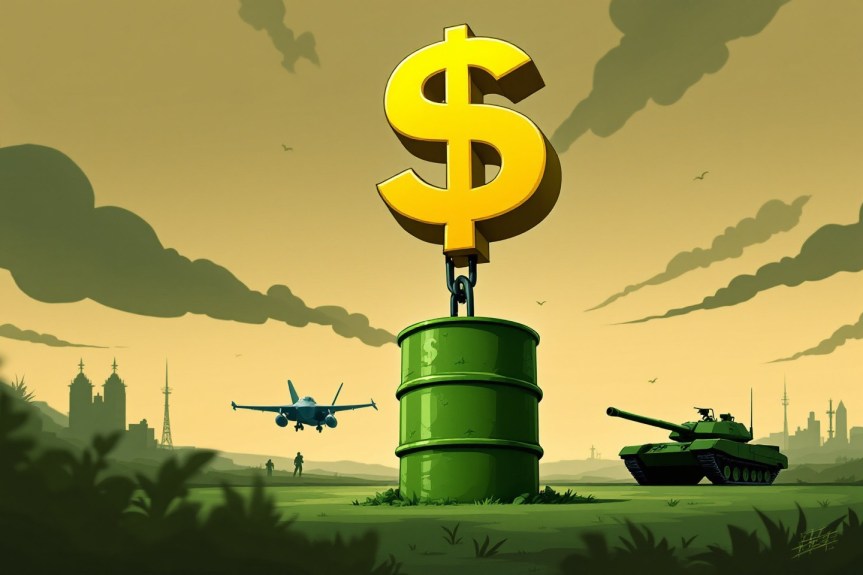
President Trump recently indicated the CIA would be operating inside Venezuela. It’s widely assumed that the U.S. government wants control of Venezuela’s oil and other resources and is contriving to remove a government heading towards socialism.

Venezuela’s government is training militia troops by the millions. Venezuelan defense minister Vladimir Padrino López announced on October 21 that Venezuela’s’ military will cooperate with Colombian counterparts to fight narcotrafficking. Relations between the two nations are quickly improving.

They had deteriorated after Colombia’s government backed accusations that Venezuela’s 2024 presidential elections were fraudulent. But on August 10, Colombian President Gustavo Petro stated on social media that, “Colombia and Venezuela are the same people, the same flag, the same history. Any military operation that does not have the approval of our sister countries is an act of aggression against Latin America and the Caribbean.” Petro recently announced the Colombian military will be sharing military intelligence with Venezuela.

U.S. vilification extends to Petro who, speaking at the United Nations General Assembly on September 23, condemned U.S. support of Israel’s war on Gaza and U.S. imperialism generally. He railed against the U.S. at a rally outside the UN Headquarters. In response, the U.S. government revoked his visa.  Petro had previously refused to accept Colombian deportees sent handcuffed from the United States in a military plane.

International solidarity

On October 18, Petro accused the United States of killing a Colombian fisherman and violating Colombian sovereignty. Responding, President Trump called Petro “an illegal drug dealer … [who] does nothing to stop” drug production. He imposed import tariffs and suspended subsidies granted Colombia for drug-war activities. Petro recalled Colombia’s ambassador in Washington.

Colombia may be on Venezuela’s side, but that’s not clear with other countries in the region. Colombia, president pro tempore of the CELAC group of nations, arranged for a virtual meeting of CELAC foreign ministers to reach a common position. In 2014, the Community of Latin American and Caribbean States – CELAC –had declared the entire region to be a “zone of peace.”  

At the meeting taking place on September 1, representatives of the 23 CELAC nations present (out of 33) considered a general statement that filed to mention the U.S. -Venezuela confrontation. It expressed support for “principles such as: the abolition of the threat or use of force, the peaceful resolution of disputes, the promotion of dialogue and multilateralism, and unrestricted respect for sovereignty and territorial integrity.”

Most of the countries voting approved, but Argentina, Ecuador, Paraguay, Perú, Costa Rica, El Salvador, Guyana, Jamaica, and Trinidad and Tobago did not.

Member nations of the Bolivarian Alliance for the Peoples of Our America–Peoples’ Trade Treaty (ALBA-TCP) did condemn US military action in the Caribbean. The CARICOM group of Caribbean nations, meeting in late October, expressed support “for the sovereignty and territorial integrity of countries in the region,” again without reference to  the United States and Venezuela. Trinidad and Tobago was an outlier: Prime Minister Kamla Persad-Bissessar insisted that, “I have no sympathy for traffickers; the US military should kill them all violently.”

Regional presidents spoke out against U.S. intervention, specifically: Mexican president Claudia Sheinbaum; Honduras’s president  Xiomara Castro, Daniel Ortega, co-president of Nicaragua, and Brazilian president Luiz Inácio Lula da Silva.

Brazilian workers, especially those associated with Brazil’s Landless Workers’ Movement (MST) are taking matters into their own hands. Their leader João Pedro Stédile was interviewed October 16 on Rádio Brasil de Fato. (The interview is accessible here.)  He points out that:

“The United States has been threatening Venezuela for quite some time. The process was accelerated by the Trump administration, a mixture of madness and fascism. He thinks that, with brute force, he can overthrow the Maduro government and hand it over to María Corina [Machado] on a silver platter. Part of this tactic was awarding her the Nobel Prize …The United States is making a tragic mistake because it is basing its actions solely on information from the far right….

“Never before has the Maduro government had so much popular support … It is time for Lula’s government to take more decisive action and show more active solidarity with Venezuela.

“If the United States is exerting all this military pressure to try to recover Venezuela’s oil, and … [if] María Corina … comes to power after the invasion, her first act will be to privatize PDVSA [Petróleos de Venezuela] and hand over other Venezuelan resources—I imagine iron, aluminum, gold, which they have a lot of—to American companies for exploitation. …

“At this event I attended in Venezuela, the World Congress in Defense of Mother Earth, … we agreed … to organize, as soon as possible, internationalist brigades of activists from each of our countries to go to Venezuela and place ourselves at the disposal of the Venezuelan government and people.

“We want to repeat that historic epic that the global left achieved during the Spanish Civil War of 1936, when thousands of militants from around the world went to Spain to defend the Republic and the Spanish people.”

The MST webpage testifies to the class consciousness and anti-imperialism inspiring MST solidarity with the Venezuelans:

“Brazil’s Landless Worker’s Movement was born from the concrete, isolated struggles for land that rural workers were developing in southern Brazil at the end of the 1970’s. … Brazilian capitalism was not able to alleviate the existing contradictions that blocked progress in the countryside … Little by little, the MST began to understand that winning land was important, but not enough. They also need access to credit, housing, technical assistance, schools, healthcare and other needs that a landless family must have met…. the MST discovered that the struggle was not just against the Brazilian latifundio (big landowners), but also against the neoliberal economic model.”

The MST “is the largest social movement in Latin America with an estimated 1.5 million landless members organized in 23 out 27 states.”

Stédile himself articulates a rationale for calling the U.S. government to account. In a recent New Year’s greeting, he noted that, The world and Brazil are experiencing serious crises, such as the structural crisis of capitalism, the environmental crisis and the crisis of the bankruptcy of states that are unable to solve the problems of the majority … A good 2024 to all Brazilian people!”

His recent interview with Monthly Review is revealing:

“The MST has drawn on two key concepts from the historical experience of the working class in general and campesinos in particular: mass struggle and solidarity.

“Our strength does not come from our arguments or ideas; it comes from the number of people we can mobilize … I believe there has been a process of integration and mutual learning among Venezuelans, Brazilians, and Latin Americans in general. … The MST … has promoted brigades in various countries … and a permanent brigade here in Venezuela.”


W.T. Whitney, Jr., is a political journalist whose focus is on Latin America, health care, and anti-racism. A Cuba solidarity activist, he formerly worked as a pediatrician and lives in rural Maine.

US Intervenes as Indigenous Guatemalans Back President-elect Arévalo / By W. T. Whitney Jr.

Image: Los Angeles Times

South Paris, Maine


Bernardo Arévalo’s victory in first round of presidential voting on June 25 surprised Guatemalans, as did the emergence of his Seed (Semilla) political party. Roadblocks engineered by established political forces threatened his candidacy in the second round of voting, on August 20, and now may keep him from taking office, on January 14, 2024.  

Arévalo and the Seed Party seek to remove corruption from Guatemalan politics. They and others oppose “the Pact of the Corrupt,” individuals with criminal associations that for decades, they say, have occupied all levels of government, national and local. They are, “former military people …sophisticated businessmen, judicial functionaries, legislators, mayors, communications people, bankers, and liberal professionals, the facilitators of business deals worth millions.”

From shortly after Arévalo’s first-round victory until now, their operatives in the government of outgoing President Alejandro Giamattei have alleged voter fraud. The attorney general, a couple of prosecutors, and a few judges of the Supreme Court of Justice and Constitutional Court have forced the Supreme Electoral Tribunal to take measures that would prevent Arévalo from becoming president.

It decreed that ballot boxes be seized and the Seed Party no longer qualify as a political party. It voided the election of congressional deputies.  President Giamattei has rejected widespread demands that Attorney General Consuelo Porras, the offending prosecutors, and a couple of judges be dismissed.

Another surprise was on the way. A national strike of indigenous peoples erupted on October 2. For one commentator, this represented “the discovery of a forgotten and marginalized country, that didn’t exist in the national imagination … [and].came from the provinces, where the Seed Party, with its basically urban and middle-class origins, did not exist.”

Sit-ins and blockades of highways spread nationwide, peaking at 130 or more. Up to 60% of Guatemala’s commerce halted. Schools, colleges, and some local government offices closed. The demands were: no more corruption, remove Attorney General Porras, and Arévalo will become president on January 14.

Indigenous leaders referred to as the “48 Cantons of Totonicapán” had called the strike. They and indigenous officials nationwide were in charge.  Guatemala’s European-descended leadership class had bestowed administrative authority on the “48 Cantons” in the 19th century. Now, somehow, they seem to set the course for indigenous authorities in municipalities nationwide. 

News reports cite the “Ancestral Indigenous Authorities” as representing indigenous participation in Guatemalan politics. The Accord on the Identity and Rights of Indigenous Peoples, formulated in 1995, had enabled such.  It was part of the Peace Agreement that ended decades of armed conflict during which some 200,000 people died, most of them indigenous.

Partisans of the current strike staged a rally in Guatemala City on October 20 to mark the 79th anniversary of Guatemala’s “October Revolution.” On that day in 1944, a three-person “revolutionary junta” replaced the long dictatorship of Jorge Ubico.  Voters in 1945 elected Juan José Arévalo, father of Bernardo, as president and Guatemala experienced its so-called “Democratic Spring,” which ended in 1954 thanks to a CIA-instigated coup.

Bernardo Arévalo spoke at the rally on October 20:

“The ancestral authorities have opened the way to students, community leaders, professionals, unions, … business leaders. … Look around. We are located in the center of citizens’ life in the country. The legacy of the October Revolution of 1944 is before our eyes. The Guatemalan Institute of Social Security is an instrument of solidarity… and source of tranquility for many families … [and the] Bank of Guatemala guarantees economic stability and supports … an economy whose benefits extend to everyone.”

In Guatemala, however, the poverty rate was 59% in 2020, 80% in rural areas; half of the population have limited access to food. That the average adult income in 2022 was $13,412 testifies to a well-resourced sector of the population. Indeed, 10% of Guatemalans owned 61.7% of the nation’s wealth in 2021.

Journalist Víctor Ferrigno points out the limited ambitions of the national strike: its indigenous leaders claim not to represent a political party but merely to be defending democracy and opposing corruption. Analyst  Ollantay Itzamná adds that Guatemala’s government will emerge unscathed and will “certainly continue being racist and lethal for indigenous peoples.”

He argues elsewhere that the Seed Party, attentive mostly to the urban middle class, is responding to concerns that the government, a big source of employment, might disintegrate because of corruption, racist though it may be.

The U.S. government backs Arévalo, the Seed Party, and the campaign against political corruption. Itzamná points out that USAID finances projects of the 48 Cantons and of NGOs siding with the Seed Party.  Indigenous leadership groups in Guatemala have gained U.S. trust, he indicates, by not “questioning the racist nature of the state or disputing the power of the rich.”

The U.S. government, he explains, is willing to “try out a progressive government in Guatemala as long as it is obedient to U.S. interests.” That government now gains U.S. favor by accepting an indigenous mobilization that serves to “hide the emergence of the pluri-national, anti-neoliberal, or anti-imperialist social subjects that do exist in Guatemala.” Radical indigenous movements, such as the ones active in Peru and especially Bolivia, are to be squelched.  

One would be Committee of Campesino Development (CODECA), formed in 1992 as a “class-based organization” defending farm workers. CODECA announced its own national strike to begin on September 19. Demands were those of the current strike with the addition of a “people’s and pluri-national constituent assembly.”

Calling for a constituent assembly and basic change, Thelma Cabrera, presidential candidate of CODECA’s political party,The Movement for Liberation of the Peoples, won 456,114 votes, or fourth place, in the 2019 elections.   She was ranking in fourth place in 2023, according to opinion polls, when the Supreme Electoral Tribunal rejected her candidacy.

In an interview on February 19, 2023, Mauro Vay Gonón, the CODECA founder, recalled that “state terrorism, mainly at the hands of Guatemala’s military, had cost the lives of 25 CODECA activists.”  Tereso Cárcamo, killed on December 5, 2022, had taken part “in different peasant struggles such as the Popular and Pluri-national Constituent Assembly process.”

Vay Gonón, a guerrilla insurgent during the armed conflict, lamented that, “The entire Peace Agreement” [of 1996] is for nothing. They are walking all over it. This is a sad truth for the Guatemalans, because we sincerely don’t want to go back to a war.”


W.T. Whitney Jr. is a political journalist whose focus is on Latin America, health care, and anti-racism. A Cuba solidarity activist, he formerly worked as a pediatrician, lives in rural Maine. W.T. Whitney Jr. es un periodista político cuyo enfoque está en América Latina, la atención médica y el antirracismo. Activista solidario con Cuba, anteriormente trabajó como pediatra, vive en la zona rural de Maine.

A Plea for Simón Trinidad / By W. T. Whitney Jr.

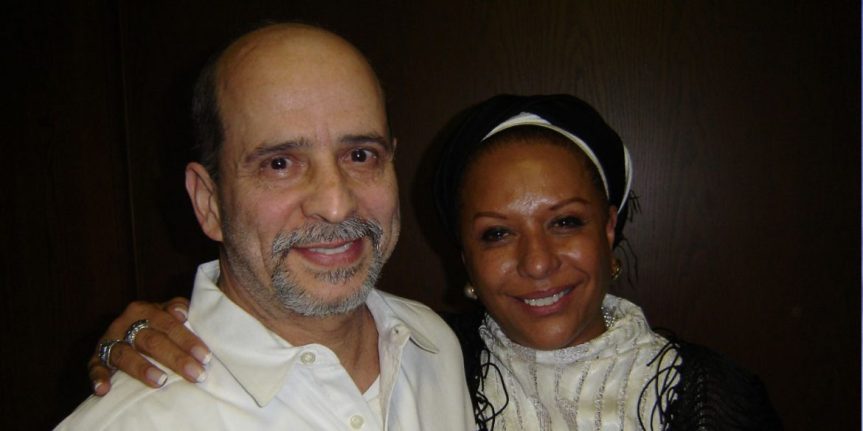
“Simon Trinidad” and Piedad Cordoba (Image: Piedad Cordoba)

South Paris, Maine


The title recalls the title of Henry David Thoreau’s essay “A Plea for Captain John Brown.” Trinidad, like John Brown, is remarkable for his implacable resolve and regard for justice.

Trinidad was 58 years of age when a U.S. court in 2008 sentenced him to 60 years in prison. His alleged crime was that of conspiracy to hold hostage three U.S. drug-war contractors operating in Colombia. In effect, he is serving a life sentence. He had nothing to do with the hostage-taking.

The contractors, captured in 2003, went free in 2008. U.S. drug war in Colombia has obscured the big U.S. role in Colombia’s war against leftist insurgents, primarily the Revolutionary Armed Forces of Colombia (FARC).

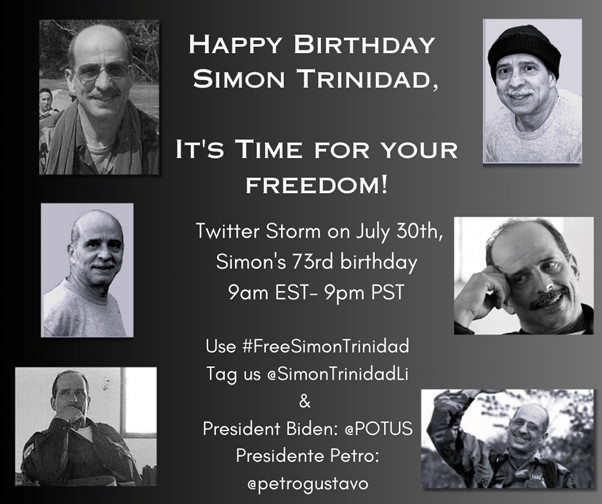
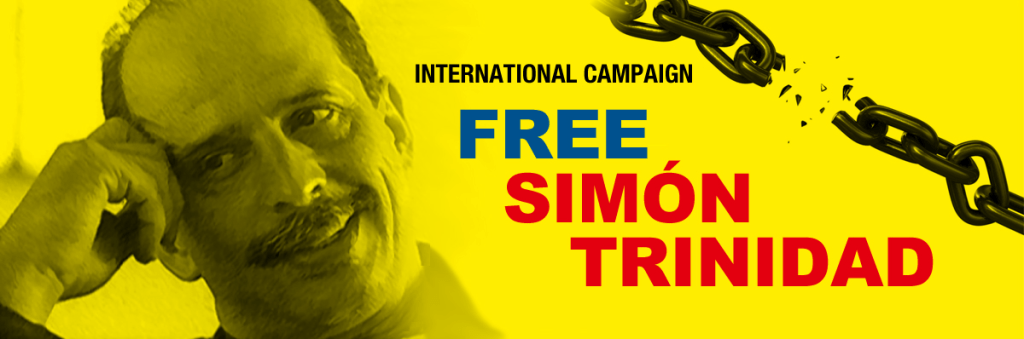
Simon Trinidad

Simón Trinidad was a FARC leader. The FARC and Colombia’s government signed a peace agreement in 2016 and Trinidad and other ex-combatants expected to be part of a peace process. Now he is a prisoner in a super-max prison in the United States and is confined to his cell for all but two hours per day, receives no mail, and is allowed very few visitors.

On July 27, Simón Trinidad unexpectedly was a featured item in the news in Colombia. An undated letter he had written to Colombian chancellor Álvaro Leyva requesting repatriation to Colombia had appeared on social media. News reports were reproducing it.

Observers associated Trinidad’s letter with the U.S. government’s announcement the day before that the bloodthirsty former paramilitary chieftain Salvatore Mancuso, also jailed in the United States, soon would be extradited to Colombia. President Gustavo Petro designated Mancuso as a “promotor of peace.”

Trinidad, not so favored as this, in his letter wrote of his determination to testify before the Special Jurisdiction for Peace, as other former FARC combatants have done, and Mancuso too, virtually. This court, established under the Peace Agreement of 2016, offers former combatants an opportunity to tell the truth about crimes they may have committed during the civil war and, having done so, to be pardoned or punished.

Trinidad apparently hopes not only that that Chancellor Leyva will inform the U.S. Secretary of State of his request to be repatriated but also that his message will be passed on to President Biden, who has the power to release him from prison.

Progressive Colombian Senator Iván Cepeda, “one of the people who speaks of peace on behalf of President Gustavo Petro,” welcomed “Simón Trinidad’s proposal [and] sent it directly to Chancellor Álvaro Leyva.”

Trinidad had joined the left-leaning Patriotic Union (UP) electoral coalition after it formed in 1985. A year later, paramilitaries began their massacre of UP adherents that, with impunity from Colombia’s government, lasted for years. In response, Trinidad in 1987 joined the FARC and, in the process, dropped his name Ricardo Palmera Pineda. For the FARC, Trinidad was responsible for political education and propaganda and was a negotiator.

The U.S. government in 2000 introduced its “Plan Colombia” through which Colombia’s military secured U.S. weapons and training assistance; U.S. troops and military contractors were deployed in Colombia. The appearance of Plan Colombia doomed peace negotiations between the FARC and Colombia’s government that were in progress at the time.

As a lead FARC negotiator in those talks, Simón Trinidad became known to international observers. His course with the FARC ended abruptly on January 2, 2004, when Colombian military personnel and the CIA seized him in Quito. Trinidad was there seeking UN assistance for a proposed prisoner exchange.

Colombia’s government extradited Trinidad to the United States on New Year’s Eve, 2004. According to his U.S. lawyer Mark Burton, Trinidad’s U.S. captors regarded him as a “trophy prisoner.”

Trinidad’s U.S. handlers had to stage four trials for them to finally gain a conviction. His capture and his multiple appearances in U.S. courtrooms from 2005 to 2008 served as real-time advertising that testified to U.S. commitment to anti-insurgency war and drug war in Colombia.

Trinidad’s misfortune was to have fallen into the clutches of a nation whose record on prisoners is horrific. After all, “The United States stands alone as the only nation that sentences people to life without parole for crimes committed before turning 18.” (No wonder: of 196 countries, only the United States has yet to ratify the UN’s Convention on the Rights of the Child.)

As a U.S. political prisoner, Simón Trinidad harks back to the Scottsboro Boys, who in Alabama faced death penalties in the 1930s; to Communist Party members jailed under the Smith Act; to Black Panther Party members caught up in the U.S. government’s COINTELPRO project. Simón Trinidad is also representative of prisoners gathered up in U.S. wars and other interventions abroad. They include: Ricardo Flores Magón, Mexican revolutionary who died in Leavenworth Federal Prison in 1922; the “Cuban Five” prisoners who resisted U.S. hostilities against Cuba; and the unfortunates ending up in the U.S. prison in Guantanamo during and after the Iraq War.

Despite the Peace Agreement, paramilitaries or other thugs have since killed almost 400 former FARC fighters; 300 FARC prisoners of war are still in prison almost seven years later.

Violence in the countryside persists. Colombia’s military is unable or unwilling to suppress a new breed of paramilitaries. One report highlights the paramilitaries’ “symbiotic relationship with Colombian state actors.” Declassified State Department and CIA documents from George Washington University’s National Security Archives say the same. The plot thickens: the tight relationship between the U.S. and Colombian militaries and the U.S. alliance with Colombia’s government together suggest U.S. complicity with a violence that Colombia’s Army and state are unable or unwilling to control.

The bad news for Simón Trinidad is that the U.S. government is betting not on peace in Colombia, but on continuing war. For that reason, Simón Trinidad confronts formidable barriers in satisfying his need to join Colombia’s peace process. Mark Burton’s words end this report: “Simón Trinidad is a man with a clear vision for a new Colombia, a Colombia in peace and with social justice. Colombia needs to listen to his voice, his vision, his proposals for peace. His continued imprisonment in the United States on false charges is an insult to Colombia, its history, and its people.”

Burton’s comments appear in a remarkable new eBook, accessible here. It contains commentary, in Spanish, from activists, writers, and intellectuals seeking Trinidad’s repatriation. The announcement of this book offers a video presentation, here, of reflections and documentary material.


W.T. Whitney Jr. is a political journalist whose focus is on Latin America, health care, and anti-racism. A Cuba solidarity activist, he formerly worked as a pediatrician, lives in rural Maine. W.T. Whitney Jr. es un periodista político cuyo enfoque está en América Latina, la atención médica y el antirracismo. Activista solidario con Cuba, anteriormente trabajó como pediatra, vive en la zona rural de Maine.

Fighting for Land and Independence in Jujuy, Argentina / By W. T. Whitney Jr.

South Paris, Maine, June 27, 2023


In Jujuy province, in Argentina’s extreme Northeast, poor people’s discontent, the provincial government’s overreach, and popular resistance recently contributed to a crisis that portends grief and struggle ahead.  Setting the stage were: free rein for local reactionaries, indigenous peoples’ oppression, foreign plundering of natural resources, and a U.S. eye over the whole affair.

June was a month of turmoil.  Governor Gerardo Morales had proposed reforming the province’s Constitution. Teachers’ unions were agitating for higher salaries.

Discussion for 50 days that should have preceded the Constitutional Convention never happened. The Convention, presided over by Morales himself, played out over three weeks.  He had timed the electing of delegates to coincide with provincial government elections and thereby assure enough voter turnout to elect delegates who backed constitutional reform.

The proposed changes included new provisions for criminalizing public protests and new restrictions on “freedom of expression, petition, and association.” There would be revised legal mechanisms for regulating access to land, this so as to deliver land to lithium-producing multi-national companies. Indigenous peoples would face the probability that untitled plots of land crucial to their survival, for generations, would no longer be available. Jujuy province is the center of lithium extraction in Argentina, the world’s fourth largest lithium producer.  

Elected in 2015, Morales cut back governmental support for education, and teachers lost jobs. Teacher salaries in Jujuy are the lowest in Argentina. Teachers’ unions in nearby Salta province had recently carried out strikes and won pay increases.

On June 5, a Jujuy teachers’ union struck for better pay. On June 9, several teachers’ unions and the municipal employee union marched on Jujuy city, population 375,000. Soon healthcare workers and a miners’ union would join the mobilization. Morales decreed “increased penalties against individuals and organizations participating in any protests or social mobilization.” 

On June 14 indigenous people marched on the city “to demonstrate their rejection of the [constitutional] reforms … being devised behind closed doors.”  City streets were teeming with protesters on June 15 when word came that agreement was near on constitutional reforms. Soon indigenous groups and others were maintaining roadblocks on highways throughout the province. Police, assisted by unidentifiable enforcers using unmarked vehicles, stepped up arrests of demonstrators and journalists.  Calls went out for Morales’s resignation.

The Constitutional Convention on June 20 approved alterations of 66 of the provincial Constitution’s 212 articles. Street pressure had caused two reforms involving indigenous rights and access to land to be withdrawn temporarily.  Restrictions on protesting and free expression remained. The Constitution now provides for “automatic majority in the legislature for the governing party” and no longer requires that provincial elections be held every two years.

Massed demonstrators responded by assaulting the Government House with projectiles. Police turned them back using tear gas, rubber bullets and arrests.

The provincial government’s repressive methods elicited criticism from elsewhere in Argentina and from the Inter -American Commission on Human Rights, Amnesty International, and the United Nations High Commissioner for Human Rights. 

Governor Morales exceeds boundaries. Early in his first term, for example, he enlarged the top provincial court from five to nine judges. Consequently, provincial courts have endorsed illegal searches, illegal evictions, and persecution of social leaders. By 2018, 25 family members were serving as provincial government officeholders.

One presumes that the governor’s evident lack of restraint is bad news farther afield. He leads Argentina’s rightwing Radical Civic Union party and now is a vice-presidential candidate on one of two tickets aiming to represent the rightwing Unite for Change electoral coalition in upcoming elections.

It’s clear: he stops at nothing. Morales’s government in 2016 arrested Milagro Sala, leader of the Tupac Amaru Organization that at the time was assisting indigenous families as they looked for food, housing, basic education and more. The government was interfering and the Organization resisted. The police arrested Sala on flimsy pretexts and seven years later she is still detained.

Continuing his efforts to waylay indigenous independence, Gerado Morales took part in the November 2019 coup that deposed Bolivian President Evo Morales. That Morales was an indigenous president of a multi-national republic. Governor Morales was instrumental in arranging for U.S. assistance.

Around September 4, 2019, Gerardo Morales supposedly joined a meeting in Jujuy held to organize the coup against Evo Morales. Present was Luis Camacho who, based in Santa Cruz in Bolivia, was leading the coup in progress. Later on, Governor Morales himself traveled to Santa Cruz to confer with plotters. 

On that September 4, Ivanka Trump and State Department, CIA, and USAID personnel arrived in Jujuy ostensibly to support local women’s initiatives. Trump had brought $400 million.  A Hercules C 130 aircraft was deployed on the runway close to the recently arrived U.S. plane.  Almost at once that plane departed for Santa Cruz, without a flight plan. Camacho was on board. 

He may have been conveying the U.S. funds that would be used to bribe the senior Bolivian Army officers who pressured Evo Morales to resign. Later on, Gerardo Morales surely was not blind to that same airplane carrying weapons to plotters in Santa Cruz.

The governor’s zeal in serving U.S. interests shows up now as he cultivates U.S. official representatives for the sake of U.S. investment in the extraction and processing of lithium. He met with U.S. ambassador Marc Stanley in May 2022, and later Stanley was in Jujuy as Morales acquainted him with “a portfolio of projects in development.” Stanley and his family attended an indigenous festival.

Together with governors of other lithium-producing provinces, Morales in 2022 visited European countries and the United States. There he met with Washington officials, bankers, and industrial leaders, among them Elon Musk, owner of Tesla Corporation.

Morales’s friendship with Argentinian-government economic minister Sergio Massa is surprising – President Alberto Fernandez’s government is on the other side of the political divide – but understandable:  Massa is  a favorite in U.S. official circles, a lead promotor of foreign investment in Argentina’s natural resources, and a likely presidential candidate in elections later this year.

The story here centers on Morales’s doings as an individual. But people respond to circumstances collectively and engage collectively in social change. Morales is representative, it seems, of that class of well-paid intermediaries who have long arranged for the transfer of wealth from wherever to a waiting set of plunderers.

The history of the Americas has them freeing up land so as to get at wealth that is there. They must dispose of the set of people living on the land. Military force is made available. Morales becomes an updated conquistador.

Writing for the Argentinian Club of Journalist Friends of Cuba (capac-web.org), Alberto Mas provides specifics. In a report entitled “Jujuy is the North American Laboratory for Argentina,” he states that, “The visit of General Laura Richardson of the U.S. Southern Command [on April 17, 2023] did not in the least hide intentions of controlling the production and exportation of Argentina’s lithium. This is part of a strategic plan for the region which they have implemented over the course of time: the coup against Evo Morales in Bolivia had the smell of lithium.”


W.T. Whitney Jr. is a political journalist whose focus is on Latin America, health care, and anti-racism. A Cuba solidarity activist, he formerly worked as a pediatrician, lives in rural Maine. W.T. Whitney Jr. es un periodista político cuyo enfoque está en América Latina, la atención médica y el antirracismo. Activista solidario con Cuba, anteriormente trabajó como pediatra, vive en la zona rural de Maine.


Birthday Celebration – “Fidel is a country, is this people.” / by W. T. Whitney Jr.

Credit: rebelión.org

Many people here in Maine have traveled to Cuba. Together with our Cuba solidarity group Let Cuba Live, some of them celebrate on August 13. That’s today; it’s the 96th anniversary of Fidel Castro’s birth. But we hear you saying: “isn’t a social revolution supposed be to something collective and not a cult of personality?”

True, we would reply, revolutions do need masses of people who, amid hardship and oppression, have visions of decent lives and can come together. But revolutions are not spontaneous. There is a place for leaders, someone like Fidel Castro. Just as with Jose Martí, Cuba’s great leader in an earlier era, Fidel Castro communicated goals and hope and offered strategic insight and plans. So it’s OK.

Some reflections on this anniversary date make the point. In her article appearing August 13 on cubadebate.orgDaily Sánchez Lemus claims that, “Fidel is a country, is this people, who see in him the architect of their highest dreams.” She asks, “How can we explain what it meant [for him] to be close to the humblest people, to feel them, interpret them and share the same fate?”.

She cites a long letter Fidel wrote on July 21, 1957 to Frank País, his martyred young comrade based in Santiago de Cuba in the early days of the Revolution. She states that Castro’s “concept of people” is displayed there. At that time Castro and his band of guerrilla insurgents, were fighting in the Sierra Maestro mountains. Castro writes:

“Now I do know what a people is: I see it in that invincible force that surrounds us everywhere. I see it in those caravans of thirty and forty men, with torches for light, going down muddy slopes, at two and three in the morning, with seventy pounds of weight on their shoulders, bringing supplies for us.

Where did they come from? Who organized them so marvelously? Where did they get so much skill, so much cunning, so much courage, so much self-sacrifice? Nobody knows! … They organize themselves, spontaneously! When the animals get tired and lie down on the ground, unable to keep on, men appear everywhere and bring the stuff along. [Deadly] force can’t do anything against them. They would have to kill them all, down to the last peasant, and that’s impossible. No tyranny can do that and the people realize it, and are more and more aware of their immense strength.”

From Spain’s Basque region, Paco Azanza Telletxikiwrote in 2008 about Fidel Castro’s decision then not to seek Cuba’s presidency. He cites Haydée Santamaría’s remarks spoken at the University of Havana in 1967. That hero of Cuba’s Revolution declared that, “for me, being a communist is not being a member of a party: for me, being a communist is having an attitude towards life. Fidel is a communist with an attitude; he is more than a Party member. Fidel is the unequivocable communist who is so scarce today and who is needed to bring to fruition the just causes of the whole world.

She adds that, “In the 80’s Fidel commented that if one day the USSR disappeared and Cuba was alone, Cuba would still be socialist. Then came 1991, and the Soviet Union collapsed. When that happened, many “friends” of Cuba disappeared. In this new and complicated situation, the color red was fading. The reds of some countries faded little by little; others, devoid of shame, did so quickly. …Fidel and his Revolution continued walking along the same ideological path as always, flying the same flag.”

Mumia Abu-Jamal, a political prisoner serving a life sentence in a Pennsylvania jail, in 2008 also weighed in on Fidel Castro’s withdrawal from political life.  In his commentsMumia Abu-Jamal points out that:

“Fidel’s nearly 50 years as Cuba’s head of state have had a far-reaching impact not only in Cuba, but in Latin America, and beyond. … Latin America, in large part due to Cuba’s strong and tenacious example, has distanced itself from the draconian governments of U.S.-supported generals and is opting for democratic governments and populist leftists.

“In the field of education, Cuba’s achievements have been exemplary. In Central and South America, the average literacy rate is 86.4 percent. Cuba’s average literacy rate is 98 percent …

“Under its socialist system, education in Cuba is free. Indeed, Cuba is the school of choice for thousands of students from all over the world, especially in higher education and medicine. …  In fact, in 1961 more than one million Cubans (mostly from rural areas of the nation) were illiterate. More than 100,000 children over the age of 10 voluntarily participated in “literacy brigades” and spread throughout the country to teach the poor and peasants to read and write …

“In foreign affairs, Cuba brought its considerable military power to the fore in the struggle against South Africa’s racist apartheid system. Cuba, supporting the Angolan armed forces, …caus[ed] such losses to the South African army that it ushered in a long road of negotiations, compromise, and [eventually] the dissolution of apartheid.”

Lastly, Patricio Montecinos offers reflections that appear today on rebelion.org

These days Cubans are paying special tributer to the historical leader of their Revolution, Fidel Castro. They speak of him with a mixture of admiration, respect, and longing, but for them, he is always present, even now when, physically, he is gone.

For millions of admirers on the island, Fidel – the Commander in Chief, as they always will always call him – lives on, inside all of them.  He is there in every part of the Island where he used to show up to plant ideas and hopes, and listen to his people.

Most Cubans have an anecdote they tell of their maximum leader and guide, and now on his 96th birthday celebration, this August 13, they are proud to have him with them in their various activities. Many say they still talk with Fidel, ask his advice and help with their personal decisions. Sometimes, one hears them saying this in tears, as if he were their closest and most beloved family member

He is the man the CIA tried to assassinate more that 600 times and that successive U.S. administrations tried to being down but couldn’t do so. He is present in every moment of happiness and victory for Cubans and there too in moments of adversity and sadness.

The leader of Cuba’s Revolution of January 1, 1959 is with his people always, and will be for generations, including people who never knew him.  For most young people and children, he is a guardian angel and the idol of the island that deserves the name “island of dignity.” 

Fidel is also remembered on every continent. He always extended hands of solidarity to the dispossessed peoples of this world, and never asked for anything in exchange. He taught his compatriots to continue on that path and always lend a hand to anyone who needs help.


W. T. Whitney Jr. is a political journalist whose focus is on Latin America, health care, and anti-racism. A Cuba solidarity activist, he formerly worked as a pediatrician, lives in rural Maine. W.T. Whitney Jr. es un periodista político cuyo enfoque está en América Latina, la atención médica y el antirracismo. Activista solidario con Cuba, anteriormente trabajó como pediatra, vive en la zona rural de Maine.