New Cuban Report Confirms US Blockade is War / By W.T. Whitney Jr.

South Paris, Maine


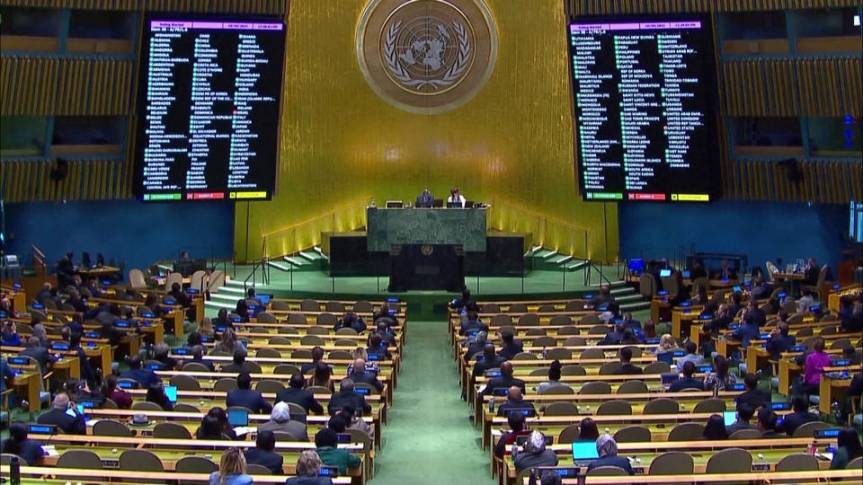
Cuba’s foreign ministry on September 17 released the nation’s annual report on adverse effects of the lengthy U.S. economic blockade of Cuba. It does so ahead of the yearly vote in the United Nations General Assembly on a Cuban resolution stating the “necessity of ending the economic, commercial and financial embargo imposed by the United States against Cuba.” Voting takes place on October 28-29.

For 32 years, member states have overwhelmingly approved Cuba’s resolution. At times recently, the U.S. and Israel have been alone inrejecting it.

The 55-page Report – accessible here – is remarkable for its detailed and far-ranging description of disarray and distress caused by the blockade. It exposes the cruelty and lawlessness of U.S. intrusion in the lives of a sovereign people.

This year’s version of the Report is convincing as to the urgency of opposing this U.S. policy. Showing that the blockade kills people, it casts the blockade as war. Struggle against the blockade might gain new strength with a new focus on the issue of peace over war.

The idea of the U.S. as war-maker is not new. Beginning with the Monroe Doctrine of 1823, the U.S. government has relied on military power as well as economic and political pressure to work its way in Latin America and the Caribbean area. Even now the U.S. wages war on Venezuela, Cuba’s close ally and fellow victim of U.S. economic sanctions.

A recent study adds precision to the notion of U.S. war against Cuba. The Lancet medical journal in August 2025 reported that economic sanctions imposed in 152 countries between 1971 and 2021 caused so many deaths annually as to exceed battle-related deaths and, often, to equal the annual toll of battlefield deaths plus civilian casualties.
This information removes any lingering surprise that the blockade might be lethal.

Awareness of that reality would be a big step toward recognition of the blockade as war against Cuba. The agenda here is to show the Report as backing these claims. The inquiry offers perspective as to Cuba’s place in the world system of wealth accumulation, conflict,
and oppression.

Big picture

The Report records damage affecting various sectors of Cuban society between March 2024 and February 2025. It surveys financial losses, shortages, and consequences. It shows that adverse effects themselves lead to far-ranging difficulties for individual Cubans and Cuban commercial and production entities.

Troubles stacked one upon another undermine strenuous efforts by Cuba’s government and people to encourage production and create living conditions that are sustaining and fulfilling. The Report is a story of institutions, production units, private enterprises, schools, healthcare entities, government agencies, and service organizations having to cope with frustrations and failed improvisations. A section appears on solidarity activities on Cuba’s behalf taking place in the United States and in the world.

The Report outlines two general categories of requirements under the blockade. Measures relating to Cuba’s finances make for low salaries, diminished flow of emittances, obstacles to investments from abroad, and inability to re-finance accumulated debt. Other measures block access to materials and commercial products. These include: food, hospital supplies, medicines, raw materials, new machinery, miscellaneous devices and tools, construction materials, replacement parts, fuel, chemicals, fertilizers, and more.

The categories overlap. According to the Report, “Dozens of banks suspended their operations with Cuba, including transfers for the purchase of food, medicines, fuel, materials, spare parts for the national power system, and other essential goods.”

The Report identifies the U.S. instruments that created regulations governing Cuba’s access to money and goods, among them:

  • Designation of Cuba as a state sponsor of terrorism, whereby Cuba
    loses access to international loans and payments due from abroad.
  • Lawsuits filed in US courts under Title III of the Helms-Burton Act.
    These seek damages from those foreign businesses making use of
    nationalized properties. The effect is to discourage future investments.
  • Hundreds of U.S. measures devised for weakening Cuba’s tourism
    industry, that until recently was the country’s leading source of income.
  • New sanctions aimed at foreign officials who enable Cuban doctors to
    work in their countries. They block income that formerly supported
    Cuba’s own healthcare system.
    +Threats and sanctions mounted against “shipping companies, carriers,
    insurers or reinsurers involved in supplying fuel to Cuba.”
  • The 1992 U.S. “Torricelli Law” that requires third-country enterprises
    affiliated with U.S. corporations to never sell goods to Cuba containing
    more than 10% U.S. components.
  • The legacy of 1996 Helms-Burton Act stipulating that the blockade
    would be altered or ended only by Congress and not by the U.S.
    president.

Money talks

The Report records monetary data relating to shortages. The term “damages” that crops up. It signifies a combination of costs, loss of income due to the blockade, and potential gains stymied by theblockade. Damages recorded for various sectors are:

Biotechnology – $129.3 million
Energy and mining – $496.1 million
Information and communication – $78 million
Industry (goods and services) – $5.1 billion
Construction – $161.9 million
Transportation – $353.0 million
Tourism – $2.5 billion
Education – $89.9 million
Sports – $4.1 million
Culture – $195.1 million
Healthcare – $288.8 million
Food supply and processing – $932.3 million
Agricultural production – $51.9million

Total damages during the period under study were $7.6 billion. That amount exceeds damages by 49%. The total since the blockade’s onset is $170.7 billion. With inflation, “quantifiable damages” over the years become $2.1 trillion. There are these additional realities:

* Cuba’s GDP was down 1.1% in 2024. “The economy …has recorded an 11 per cent downfall since 2018.”

* Exports of goods and services achieved 92.5% and 101.6%, respectively, of anticipated goals. Export income was $770 million less than expected. Domestic revenues were down $900 million from 2023.

* Food production was so reduced during the year that 100% of the food provided under the rationing system was imported food.

* The term “geographic relocation of trade” refers to trade displaced because of the blockade. That necessity leads to elevated transportation costs and inflated prices. Added costs are $1.2 billion.

* The year’s inflation rate of 24.9% stems from shortages of supplies, diminished access to hard currency, and state spending to finance its budget deficit.

* Overall spending on tourism was $2.5 billion in 2024; tourism was down 9.6%.

Sanctions as war

Presenting the Report to the press on September 17, Cuban chancellor Bruno Rodríguez observed that, “It is impossible to quantify the emotional damage, anguish, suffering, and deprivation that the blockade causes Cuban families. This has been the case for several generations, with more than 80% of Cubans on the island born after the blockade began.”
According to the Report, “The unprecedented tightening of the blockade in recent years has had a particular impact on the public health sector.

The tense situation created in our economy, the financial persecution of Cuba and the denial of access to the US market … have hampered the ability of our health system to obtain … supplies when needed and provide quality service to the population. This has, in turn, led to the deterioration of several health indicators, including those related to
mortality.”

Indeed, the “blockade imposed by the US government against Cuba is an act of genocide.”
Hospitals and doctors have trouble finding, or may not find, “first line medicines,” cancer drugs, specialized drugs, key surgical supplies, respiratory therapy equipment, imaging equipment, diagnostic agents and test kits, dialysis machines, anesthesia gear, endoscopy equipment, insulin pumps, pacemakers, defibrillators, and pediatric ventilators.

According to the Report, 94,729 people are on surgery waiting lists, including 4507 cancer patients and 9913 children. A benign treatment device for aortic stenosis is available elsewhere but not in Cuba for 158,800 unstable patients. Survival rates for childhood cancer have fallen.

In a recent interview, Paul Jonas, a physician associated with the University of Leiden and admirer of Cuban healthcare, stated that, “In recent years, the Cuban healthcare system has deteriorated significantly…. This leads to untreated illnesses, unnecessary suffering,
and sometimes even death … [T]he quality of nutrition in Cuba is currently very poor … there are also shortages of medicines and other medical supplies.”

Cuba’s infant mortality rate (IMR), the number of babies dying in their first year of life per 1,000 births, was 4.2 in 2014 and presently is 8.2. Cuban economist and demographer Juan Carlos Albizu-Campos, writing in 2023, notes that Cubans’ life expectancy registered a “decrease of 5.39 years” from 2012, also that the “decline … would not only have
continued, but would also have accelerated even if the [Covid-19] pandemic had not occurred.”

Food scarcity, mentioned in 2024 by Granma, the Cuban Communist Party’s newspaper, contributes to excess deaths. Blockade effects extend to food production. New machinery, livestock feed, credit, fuel, spare parts, fertilizer, veterinary supplies, and means of transportation are often lacking War characteristically disrupts societies and kills troops and/or civilians. Doing both, the U.S. blockade of Cuba is a weapon of war and manifestation of war.

What accounts for U.S. warmaking against Cuba? The U.S. has littlechoice. As chief honcho of the world capitalist order, the U.S. government must stick with capitalist rules. A big one requires that production always increase and expand. For that to happen, poorer and under-developed nations must cooperate and be subservient. Their job is to provide cheap labor and access to natural resources – and allow their wealth to be transferred to the centers. An outlier like Cuba is surely due for punishment.


W.T. Whitney, Jr., is a political journalist whose focus is on Latin America, health care, and anti-racism. A Cuba solidarity activist, he formerly worked as a pediatrician and lives in rural Maine.

Trump’s Cuba Memorandum provokes strong criticism amid new US aggressiveness abroad / By W. T. Whitney Jr.

Photo via Resumen Latinoamericano 

South Paris, Maine


The Trump administration on June 30 released its “National Security Presidential Memorandum 5” on U.S. plans for Cuba. Criticism from Cuba’s government and international commentators welled up, as if entirely new forms of anti-Cuba aggression were in the works. That may or may not be so. Actually, the recent Memorandum was a re-issue of the document put forth by the first Trump administration on June 16, 2017.

The eruption of an unusually forceful reaction to a Memorandum that says nothing new seems odd. It’s not. For one thing, the Memorandum creates an opening for U.S. government departments and agencies to fashion entirely new devices aimed at destroying Cuba’s economy. The 2017 Memorandum did exactly that, and what happened was disastrous.

And more: the international context of U.S. assaults on Cuba has drastically changed. U.S. foreign intervention now shows as war from the sky against Iran and as U.S. support and military hardware for genocide against Gazans. Is Cuba next in line for extreme measures?

Prescriptions

The Memorandum’s ostensible use is as a directive to heads of the various departments making up the U.S. government’s executive branch. It requires them to send President Trump reports on new tools they have devised for beating up on Cuba, and to do so within 30 days. They must “adjust the current Cuba regulations in order to ensure adherence, so
that unauthorized transactions with Cuba and impermissible travel to Cuba are effectively banned.”

The document attests to the authority already vested in the departments to take action against Cuba. It cites the 1996 Helms-Burton Law as having legitimized the U.S. purpose of regime change for Cuba.

The Memorandum sets forth various U.S. goals and various ways to implement them. These include promotion of free enterprise in Cuba, channeling funds to the Cuban people and not to their government, “restructuring certain travel arrangements and [US] travel,” and ending supposed human rights abuses in Cuba. This year’s Memorandum once more calls for depriving Cuba’s military and intelligence services of money derived from U.S. tourism.

This Memorandum, as with the other one, bans U.S. tourism to the island. All U.S. citizens traveling to Cuba for permitted reasons must keep records of their transactions in Cuba and for five years ensure that they are available for potential Treasury Department inspection.

The Memorandum directs U.S. officials to expand Cubans’ access to the Internet and to a “free press” and to oppose efforts at the United Nations and “other international forums” aimed at blocking U.S. policies on Cuba. Annually, the secretaries of the various departments of the executive branch must report to the president “regarding the engagement of the United States with Cuba to ensure that engagement is advancing the
interests of the United States.”

President Biden never disavowed Trump’s 2017 Memorandum. As a result, actions adverse to Cuba carried out under its authority remain in force.

Reaction

In discussion on July 2 with Randy Alonso Falcón, host of Cuban TV’s “Round Table” (Mesa Rotunda), Cuban Vice Foreign Minister Carlos Fernández de Cossío portrayed the recent Memorandum as a “political platform, a political document that is propagandistic, but also one that is a political declaration of U.S. intentions serving as a cover for actions it will take and others already in effect.”

As examples of the latter, he cited both sanctions applied to ships of third countries bringing fuel to Cuba and denial of access to the U.S. Visa Waiver program to those otherwise eligible citizens of 40 named countries who have visited Cuba. Now, potential travelers to Cuba often choose not to visit Cuba so as to preserve their eligibility. The intended result has been damage to Cuba’s tourism industry.

Cossio claimed that U.S. measures prompted by the recent Memorandum pose extra danger from “the hand of [Secretary of State] Marco Rubio … [and] of that clique that has made money and political careers out of hostility towards Cuba.” He laments harassment against individuals and businesses licensed to export goods to Cuba’s private sector, suggesting that the U.S. government seeks to harm Cuba’s private sector. He worries that some Cuban-Americans visiting in Cuba may be barred from returning to the United States.

The foreign ministry official pointed to a big change. Cubans have been “receiving privileged treatment on crossing the US border.” They are now vulnerable to “all [U.S.] anti-migrant actions including the alligator prison in Florida.”

International criticism of the recent Trump Memorandum erupted promptly and from many quarters, beginning in Cuba. Cuban president Miguel Díaz-Canel condemned the U.S. “purpose of inflicting the greatest possible damage and suffering.” National Assembly President Esteban Lazo, predicted their “vile purpose will fail in the face of Cubans’
unity and determination. “Cuba will defeat this new aggression,” pronounced Prime Minister Manuel Marrero Cruz.

The Bolivarian Alliance for the Peoples of Our America (ALBA) judged the Memorandum to be “aimed at forcefully hitting at all sectors of Cuban society.” Argentina’s International Committee for Peace, Justice, and Dignity for the Peoples declared its support for U.S. opponents of the Memorandum. Brazil’s Landless Workers Movement (MST) on July 3
initiated an international fundraising campaign to send essential medicines to Cuba.

Mexican President Claudia Scheinbaum on July 2 denounced the Memorandum, while declaring that “Mexico is the country that for decades voted against the blockade of Cuba and that will always be our position.” Mao Ning, spokesperson for China’s Ministry of Foreign Affairs on July 2 stated that, “We exhort the USA to immediately raise the blockade and sanctions against Cuba, and eliminate the U.S. list of state sponsors of terrorism.”

The most explosive and revealing reaction came from Rosa Miriam Elizalde, editor of Cubadebate.cu. She was echoing Vice Minister Cossio’s observation that “Perhaps U.S. officials imbued with this euphoria over a new U.S. foreign policy of imposing peace through force are demanding something similar with Cuba.”

Writing for Mexico’s La Jornada news service on July 5, Elizalde points to “[D]éjà vu: More than 20 years after the United States invaded Iraq under false pretexts, we are witnessing the same warmongering operetta in South Florida … During the spring of 2003, while the missiles were falling on Baghdad, the ultra-sector of Cuban emigration took to the streets of Miami with a disturbing slogan: ‘Iraq now; Cuba later’”.

She notes that, “[T]he Miami propaganda machine is once again waving the flag of armed intervention [in Cuba], while the U.S. and Israel are escalating their military offensive in Iran.” She highlights Congresswoman María Elvira Salazar’s remark that, “This is how tyrants are confronted, not only in Iran, but also satraps in Cuba, Venezuela and
Nicaragua. Peace through force. That’s the American way.”

Elizalde regards as ominous that “Trump invokes as an American military success the sad memory of the Hiroshima and Nagasaki bombs.” She describes a volatile situation in which “[i]mmigrants are hunted down like beasts, just like communists and Jews before World War II.”

She views the current political climate as recalling that of 2003, when the United States invaded Iraq: “The logic is the same: misinform, isolate, demonize, justify sanctions and, if conditions are right, authorize intervention in the “dark places of the planet.”


W.T. Whitney Jr. is a political journalist whose focus is on Latin America, health care, and anti-racism. A Cuba solidarity activist, he formerly worked as a pediatrician, and lives in rural Maine.

US imperialist war against Haiti / By W. T. Whitney Jr.

South Paris, Maine


The Trump administration on June 27 announced that Temporary Protected Status (TPS) applying to half a million Haitians living in the United States will end on September 2. That total includes 300,000 people who, having fled unrest and violence, gained TPS in June 2024 under the Biden administration; 200,000 other Haitians who entered following a terrible earthquake in 2010 received TPS during Obama’s presidency.

Haitians not voluntarily returning to their country or not qualifying for legal immigration status otherwise face deportation. A spokesperson for the Department of Homeland Security was reassuring: “The environmental situation in Haiti has improved enough that it is safe for Haitian citizens to return home.” That is not so.

A State Department travel advisory on Haiti in September 2024 tells U.S. citizens, “Do not travel to Haiti due to kidnapping, crime, civil unrest … Crimes involving firearms are common in Haiti …” Lawyer Aaron Reichlin-Melnick of the American Immigration Council insists that, “This is NOT a safe place to send people. It’s a death sentence.”

Desperation

In truth, chaos and devastation are going to speed the deaths of many Haitians. According to a recent report from the International Organization for Migration of the United Nations, “Nearly 1.3 million people have been forced to flee gang violence in Haiti and seek refuge elsewhere within the Caribbean country … This represents a 24 per cent increase from December 2024.”

The report adds that, “Behind these numbers are so many individual people whose suffering is immeasurable; children, mothers, the elderly, many of them forced to flee their homes multiple times.” The gangs, unified under the name Viv Ansanm, engage in stealing, killing, extorsion, and destruction.

For a decade and more, Haitians have repeatedly protested and mobilized in the streets against high prices and shortages. Business owners and the wealthy have funded the gangs in order to protect their properties and interests against popular mobilizations. The U.S. government turns a blind eye to weapons entering Haiti from the U.S. Analyst Seth Donnelly speaks of “Death squads … financed by members of Haiti’s upper class and heavily armed by major weapons flowing into Haiti from Florida.”

This account of Haitians in distress and of the U.S. government covering up the truth points to U.S. domination there that that differs from the targeting of Gaza and Iran. However, each of these situations as varied as they are, have characteristics defining them as imperialist interventions.

Important here is the connection between imperialism and capitalism. It looks like this: at a certain stage in history, imperialism came to represent a way for nations to be able to improve the capabilities of corporations to generate wealth. Therefore, fight against imperialism is fight against capitalism, because imperialism derives from capitalism. It follows that opposition to the excesses of U.S. imperialism in Haiti fits within customary anti-capitalist struggle. But one needs to appreciate the imperialist nature of U.S. interventions in Haiti. That’s the object of what follows here.

Rule from afar

President Jovenel Moïse, wealthy and a major embezzler of public funds, was assassinated for uncertain reasons by US -organized mercenaries in 2021. Subsequently, a governing body appointed by the so-called Core Group has supervised Haiti’s affairs. The Core Group represents key North American and European governments.

Garry Conille, Haiti’s de facto prime minister, in June 2024 welcomed to Haiti 400 Kenyan troops who were the first contingent of the UN-authorized and partially-U.S.-funded Multinational Security Support Mission. They would be fighting the gangs.  Full funding and the full complement of 2500 troops sent by participating nations have fallen short. Meanwhile, killings and internal displacement continue.

According to the New York Times, Eric Prince has recently sent weapons to Haiti and will soon dispatch 150 mercenary troops there. He has introduced drones that have killed at least 200 people. Prince was a big donor to President Trumps’s 2016 campaign and is by far the lead U.S. empresario of mercenary warfare. Who pays Prince is unspecified.

As if Haiti’s government is the prime actor in this drama, the Times report portrays that government as “turning to private military contractors equipped with high-powered weapons, helicopters and sophisticated surveillance and attack drones to take on the well-armed gangs.” Haiti’s government, in fact, is on leave – is AOL.

History with a logic

Nothing about this train of grief is by chance. Powerful forces – imperialists abroad and oligarchs within – remain determined, it seems, that a people-centered government will never take root in Haiti. Once, there had been an opportunity.

Cooperating with Canada and France, the U.S. government in 2004 backed the paramilitaries who removed President Jean-Bertram Aristide from power, along with his progressive Lavalas political party. Earlier in 1991, CIA-affiliated paramilitaries did likewise.

President Aristide’s overwhelming electoral victory in 1990 and Lavalas presidential candidate René Préval’s victory in 1995 represented the first and second democratic elections, respectively, in Haiti’s history. They were the last ones, so far. U.S. Secretary of State Hilary Clinton engineered Michel Martelly’s election as president in 2010. Jovenel Moïse’s election in 2016 was marked by electoral corruption.  No elections of any kind have taken place since that year.

Following the U.S. coup against Aristide in 2004, the U.S. government, United Nations officials and the Core Group (of imperialist countries) together installed, the “United Nations Stabilization Mission in Haiti” (MINUSTAH).  Under Core Group supervision, MINUSTAH imposed a military occupation from 2004 until 2017.  Reports abounded of destruction, dying, disease – particularly cholera – and sexual violence on the part of occupying troops. The Haitian people’s real needs went begging.  

Enslaved workers in what would become Haiti rebelled in 1791 and established national independence in 1804. Between then and 1991, when Aristide first became president, Haiti was under steady assault from foreign powers. The result was foreclosure on the country’s political and social development.

France pressured independent Haiti into providing reimbursement for French plantation owners’ loss of enslaved labor. Haiti borrowed money to pay. Vast debt obligations continued into the 20th century. The U.S. government refused for decades to trade with Haiti or recognize her independence. It carried out a brutal military occupation from 1915 until 1934 and fully backed the Duvalier dictatorship (1957-1986).

A flexible imperialism

U.S. oppression of Haiti takes place in ways other than the devices imperialists usually rely on. Intent upon accumulating wealth, they go abroad to capture natural resources like oil and try to control strategically placed geographic locations. U.S. imperialists, partnering with Israel, are pursuing both of these objectives in Palestine and Iran.

Haiti offers nothing to compare. Low-wage industry beckons but garment manufacturing, active in Haiti, is only a weak draw. However, Haiti presents other attractions for imperialists that are very much in line with goals of extending control and generating wealth.

Haiti’s achievement of national independence surely represented a great upset of colonial trade arrangements, and these had prepared the way toward capitalist industrialization. Early U.S. capitalists condemned happenings in Haiti. That attitude undoubtedly assured Haiti a place on the U.S. blacklist.  Maybe the stigma remains.  

Karl Marx explains that, “direct slavery is as much the pivot of bourgeois industry as are machinery, credit, etc. Without slavery you would have no cotton; without cotton you have no modern industry. It is slavery that gave the colonies their value, it is the colonies that created world trade, and world trade is the precondition for large-scale industry.”

One reason why U.S. imperialists make Haitians miserable is that, in doing so, they create a model image of massed people of color desperate to survive. That image, widely accepted, has possible use in projecting social precariousness as a constant in the underdeveloped world. The object would be to persuade northern exploiters that workers in such regions are so cowed as to accept poor working conditions and stay away from social revolution.

Additionally, the image of black people in great distress may be pleasing to the imperialists for its power of persuading non-Black victims of oppression living precarious lives to value what little remains of their self-regard and worldly possessions and to go it alone, and not join peoples of African heritage in common struggle. 

Lastly, old habits die slowly. The successful rebellion of enslaved people in Haiti stoked fear within U.S. political life and the wider community, both being under the sway of slave-owning interests. Fear persisted and Haiti’s image surely gained no favor during the Jim Crow era. And even now, crucially, racists and their ideas have their place within official Washington circles.


W.T. Whitney Jr. is a political journalist whose focus is on Latin America, health care, and anti-racism. A Cuba solidarity activist, he formerly worked as a pediatrician, and lives in rural Maine.

Pre-election turmoil in Bolivia ─ is US ready to pounce? / By W. T. Whitney Jr.

Evo Morales March, 2025. Photo: Evo Morales/X

South Paris, Maine


In advance of presidential elections on August 17,2025, Bolivia’s Supreme Electoral Council on April 17 registered 11 political parties and five electoral coalitions. It will soon announce the final list of presidential candidates. Incumbent President Luis Arce, elected in 2020, candidate for the Movement to Socialism Party (MAS) and former economics minister under President Evo Morales, (2006-2019) will head the list.

Longtime MAS leader Morales is a presidential candidate too. The new “Evo, the People” (Evo Pueblo) party held a three-day gathering in Chapare state, Morales’s home base, in late March; attendance topped 70,000.

Here we look at divisions in Bolivia and various social and political instabilities. Clearly, socialist beginnings in Bolivia are vulnerable, most Bolivians may be returning to lives of misery, and U.S. intervention is waiting in the wings.

Downhill course

Morales’s presidency achieved much. A new Constitution established the pluri-national state and gave political rights to indigenous peoples. By nationalizing oil and gas production, the government gained funding for expanded education, healthcare, and support for mothers, children, and the elderly. The GDP tripled, poverty fell, wealth inequalities diminished, and international currency reserves accumulated. Morales became symbol and spokesperson for environmental sustainability.

Then came troubles. They’ve worsened amid political divisions and destabilization episodes. The selling price for exported natural gas fell. Deposits turned out to be limited. (However, discovery of a huge natural gas field was announced in July, 2024.) Funding for social programs and for imports of gasoline, diesel fuel, and food went downhill.  

Government agencies borrowed from the central bank to maintain programs and access to supplies. The bank drew upon the nation’s currency reserves, which have almost disappeared. Dollars, in demand to pay for everyday items, are scarce. Inflation, shortages, and discontent continue. 

Old political divisions took on new life. Having accused U.S. ambassador Philip Goldberg of conspiring with the opposition, Morales expelled him in 2008, along with the U.S. Drug Enforcement Administration. He expelled USAID in 2013.

Big landowners, oil and gas producers, and their proxies in Bolivia’s four eastern states, particularly in Santa Cruz, in 2008 mounted a rebellion with separatist and racist overtones. It failed. Sections of the Bolivian Workers Confederation opposed certain government initiatives. Indigenous groups fought against a new government highway passing through a large preserve.

Morales had faced controversy over the legitimacy of his third presidential term and the fourth one that would have followed his electoral victory in October 2019.  But a coup led by rightwing conspirators, including the Santa Cruz rebels of 2008, took down his government in November, 2019. Morales escaped to Mexico. U.S. support enabled the coup.

Schism and new instabilities

The coup government named Jeanine Áñez as president and arranged for elections. From exile in Argentina, Morales nominated former economics minister Luis Arce as the MAS presidential candidate in elections set for October 18, 2020. Arce took 55% of the vote. His new government jailed Áñez and the other plotters.  

Returning from exile, Morales retained administrative control of the MAS Party. He urged his loyalists serving in Parliament to oppose Arce’s policies. He is said to have “pressure[d] Arce by influencing government nominees to reaffirm his political … authority.” Morales led a march in 2021 that defended Arce against far-right attacks.

By 2023 Morales was actively seeking re-election, even though a Constitutional Court ruled against another Morales term. He was facing charges of sexual abuse of a minor.  Morales abandoned the MAS party in 2024 after Arce-supporting Grover Garcia replaced him as party president.

By late 2024, the split between the two former MAS colleagues was profound. In September, Morales marched with supporters from Caracollo in Oruro Department to La Paz, led protests and vigils against Arce’s policies, encouraged highway blockades, and carried out a five-day hunger strike. Ethnic division may be playing a role, with Arce supposedly speaking for Bolivia’s mestizo population and Morales, Bolivia’s first indigenous president, representing indigenous peoples. 

Destabilization returned. In June 2024 Gen. Juan José Zúñiga sought to arrest Morales for his presidential ambitions. He later led troops and armored vehicles in attacking government office buildings in La Paz, in the process demanding freedom for the jailed 2019 coup leaders. In doing so, according to one report, he revealed his rightwing political orientation and longing for U.S. intervention.

Stirrring the pot of mutual accusations, the now-imprisoned General Zúñiga recently told an interviewer that, in attacking the government, he and his associates had been following President Arce’s instructions to carry out a “self-coup” that would promote discontent in military ranks and ultimately an armed uprising. Zúñiga accused Arce of manipulating the list of potential voters ahead of the upcoming elections.

The overflow of complaints on social media about shortages of basic supplies is also destabilizing. The apparent object is to create panic and generate demand for black-market dollars.

Plot thickens

Observer Pablo Meriguet notes refusal by the strongest center-right opposition candidates to unite in a single campaign, specifically veteran politicians Samuel Doria, Manfred Reyes, and Jorge Quiroga. He sees an effect of improvement of the electoral prospects of either Arce or Morales. The young senate president and former MAS politician Andrónico Rodrigues, also running for president, has confusedly made overtures to rightwing business leaders.

U.S. government officials have long categorized the ascendency of the MAS government in Bolivia with dangers they perceive from Cuba, Venezuela, and Nicaragua. They may regard the upcoming contest as a watershed moment marking disaster for the MAS party and/or worsening chaos; in any case they would be ready to assist in re-ordering the situation. 

Their minds would have turned to lithium. According to analyst José A. Amesty Rivera, the “big agro-industrial capitalists and other powerful sectors [in Bolivia] allied with the United States” want Bolivia to control its own lithium deposits. That’s because “internal divisions favor easy access to the sought-after mineral.” He perceives a quickening of U.S. interest once the Bolivian government contracted with two Chinese companies and a Russian one to develop production facilities in the Uyuni salt flats. 

Amesty Rivera observes that, “the Bolivian lithium contracts are being obstructed by local NGOs, financed by international NGOs. These respond to economic and political interests related to the United States and also to European countries opposing the Chinese and Russian governments.” He adds that “the contracts stipulate that 51% % of the income obtained through lithium sales will go to the Bolivian state.”


W.T. Whitney Jr. is a political journalist whose focus is on Latin America, health care, and anti-racism. A Cuba solidarity activist, he formerly worked as a pediatrician, and lives in rural Maine.

U.S. military meddles in Venezuela-Guyana dispute, on behalf of imperialism / By  W. T. Whitney Jr.

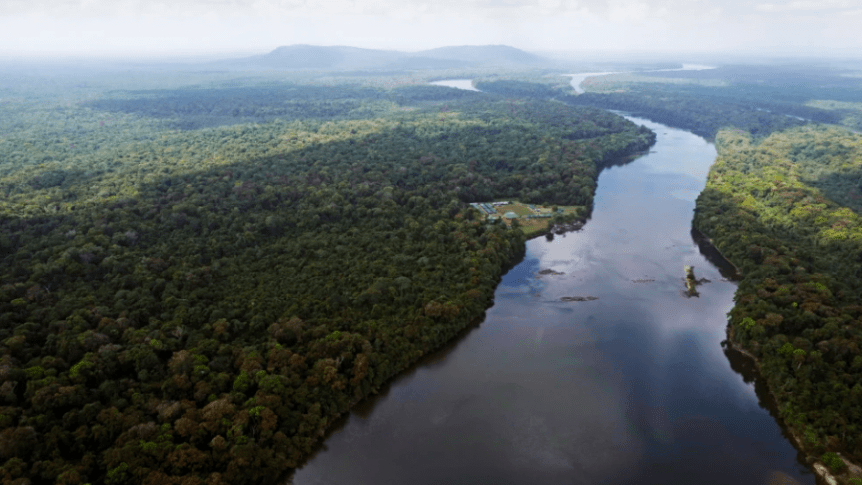
The Essequibo River flows through Kurupukari crossing in Guyana. The boundary was drawn by an international commission back in 1899, which Guyana argues is legal and binding, while Venezuela is disputing it. The U.S., meanwhile, is interfering on behalf of oil interests. | Juan Pablo Arraez / AP

Reposted from Peoples World


Venezuelan President Nicolás Maduro warned recently that “the Southern Command is provoking our region…[as it]  tries to set up U.S. military bases in our Essequibo Guyana.” Venezuelan diplomat José Silva Aponte earlier had observed that, “the United States is intent upon both countries arriving at confrontation.”

Dispute between Venezuela and Guyana over the Essequibo district originated in the early 19th century as Venezuela defied British Guinea in claiming jurisdiction over Essequibo. That territory borders on Venezuela’ eastern frontier and accounts for two thirds of Guyana’s land mass. British Guinea became Guyana in 1966 with the end of Britiah colonialism.

An arbitration tribunal in Paris rejected Venezuela’s claim in 1899. Venezuela and newly independent Guyana agreed in 1966 that the earlier decision was unfounded and that negotiations would continue. The case remains in limbo; the International Court of Justice is involved.

The U.S. government has taken Guyana’s side—no surprise in that Exxon Mobil Corporation is well ensconced there. Oil discovered in 2015 has Guyana, including Essequibo, on track to soon become the world’s fourth largest offshore oil producer.

Venezuela’s government in 2023 created a “Zone of Comprehensive Defense of Guyanese Essequibo.” It’s made plans for the “exploration and exploitation of oil, gas, and minerals” in the region.  Venezuelans voting on Dec. 3, 2023 overwhelmingly approved a referendum allowing their government to establish sovereignty over the contested territory. Essequibo would become a new Venezuelan state.

CIA head William Burns visited Guyana in March 2024. Reacting, Venezuela’s vice president Delcy Rodríguez explained that, “In the history of this U.S. intelligence agency, there is not a single positive milestone; but only death, violence and destruction.” Foreign minister Yvan Gil condemned the visit as “an escalation of provocations against our country and meddling, together with the U.S. Southern Command.”

U.S. resort to military power via the Southern Command suggests that powerbrokers in Washington see the possibility of accomplishing two missions with the same stroke. They want Essequibo to remain within the orbit of Guyana and Exxon Mobil. And, having found a pretext for introducing military power, they would be moving toward the forced removal of a despised left-leaning government.

The Southern Command is responsible for U.S. military operations and “security cooperation” throughout Latin America and the Caribbean.

The Guyana media follows local U.S. military activities. Reporting on December 1, Bernardo de la Fuente detailed Southern Command assistance to the Guyanese Defense Force (GDF). It includes:

  • The upgrading of four Coast Guard River stations, plus additions to the port structure at the Ramp Road Ruimveldt Naval Station in Georgetown.
  • Constructing an outboard motor boat launching ramp and interceptor boat storage yard at a naval facility.
  • Supplying U.S.- constructed “Metal Shark Defiant” patrol boats.
  • Refurbishing a naval headquarters, constructing a new hangar and “expanding the existing facilities of the Air Wing of the Defense Force”
  • Developing “a network of radio repeater stations and a Jungle Amphibious Training School.”

The Southern Command is “helping the GDF strengthen its technological capabilities, as well as directly supporting strategic planning, policy development and coordination of military and security cooperation to strengthen the interoperability of its services in the face of new threats.”

Rehabilitation of a jungle airstrip in Essequibo is icing on the cake. At a cost of $688 million, the now fully-fledged airfield has been extended to 2,100 feet; it will “withstand all weather conditions and ensure 24-hour accessibility.”  According to reporter Sharda Bacchus, the GDF provided $214.5 million. The U.S. taxpayer presumably supplies the rest.

Bernardo de la Fuente notes the airfield’s location adjacent to the west-to-east running Cuyuni River. For Guyana, but not for Venezuelans, that river marks the northern border of both Guyana and Essequibo and the southern border of eastern Venezuela.

Immediate across the river, on the Venezuela side, construction is underway of a jungle command school, ambulatory medical center, training field, and more. Venezuelan General Elio Estrada Paredes and colleagues arrived on Dec. 6 for an inspection visit. A refurbished airstrip provides access to the area.

Officials in Washington have long sought to destroy a Venezuelan government that offends in two ways. It exerts control over huge oil reserves and has aspired to be a model for people-centered political change. Governments led by Presidents Chávez and Maduro, after Chávez’s death in 2013, have had to contend with multiple U.S. intrusions.

They include: an unsuccessful coup in 2002 facilitated by the State Department, tens of millions of dollars delivered to dissident groups, painful economic sanctions from 2015 on, U.S. backing for a puppet Venezuelan president, and the stealing of Venezuelan assets located abroad. U.S. military interventions have been trivial. There was the tiny, U.S.- led seaborn invasion in 2020 (“Operation Gideon”). U.S.-allied Colombian paramilitaries cause mischief inside Venezuela. The U.S. Navy’s Fourth Fleet monitors air and sea approaches to Venezuela.

A U.S. turn to military force directed at Venezuela may not elicit the criticism from U.S. progressives that might have obtained during the Chávez era. Their attachment to Venezuela’s Bolivarian project appears to have weakened.

President Maduro shows less charisma than did President Chávez; he does not match Chávez’s personification of the cause of regional unity, of “Our America.” According to Venezuela’s Communist Party, his government in 2018 “flattened the wages for all sectors and unilaterally canceled all the collective bargaining agreements of…workers.” It later “strengthened its alliance with sectors of big capital, particularly the new bourgeoisie.”

Controversy surrounding Maduro’s re-election to office on July 28, 2024 centers on incomplete reporting of voting tallies. Gustavo Petro, Colombia’s first-ever progressive president, expressed skepticism at the election results.  Alleging over-dependence on oil exports for the financing of development, Petro claimed on Dec. 5 that “Venezuelans now don’t know if they are a democracy, or if they have a revolution.”

The Maduro government recently excluded Venezuela’s Communist Party (PCV) from effective electoral participation, perhaps in order to gain favor in Washington.

Some U.S. progressives disenchanted with the Maduro government may be unaware of its achievement of having built urban and rural communes. They may not have adequately factored in heavy U.S. funding of a divided opposition or recent destabilization inside Venezuela caused by Colombian paramilitaries.

Anti-imperialists may find that assessing the virtues and shortcomings of U.S.-targeted governments doesn’t work well as guidance for action. They might recall their primary vocation of opposition to capitalism.

They would surely derive ample inspiration from there to oppose maneuvering in defense of Exxon Mobil in Essequibo—and enough too to reject U.S. military meddling, whether in a dispute between two nations or against Venezuela itself.


We hope you appreciated this article. At People’s World, we believe news and information should be free and accessible to all, but we need your help. Our journalism is free of corporate influence and paywalls because we are totally reader-supported. Only you, our readers and supporters, make this possible. If you enjoy reading People’s World and the stories we bring you, please support our work by donating or becoming a monthly sustainer today. Thank you!


W.T. Whitney Jr. is a political journalist whose focus is on Latin America, health care, and anti-racism. A Cuba solidarity activist, he formerly worked as a pediatrician, and lives in rural Maine.

President Biden, release Simón Trinidad from prison now! Let him return to Colombia! / By W. T. Whitney

Simón Trinidad, leader of the former guerrilla organization Revolutionary Armed Forces of Colombia. File photo / via Orinoco Tribune

South Paris, Maine


President Biden recently pardoned his son Hunter Biden and commuted the sentences of 1499 drug offenders. Analyst Charles Pierce insists Biden should pardon Simón Trinidad also. Here we join this plea on behalf of the Colombian Ricardo Palmera, whose nom de guerre is Simón Trinidad. Biden indeed must release Trinidad and let him return to Colombia.

Trinidad, a former leader of the Revolutionary Armed Forces of Colombia (FARC), has been imprisoned since 2008. U.S. agents arranged for his capture in Ecuador in 2003. Charged with drug-trafficking, Trinidad was extradited from Colombia to the United States in late 2004. Juries in two of his four trials there failed to convict him of narco-trafficking. Two trials were required to convict Trinidad of terrorist conspiracy to hold hostage three U.S. military contractors operating in Colombia.

The Peace Agreement of 2016 between Colombia’s government and the FARC offered a process for combatants to leave war behind. The Agreement produced the Special Jurisdiction for Peace (JEP), a device whereby Trinidad, once he arrives in Colombia, would be able to tell the truth about participating in civil war and possibly gain immunity from further punishment.

Trinidad’s defenders claim that his earlier experience as a negotiator on behalf of the FARC amply qualify him to help with overcoming difficulties still damaging prospects for peace in Colombia.

Trinidad is presently serving a 60-year sentence – 20 years for each of the captured North Americans.  Early release from prison for Trinidad would make partial amends for an excessively long sentence and relieve him of the cruelty marking his prison experience.

President Gustavo Petro’s Colombia’s government is now finally pressuring the Biden administration to return Trinidad to Colombia. A note sent from the Colombian Embassy on November 12 proposes that “in a humanitarian spirit and for the purpose of [Trinidad] contributing to Colombia’s peace agenda, we present a request for a presidential pardon.”

In a request first made in early 2023, Colombia still seeks “necessary technical facilities” provided for Trinidad so that he might participate in “virtual sessions” of the Special Jurisdiction for Peace.  Once repatriated, he could then participate fully in “the search for total peace in Colombia.”

The U.S. government, ironically enough, has expressed support for the peace process in Colombia, both during four years of negotiation and subsequently after the Agreement was signed in 2016.

Simón Trinidad came from a wealthy, politically powerful, and landowning family in Cesar Department in northern Colombia. He prepared as an economist. Before he joined the FARC in 1987, he was managing an agricultural bank and his family’s estates, and teaching at a local university.

In reaction to accentuation of class-based bloody conflict in Colombia’s rural areas, ongoing for decades, his politics changed. Joining with others, he opposed the Colombian government’s tolerance of paramilitary killings of office-holders and adherents of the Patriotic Union electoral coalition, from 1985 on. They were Communist Party members, former FARC guerrillas, and other progressives. Well over 5000 of them would be massacred.

Within the FARC, Trinidad attended to political education, propaganda, and negotiations with foreign agencies and political leaders. He served as a lead negotiator and spokesperson during the failed FARC-Colombian government peace negotiations taking place in San Vicente del Caguen in 1998-2002.

Here are good reasons for Trinidad’s U.S. imprisonment to end, and for him to return to Colombia now:  

·        The federal prison in Florence, Colorado where Trinidad is held “is one of the strictest maximum-security prisons in the world.” He remained in solitary confinement for 12 years. Authorities restrict his outside communication to infrequent contacts with a very few family members. Visits are few and far between.

·        The conspiracy charge against him amounts to no more than membership in the FARC. That insurgency sought revolutionary social change. International law recognizes both the right of revolution, and rights for prisoners of war.

·        FARC guerrillas in 2003 shot down the plane carrying the three U.S. military contractors and took them hostage. They were “three retired military officers who provided intelligence services through private companies.” The FARC regarded them as enemy combatants. They went free in 2008. Simón Trinidad was far-removed geographically and command-wise from the decision to bring down their plane. In view of such circumstances, Trinidad’s 60-year jail sentence is wildly disproportionate.

·        Mind-reading has its hazards, but appearances may be suggestive. Pains taken to prosecute and persecute Simón Trinidad speak to his status as “trophy” prisoner for his U.S. captors – as indicated by Trinidad’s U.S. attorney Mark Burton. Under the pretext of drug war, the U.S. government in 2000 had introduced its “Plan Colombia” program of military assistance directed at ridding Colombia of leftist insurgents – to the tune eventually of $10 billion. Simón Trinidad’s prominent role in the recently failed Caguen peace talks showed off Plan Colombia as meeting expectations; an exalted prisoner like Trinidad was now in U.S. hands.

There would be the possibility too that Trinidad had earned the special ire of the entitled classes in both Colombia and the United States. Born with a silver spoon, he was indeed a traitor to his class. 

SimónTrinidad as a special case is clear on comparing his fate with that of major paramilitary boss Salvatore Mancuso, reliably accused of killing 1500 Colombians. Each faced trials in the United States after extradition on narco-trafficking charges. Mancuso served his 15-year sentence and in February 2024 was allowed to return to Colombia. President Gustavo Petro honored him through an appointment as “peace manager as part of’ [his] ‘Total Peace’ initiative.” Mancuso, but not Simón Trinidad, has testified before the JEP.

Attorney Mark Burton regards Trinidad as a friend: “To know him is to admire him, because he is an intelligent, human man, and also very firm in his political and social ideas. There are not many people like him in life. He is a person that in the worst prison in the United States they have not been able to break him. He is a person with firmness, ideas, and character. That alone is worth admiration.”


W.T. Whitney Jr. is a political journalist whose focus is on Latin America, health care, and anti-racism. A Cuba solidarity activist, he formerly worked as a pediatrician, and lives in rural Maine.

US military meddles in Venezuela-Guyana dispute, on behalf of imperialism / By W. T. Whitney

Venezuela has called for direct dialogue to solve the longstanding territorial dispute. (Archive) | venezuelanalysis.com

South Paris, Maine


Venezuelan President Nicolás Maduro warned recently that “the Southern Command is provoking our region …[as it]  tries to set up U.S. military bases in our Essequibo Guyana.” Venezuelan diplomat José Silva Aponte earlier had observed that, “the United States is intent upon both countries arriving at confrontation.”

Dispute between Venezuela and Guyana over the Essequibo district originated in the early 19th century as Venezuela defied British Guinea in claiming jurisdiction over Essequibo. That territory borders on Venezuela’ eastern frontier and accounts for two thirds of Guyana’s land mass. British Guinea became Guyana in 1966 with the end of Britiah colonialism.

An arbitration tribunal in Paris rejected Venezuela’s claim in 1899. Venezuela and newly independent Guyana agreed in 1966 that the earlier decision was unfounded and that negotiations would continue. The case remains in limbo; the International Court of Justice is involved.

The U.S. government has taken Guyana’s side – no surprise in that Exxon Mobil Corporation is well ensconced there. Oil discovered in 2015 has Guyana, including Essequibo, on track to soon become the world’s fourth largest offshore oil producer.

Venezuela’s government in 2023 created a “Zone of Comprehensive Defense of Guyanese Essequibo.” It’s made plans for the “exploration and exploitation of oil, gas, and minerals” in the region.  Venezuelans voting on December 3, 2023 overwhelmingly approved a referendum allowing their government to establish sovereignty over the contested territory. Essequibo would become a new Venezuelan state.

CIA head William Burns visited Guyana in March 2024. Reacting, Venezuela’s vice president Delcy Rodríguez explained that, “In the history of this US intelligence agency, there is not a single positive milestone; but only death, violence and destruction.” Foreign minister Yvan Gil condemned the visit as “an escalation of provocations against our country and meddling, together with the U.S. Southern Command.” 

U.S. resort to military power via the Southern Command suggests that powerbrokers in Washington see the possibility of accomplishing two missions with the same stroke. They want Essequibo to remain within the orbit of Guyana and Exxon Mobil. And, having found a pretext for introducing military power, they would be moving toward the forced removal of a despised left-leaning government.

The Southern Command is responsible for U.S. military operations and “security cooperation” throughout Latin America and the Caribbean.

The Guyana media follows local U.S. military activities. Reporting on December 1, Bernardo de la Fuente detailed Southern Command assistance to the Guyanese Defense Force (GDF). It includes:

·        The upgrading of four Coast Guard River stations, plus additions to the port structure at the Ramp Road Ruimveldt Naval Station in Georgetown.

·        Constructing an outboard motor boat launching ramp and interceptor boat storage yard at a naval facility.

·        Supplying U.S.- constructed “Metal Shark Defiant” patrol boats.

·        Refurbishing a naval headquarters, constructing a new hangar and “expanding the existing facilities of the Air Wing of the Defense Force”

·        Developing “a network of radio repeater stations and a Jungle Amphibious Training School.”

The Southern Command is “helping the GDF strengthen its technological capabilities, as well as directly supporting strategic planning, policy development and coordination of military and security cooperation to strengthen the interoperability of its services in the face of new threats.”

Rehabilitation of a jungle airstrip in Essequibo is icing on the cake. At a cost of $688 million, the now fully-fledged airfield has been extended to 2100 feet; it will “withstand all weather conditions and ensure 24-hour accessibility.”   According to reporter Sharda Bacchus, the GDF provided $214.5 million. The U.S. taxpayer presumably supplies the rest.     

Bernardo de la Fuente notes the airfield’s location adjacent to the west-to-east running Cuyuni River. For Guyana, but not for Venezuelans, that river marks the northern border of both Guyana and Essequibo and the southern border of eastern Venezuela.

Immediate across the river, on the Venezuela side, construction is underway of a jungle command school, ambulatory medical center, training field, and more. Venezuelan general Elio Estrada Paredes and colleagues arrived on December 6 for an inspection visit. A refurbished airstrip provides access to the area.

Officials in Washington have long sought to destroy a Venezuelan government that offends in two ways. It exerts control over huge oil reserves and has aspired to be a model for people-centered political change. Governments led by Presidents Chávez and Maduro, after Chávez’s death in 2013, have had to contend with multiple U.S. intrusions.

They include: an unsuccessful coup in 2002 facilitated by the State Department, tens of millions of dollars delivered to dissident groups, painful economic sanctions from 2015 on, U.S. backing for a puppet Venezuelan president, and the stealing of Venezuelan assets located abroad. U.S. military interventions have been trivial. There was the tiny, U.S.- led seaborn invasion in 2020 (“Operation Gideon”). U.S.-allied Colombian paramilitaries cause mischief inside Venezuela. The U.S. Navy’s Fourth Fleet monitors air and sea approaches to Venezuela. 

A U.S. turn to military force directed at Venezuela may not elicit the criticism from U.S. progressives that might have obtained during the Chávez era. Their attachment to Venezuela’s Bolivarian project appears to have weakened.

President Maduro shows less charisma than did President Chávez; he does not match Chávez’s personification of the cause of regional unity, of “Our America.” According to Venezuela’s Communist Party, his government in 2018 “flattened the wages for all sectors and unilaterally canceled all the collective bargaining agreements of … workers.” It later “strengthened its alliance with sectors of big capital, particularly the new bourgeoisie.”  

Controversy surrounding Maduro’s reelection to office on July 28, 2024 centers on incomplete reporting of voting tallies. Gustavo Petro, Colombia’s first-ever progressive president, expressed skepticism at the election results.  Alleging over-dependence on oil exports for the financing of development, Petro claimed on December 5 that “Venezuelans now don’t know if they are a democracy, or if they have a revolution.”

The Maduro government recently excluded Venezuela’s Communist Party (PCV) from effective electoral participation, perhaps in order to gain favor in Washington.

Some U.S. progressives disenchanted with the Maduro government may be unaware of its achievement of having built urban and rural communes. They may not have adequately factored in heavy U.S. funding of a divided opposition or recent destabilization inside Venezuela caused by Colombian paramilitaries.

Anti-imperialists may find that assessing the virtues and shortcomings of U.S. – targeted governments doesn’t work well as guidance for action. They might recall their primary vocation of opposition to capitalism.

They would surely derive ample inspiration from there to oppose maneuvering in defense of Exxon Mobil in Essequibo– and enough too to reject U.S. military meddling, whether in a dispute between two nations or against Venezuela itself.


W.T. Whitney Jr. is a political journalist whose focus is on Latin America, health care, and anti-racism. A Cuba solidarity activist, he formerly worked as a pediatrician, and lives in rural Maine.

Gaza health horror: Pregnancy is now a life-threatening condition / by W.T. Whitney Jr.

Targeting moms and moms-to-be: Palestinian paramedics inspect damage in the patient rooms caused by Israeli strikes on the maternity ward at Nasser Hospital in the town of Khan Younis, Gaza, Dec. 17, 2023. | Mohammed Dahman / AP

Reposted from Peoples World


U.S. laws require healthcare practitioners and anyone else who suspects they may have encountered a case of child abuse to report it to “the state.” But what is one to do when it is the state itself that’s doing the abusing?

The Lancet medical journal, published in Britain and read throughout the world, recently condemned the Israeli state and the “ongoing Israeli military assault on Gaza” for causing “an unprecedented rise in maternal deaths, miscarriages, and stillbirths.”

Lancet asserts that the “violence is not just a consequence of the military assault—it is a deliberate outcome of policies that restrict access to health care.” And a “blockade, now in its second decade, and ever-tightened over the last few months, has compounded the suffering, with dire implications for future generations.”

Lancet’s report refers to “humanitarian catastrophe…the onset of famine…deterioration of maternal health services…[and the] near-total collapse of the health-care infrastructure.” It points to “a tragic surge in preventable maternal and neonatal deaths.”

Lancet adds that:

“Prenatal care is virtually non-existent in Gaza. The rise in premature labor is staggering, often triggered by the chronic stress of displacement, malnutrition, and the trauma of witnessing air strikes. As hospitals struggle to keep up with mass casualties, maternity wards are becoming non-functional. In some cases, women have had to deliver babies outside, in unsanitary conditions, without the assistance of midwives or doctors.”

The “targeting of maternity hospitals and the blockade that limits essential medical supplies…from entering Gaza have turned pregnancy into a life-threatening condition for thousands of women.”

Women “are forced to carry pregnancies through conditions unfathomable to the human conscience.” The report cites “malnutrition… a profound moral failure of the international community…[and] violation of international law.”

“Humanitarian principles dictate that civilians, particularly children and pregnant women, must be protected,” the report states.  Moreover: “The world cannot remain silent any longer. The time for action is now—to restore access to health care, to protect women and children, and to uphold the sanctity of life.”

The enabling role of Israel’s partner in crime receives no mention. The United States supplies the tools for killing—the bombs, guns, ammunition, and planes.

Citing mothers, nurses and physicians, Gaza journalist Taghreed Ali points out that expectant mothers are experiencing more miscarriages, premature deliveries, and stillborn births than before. He notes an increased incidence of newborns born with congenital abnormalities.

These include deformed or absent limbs; neurologic malformations, especially hydrocephalus; cardiac defects; and digestive problems. Possible causes, according to experts whom he consulted, include:

malnutrition of mothers; no pre-natal care; stress provoked by the bombings, shooting, and forced moves to new localities; gases produced by explosions; self-administration of inappropriate medicines necessitated by the absence of care; and inhalation of dust from explosions and collapsed buildings. Ali tells of expectant mothers buried in rubble for hours and later giving birth to babies who died or were malformed.

In this war and earlier Gaza wars, Israel’s military violates international humanitarian law by using artillery shells containing white prosperous. A pregnant woman exposed to this incendiary agent risks delivering a baby with congenital abnormalities, according to Lancet.

Aggravating the lack of care for sick or malformed babies has been the denial of access to specialty services outside of Gaza. Israel continues with its lockdown of Gaza’s borders.

The Israeli state’s trashing of healthcare in Gaza parallels the sorry state of healthcare fostered by governments in power in the United States. Israeli and U.S. political leaders share an easy tolerance of preventable dying.

In his recent comprehensive analysis, reporter Peter Dolack asserts that U.S. healthcare “is by far the world’s most expensive while providing the worst results among the world’s advanced capitalist countries.” The system is “designed to extract maximum profits rather than deliver health care.” U.S. residents “live the shortest lives and have the most avoidable deaths…. More than 26,000 die in the United States yearly because of a lack of health insurance.”

Powerbrokers in both countries are dismissive, it seems, of healthcare for the poor, marginalized, and forgotten, and of their health. Such evident cruelty betokens an oppression that is widespread in both situations. Meanwhile, both leadership classes shore up power and privileges. This is one area of struggle.

Another is the decades-long striving of Palestinians to restore land and liberty. Any headway with struggle along such lines promises to fire up oppressed peoples throughout the Middle East—and not so much minders of the region’s status quo.

According to academic Jason Hickel, “A liberated Middle East means capitalism in the core really faces a crisis, and they will not let that happen, and they’re unleashing the full violence of their extraordinary power to ensure it doesn’t.”

Under these circumstances, Israeli and U.S. strategists are looking ahead and seeking to waylay progressive change, while tuning into their counter-revolutionary instincts. They apparently have latched onto a notion of power put forth earlier by one of their ideological enemies.

According to Lenin (State and Revolution), “The state is a special organization of force; it is the organization of violence for the suppression of some class.”

It’s a frame of mind that, reasonably enough, would have the victims of oppression in both the Middle East and United States casting about for ways for their own class to achieve political power.

Meanwhile, the Communists of Palestine and Israel, and their allies, meeting virtually on Oct. 7, agreed that, “Only by establishing a sovereign Palestinian state will there be peace and stability in the region.”  Beyond self-determination, they also called for cessation of the siege on Gaza and the relief of suffering.


We hope you appreciated this article. At People’s World, we believe news and information should be free and accessible to all, but we need your help. Our journalism is free of corporate influence and paywalls because we are totally reader-supported. Only you, our readers and supporters, make this possible. If you enjoy reading People’s World and the stories we bring you, please support our work by donating or becoming a monthly sustainer today. Thank you!


W.T. Whitney Jr. is a political journalist whose focus is on Latin America, health care, and anti-racism. A Cuba solidarity activist, he formerly worked as a pediatrician, and lives in rural Maine.

Promise and contradictions emerge from celebration of Cuba’s Latin American School of Medicine / By W. T. Whitney Jr

Photo credit: Prensa Latina

South Paris, Maine


The Latin American School of Medicine (ELAM for its Spanish language initials) is a masterpiece of Cuba’s remarkable healthcare system. A conference of ELAM graduates took place in Havana from November 11 to November 15; two sets of them attended. The gathering marked the 25th anniversary of ELAM’s founding in 1999.

What happened and what was said reflect Cuba’s healthcare achievements and ELAM’s special contribution. A focus on ELAM demonstrates for us the paradox, cruelty, and injustice of U.S. aggression against a people capable of producing such an unprecedented achievement as ELAM.

To be aware that ELAM exists and that its creation falls within the range of human capacity is to be reassured that, in fact, possibilities do exist other than U.S. warmaking, militarization, and complicity in anti-Palestine genocide.

ELAM evolved out of Cuba’s response in 1999 to the ravages of Hurricanes George and Mitch in the Caribbean area and in parts of Central America. Cuban physicians carrying out rescue missions discovered that local healthcare workers were overwhelmed by the catastrophe. Within weeks, Cuba’s political leaders opted to prepare young people to be physicians in their own countries and be ready for future disasters and much more 

Soon prospective medical students were heading to ELAM from hurricane-affected regions. Later they came from throughout Latin America, and eventually from Africa and farther afield, including from the United States.  They were motivated by idealism – enrollees dedicate themselves to serving the underserved – and the fact that no personal outlay is required.

ELAM has now prepared  31,180 physicians for service in 120 countries. Some 1800 medical students from many countries are presently studying there. ELAM provides the first two years of pre-clinical courses at a converted naval base immediately to the west of Havana. Clinical training over the next four years takes place at teaching hospitals throughout Cuba.

On hand in Havana 25 years after ELAM’s initiation were more than 300 ELAM graduates and students plus 250 guests, physicians and students, from 30 countries. The occasion combined the 1st International Congress of ELAM graduates and the 2nd International Assembly of the International Medical Society of Graduates of ELAM (SMI-ELAM).

Organizers assigned the theme “Guardians of life, creators of a better world.” They projected the assembly as “a space for scientific interchange … and a concrete step toward creation of an international medical and scientific organization whose members [are] ELAM graduates.” 

The gathering featured plenary sessions, round tables, panels, and presentations by clinical and research specialists. These took place in Havana’s teaching hospitals and Conventions Center. Topics were: primary health care, medical care during emergencies and natural disasters, postgraduate medical training, and higher education in the medical sciences. Presenters linked medical education, social impact, and international solidarity. Experts from abroad and from international organizations were participating.

Welcoming the delegates, ELAM’s rector Yoandra Muro insisted that, “Commander Fidel is here, standing up, fighting with the example he instilled in his children, the graduates of this project of love.” Here, “we have a space for [ELAM] graduates to continue strengthening our kind of work and projecting training programs for the guardians of the present and future.” She identified graduates as “invincible standard-bearers in the field of health, who from their quality preparation are steeped in the work of solidarity.”

Luther Castillo Harry, currently minister of science, technology, and innovation in the Honduran government, graduated from ELAM in 2007. He declared at the conference that, “We are looking at the possibility of building the greatest scientific organization in the world … Each one of us has to be an ambassador of the Cuban Revolution.” And, “We will only gain the possible, through struggle against the impossible.”

Cuban President Miguel Díaz-Canel sent a message welcoming graduates back to their “second homeland.” He indicated he would not attend the sessions because of duties with post-hurricane recovery efforts. Díaz-Canel cited Fidel Castro’s “deep conviction that a better world is possible if we fight tirelessly for that ideal.”  He speculated on “Fidel’s happiness had he been able to see you become guardians of the life and health of your people.”

Presiding over a plenary session, public health minister José Ángel Portal Miranda discussed healthcare in Cuba. The report has him outlining a system based on primary care that involves 69 medical specialties and three levels of care. Cuba’s medical network, he explained, consists of 451 polyclinics, 11,315 community health centers, 149 hospitals, and a work force of 400,000 people. There are eight physicians serving each cohort of 1000 Cubans, 80,000 in all. Maternity homes and homes for elders are part of the system.

The minister indicated that 40 different faculties or their affiliates are responsible for training physicians; medical sciences are taught in 13 universities. He identified “the development of science and technology as the fundamental pillar of the health system.” Presently 2,767 research projects and 82 clinical trials are underway.  

Portal highlighted Cuba’s international medical solidarity, mentioning the Comprehensive Health Program mediated through international missions, the Barrio Adentro program for Venezuela, Operation Miracle (for eye care), and the Henry Reeve Brigades. He cited some 600,000 Cuban health workers having cared for people in more than 160 countries over many years.

Concluding his remarks, he stated that, “Out of ELAM have emerged and will emerge galenos who will save humanity from the barbarism. Or, as leader of the Revolution Fidel Castro said – ‘Doctors, not bombs!’” (Claudius Galen was a Greek physician and researcher in the classical era. Spanish speakers often refer to physicians as “galenos.”)

Here is Castro speaking in Buenos Aires in 2003:

“Our country does not drop bombs on other peoples, nor does it send thousands of planes to bomb cities; Our country has no nuclear, chemical or biological weapons. The tens of thousands of scientists and doctors in our country have been educated in the idea of saving lives. It would be absolutely contradictory to their conception to put a scientist or a doctor to produce substances, bacteria or viruses capable of killing other human beings.”


W.T. Whitney Jr. is a political journalist whose focus is on Latin America, health care, and anti-racism. A Cuba solidarity activist, he formerly worked as a pediatrician, lives in rural Maine. W.T. Whitney Jr. es un periodista político cuyo enfoque está en América Latina, la atención médica y el antirracismo. Activista solidario con Cuba, anteriormente trabajó como pediatra, vive en la zona rural de Maine.

Puerto Rico Elections show upswing of popular and independence forces / By W.T. Whitney

Supporters of Country Alliance. Photo: Patria Nueva PR

South Paris, Maine


The special significance of elections taking place in Puerto Rico on November 5 was evident beforehand. A commentator detected from opinion polls that, “This election already is historic. It already marks a before and an after.”

For the first time ever, a gubernatorial candidate of the Puerto Rican Independence Party (PIP) was successfully challenging the candidates of the pro-statehood New Progressive Party (PNP) and the pro-commonwealth Popular Democratic Party (PPD). The two parties have ruled the roost in Puerto Rico for decades.

As of November 6, with 91 precincts having reported, PNP candidate Jenniffer González was leading with 39% of the votes. Juan Dalmau, the PIP candidate for governor, had gained 33% and PPD candidate Jesús Manuel Ortiz only 21%. Conservative candidate Javier Jiménez of Project Dignity obtained 7% of the vote.

Preliminary results of voting for the resident commissioner show the PPD candidate with 44.4% of the vote followed by 35.7% for the PNP candidate and 9. 5% for Ana Irma Rivera Lassén of the MVC. The resident commissioner is Puerto Rico’s sole member of the U.S. Congress. He or she has no authority to vote on legislation.

The results of past voting for governor show a trend. Candidates of the PNP and PPD parties together shared 95% of the vote in 2012, 81% in 2016, and 65% in 2020. “These political parties have basically collapsed over the past ten years,” says Rafael Bernabe, gubernatorial candidate the Working People’s Party in 2012 and 2016.

The PIP has broadened its appeal. Its candidates for governor moved from 2.5% of the vote in 2012 to 2.1% in 2016, and up to 13.5% in 2020. That party is heir to a legacy of serious U.S. repression from police and the FBI directed at both the PIP and former Nationalist Party.

The improved electoral showing this of the PIP is due mainly to a creative work-around of the U.S. government’s prohibition of coalitions being utilized in Puerto Rican elections. By late 2023, the PIP and the Citizens’ Victory Movement (MVC) had joined in an alliance called the Country’s Alliance (Alianza de País).

The two parties created an arrangement whereby each partner would put forth its own candidate for all offices being contested, including governor and resident commissioner. The stipulation was that only one of the two candidates for each office is actually seeking votes. The other does not do so and has no intention of serving in office.

For example, PIP candidate[WW1] for governor Juan Dalmau received votes from MCV backers and they did not vote for the MCV candidate. Likewise, Ana Irma Rivera Lassén, the MCV candidate for resident commissioner (and general coordinator of the MVC) would gain PIP votes for her candidacy and none from her own party.

The MVC, formed in 2019 and joined by the Working People’s Party and the Hostosian National Independence Movement, claims in its Party program an “Urgent Agenda … [dealing with] the rescue of public institutions; social, environmental and economic reconstruction, and decolonization of Puerto Rico.”

The MVC, whose candidate for governor in 2020 took 14 % of the vote, proposes reforms addressing a wide range of social problems and relief of class and identity-based oppression. Its program emphasizes the importance of competence, efficiency, and freedom from U.S. interference in achieving these gains. The PIP, founded in 1946, has long advanced Puerto Rico’s struggle for national sovereignty while also pushing o for social reforms. The two parties are as one in fighting the corruption that they say permeates the PNP and PDR alike.

The PIP and MVC are each seeking a “constitutional assembly on status.” As described by Rafael Bernabe, the delegates to such an assembly would study, debate, and decide on future relations with the United States. The options would be independence, statehood, or commonwealth. The U.S. government characterizes the latter as “free association.” It represents the status quo. Bernabe insists that, “the process of self-determination … should start with us.”

Any political change on the way now in Puerto Rico is responding to a step-wise process that led to disaster. The downhill course began with the U.S. government in the 1990s having withdrawn tax incentives aimed at stimulating new industry. Businesses and factories disappeared; income from taxation decreased and so too much of the government’s social programming. Public borrowing spiked to replace the lost income. The accumulated debt was unpayable

In 2016 the federal government created its Financial Oversight and Management Board in order to deliver austerity and privatization to the island’s economy. Public expenditure for human needs was put on a short leash. Grief multiplied, and more so with the ravages of Hurricane Maria in 2017. The newly privatized electrical generation system has never fully recovered.

A recent New York Times report describes an island in “ruins,” specifically with “[s]huttered schoolscrumbling roads, a university gutted by budget cuts, a collapsing health system and relentless blackouts.”

This report concludes with commentary from analyst Jenaro Abraham, taken from NACLA.org: “As the naked interests of U.S. imperialism have become more evident, the conditions for political unity were forged … [The Alianza] is the product of the experiences anti-colonial movements have long endured under the brunt of U.S. imperialism…. [They have] compelled the PIP and the MVC to partake in a shared strategy that places … differences aside in service of a more immediate shared goal: uprooting the bipartisan pro-colonial stranglehold over Puerto Rico’s government.”


W.T. Whitney Jr. is a political journalist whose focus is on Latin America, health care, and anti-racism. A Cuba solidarity activist, he formerly worked as a pediatrician, lives in rural Maine. W.T. Whitney Jr. es un periodista político cuyo enfoque está en América Latina, la atención médica y el antirracismo. Activista solidario con Cuba, anteriormente trabajó como pediatra, vive en la zona rural de Maine.

At difficult time for Cuba, UN General Assembly again condemns US blockade / By W. T. Whitney

The United Nations General Assembly has voted to condemn the United States’ embargo on Cuba for the 32nd consecutive year. On Wednesday, 187 countries voted in favor of lifting the decades-old sanctions; only the U.S. and Israel voted against the nonbinding resolution | via Democracy Now!

South Paris, Maine


By a 187-nation majority, The United Nations General Assembly on October 30 voted to approve a Cuba Resolution calling for the “Necessity of ending the economic, commercial and financial embargo imposed by the United States of America against Cuba.” The United States and Israel voted no; Moldova abstained.

The same motion has been approved overwhelmingly every year since 1991. No vote took place in 2020 because of the Covid-19 pandemic. For over 20 years, only Israel and the United States have voted down the Resolution; annually one or more states have abstained.

In remarks to the Assembly’s delegates, Cuban Foreign minister Bruno Rodríguez explained that the U.S. economic blockade restricts Cuba’s importation of goods and access to international financial resources, also that shortages hurt every aspect of Cubans’ lives. Cuba’s foreign ministry on September 12 issued a comprehensive summary of adverse effects of the blockade.” Appearing here, it supplements this report.

The UN vote this year has special significance. It took place immediately following both Hurricane Oscar, which devastated eastern Cuba, and an island-wide electrical outage lasting several days. Its cause was lack of oil for generating electricity, restrictions on the shipping of petroleum products, and limited access to international financing, all owing to the blockade.

Now is an extraordinarily difficult time for Cubans and their government. Basic supplies and materials needed for day-to-day functioning are not readily available. Money is short and inflation mounts. The twin culprits are a fall-off in tourism, Cuba’s main source of foreign currency, and U.S. designation of Cuba as a state sponsor of terrorism. The latter entails regulations that persuade international financial institutions and corporations to steer clear of Cuba.

Every year in preparation for its vote on the Resolution, the General Assembly arranges for two days of discussion of the Resolution’s pros and cons. Perhaps reflecting extra stresses weighing on Cuba, commentary during this year’s discussion period came from an unprecedently large group of delegates.

In brief interventions, 59 of them offered reasons why the Resolution should pass; almost 30 international organizations or alliances did likewise. These included the Group of 77 and China, the Association of Southeast Asian Nations (ASEAN), the Community of Latin American and Caribbean States (CELAC), the Organization of Islamic Cooperation (OIC), the Non-Aligned Movement (NAM), and the Caribbean Community (CARICOM).

The speakers made frequent reference to the SSOT designation and to Title III of the U.S. Helms-Burton law (which discourages foreign investment in Cuba). Many of them variously denounced the blockade as violating international law and Cubans’ human rights, for inhibiting Cuba’s development, and for sticking around as a Cold War left-over. Several delegates extolled South-to-South cooperation and multipolarity. Others offered thanks for Cuba’s assistance during the Covid-19 pandemic

Meanwhile, U.S. activists and organizations, rallying against the blockade and in defense of Cuba, joined in vigorous demonstrations taking place in Washington DC, New York, Los Angeles, Chicago and elsewhere.

The International US-Cuba Normalization Coalition Committee on October 27-28 again staged its annual “24 Hour Global Picket” to accompany the UN vote. The effort made for a continuous presentation of commentary, advocacy, video presentations, and music from 61 countries. Hats off to Vancouver-based activists Tamara Hansen and Alison Brodine, and others, for devising a remarkable phenomenon.

One oddity of the discussion on the Cuban Resolution was the contrast between multiples viewpoints offered by nations of the Global South and silence from their northern counterparts, specifically Japan, Canada and all European nations, save Hungary. (The U.S. representative did speak). The divide may represent dismissal of the proceedings by nations identifying with U.S. interests, or a fundamental cleavage within the community of nations, or both.

A standout anomaly was that of Argentinian foreign minister Diana Mondino having been fired from her job shortly after she voted in favor of the Cuban Resolution. Her boss, extremist rightwing President Javier Milei, was displeased.

After the vote in New York, China’s ambassador in Cuba issued a statement qualifying the result as a “just call from the international community that must be applied immediately and effectively.” He added that, “It’s disappointing and outrageous that the United States voted against the Resolution while refusing to end its sanctions against Cuba and insisting on including Cuba on its list state sponsors of terrorism … [And besides] China and Cuba are good friends, comrades and brothers.”


W.T. Whitney Jr. is a political journalist whose focus is on Latin America, health care, and anti-racism. A Cuba solidarity activist, he formerly worked as a pediatrician, lives in rural Maine. W.T. Whitney Jr. es un periodista político cuyo enfoque está en América Latina, la atención médica y el antirracismo. Activista solidario con Cuba, anteriormente trabajó como pediatra, vive en la zona rural de Maine.

How US imperialism causes death and destruction in Gaza and Lebanon / By W. T. Whitney

Smoke billows over southern Lebanon following Israeli strikes, as seen from Tyre, southern Lebanon on 23 September, 2024 (Reuters)

South Paris, Maine


The Israeli military’s horrendous massacres in Gaza extend now to Lebanon. Housing, schools, and hospitals are destroyed.  Residents of Northern Gaza are being herded south, again. People starve. The U.S. government supplies the bombs, planes, and weapons.

The war’s continuation relates to U.S. strategic interests in the region and U.S. pretensions to world domination. War and humanitarian catastrophe will end with stopping U.S. assistance. Some of the war’s critics present views and emphases that distract and offer little toward ending it.

They commonly ascribe the carnage to the expansionist nature of Zionism. For a century and more, Zionism has indeed visited grief and loss upon Palestinians. But criticizing that record is more likely to reinforce intransigence than alter the course of events.  

Highlighting unprecedented humanitarian disaster will not by itself stop the killing, or bring about repair.  It needs to be the object of international consensus and cooperation, as mediated through the United Nations. Underfunding and Security Council vetoes are impediments.

Peace advocates may insist that the more humanitarian norms are violated, the more impactful moral, legal, and/or ethical criticism will be and the more telling will be personal witness or civil disobedience. Without mass pressure to accompany expectations, they become wishful thinking.   

The war won’t end just because the war should end. It continues as long as vital interests are being served. Israel’s interests are her own. Criticism from afar is likely ineffectual. U.S. interests do warrant attention, because the war serves U.S. purposes.

According to peoplesworld.org, “Israel is completely dependent on the U.S. It would be incapable of carrying out its campaigns of aggression without U.S. help.”

The United States is bound to Israel. The two major political parties support military aid for Israel. Prime Minister Netanyahu addressed the U.S. Congress on July 24 to rapturous applause. The U.S. tie to Isreal is worth a lot.  

U.S. commitment to Israel, and to assisting with Israel’s war, is measured in money: $251.2 billion (adjusted for inflation) in military aid to Israel during 66 years, $18 billion in the year prior to October 2024, and $20 billion approved by President Biden in August 2024 and being voted on in Congress in November. These are funds “that Israel must use to purchase U.S. military equipment and services.”

Commitment is such that U.S. military aid flows despite the Leahy Act (1997) requirement to “vet any foreign military unit to ensure it has a clean human rights record before it can receive U.S. assistance.”

Support for Israel is a crucial part of U.S. strategy for the entire Middle East. That strategy is one aspect of U.S. plans for arranging international affairs to its liking. U.S. backing of Israel and its war coincides with U.S. imperialist purposes.  

Formerly, U.S. reactions to the Holocaust were foremost in determining U.S. support for a Jewish state. Later, relations with Israel took on an additional transactional aspect. The U.S. government would indeed support Israel’s dealings with Palestinians. But Israel would facilitate U.S. policy objectives for the Middle East.

They are: control and supervision of the region’s production and distribution of oil and natural gas, maintenance of the Middle East role as “transit hub connecting Europe, Asia, and Africa,” military force ready to intervene against so-called terrorism, and pushback against “the influence of rival great powers.”

There are other favors. Israel serves as proxy warrior for the United States, for example, in Syria and Iraq, and in the UN General Assembly provides a yearly vote for the U.S. economic blockade of Cuba (there’s usually only one other such vote).

Israel furnishes U.S. rightwing allies in Latin America with military aid, training and equipment. Israel offers attractions: a proposed canal through the Negev Desert bypassing Egypt and offshore deposits of oil and natural gas.

A side note: money is also the measure of U.S. commitment to imperialism. Because imperialism involves conflict, military capabilities are crucial, and they cost. Overall U.S. military spending is exorbitant, dwarfing outlay for the U.S. population’s social needs. In the government’s discretionary budget for fiscal year 2023, military funding amounted to 62% of the $1.8 trillion total; 38% sufficed for everything else, including housing, education, healthcare, and restoration of infrastructure.

Another side note: unfathomable human suffering will not likely deter United States from enabling Israeli massacres in Gaza. The U.S. government has returned to a nuclear arms race. Doing so signals tolerance for the worst kind of catastrophe.  According to the New York Times: “General Dynamics will have “produced 12 nuclear ballistic missile submarines by 2042 — a job that’s projected to cost $130 billion … [and] the United States is set to spend an estimated $1.7 trillion over 30 years to revamp its [nuclear] arsenal.”

The U.S. government, with Israel’s help, pursues a new kind of imperialism. Distant from enslaved labor, die-offs of indigenous peoples, and occupation of foreign territories, it relies on debt dependency and cheap labor. Under neoliberalism, wealth is still being drained from the world’s peripheral regions to metropolitan centers.

Conflict remains. Rival powers are ever threatening, and the United States needs a hard-boiled and militarily competent factotum at its side. The U.S. government pays in-kind, with bombs, guns, planes and missiles.  

Neither war nor U.S. weaponization of Israel will end soon. What happens will depend on priorities serving U.S. imperialism. U.S. young people and others actively demanding justice for Palestinians would do well, it seems, to prepare themselves for the long haul. They are looking at U.S. imperialism now and would come to understand its origins and know what needs to be done.  

They would learn, first, that capitalism consolidated, turned aggressive, and then thrust modern-day imperialism upon the world. They would study worker exploitation and how it led to the profit-taking abundance fueling the growth of capitalism. They would explore division by social class, the necessary condition for exploitation.

Others, socialists in particular, reversed this sequence, and it doesn’t matter. Beginning with Marx and Engels’ reflections on the factory system under capitalism, they learned that workers lose out on the surplus value of the labor they provide. The inquirers became familiar with labor mobilizations and working-class struggles for political power. They arrived at Lenin’s Imperialism, the Highest Stage of Capitalism (1916), a study of capitalists monopolizing and making war.


W.T. Whitney Jr. is a political journalist whose focus is on Latin America, health care, and anti-racism. A Cuba solidarity activist, he formerly worked as a pediatrician, lives in rural Maine. W.T. Whitney Jr. es un periodista político cuyo enfoque está en América Latina, la atención médica y el antirracismo. Activista solidario con Cuba, anteriormente trabajó como pediatra, vive en la zona rural de Maine.